Sorting skills Numbers Worksheets for Ages 6-9
5 filtered results
-
From - To
Develop your child's numerical proficiency with our "Sorting Skills Numbers Worksheets for Ages 6-9." These printable worksheets from Kids Academy are meticulously designed to enhance children's sorting and classification abilities, critical for foundational math skills. Each activity engages young learners in fun and educational sorting exercises, promoting logical thinking, organization, and number sense. The vibrant visuals and varied challenges cater to different learning styles, ensuring kids stay motivated and confident. Perfect for classroom use or homeschooling, these worksheets make learning numbers enjoyable and effective. Equip your child with the skills they need for lifelong mathematical success!
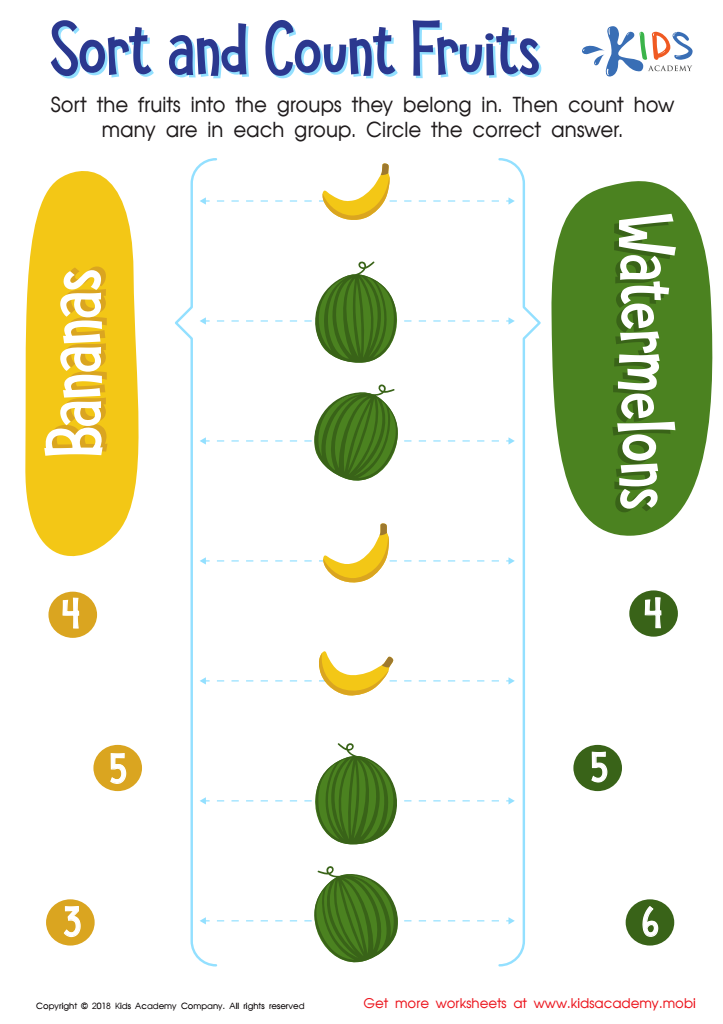
Sort and Count Fruits Worksheet
 Assign to My Students
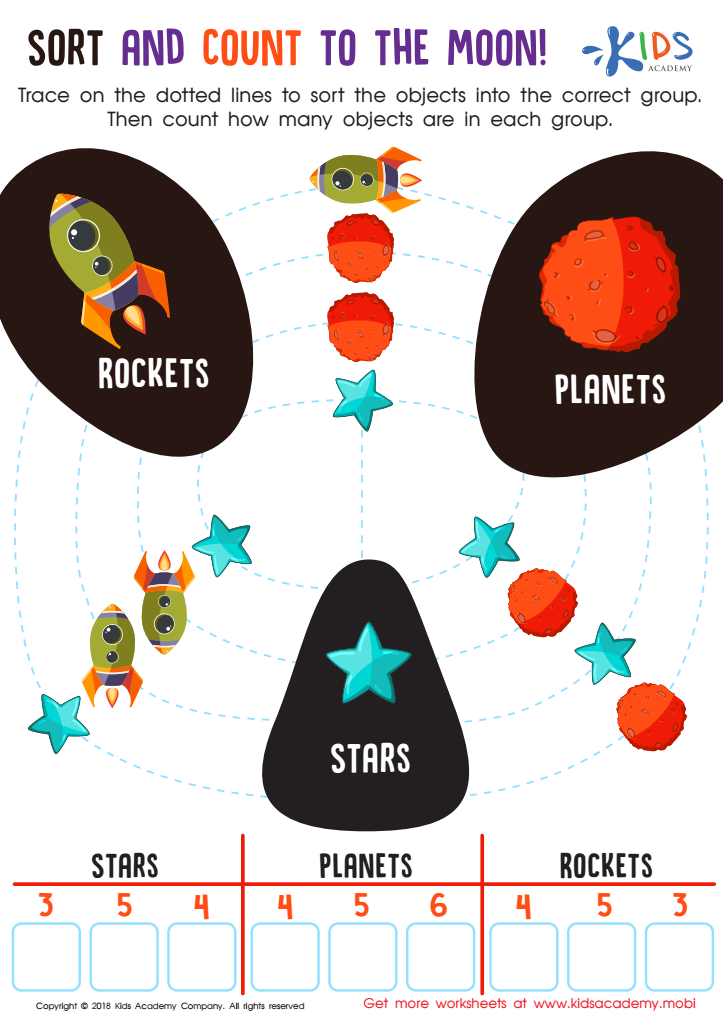
Sort and Count to the Moon Worksheet
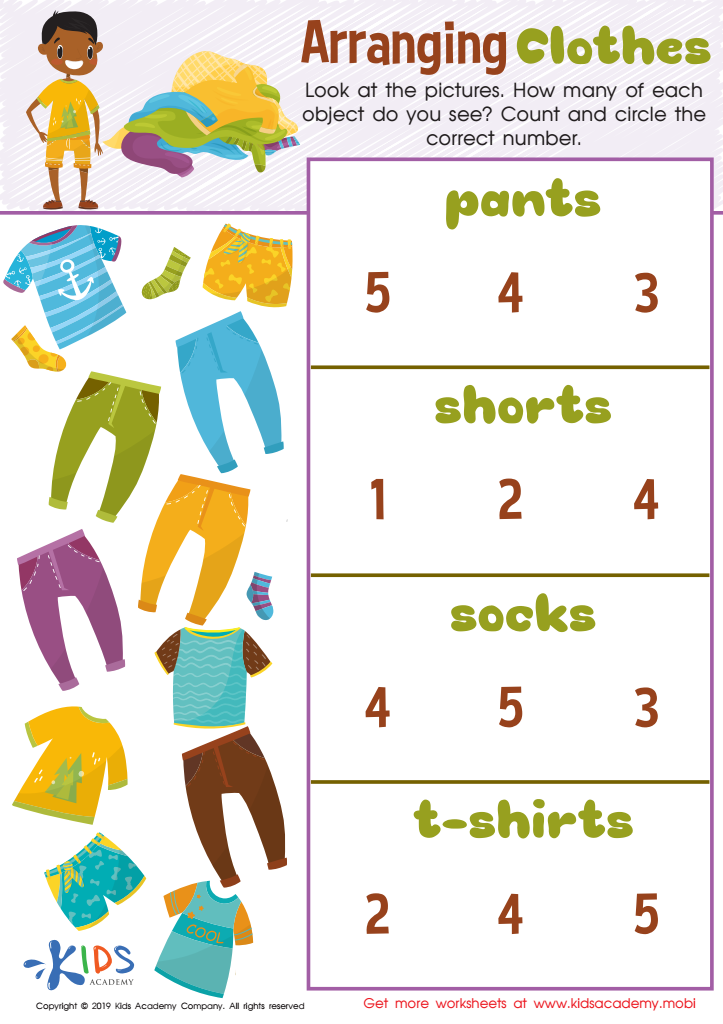
Arranging Clothes Worksheet
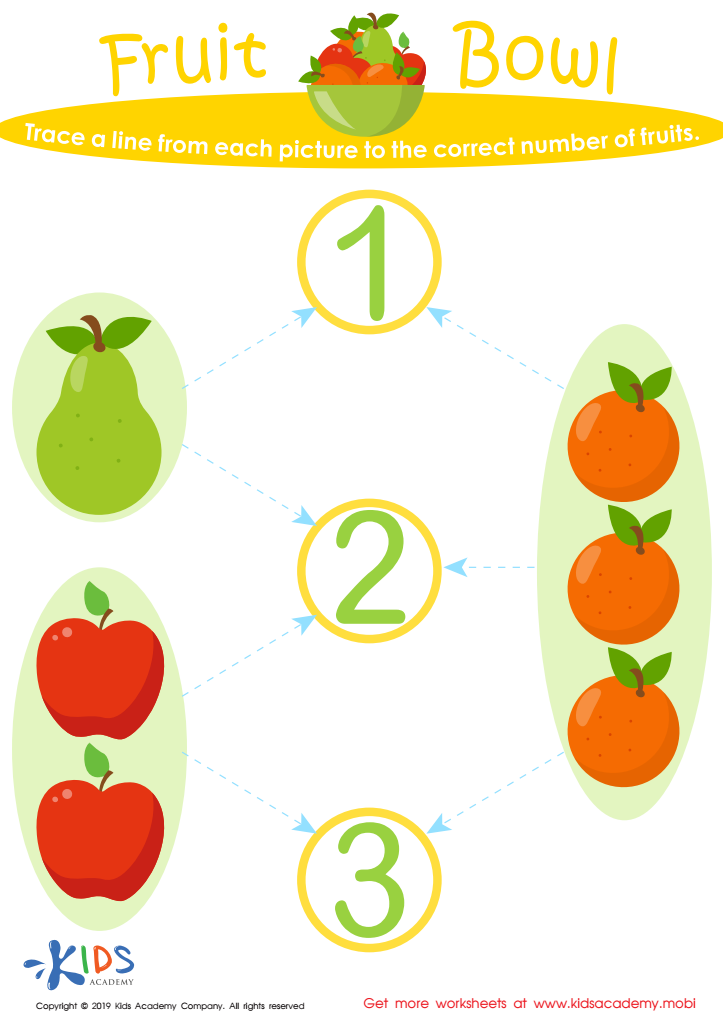
Fruit Bowl Worksheet
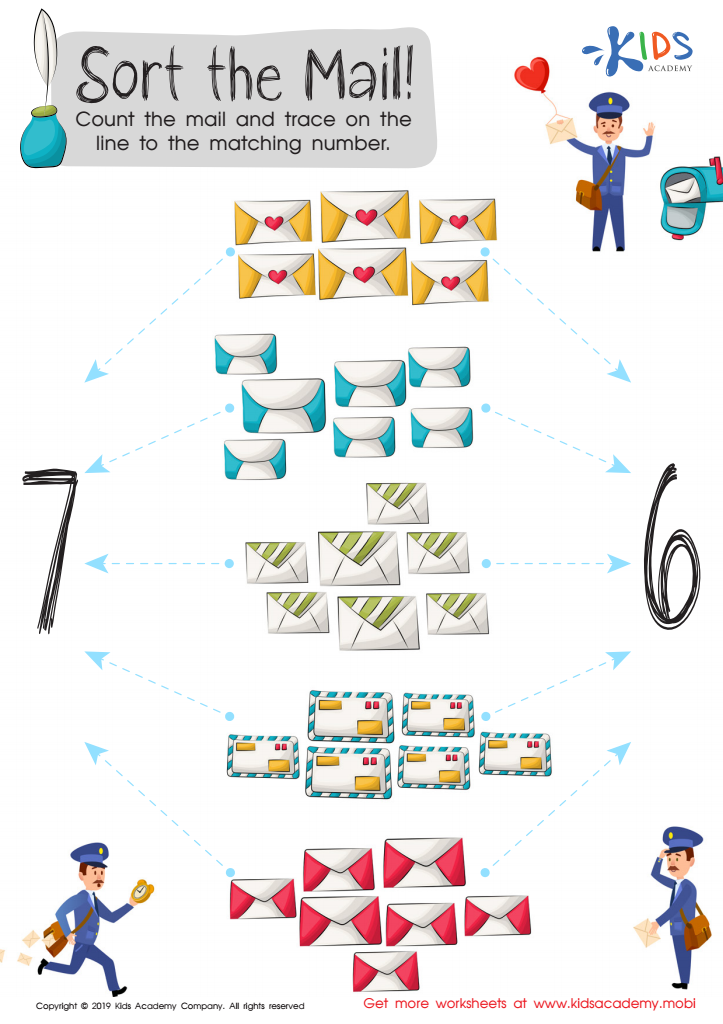
Sort the Mail Worksheet




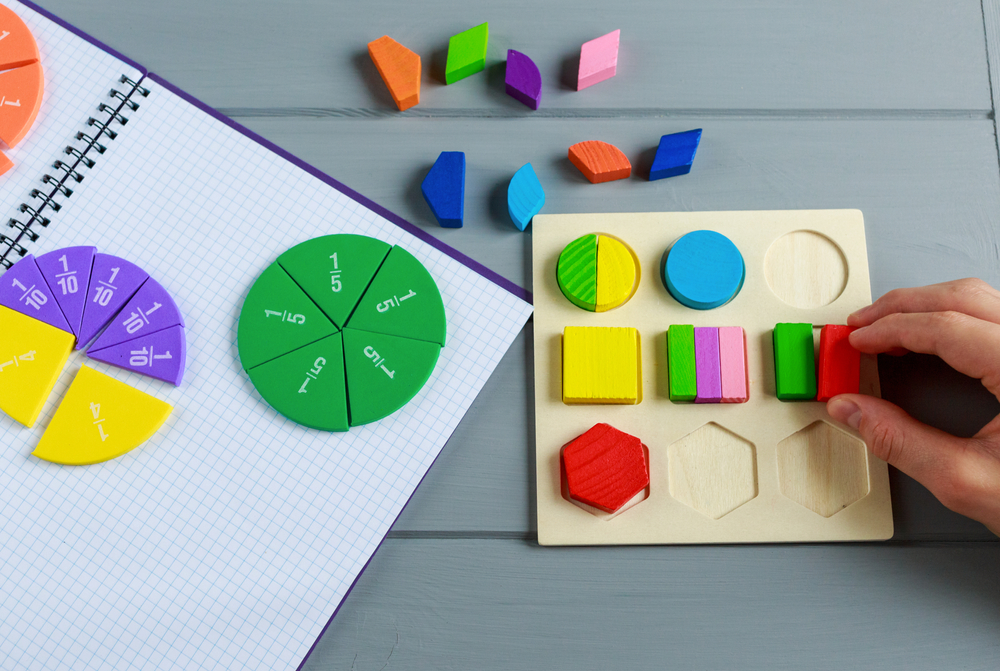



Sorting skills are fundamental cognitive abilities that play a critical role in a child's development, and this is why parents and teachers should prioritize them for children ages 6-9. At this stage, children are developing their basic mathematical and analytical skills, and sorting activities help to reinforce these abilities. Sorting numbers helps children to recognize patterns, make comparisons, and understand sequences, which are essential for more complex mathematical concepts later on, such as addition, subtraction, multiplication, and division.
When children sort numbers, they are not just learning numeracy. They are also developing critical-thinking skills. Identifying the characteristics that differentiate one number from another, and organizing them according to defined criteria, involves logical reasoning—a skill that transfers across all areas of learning. Additionally, sorting helps to improve attention to detail and problem-solving abilities.
Moreover, fostering these skills at a young age builds a solid foundation for more advanced sorting and classification activities in subjects like science and reading. The organizational skills developed through sorting tasks also help in day-to-day activities, making children better equipped to handle both schoolwork and life’s everyday tasks. Encouraging sorting activities can enable a holistic approach to childhood development, blending academic competence with practical life skills.








