Understanding skip-counting Numbers Worksheets for Ages 6-9
3 filtered results
-
From - To
Boost students' numerical fluency with our "Understanding Skip-Counting Numbers Worksheets for Ages 6-9". Perfectly curated, these worksheets introduce young learners to the essential concept of skip-counting, fostering strong mathematical foundations. Through engaging activities, kids practice counting by 2s, 5s, and 10s, enhancing their ability to recognize patterns, perform basic arithmetic, and tackle more complex problems. Tailored specifically for ages 6-9, our skip-counting resources make learning interactive and fun, ensuring children grasp the concept with ease and confidence. Empower your child’s math skills with these comprehensive, educator-designed skip-counting worksheets.
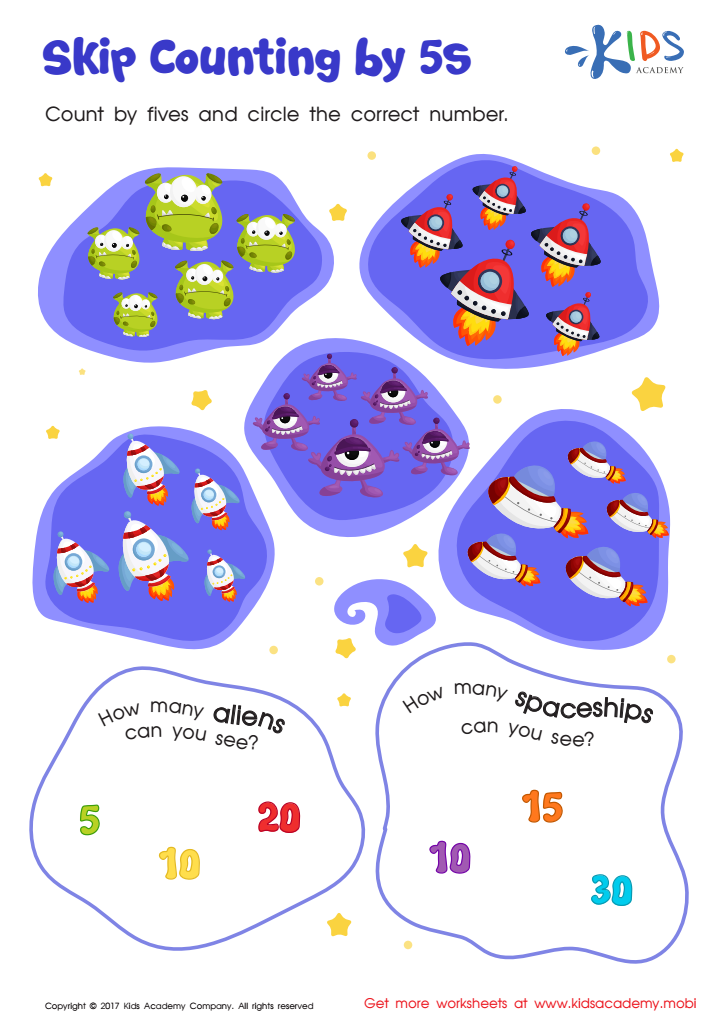
Skip Counting by 5s: Aliens and Spaceships Printable
 Assign to My Students
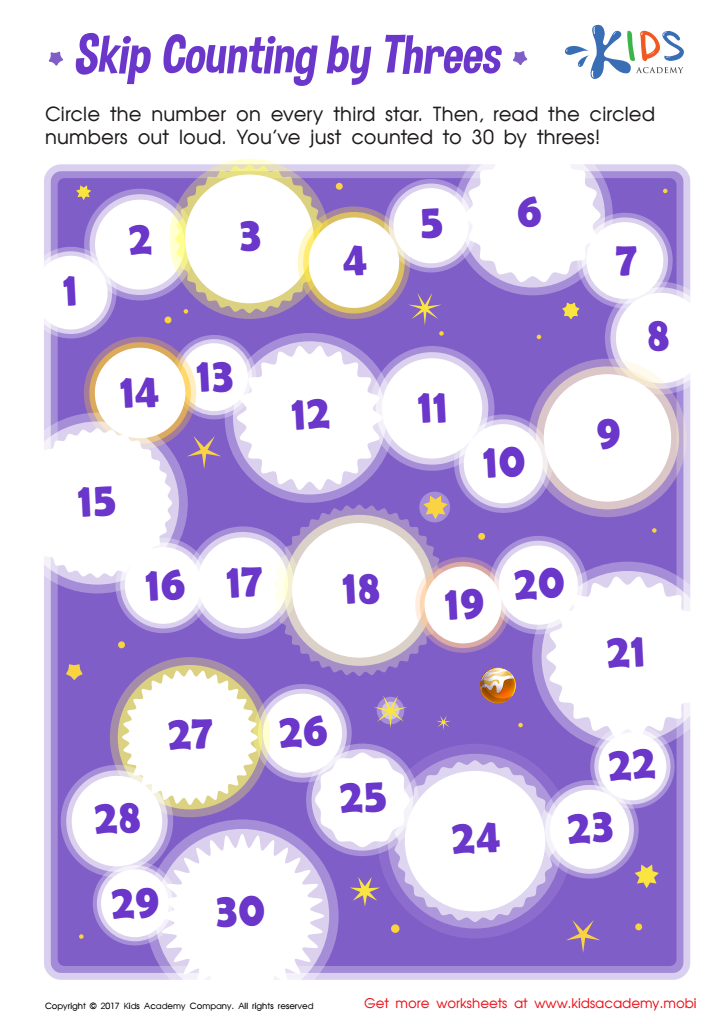
Skip Counting By Three Printable
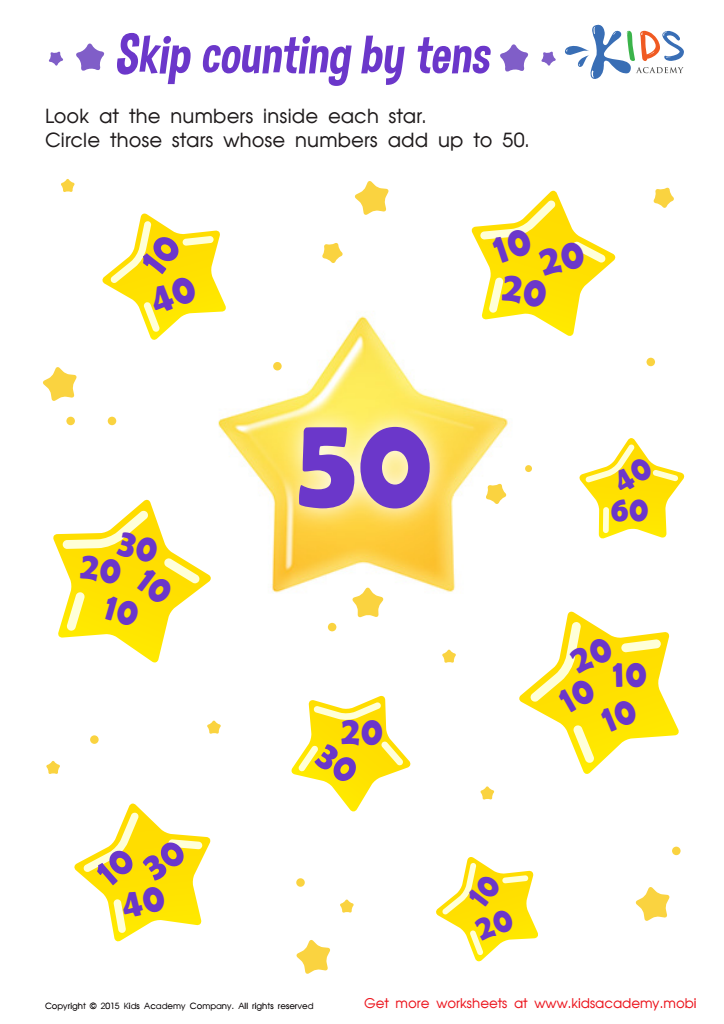
Learn Dozens: Skip Counting by Tens Printable








Understanding skip-counting for children ages 6-9 is pivotal in laying a solid foundation for their arithmetic and mathematical skills. Skip-counting, which involves counting forward by numbers other than one (e.g., by 2s, 5s, or 10s), is essential because it introduces the concept of patterns in numbers, fostering a deeper comprehension of multiplication and division. By mastering skip-counting, children develop fluency with numbers and gain a head start in recognizing and working with multiples, an important skill for tackling more complex math later on.
Practicing skip-counting helps build number sense, which is the ability to understand, relate, and connect numbers. This proficiency is vital in real-world scenarios, such as grouping items, even in play and daily activities like distributing snacks. Moreover, skip-counting is directly connected to understanding the base-10 number system, which simplifies tasks like addition and subtraction involving larger numbers.
For parents and teachers, focusing on skip-counting can make math more engaging and less intimidating for children. It lays a robust groundwork, helping to ensure that young learners stay curious and can appreciate the logic and rhythm of math, setting them on a path for academic success. Overall, fostering these early mathematical skills contributes to a child’s confidence and enthusiasm in learning, extending far beyond just math.








