Understanding tally marks Numbers Worksheets for Ages 6-9
5 filtered results
-
From - To
Introduce your young learners to the world of tally marks with our engaging "Understanding Tally Marks Numbers Worksheets" tailored for ages 6-9. These educational resources make math fun and interactive, helping kids easily grasp tally marks and number concepts through hands-on practice. Ideal for classroom or home use, each worksheet features clear instructions and exciting activities that cater to different learning styles. By breaking down the basics of tally marks, these worksheets not only make counting enjoyable but also lay a strong foundation for more advanced math skills. Unlock your child's potential and boost their confidence in mathematics today!
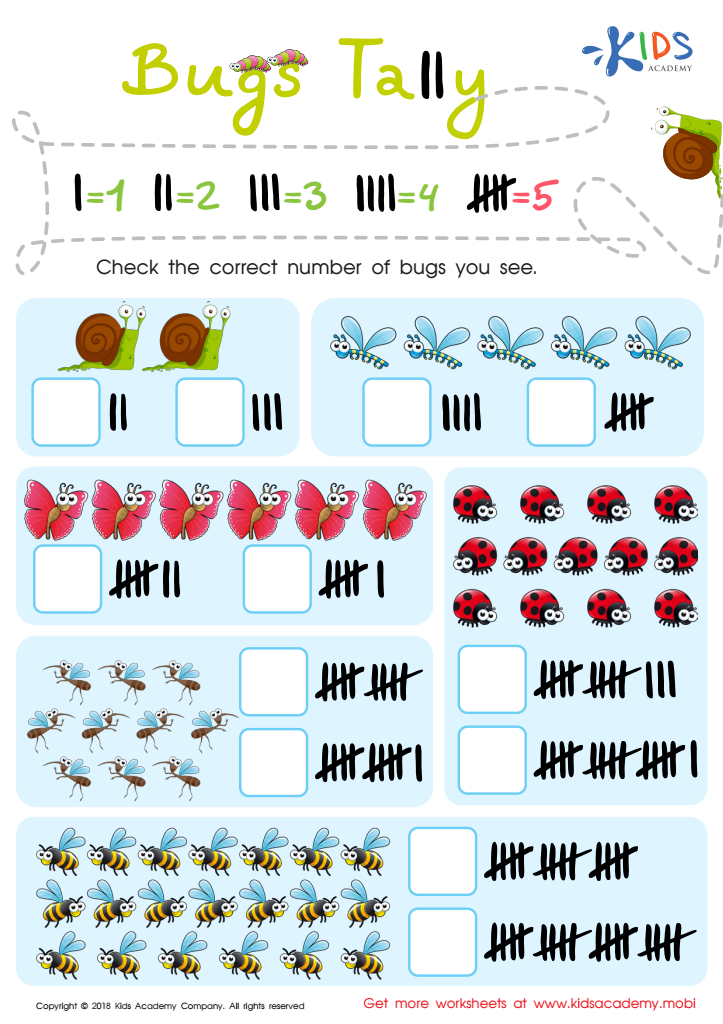
Bugs Tally Worksheet
 Assign to My Students
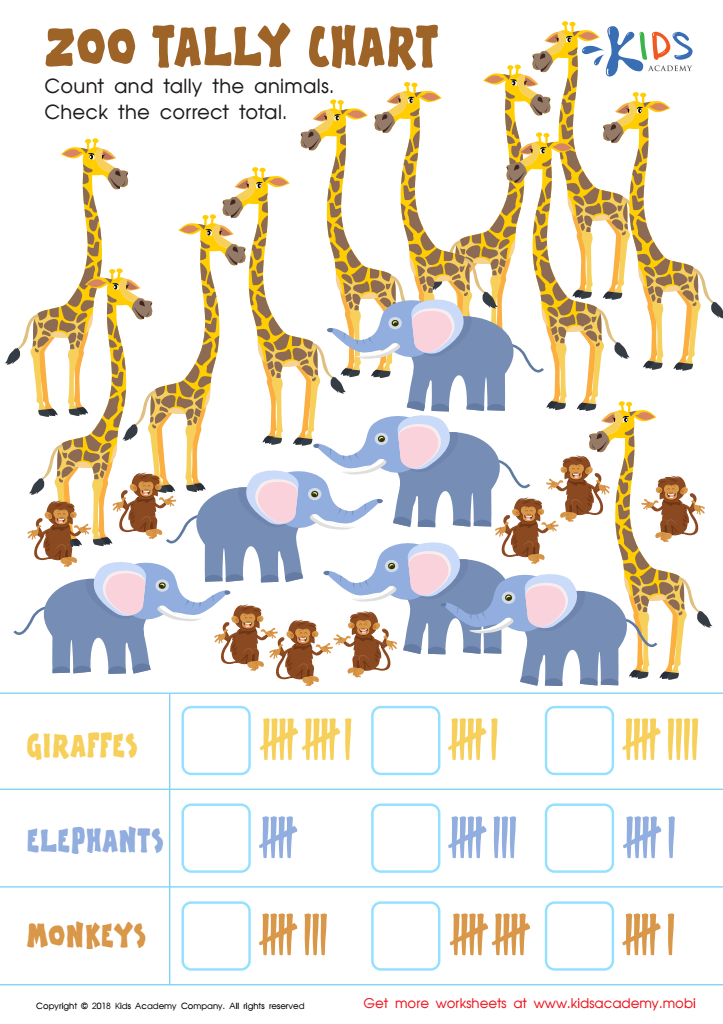
Zoo Tally Chart Worksheet
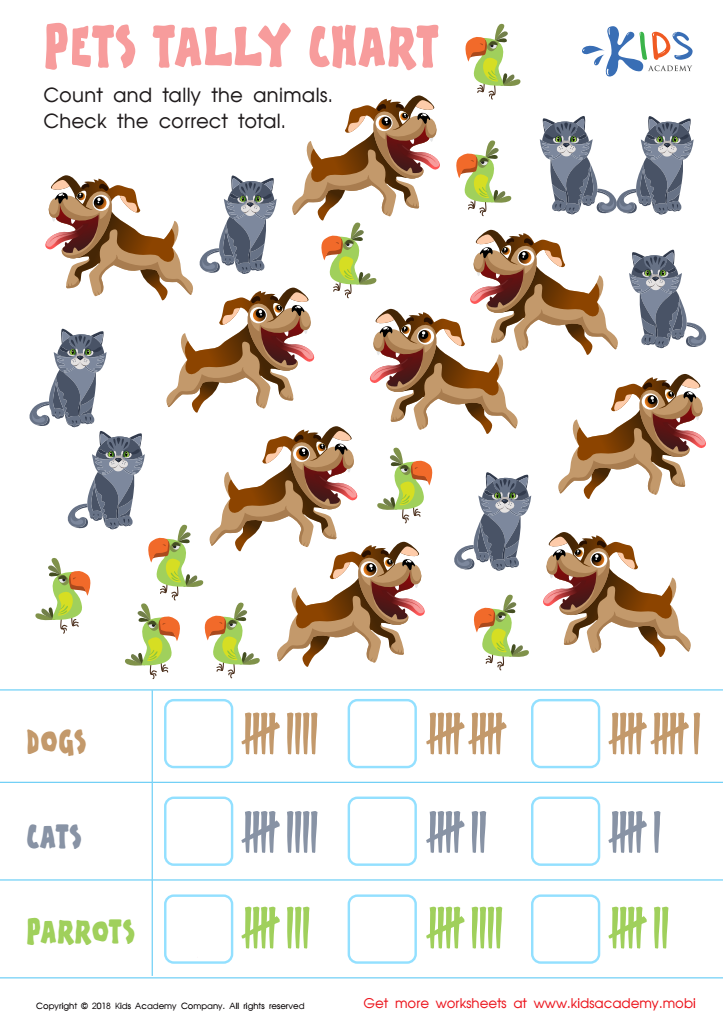
Pets Tally Chart Worksheet
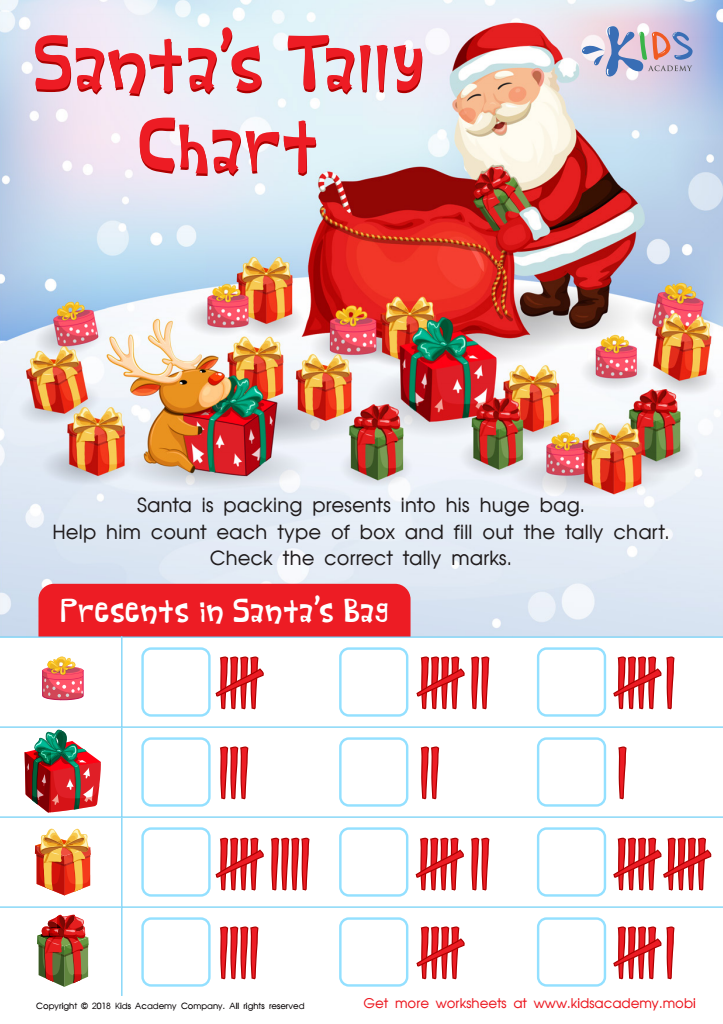
Santa Tally Chart Worksheet
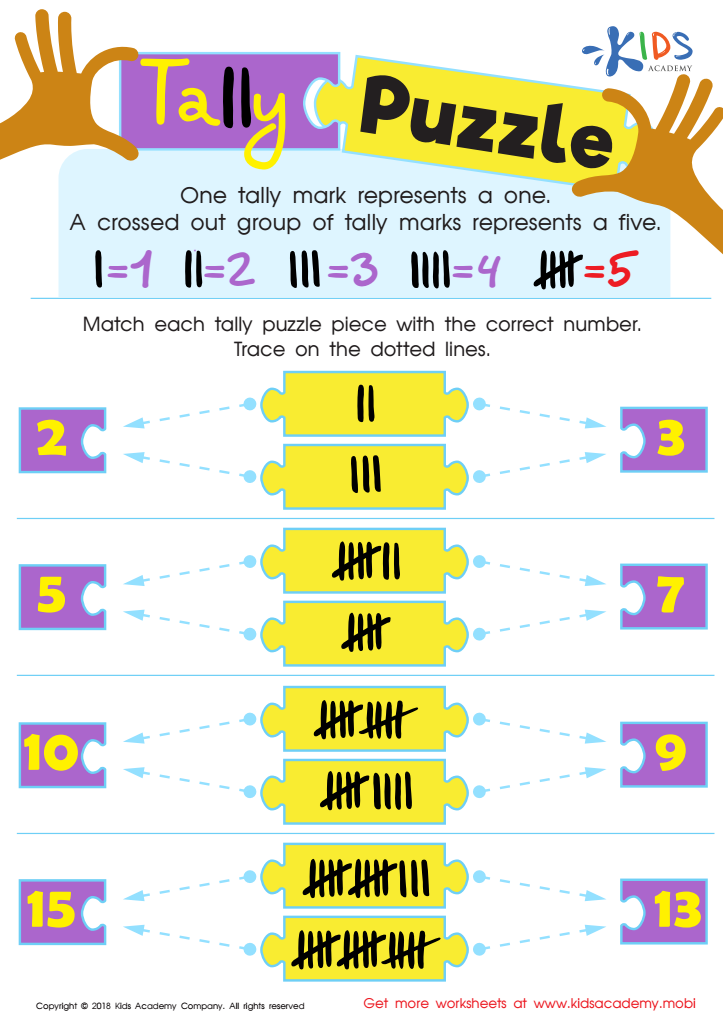
Tally Puzzle Worksheet






.jpg)
Understanding tally marks is crucial for children aged 6-9, and parents and teachers should prioritize teaching this concept for several reasons. First, tally marks serve as a foundation for basic counting and are an accessible way for young learners to grasp the concept of grouping in fives. This visual representation helps children easily count and track numbers, enhancing their fundamental arithmetic skills. For example, by organizing groupings of five, they can quickly understand and manage large quantities, fostering a more intuitive sense of numbers.
Second, tally marks are a practical tool for everyday problem-solving. They enable children to keep track of items efficiently, which is a valuable skill not only in academics but also in real-life situations such as tracking scores in games or counting specific objects.
Moreover, understanding tally marks builds up a child's ability to grasp more complex mathematical concepts later on, such as multiplication and division. Early exposure to different counting methods, including tally marks, enhances cognitive flexibility and mathematical reasoning. It makes math more engaging, as children can physically see and handle the counts.
Finally, parents and teachers who emphasize the importance of tally marks contribute to a more well-rounded mathematical foundation, setting the stage for future success in the subject. Through consistent practice and encouragement, they help children become confident and competent in their numerical abilities.








