Comparing object weights Math Worksheets for Ages 6-9
3 filtered results
-
From - To
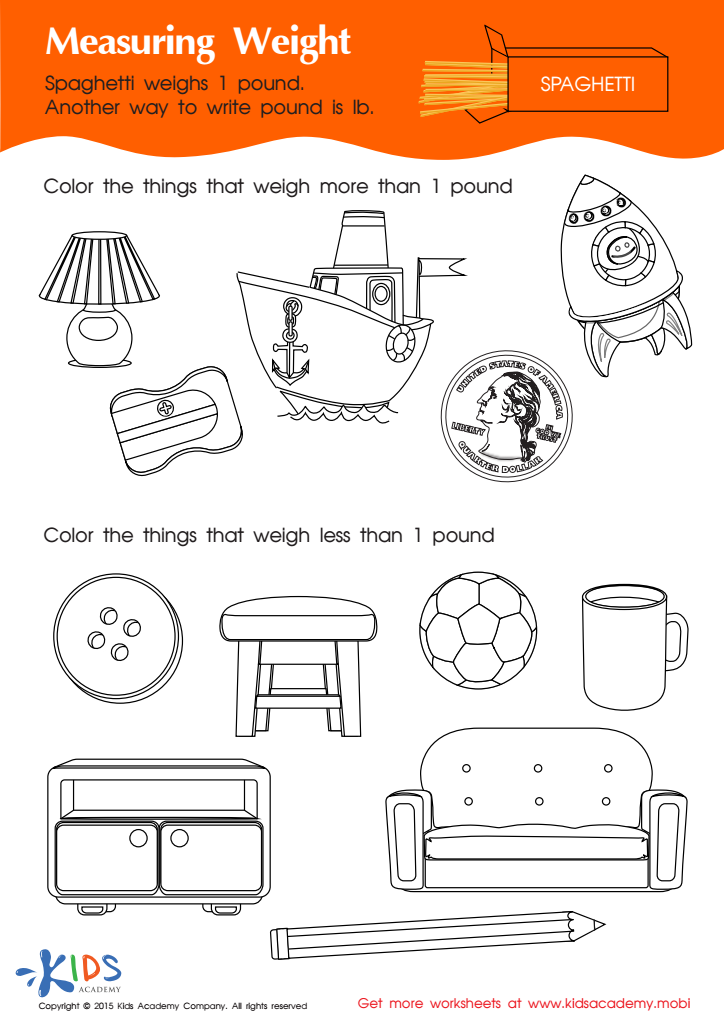
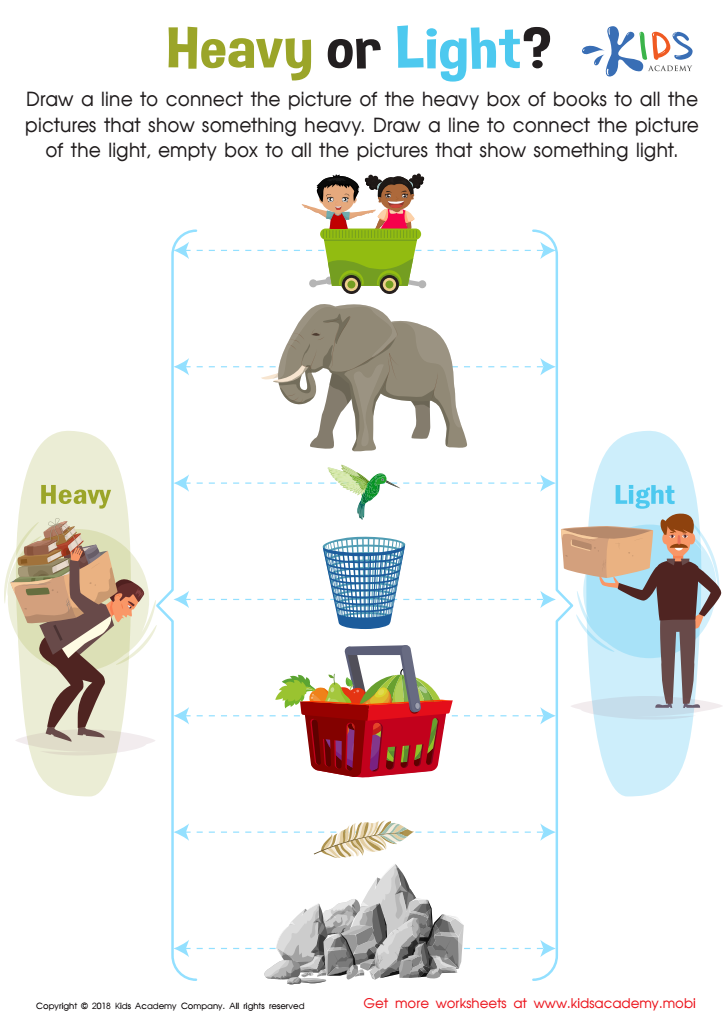
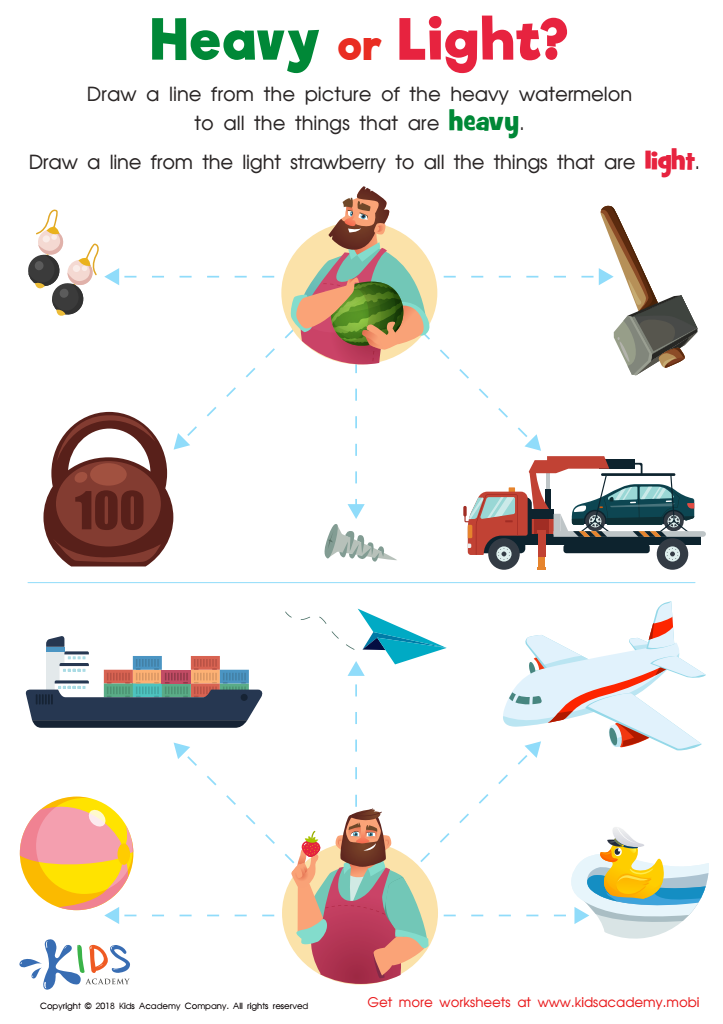
Discover exciting and educational Comparing Object Weights Math Worksheets designed for children aged 6-9! With engaging activities and vibrant illustrations, these sheets help young learners enhance their math skills by comparing the weights of various objects. Perfect for home or classroom use, the worksheets promote critical thinking and practical understanding of weight measurement. Your child will have fun while mastering this crucial math concept through hands-on practice. Start exploring our expertly crafted worksheets to give your little one a head start in math. Boost confidence and foster a love for learning with our comprehensive selection today!
 Assign to My Students
Heavy or Light? Worksheet
Heavy or Light? Worksheet







Comparing object weights is a vital concept in early childhood education for several reasons. Firstly, it introduces fundamental math skills that form the building blocks for more advanced concepts. Understanding weight comparisons fosters critical thinking and problem-solving abilities, as children learn to observe, estimate, and make decisions based on evidence.
For children ages 6-9, this skill goes beyond mere arithmetic. It helps them grasp the concept of measurement more concretely. Engaging them in activities like weighing objects on balance scales can ignite curiosity and enhance experiential learning. This tactile learning process is aligned with how young children naturally explore the world.
Additionally, learning to compare object weights connects to other core areas of the curriculum such as science and literacy. For instance, discussing why some objects are heavier involves scientific principles like density and volume, inviting interdisciplinary learning.
Furthermore, these activities support vocabulary development. Words like "heavier," "lighter," "equal," and "compare" become part of their daily language, improving both their communication skills and cognitive development.
Involving parents in this learning process fosters a supportive home-school connection. When children practice comparing weights at home, using everyday objects, learning becomes relevant and fun. This shared educational experience can enhance family bonding and reinforce children's confidence, curiosity, and enthusiasm for learning.








