Unlock your child's mathematical potential with our Enhance Comprehension Math Worksheets for ages 6-9! Designed to stimulate critical thinking and boost understanding, these worksheets delve into fundamental math concepts in an engaging way. Children will enjoy interactive activities that reinforce skills like addition, subtraction, and problem-solving. Tailored specifically for young learners, each worksheet promotes comprehension through visual aids and relatable scenarios. Perfect for home or classroom use, our resources ensure a fun and effective way to master math fundamentals, laying a strong foundation for future success. Start enhancing comprehension and cultivate a love for learning math today!
Check out this FREE Trial Lesson on Math for age 6-9!

P

Favorites
With answer key
Interactive
  • 6-9
  • Enhance comprehension
  • Math
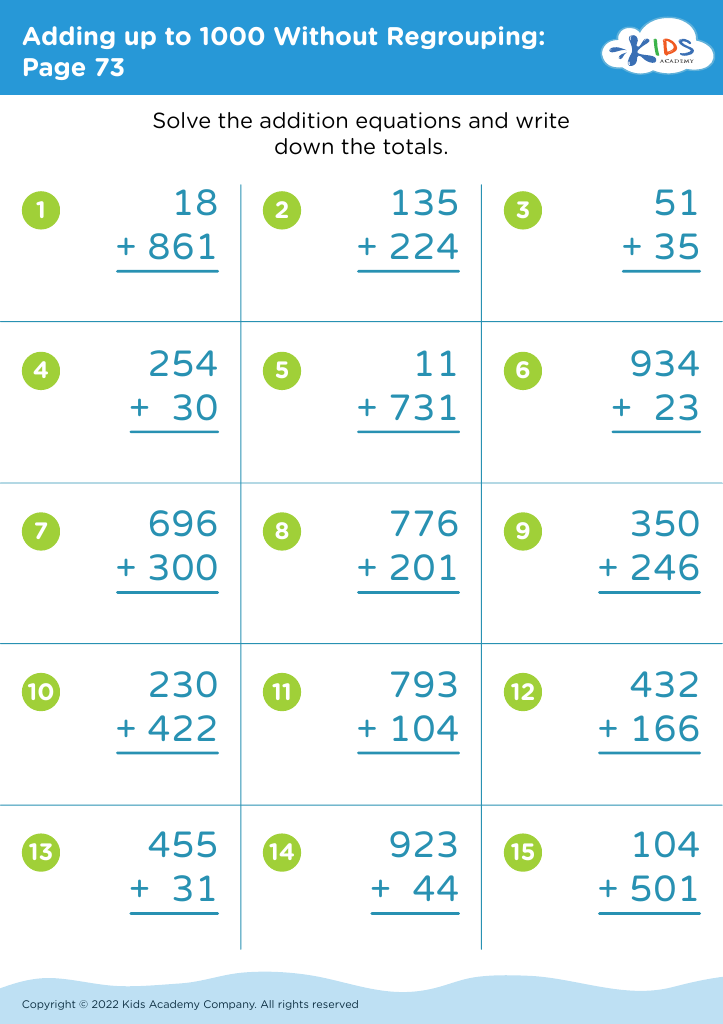
Adding up to 1000 Without Regrouping: Page 73
Worksheet
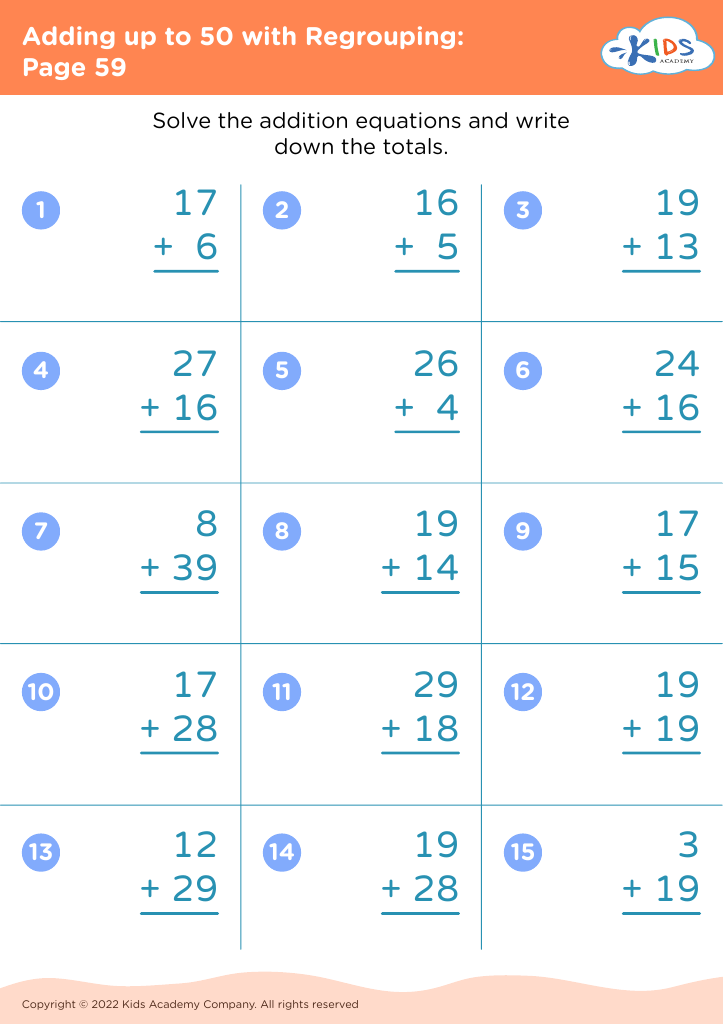
Adding up to 50 with Regrouping: Page 59
Worksheet
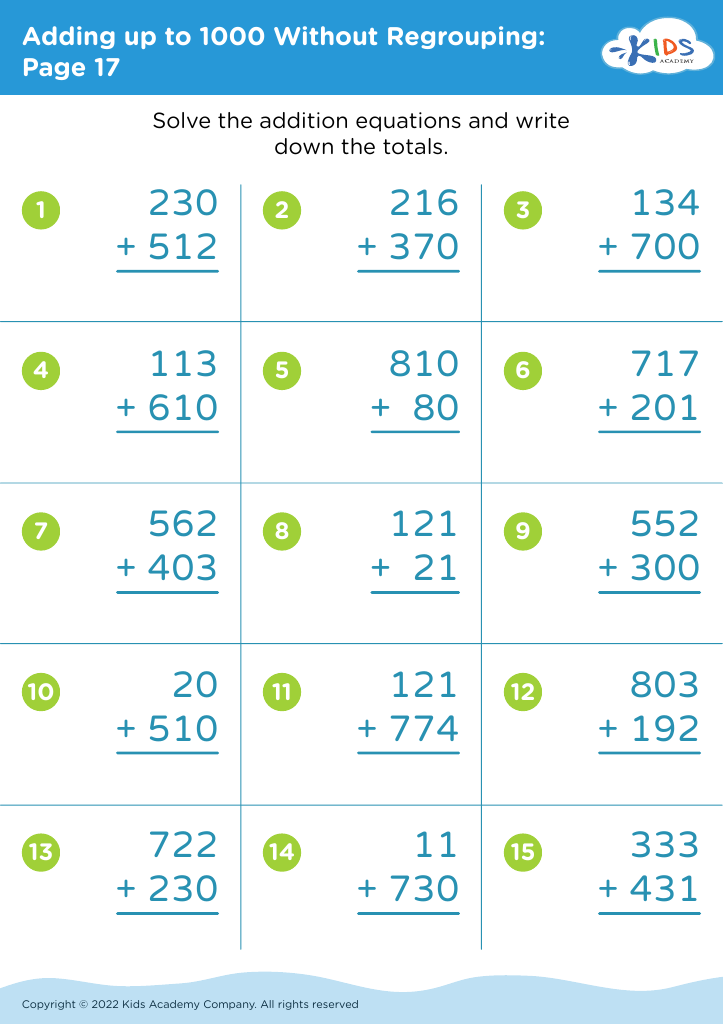
Adding up to 1000 Without Regrouping: Page 17
Worksheet
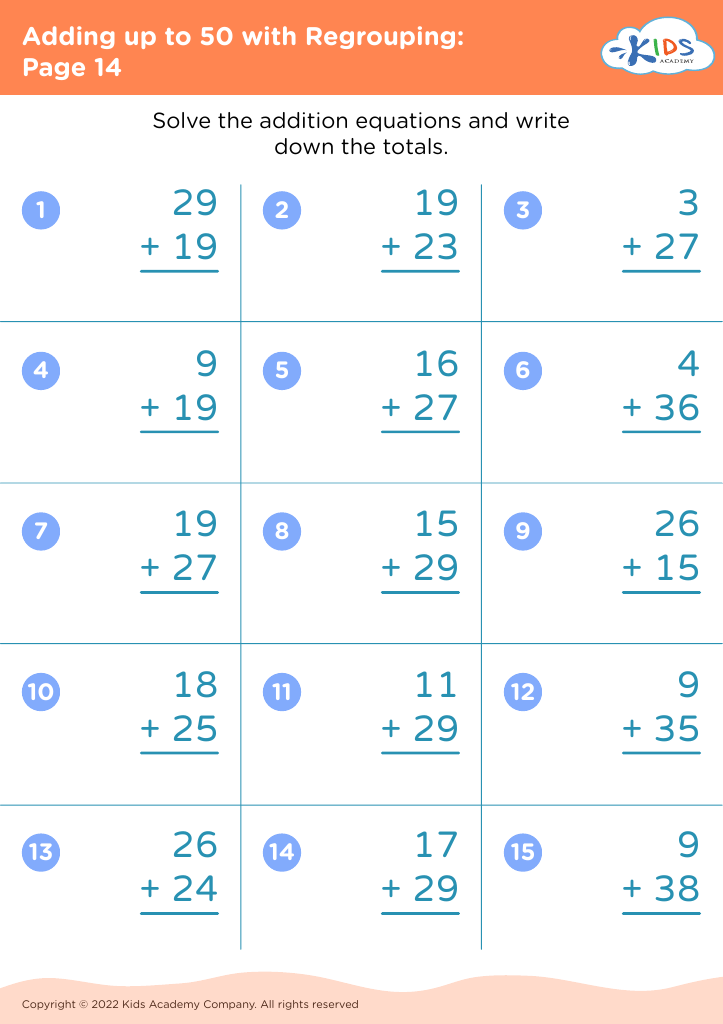
Adding up to 50 with Regrouping: Page 14
Worksheet
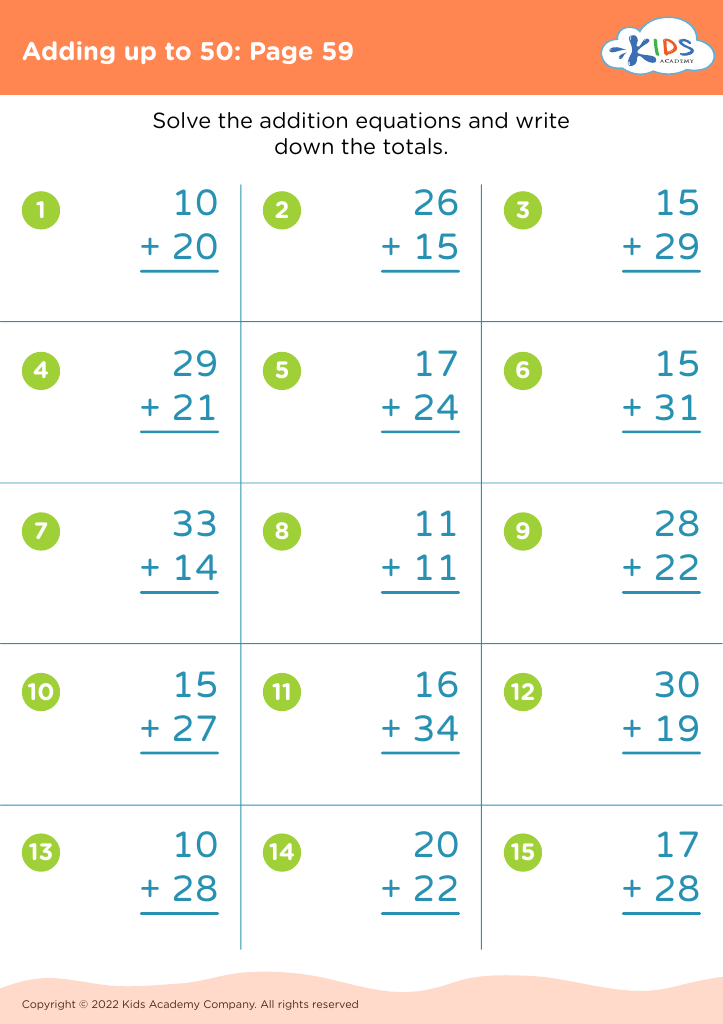
Adding up to 50: Page 59

Adding up to 50: Page 59

Adding up to 50: Page 59
Worksheet
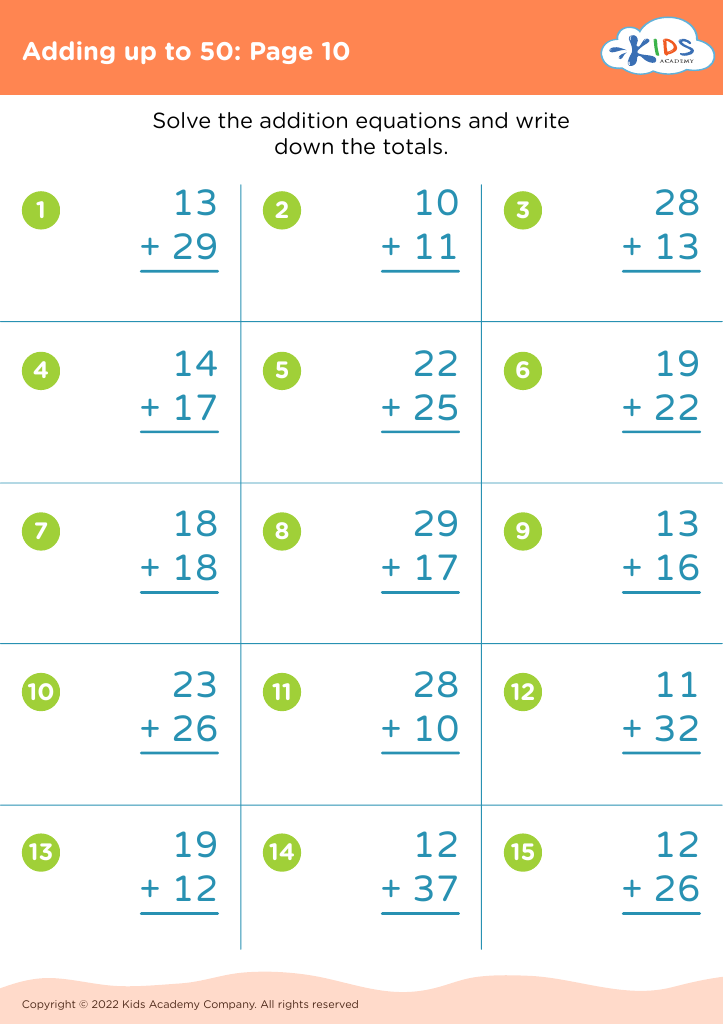
Adding up to 50: Page 10

Adding up to 50: Page 10

Adding up to 50: Page 10
Worksheet
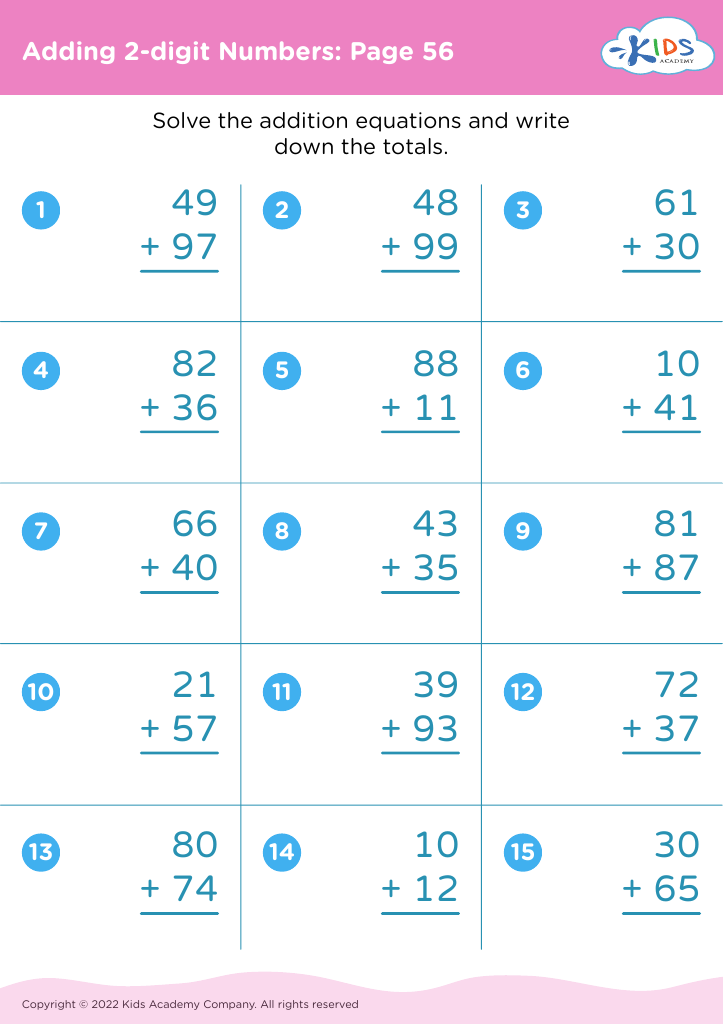
Adding 2-digit Numbers: Page 56

Adding 2-digit Numbers: Page 56

Adding 2-digit Numbers: Page 56
Worksheet
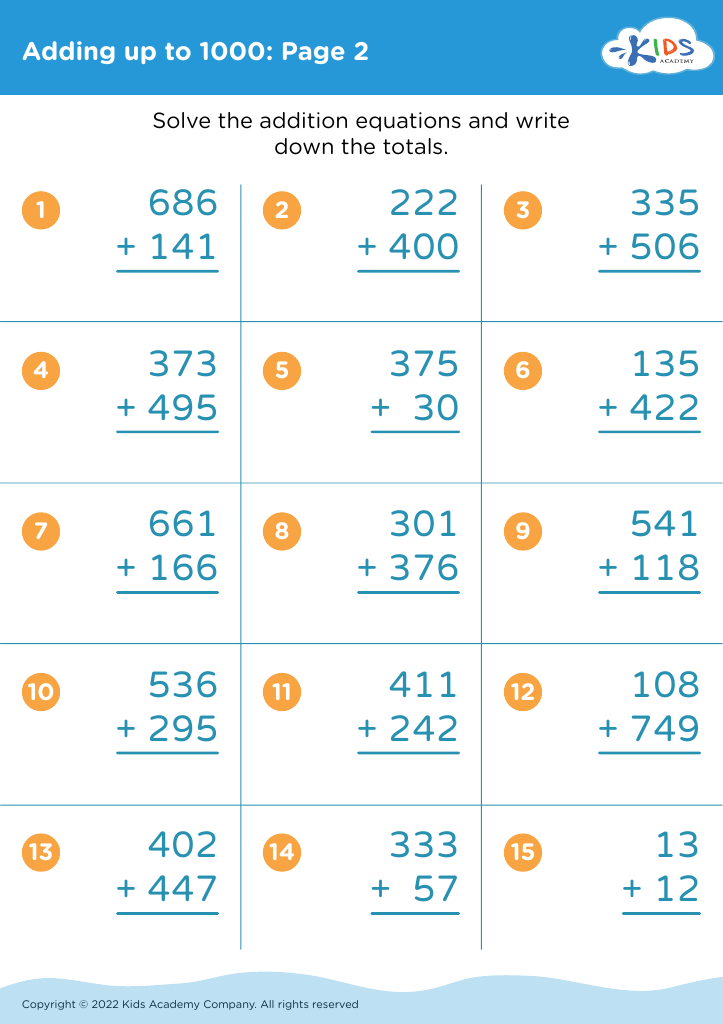
Adding up to 1000: Page 2

Adding up to 1000: Page 2

Adding up to 1000: Page 2
Worksheet
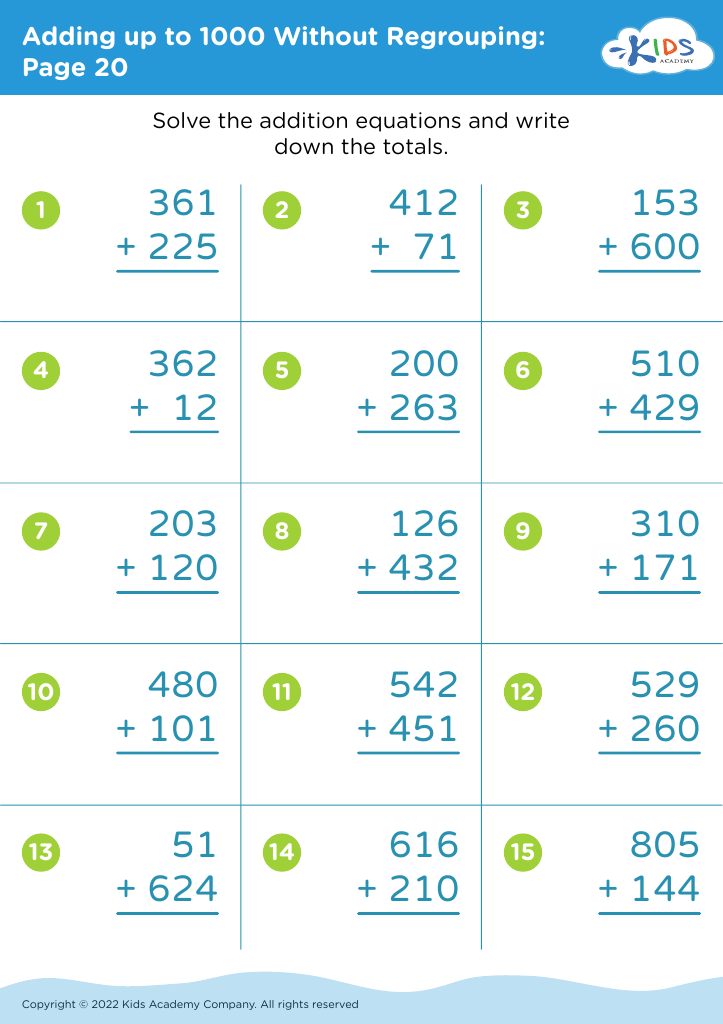
Adding up to 1000 Without Regrouping: Page 20
Worksheet
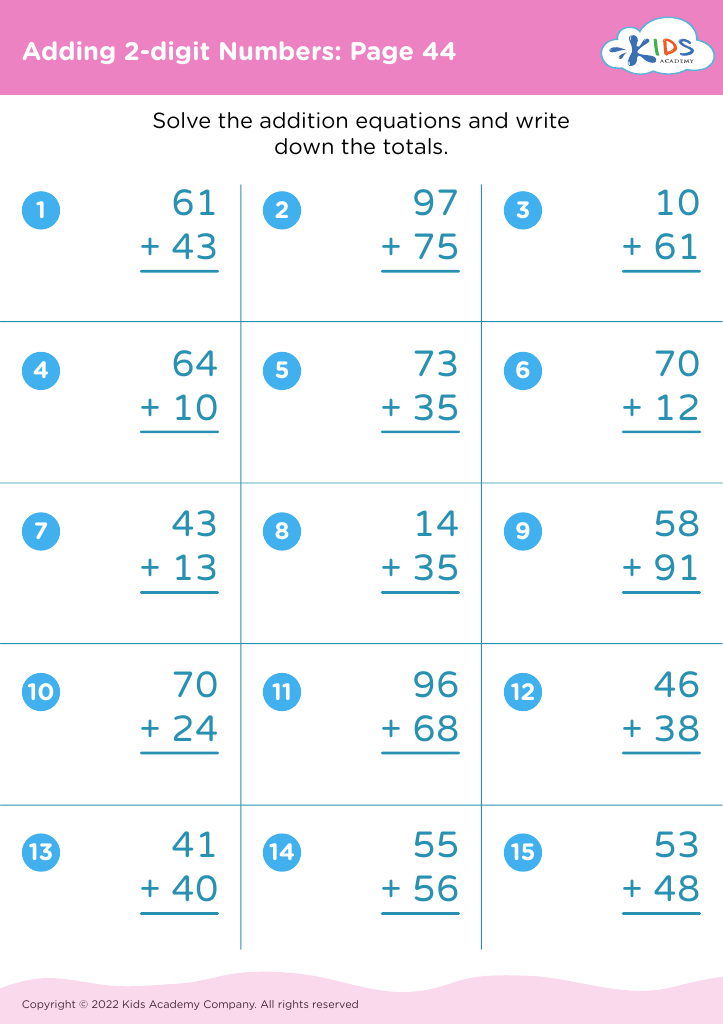
Adding 2-digit Numbers: Page 44

Adding 2-digit Numbers: Page 44

Adding 2-digit Numbers: Page 44
Worksheet
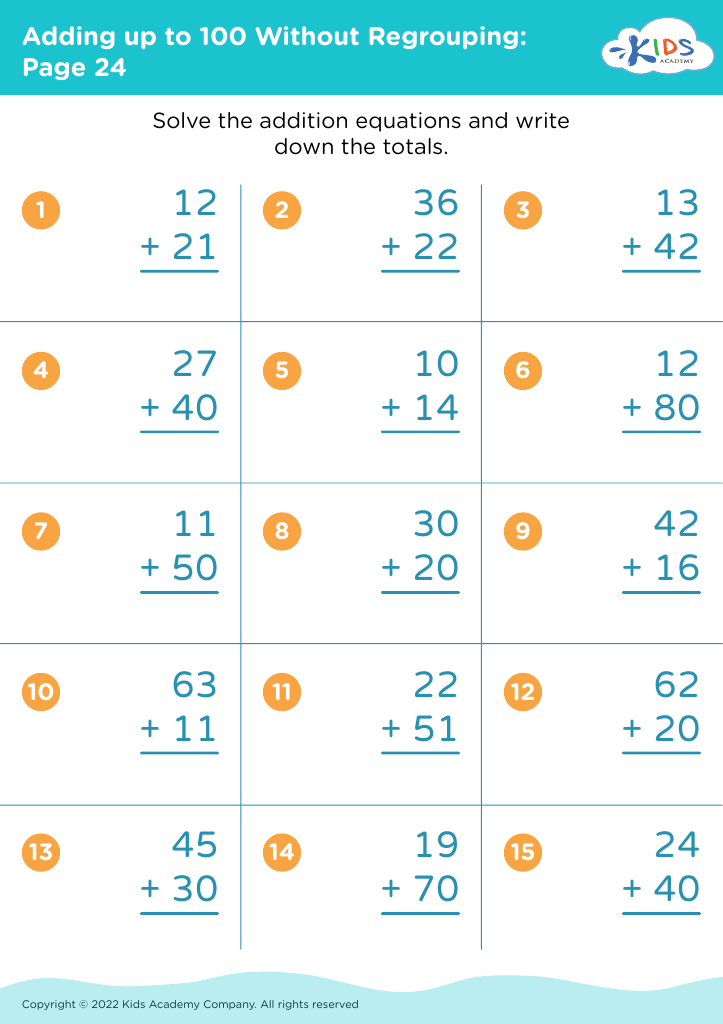
Adding up to 100 Without Regrouping: Page 24
Worksheet
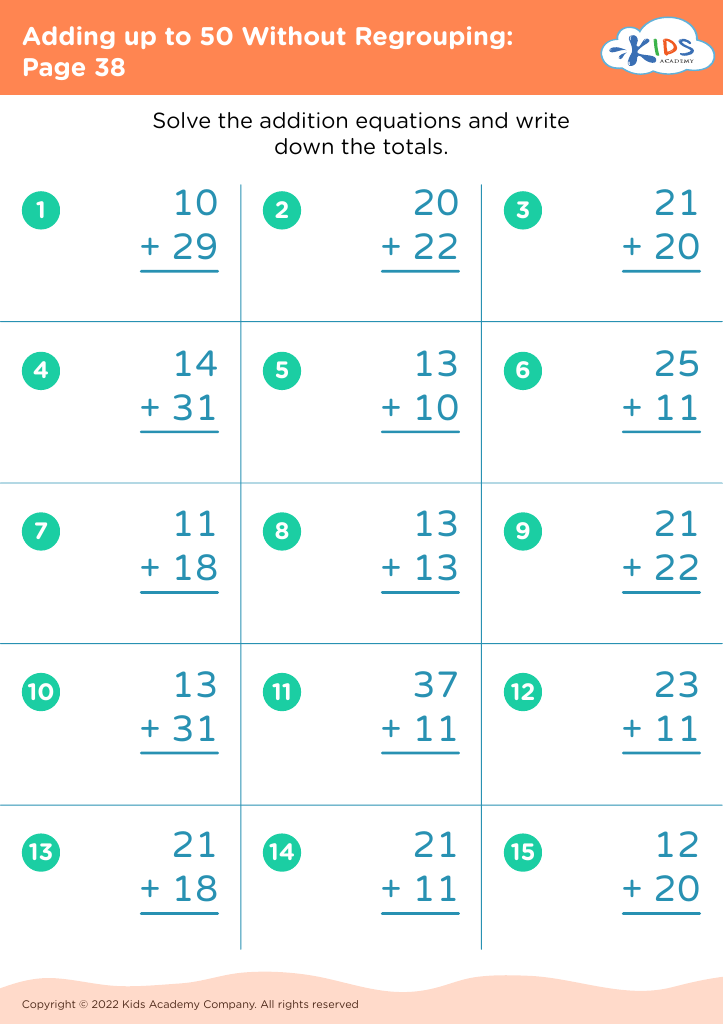
Adding up to 50 Without Regrouping: Page 38
Worksheet
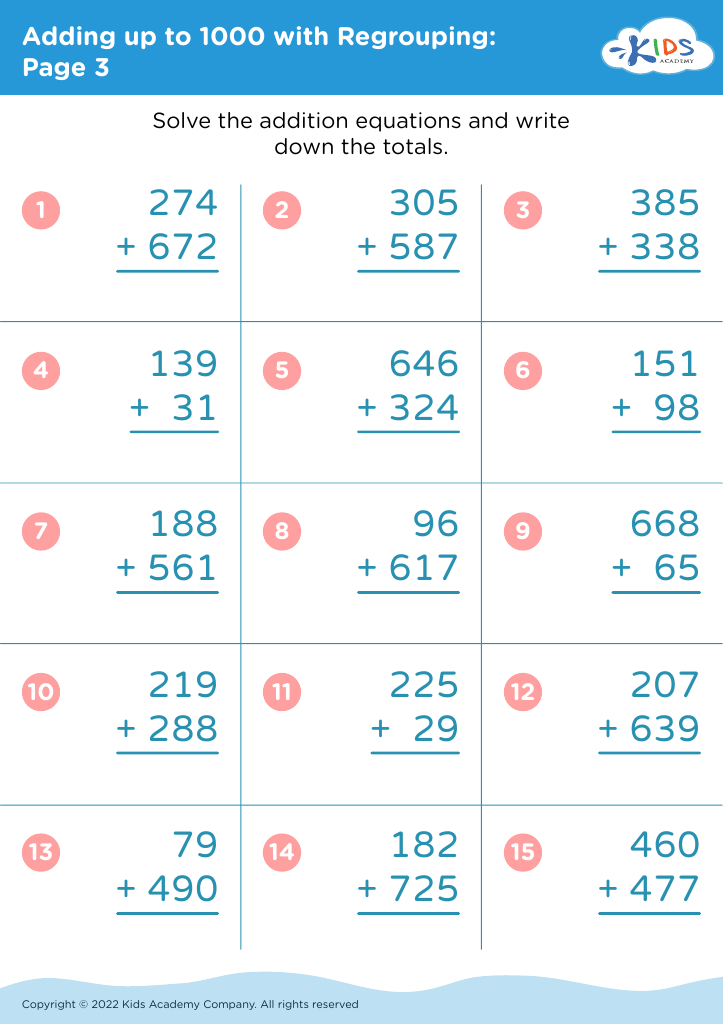
Adding up to 1000 with Regrouping: Page 3
Worksheet
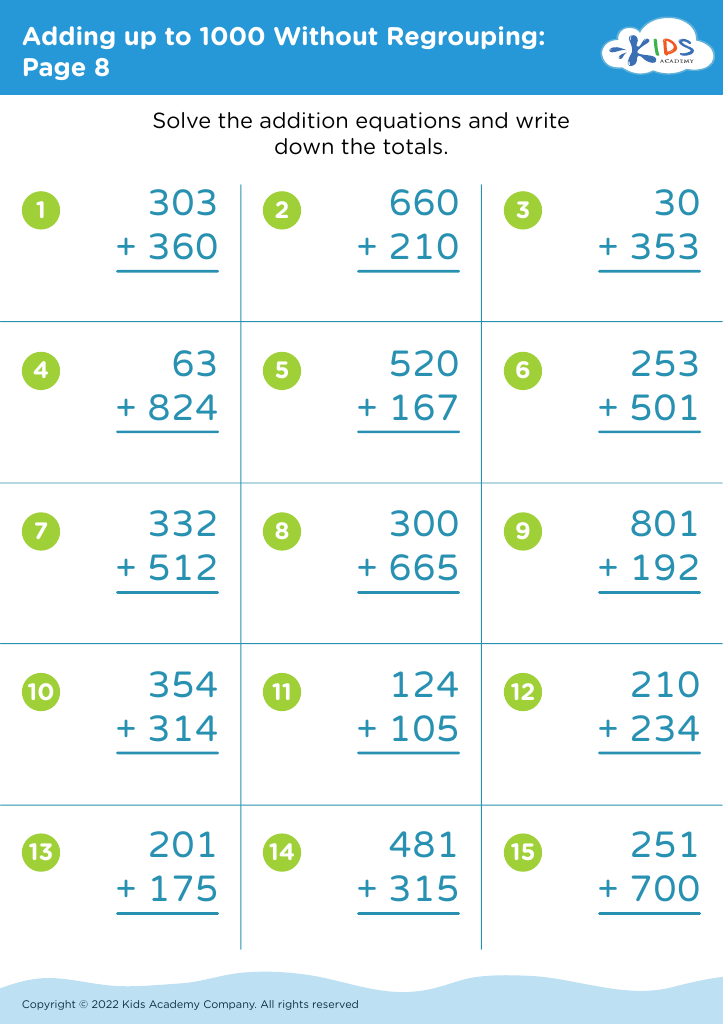
Adding up to 1000 Without Regrouping: Page 8
Worksheet
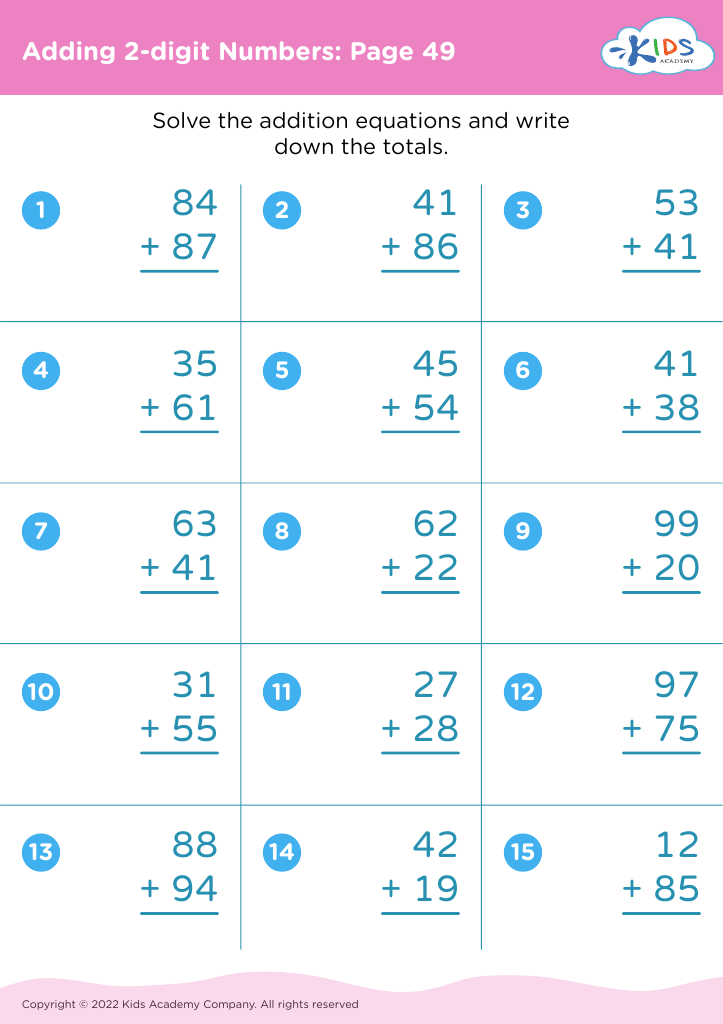
Adding 2-digit Numbers: Page 49

Adding 2-digit Numbers: Page 49

Adding 2-digit Numbers: Page 49
Worksheet
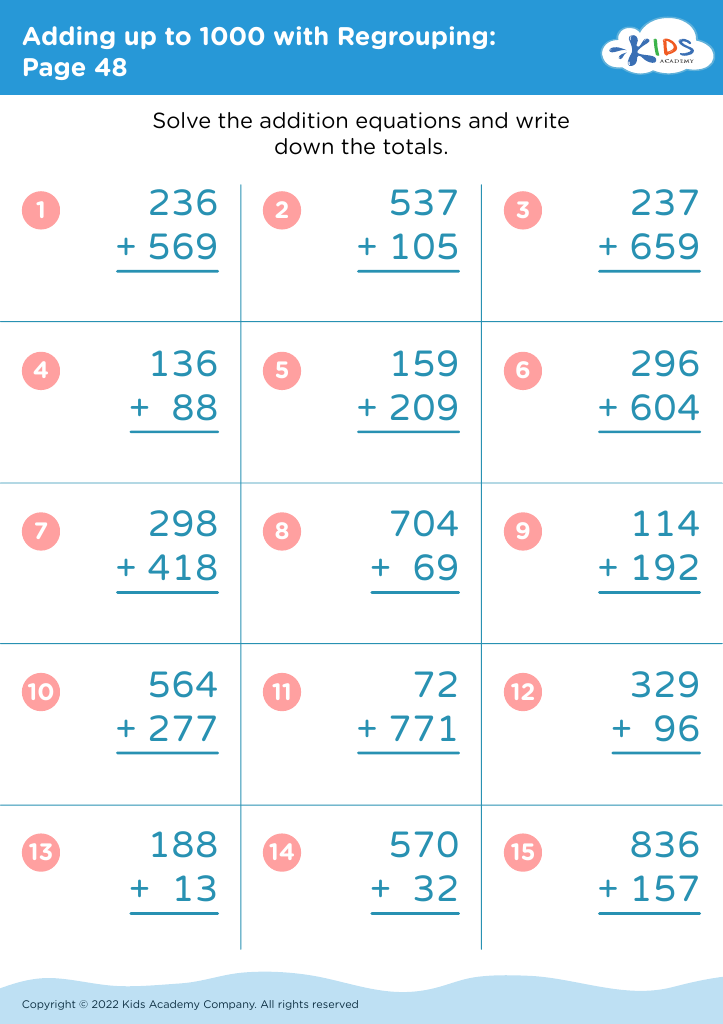
Adding up to 1000 with Regrouping: Page 48
Worksheet
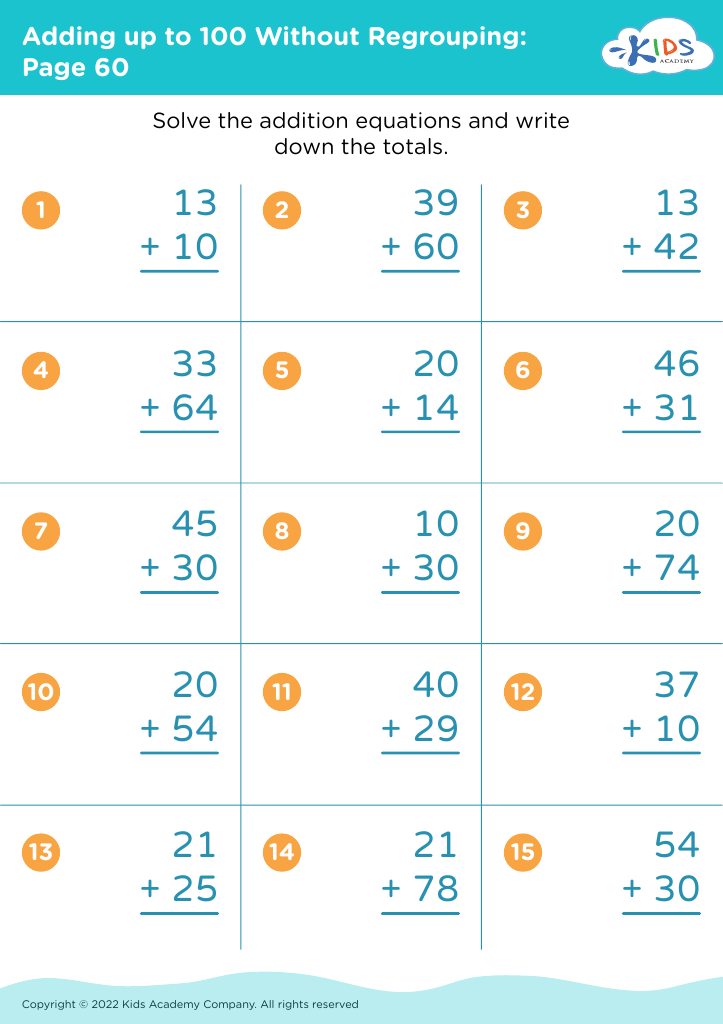
Adding up to 100 Without Regrouping: Page 60
Worksheet


Enhancing comprehension in math for ages 6-9 is crucial, as this age group lays the foundation for future mathematical understanding and problem-solving skills. During these early years, children transition from concrete concepts and basic arithmetic to more abstract reasoning and operation. By focusing on comprehension, parents and teachers can foster a deeper understanding of mathematical concepts rather than mere rote memorization.

Promoting comprehension helps children to see the relationship between different mathematical ideas, thereby enhancing their ability to solve problems, analyze patterns, and apply math to real-life situations. It nurtures critical thinking, allowing learners to tackle various challenges with confidence and flexibility. Strong mathematical comprehension can also boost a child’s self-esteem and the likelihood of positive attitudes toward math, alleviating math anxiety as they progress in their education.

Additionally, a robust foundation in math comprehension sets the stage for their academic journey. Early interventions in comprehension can prevent gaps in learning, contributing to overall academic success. Ultimately, parents and teachers play a vital role in supporting children's mathematical growth, making it imperative to prioritize and nurture comprehension during these formative years.