Fine Motor Skills (coloring) Math Worksheets for Ages 6-9
6 filtered results
-
From - To
Unlock your child's creativity and learning with our Fine Motor Skills (Coloring) Math Worksheets designed for ages 6-9! These engaging worksheets combine artistic expression and essential math skills, making learning fun and effective. Children will develop their fine motor skills through captivating coloring activities while practicing important math concepts like counting, addition, and shapes. Our thoughtfully crafted worksheets encourage self-expression while reinforcing foundational numeracy. Perfect for home or classroom use, these resources help young learners gain confidence in their abilities. Explore our diverse collection today and watch your child thrive as they color their way to better math skills!
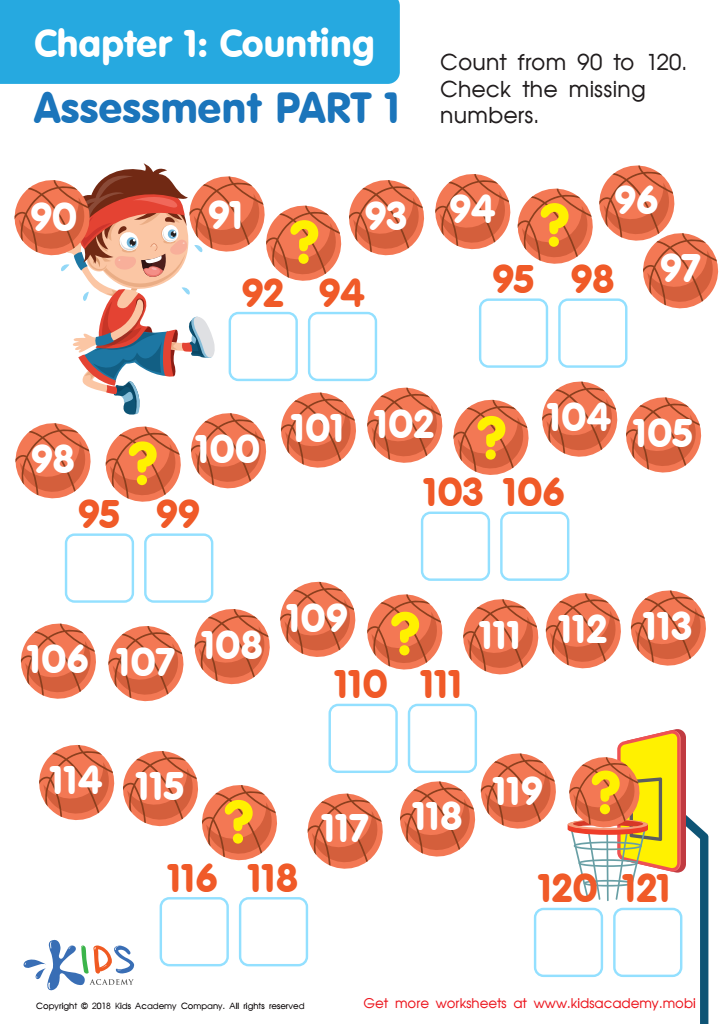
Counting Past 1: Assessment 1 Worksheet
 Assign to My Students
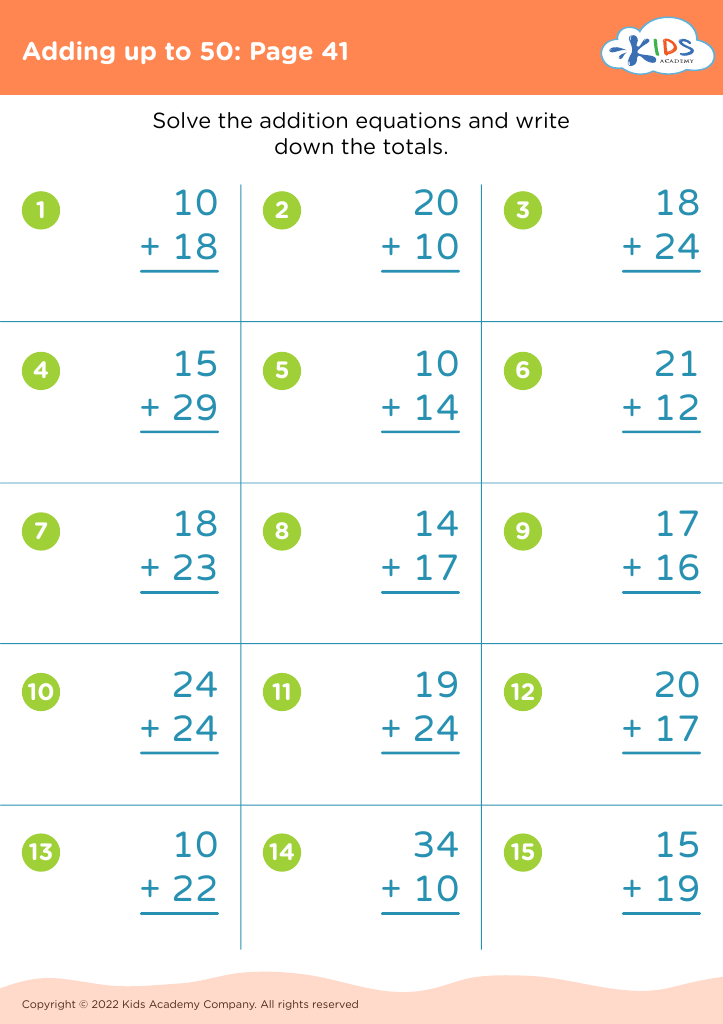
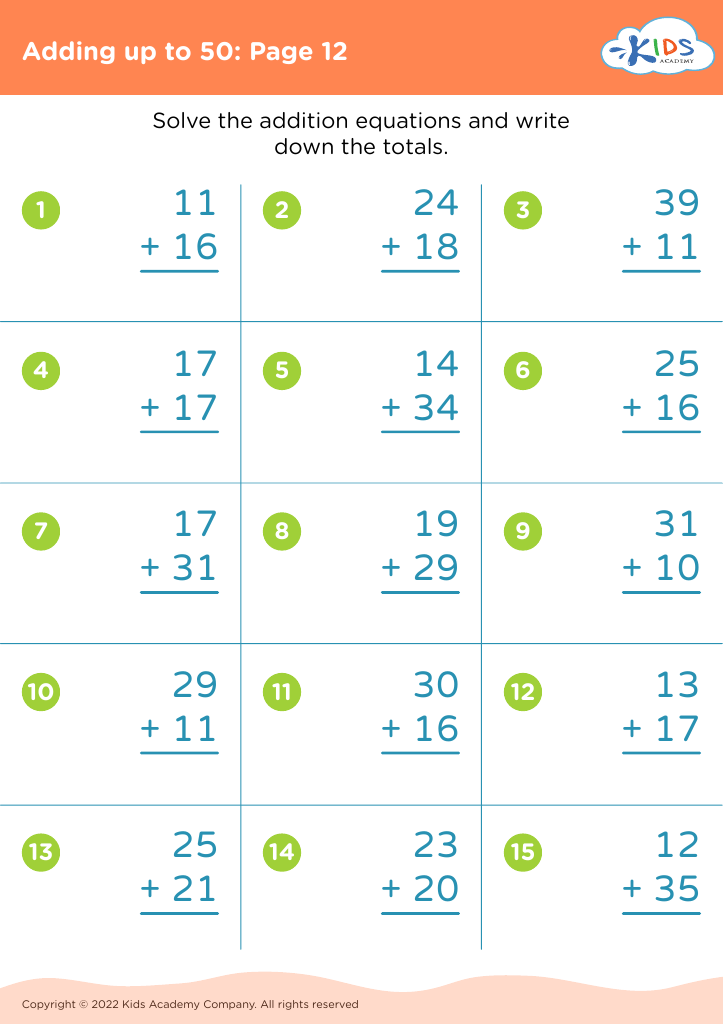
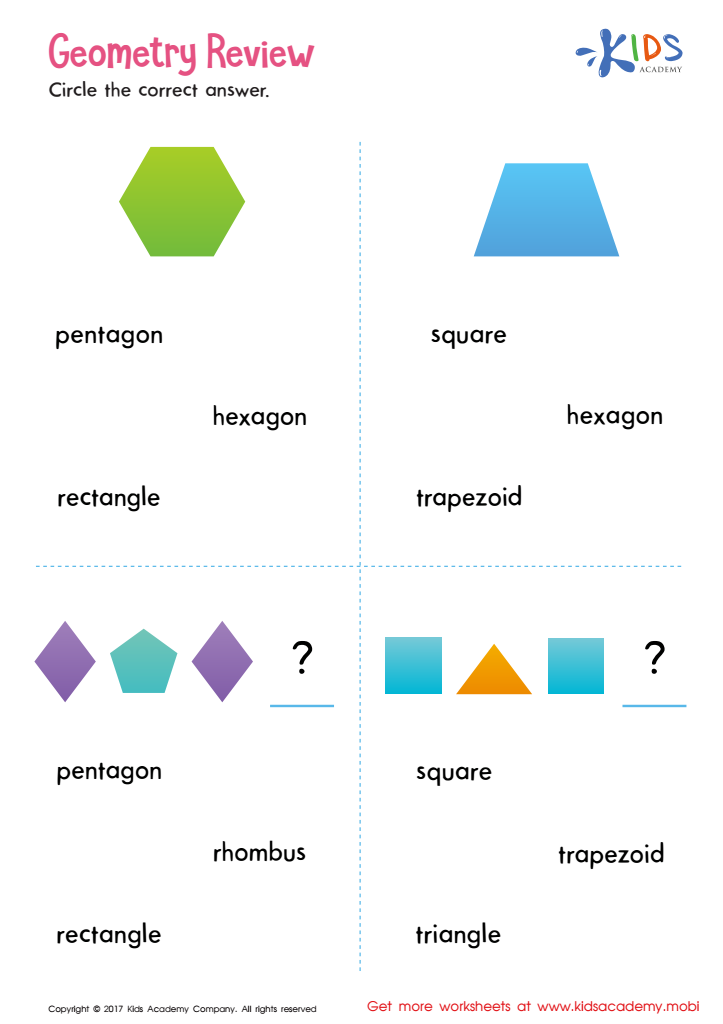
Geometry Review Printable
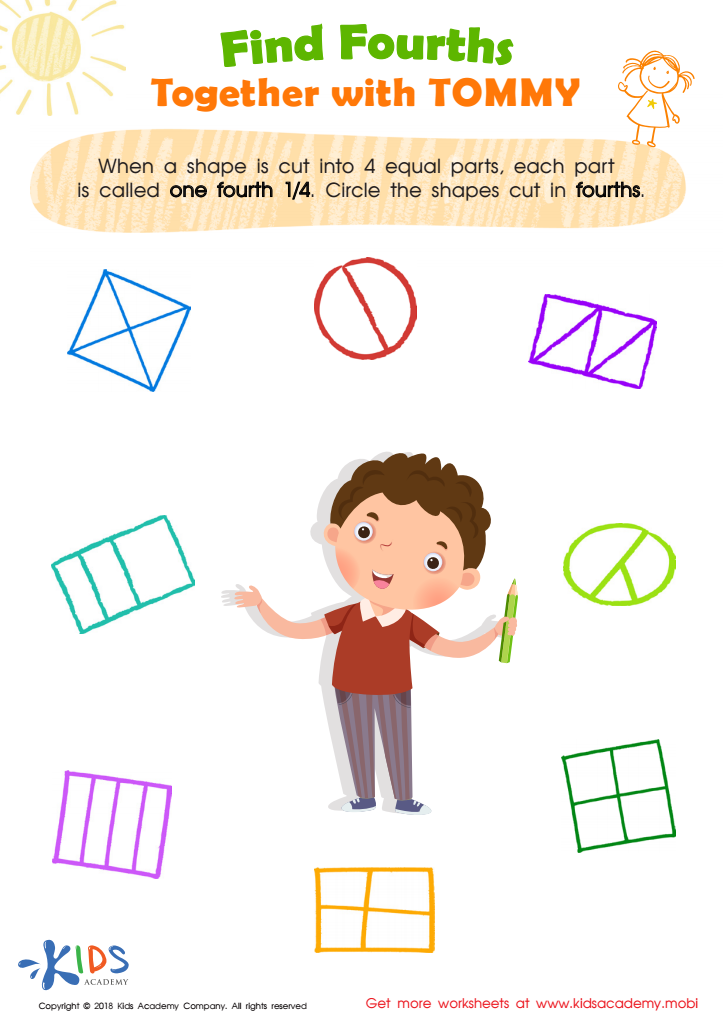
Find Fourths Together with Tommy Worksheet




.jpg)



Fine motor skills are crucial for children's overall development, especially in early grades for ages 6-9, where activities like coloring play a significant role. These skills enable children to perform tasks that require precise hand and finger movements, essential for everyday activities such as writing, buttoning shirts, or handling tools and utensils.
Incorporating math into fine motor skills through coloring can enhance both cognitive and physical development. For instance, when children color shapes, numbers, or patterns, they learn to recognize and differentiate between various geometrical forms, sizes, and quantities, forming a foundation for more advanced mathematical concepts. This engagement not only improves their fine motor skills but also strengthens their visual-spatial awareness.
Moreover, tasks like coloring and painting foster creativity and promote self-expression. As children become proficient in these skills, their confidence levels rise, impacting their willingness to participate in both academic settings and social environments.
Parents and teachers should care about this intersection of fine motor skills and math because it prepares children for success academically and socially. Fostering these skills early on supports holistic development, setting the groundwork for lifelong learning and important life skills. Prioritizing fine motor activities aids in producing cohesive and capable learners.








