Learning number patterns Math Worksheets for Ages 6-9
4 filtered results
-
From - To
Discover engaging and interactive learning number patterns math worksheets designed for ages 6-9! Our carefully crafted resources help young learners develop essential math skills through fun activities that focus on number recognition, sequencing, and pattern identification. These worksheets encourage critical thinking and problem-solving while making math enjoyable. With colorful illustrations and age-appropriate challenges, children will enhance their understanding of numerical relationships and gain confidence in their mathematical abilities. Perfect for both classroom use and at-home learning, our number patterns worksheets provide a solid foundation for future math success. Foster a love for learning with these invaluable tools today!
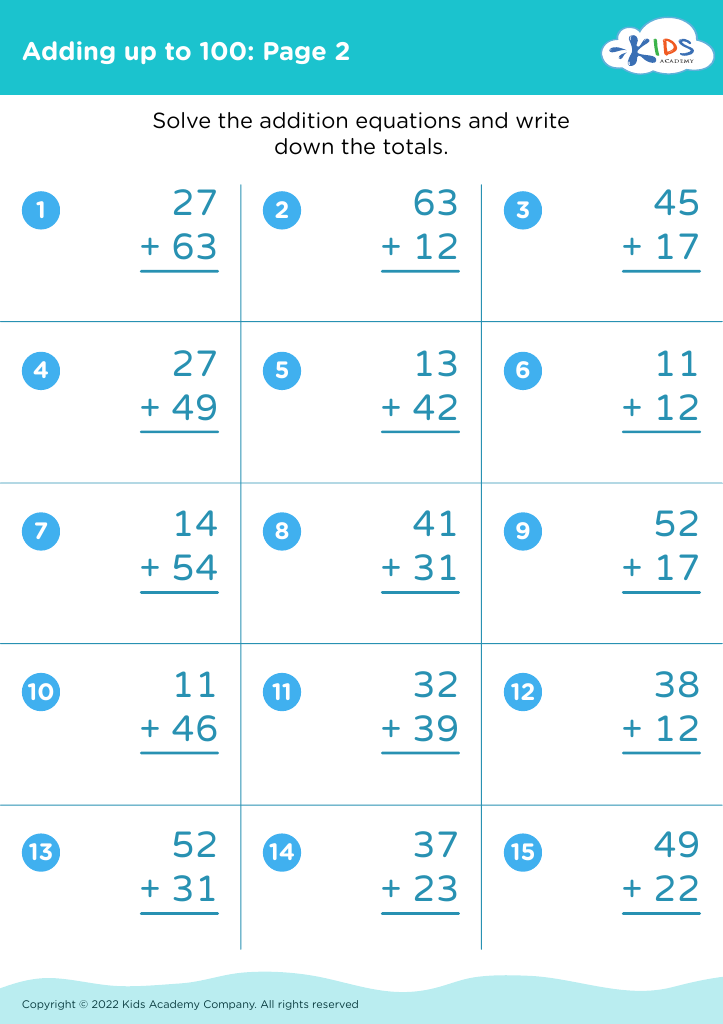
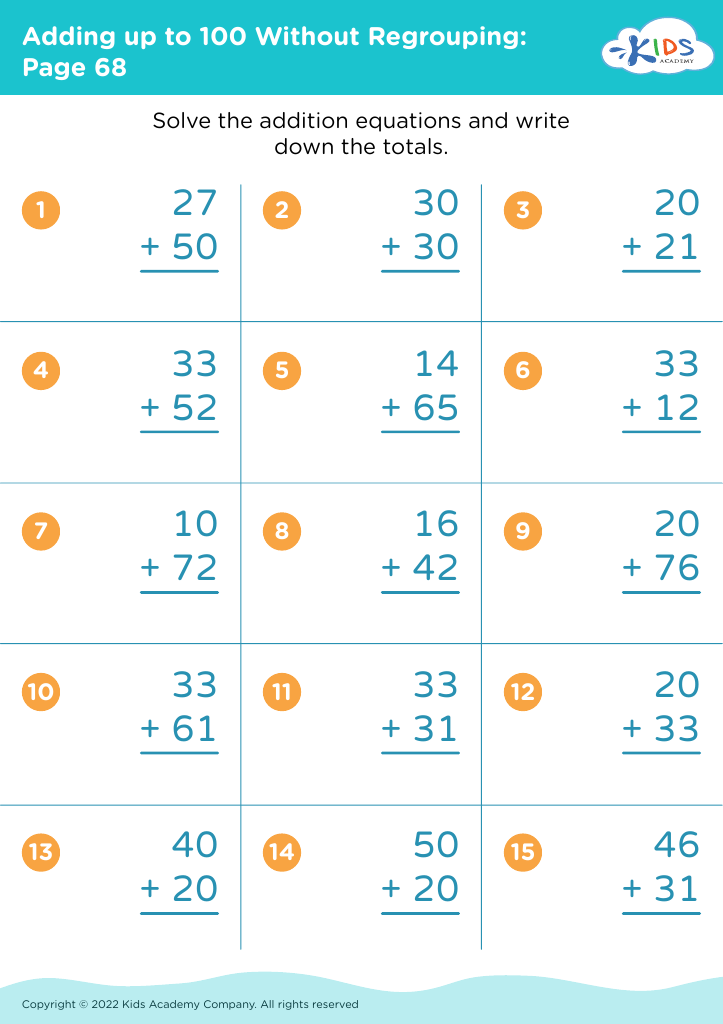
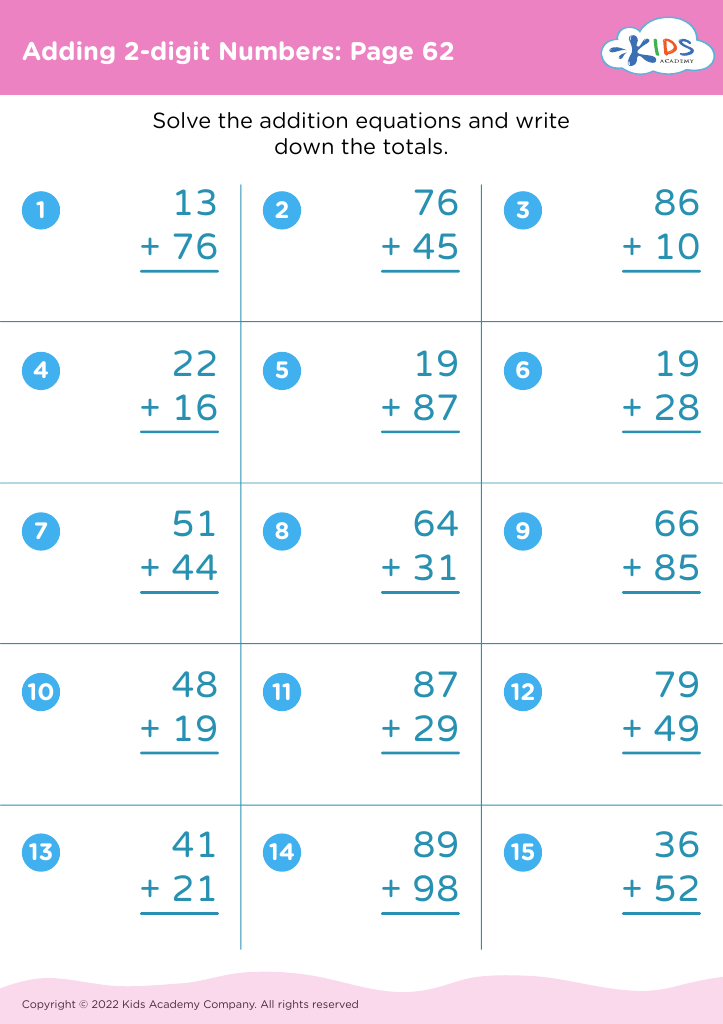
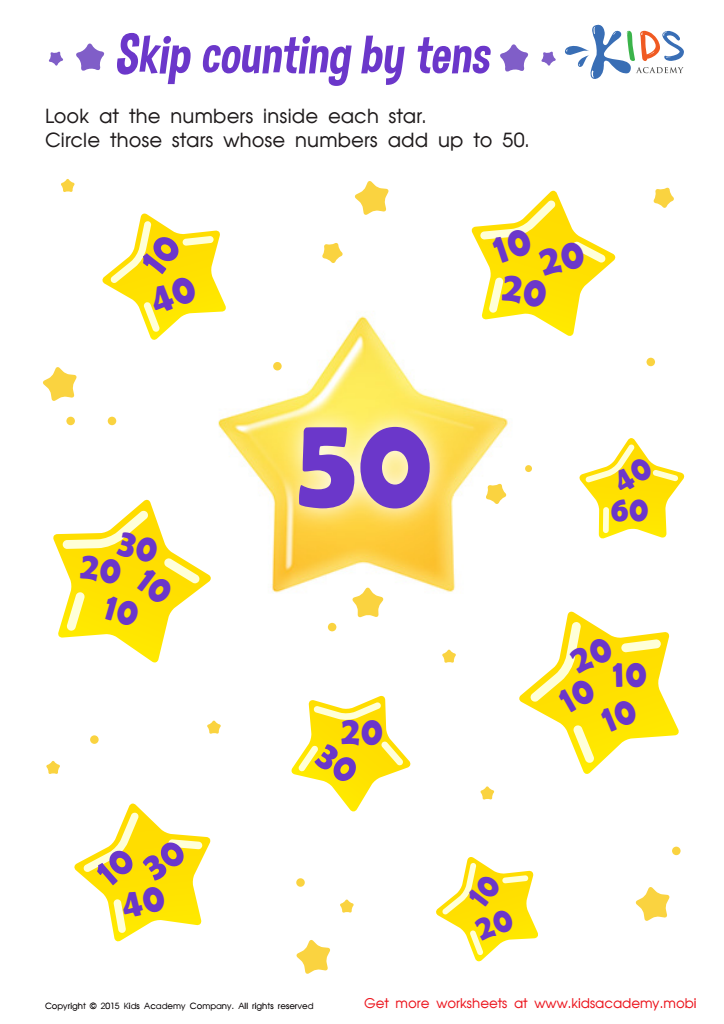
Learn Dozens: Skip Counting by Tens Printable
 Assign to My Students





.jpg)

Parents and teachers should prioritize teaching number patterns in mathematics for children aged 6-9 because it lays a foundational understanding critical for future mathematical concepts. Children in this age group are naturally curious and eager to explore relationships and structures within numbers. Familiarizing them with patterns not only enhances their numerical fluency but also improves problem-solving skills.
Recognizing number patterns helps children develop logical reasoning and critical thinking abilities, essential for tackling more complex mathematics later on. It also aids in developing mental math skills, making calculations easier and quicker as they progress in school. Moreover, learning through patterns fosters a love for math, reducing anxiety and building confidence.
Teaching number patterns also supports the understanding of sequences, which are crucial for mastering concepts such as addition, subtraction, multiplication, and division. By engaging with patterns, children begin to see mathematics as a combination of logic and creativity, rather than just rote memorization.
Incorporating pattern recognition into lessons also supports diverse learners by catering to different learning styles. Overall, number patterns are not just an integral part of mathematics; they provide essential tools for developing lifelong skills in logical reasoning, critical thinking, and a positive mindset towards learning.








