
Mental arithmetic Math Worksheets for Ages 6-9
6 filtered results
Difficulty Level
Grade
Age
-
From - To
Subject
Activity
Standards
Welcome to our Mental Arithmetic Math Worksheets for Ages 6-9! Designed to boost your child’s numerical proficiency and mental agility, our worksheets offer a variety of engaging activities perfect for young learners. From basic addition and subtraction to more challenging multi-step problems, these resources help children practice and refine their mental math skills in a fun and effective way. Our expertly crafted worksheets are ideal for classroom use or additional home practice, ensuring your child builds a strong math foundation. Turn math time into fun time with our vibrant and dynamic worksheets tailored for young minds!
Favorites
With answer key
Interactive
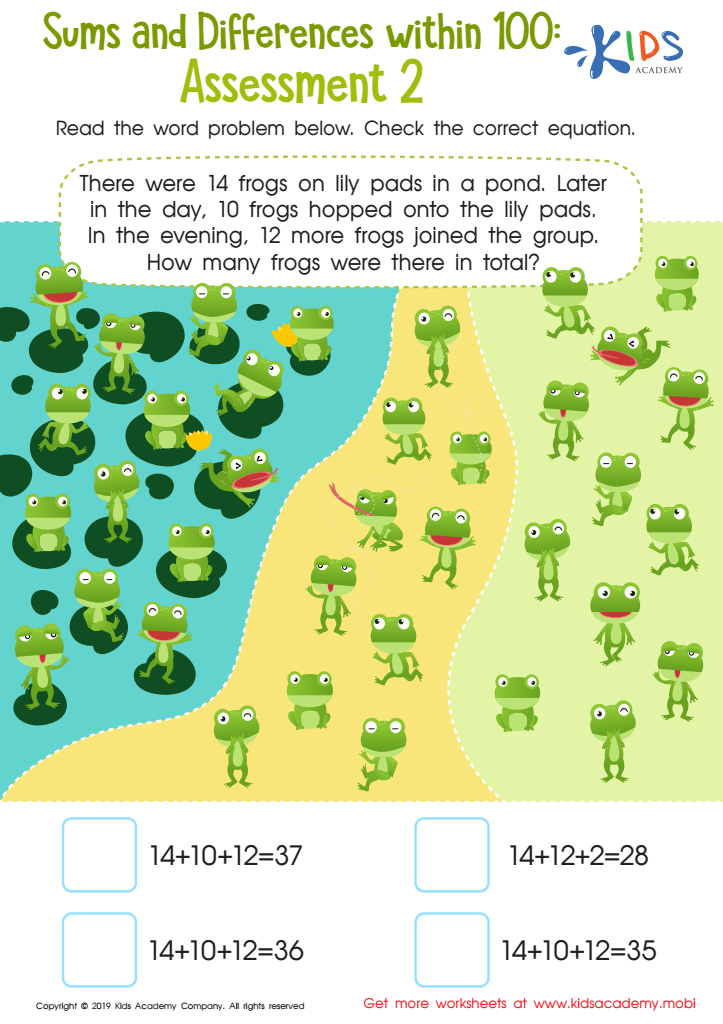
Sums and Differences Within 1 - Assessment 2 Worksheet
Help your kids practice math with these simple word problems. Read the question, discuss with them to form the equation and then check the answer. Give them a chance to sharpen their math skills!
 Assign to My Students
Sums and Differences Within 1 - Assessment 2 Worksheet
Worksheet
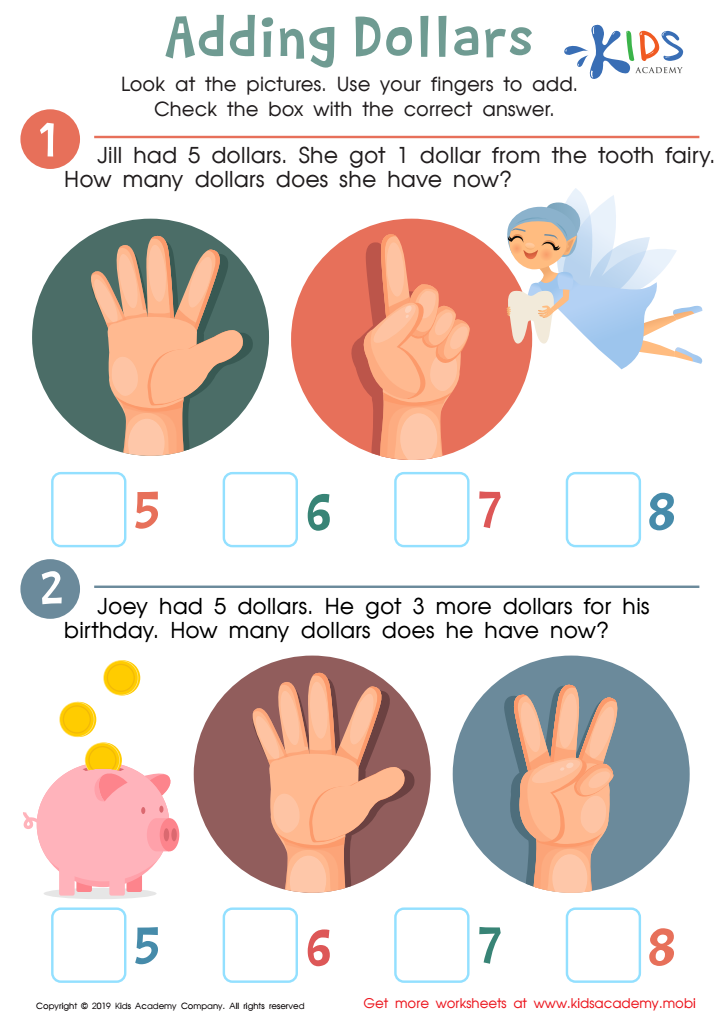
Tooth Fairy Addition Worksheet
Kids know of the tooth fairy and may have experienced visits. Kids love counting the money left in exchange for their teeth under the pillow. In this worksheet, help Jill and Joey count the tooth fairy's dollars. Ask your kids to use their fingers to add the numbers and check the box with the correct answer.
Tooth Fairy Addition Worksheet
Worksheet
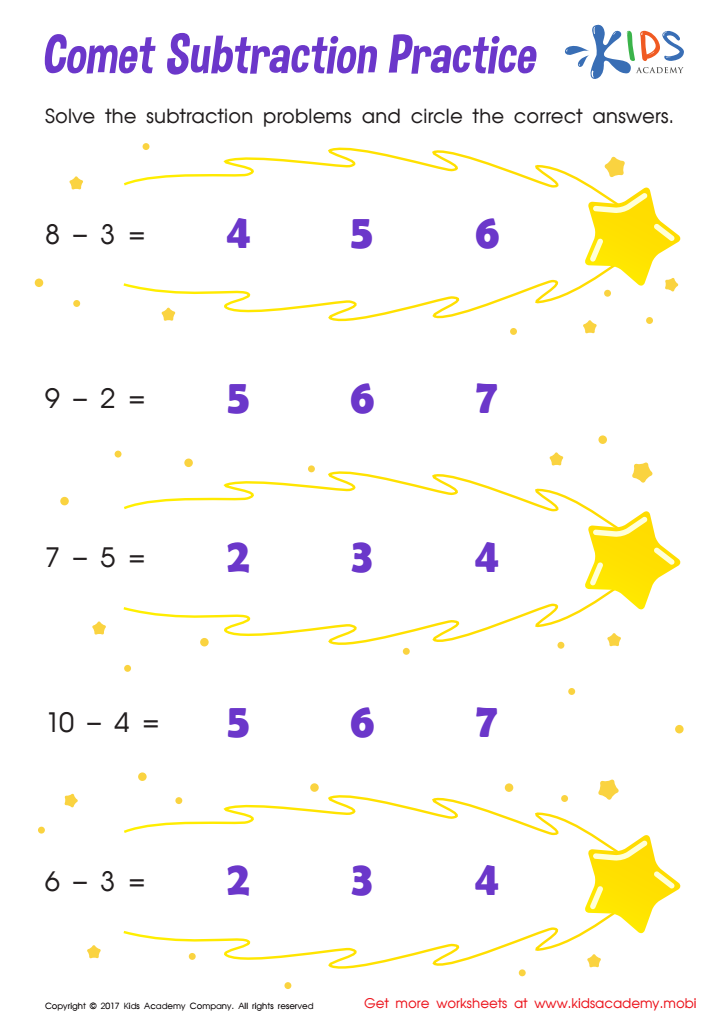
Comet Subtraction Practice Substraction Worksheet
This versatile 2nd grade math worksheet is perfect for parents wanting to get creative! It allows for practicing subtraction using different strategies, such as a number line, and provides answer choices for the child. Enjoy fun pictures in outer space to motivate your child and strengthen their problem-solving skills. It's the perfect way to learn!
Comet Subtraction Practice Substraction Worksheet
Worksheet
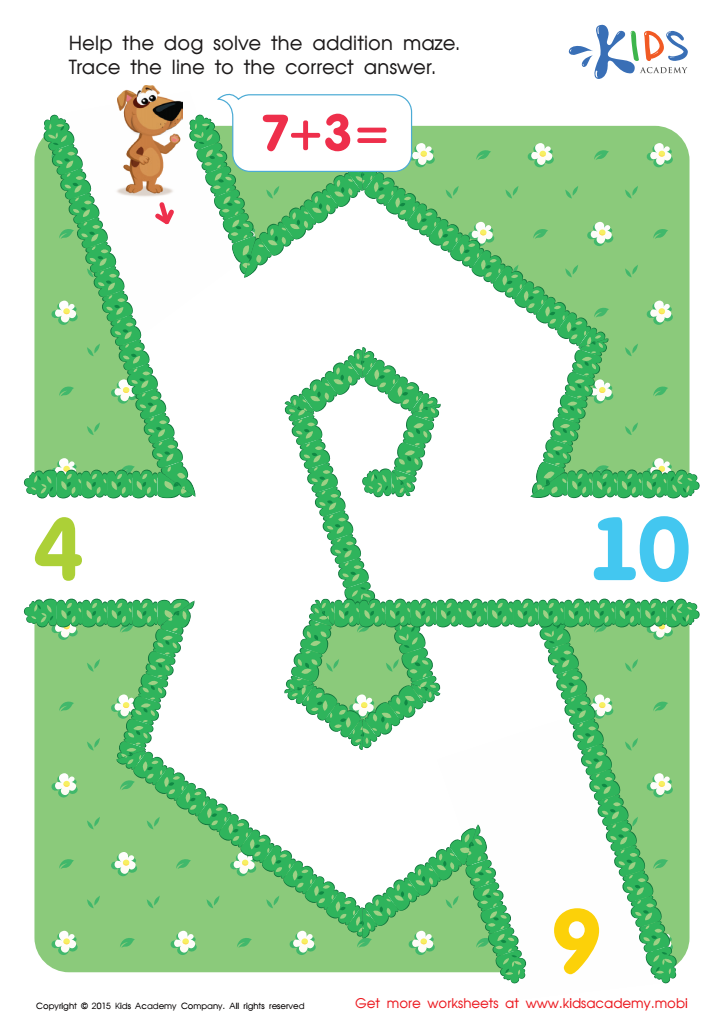
Seven Plus Three Worksheet
Practice addition and subtraction with your kids, help them out and make learning math an enjoyable activity.
Seven Plus Three Worksheet
Worksheet
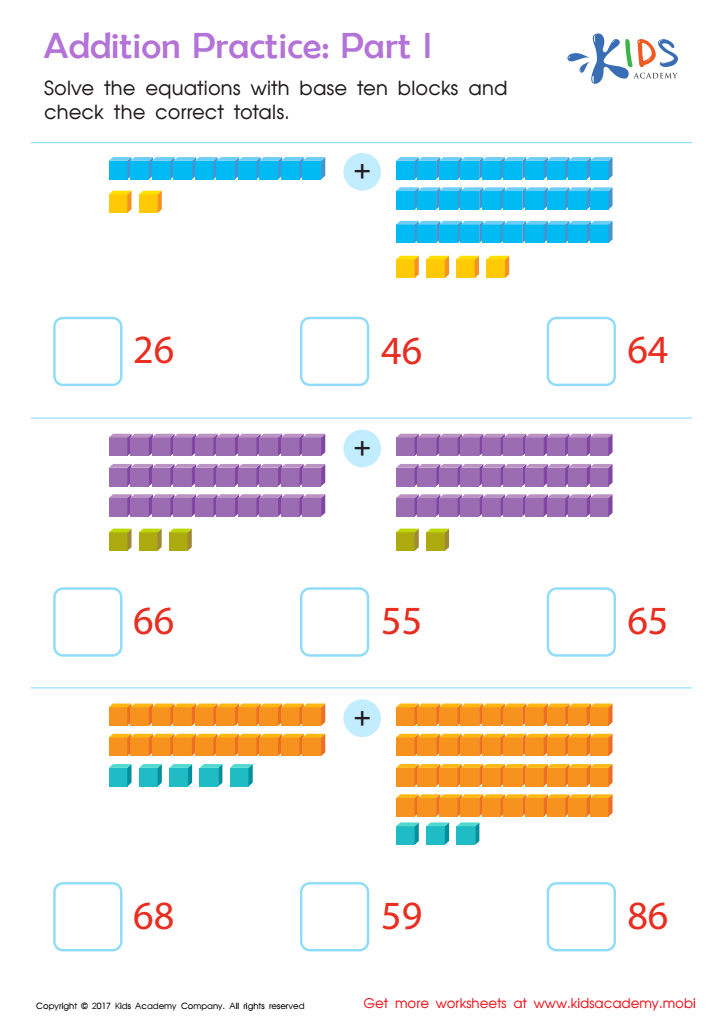
Addition Practice Sheet: Part 1
Kids Academy offers a free worksheet to help kids learn addition with base ten blocks, with or without actual manipulatives. Help your Kindergarten or First Grader flex and increase their knowledge of place value and understand math more deeply. Download this useful page for images that will promote success.
Addition Practice Sheet: Part 1
Worksheet
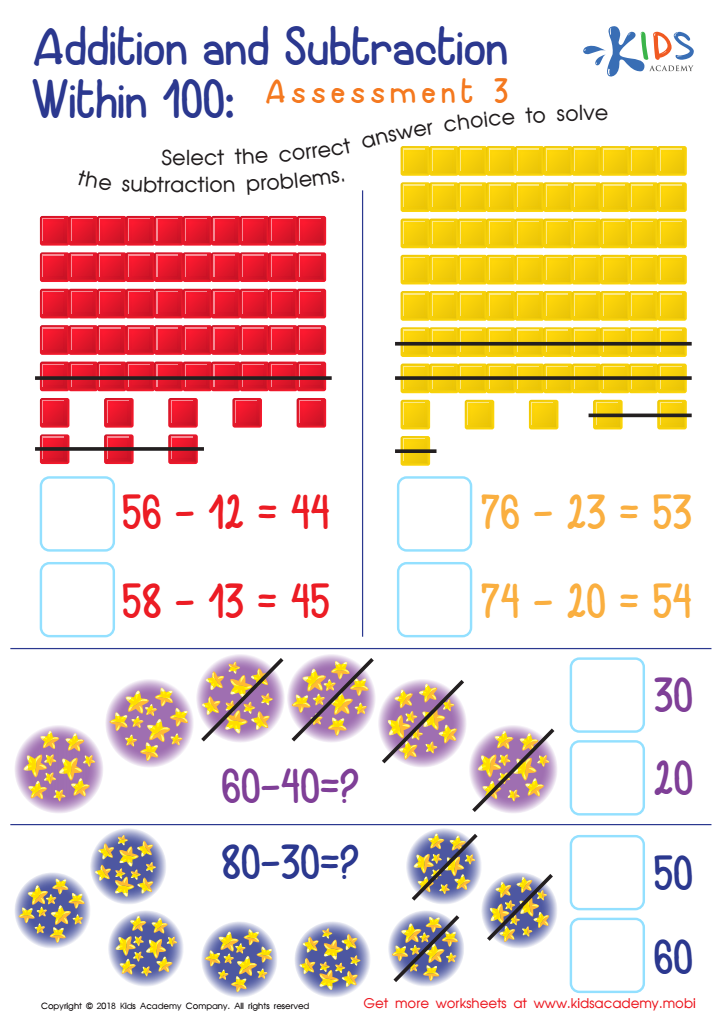
Addition and Subtraction Within 1: Assessment 3 Worksheet
Help your kids count the base ten blocks in the picture. Then, count how many have been marked off. Ask them to select the correct answer choice to solve the subtraction problems based on the blocks counted. 80 words
Addition and Subtraction Within 1: Assessment 3 Worksheet
Worksheet
Join Kids Academy for Free
Who is primarily going to use this learning content?







Parents and teachers should deeply care about mental arithmetic for children ages 6-9 because this crucial skill lays the foundational bedrock for future mathematical learning and cognitive development. At this formative age, children's brains are highly adaptable, enabling them to absorb and process information efficiently. Mental arithmetic enhances several key cognitive abilities including memory, concentration, problem-solving, and logical thinking. These skills are transferable, meaning they benefit not just math, but reading comprehension, science learning, and everyday decision-making as well.
Incorporating mental arithmetic into daily routines can also foster a positive attitude toward mathematics. When children experience the immediate satisfaction of solving problems mentally, you build their confidence and reduce math anxiety. A child who is confident in their math abilities is more likely to pursue complex subjects willingly, setting the stage for lifelong academic success.
Additionally, mental arithmetic promotes numerical fluency, enabling kids to manipulate numbers flexibly and understand mathematical concepts deeply rather than mechanically. This helps them recognize patterns and relationships between numbers, facilitating a deeper understanding of advanced math topics later on.
Consequently, dedicating time to mental arithmetic is not just about mastering numbers; it's about nurturing a well-rounded cognitive toolkit that supports a child's overall academic journey and problem-solving capabilities.








