
Recognizing shapes Math Worksheets for Ages 6-9
34 filtered results
Difficulty Level
Grade
Age
-
From - To
Subject
Activity
Standards
Unlock the world of shapes with our engaging "Recognizing Shapes Math Worksheets" designed for children aged 6 to 9! These printable worksheets provide an interactive way for young learners to explore various shapes, enhancing their visual acuity and spatial awareness. Each activity is crafted to captivate their curiosity while fostering essential math skills through fun exercises like shape identification, sorting, and matching. Perfect for home or classroom use, these worksheets are aligned with early learning standards, making them an ideal tool for reinforcing shape recognition. Encourage creativity and build confidence in math with these educational resources that make learning enjoyable!
Favorites
With answer key
Interactive
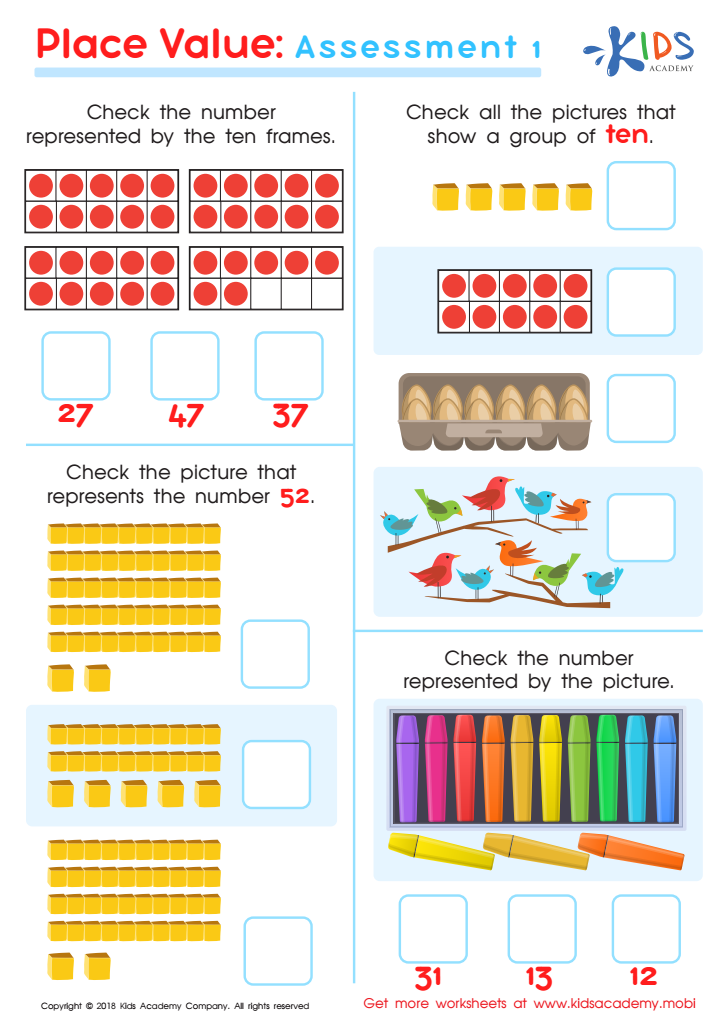
Place Value: Assessment 1 Worksheet
Assess your child's place value and number representation with this PDF worksheet. It lets them count and compare numbers and practice chiseling numbers into groups of ten. It's a great way to identify any concepts that need to be reinforced.
 Assign to My Students
Place Value: Assessment 1 Worksheet
Worksheet
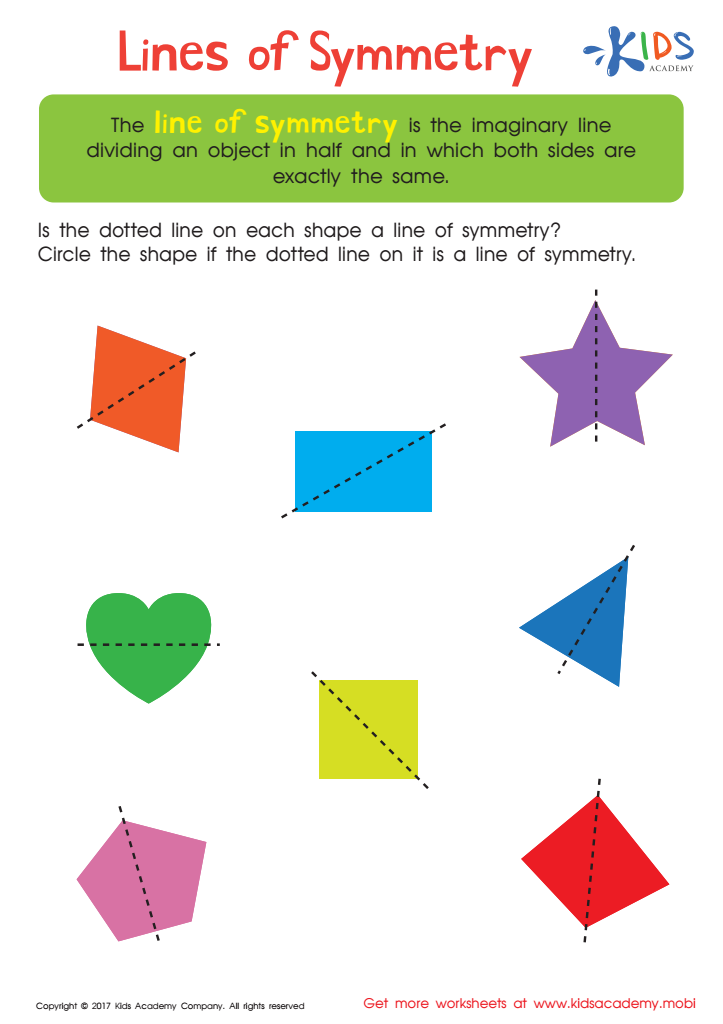
Lines of Symmetry Printable
Symmetry is a key math concept that kids must learn to develop their geometry skills. This fun worksheet helps build this skill, by encouraging kids to recognize symmetrical shapes and find equal parts.
Lines of Symmetry Printable
Worksheet
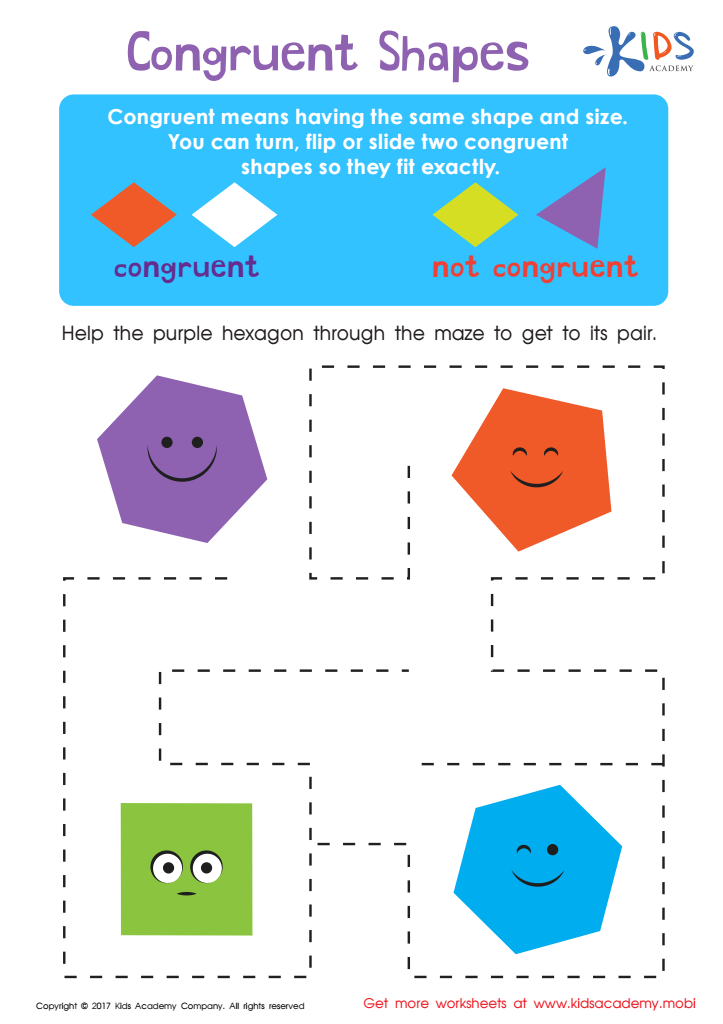
Congruent Shapes Worksheet
Help your child find the twin of the purple hexagon! This congruent shapes worksheet is great for increasing vocabulary while challenging mental rotation skills.
Congruent Shapes Worksheet
Worksheet
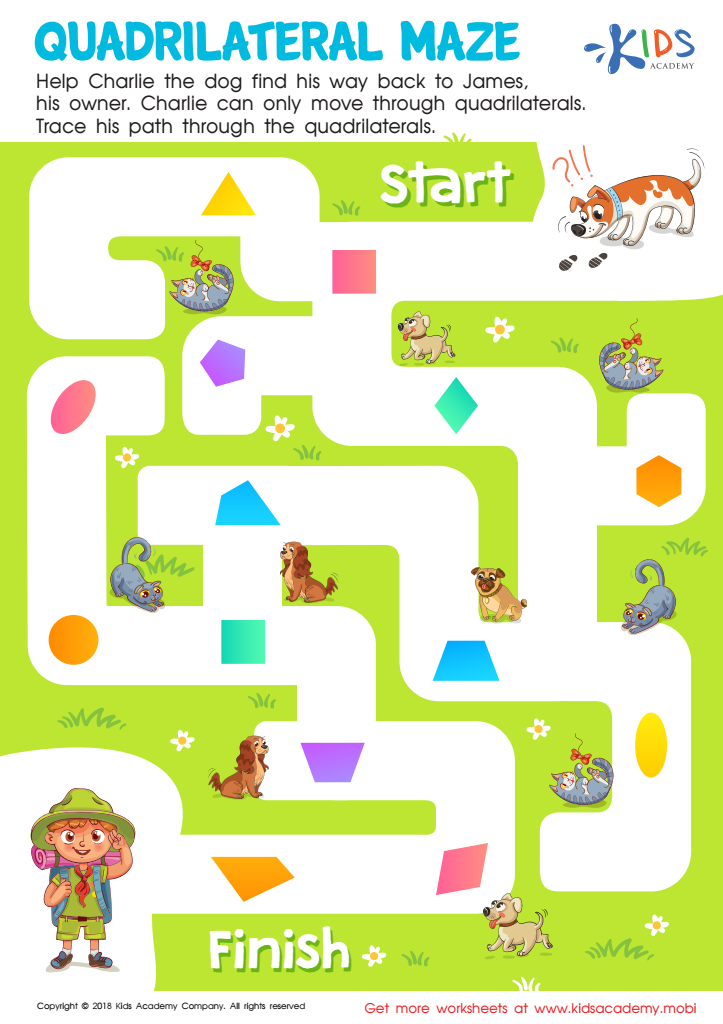
Quadrilateral Maze Worksheet
Does your kid love dogs? If so, this exercise is ideal for them! Help Charlie the pup find his way back to his owner, James, in the quadrilateral maze worksheet. Your child must trace Charlie's path only through squares and rhombuses in order to solve it. Careful planning is key!
Quadrilateral Maze Worksheet
Worksheet
Join Kids Academy for Free
Who is primarily going to use this learning content?








Recognizing shapes is a fundamental building block of mathematical understanding for children aged 6-9. During these formative years, learners are not only introduced to basic geometry but develop critical cognitive skills. Understanding shapes helps children identify, categorize, and describe the world around them, strengthening their spatial awareness and visual recognition skills.
Parents and teachers should care about this aspect of early education as it supports problem-solving abilities and logical thinking. Recognizing shapes enhances children’s abilities to create patterns, understand symmetry, and embrace approaching mathematical concepts such as area and perimeter later on. Additionally, shapes play a significant role in art and design, enriching creativity and encouraging expression.
Moreover, engaging with shapes assists in language development, as children learn to articulate their observations and comparisons. Activities like building with blocks or creating art projects provide hands-on experience, effectively merging learning with play—a vital aspect of this age group’s development.
Lastly, fostering a strong foundation in recognizing shapes can lead to increased confidence in math skills, laying the groundwork for future success in more complex mathematical topics. Therefore, embracing shape recognition early on cultivates critical thinking, creativity, and a love for learning that can last a lifetime.








