Understanding number patterns Math Worksheets for Ages 6-9
6 filtered results
-
From - To
Welcome to our "Understanding Number Patterns Math Worksheets" designed specifically for children aged 6-9! These engaging worksheets provide a fun and interactive way for young learners to explore the exciting world of number patterns. By recognizing, creating, and extending patterns, students will strengthen their mathematical reasoning and problem-solving skills. Each worksheet features vibrant illustrations and age-appropriate exercises that make learning number patterns enjoyable. Perfect for classroom use or home practice, these worksheets support key early math concepts and encourage a love for learning. Help your child develop essential skills in a playful and supportive environment today!
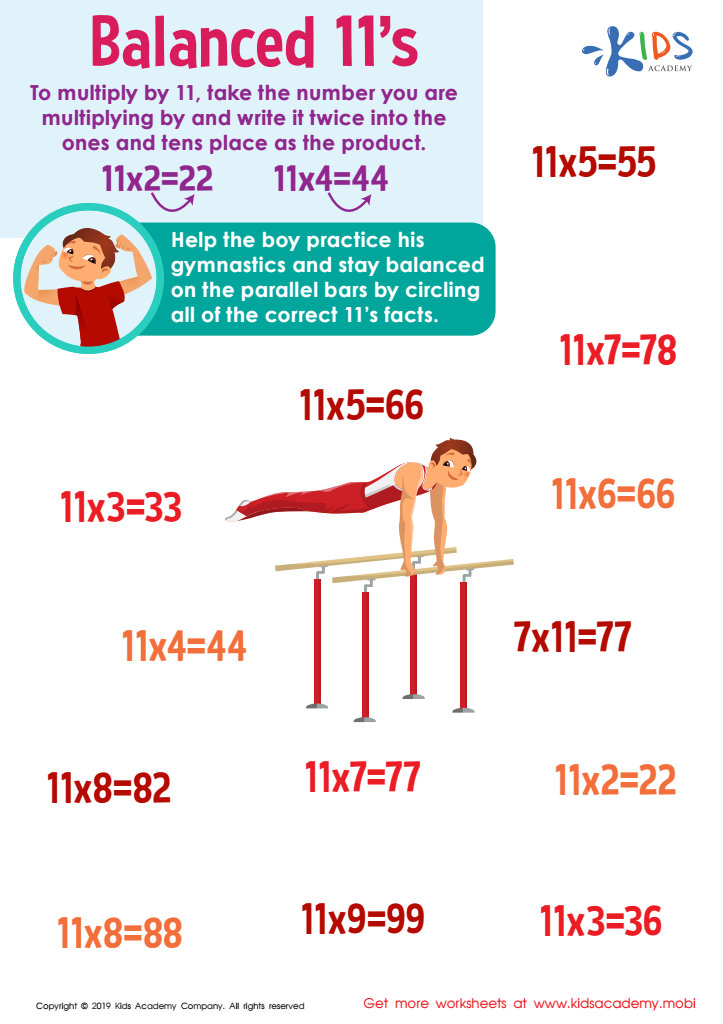
Balanced 11s Worksheet
 Assign to My Students
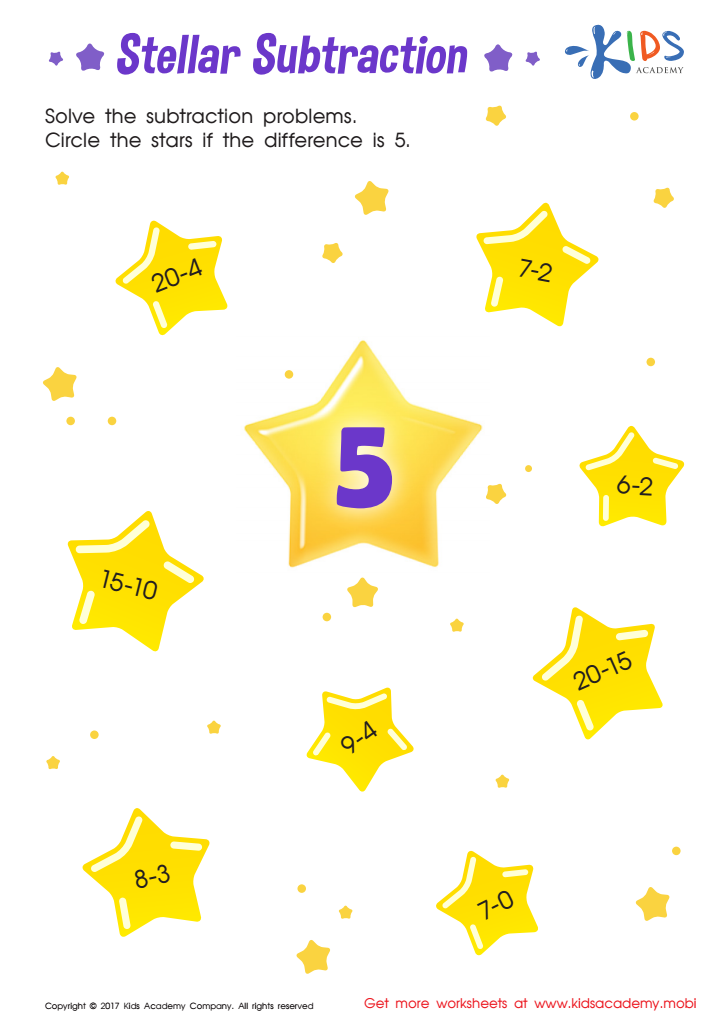
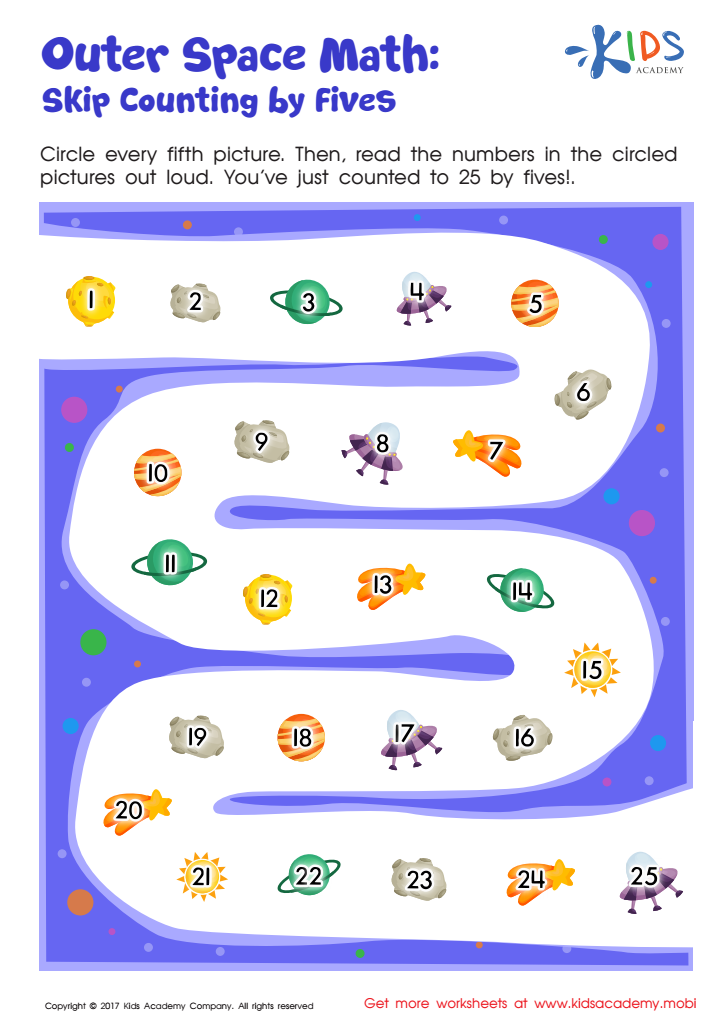
Skip Counting by 5s: Outer Space Math Printable
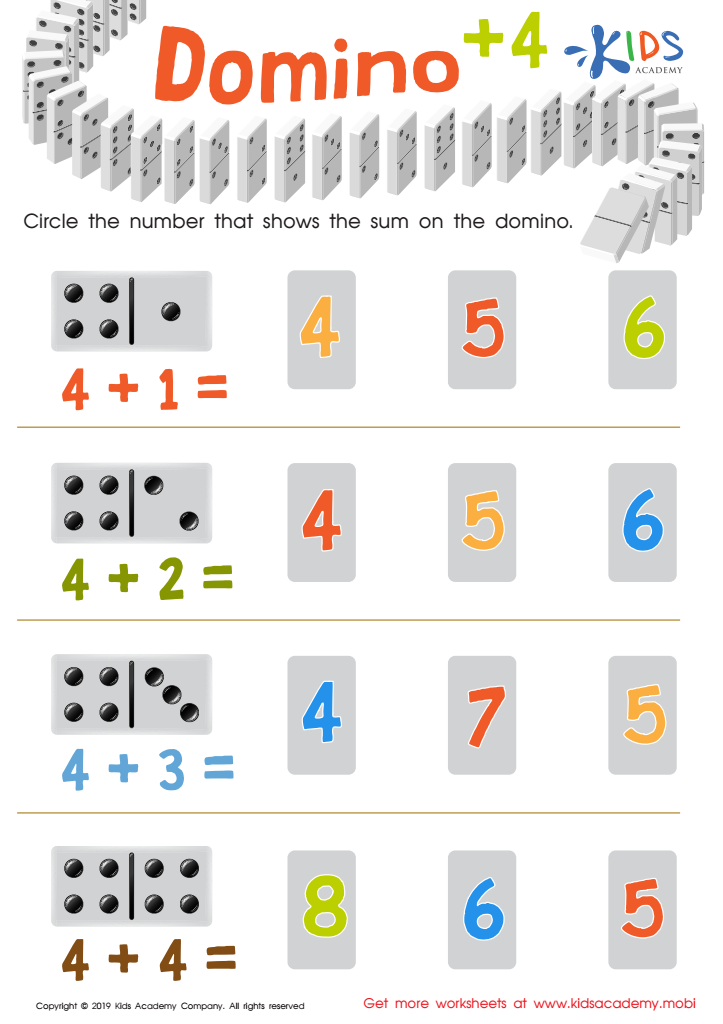
Domino +4 Worksheet
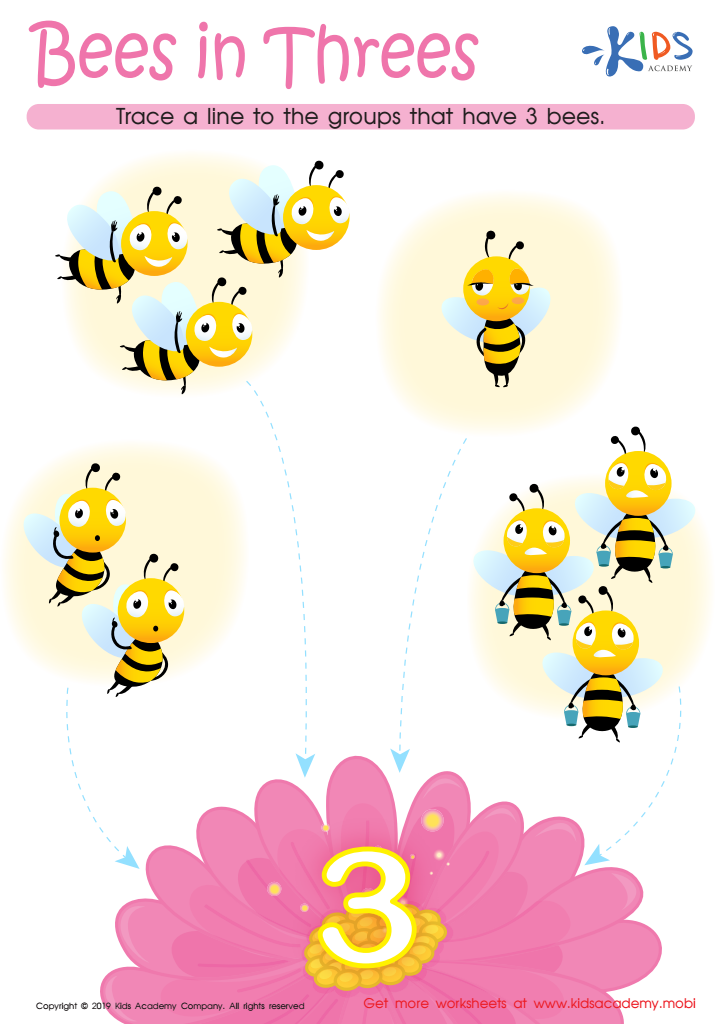
Bees in Threes Worksheet







Understanding number patterns is fundamental for children aged 6-9, as it lays the groundwork for their mathematical development. Number patterns help students recognize the relationships between numbers, enhancing their problem-solving skills. At this age, children are beginning to explore more complex mathematical concepts, and a solid grasp of patterns can aid in the transition from concrete to abstract thinking.
Parents and teachers should emphasize number patterns because they make math more engaging and accessible. By recognizing sequences and trends, children can develop strategies for predicting outcomes, which is critical in areas such as addition, subtraction, multiplication, and division. Moreover, an understanding of patterns paves the way for success in later mathematical concepts, such as algebra.
Furthermore, number patterns encourage critical thinking and analytical skills, essential not only in math but also in everyday life. This foundational knowledge enriches children's confidence in their math abilities, turning what can be a challenging subject into an achievable and enjoyable one. Additionally, incorporating activities that explore number patterns can foster a love for math, enhancing children's overall educational experience. Ultimately, nurturing this understanding helps cultivate a generation of proficient and enthusiastic mathematicians.








