
Understanding numbers Math Worksheets for Ages 6-9
3 filtered results
Difficulty Level
Grade
Age
-
From - To
Subject
Activity
Standards
Unlock your child's math potential with our "Understanding Numbers" worksheets, ideal for ages 6-9. Designed to make learning engaging and effective, these worksheets cover fundamental math skills including counting, sequencing, comparing, and ordering numbers. Tailored for young learners, each activity aims to strengthen number sense and build a solid mathematics foundation. With fun, interactive exercises, children will develop confidence and proficiency in math. Perfect for homeschooling or supplementary practice, our quality worksheets are a valuable resource for parents and educators aiming to boost their child's mathematical journey. Start exploring today and watch your child's skills soar!
Favorites
With answer key
Interactive
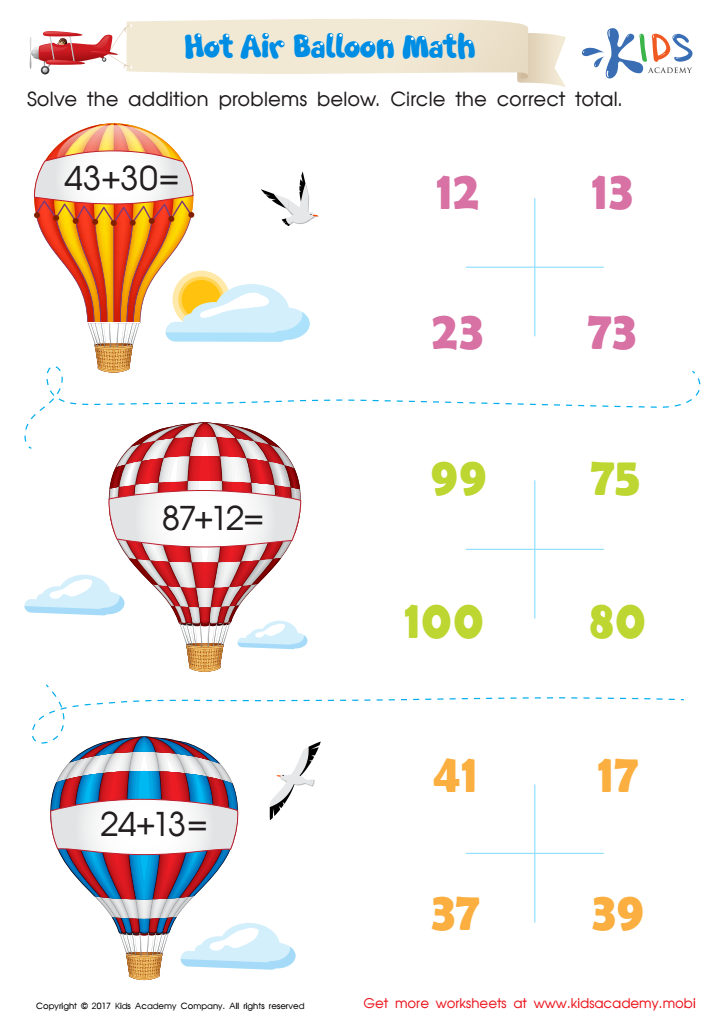
Hot Air Balloon Math Worksheet
It uses engaging pictures and a hot air balloon theme to keep your child interested, and it’s designed to build addition confidence.
 Assign to My Students
Hot Air Balloon Math Worksheet
Worksheet
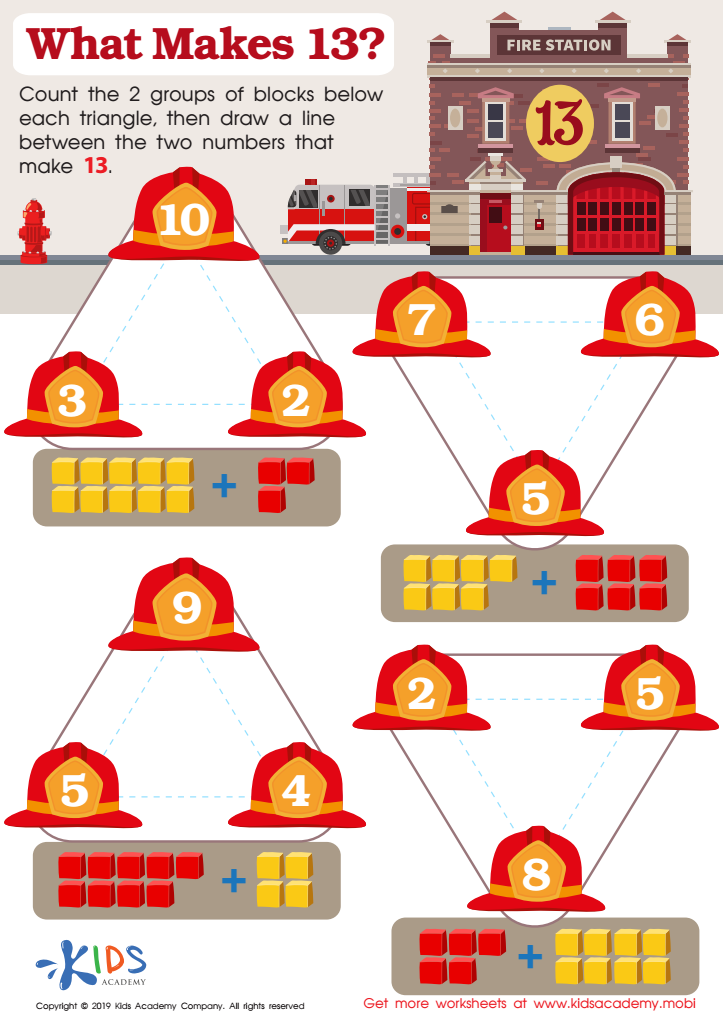
What Makes 13 Worksheet
Help your kids practice maths with this worksheet! With colourful images and simple equations, your kids will be more engaged in learning. Go through the four equations and help them add up the numbers. Then, draw a line between the numbers that make 13. Doing this will aid their learning and understanding.
What Makes 13 Worksheet
Worksheet
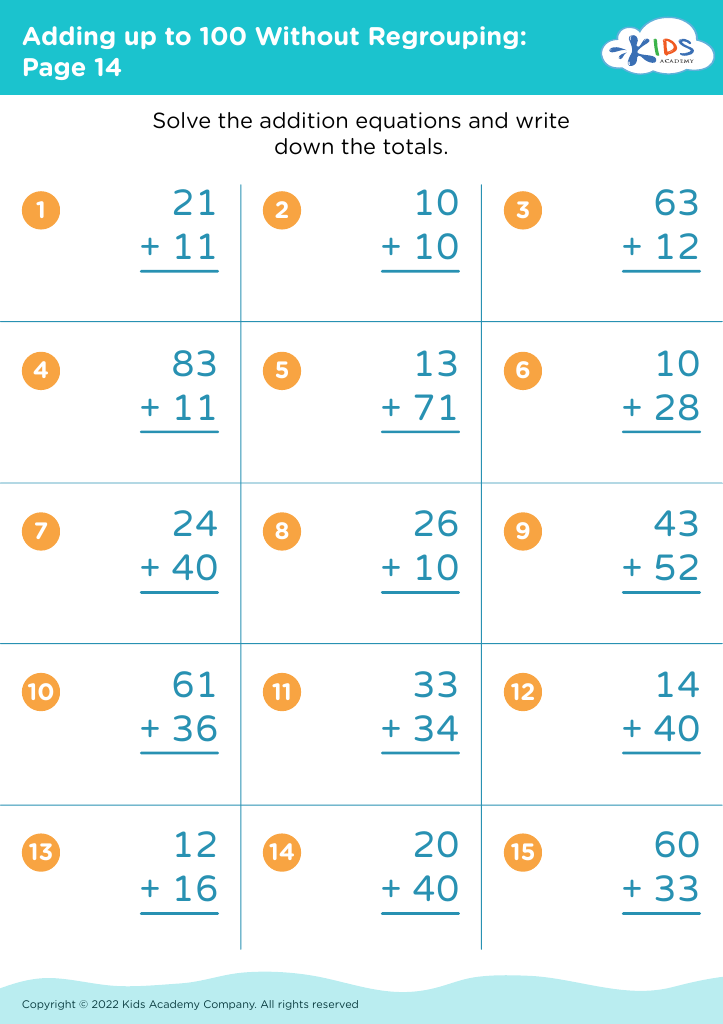
Join Kids Academy for Free
Who is primarily going to use this learning content?




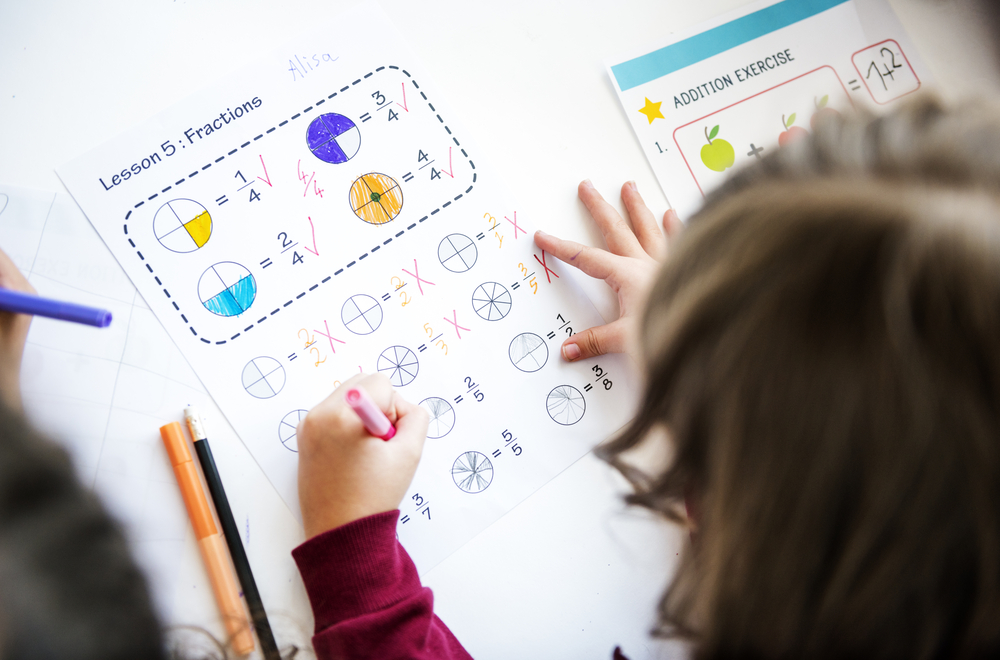


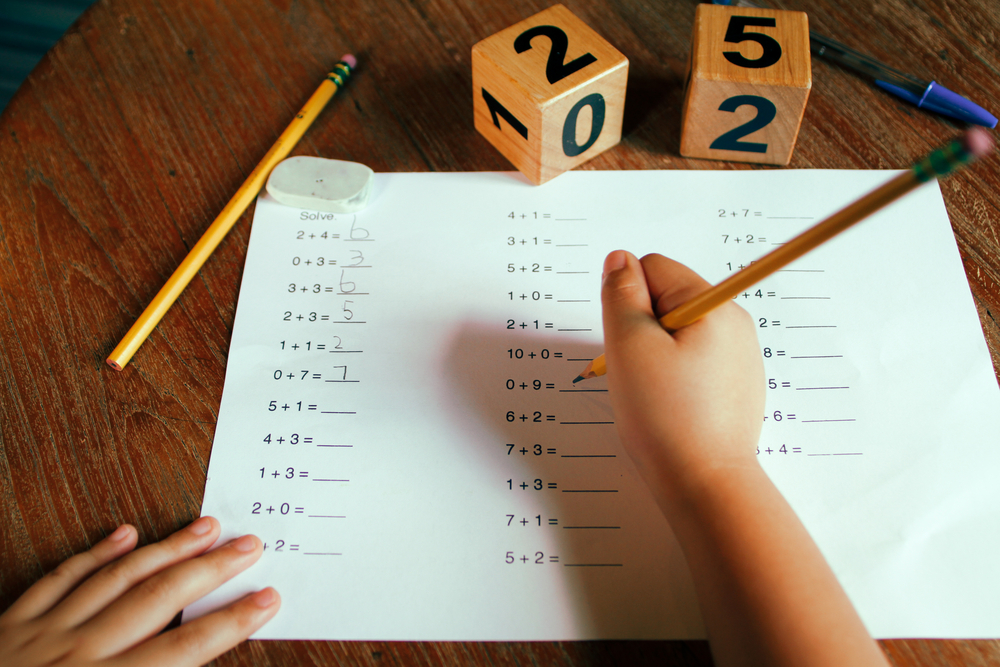
Understanding numbers is a foundational skill critical for children aged 6-9, forming the bedrock for future mathematical learning and everyday problem-solving. At these ages, children start to transition from concrete to abstract thinking, allowing them to grasp basic number concepts, patterns, and relationships. When parents and teachers pay close attention to nurturing these skills, they set a strong base for more complex operations such as addition, subtraction, multiplication, and division.
Early competency in numbers helps boost confidence and encourages a positive attitude towards math, reducing anxiety and resistance in later years. It also enhances critical thinking and logical reasoning, both crucial for academic success across subjects. For example, being able to estimate quantities, judge measurements, and understand time contributes not only to math lessons but to real-world tasks like cooking or planning the day.
Moreover, early number skills are predictive of later academic achievements. Studies show that children proficient in number concepts excel better in later grades, particularly in STEM fields. Therefore, by fostering an understanding of numbers through activities, games, and hands-on experiences, parents and teachers help children develop crucial skills. This early investment pays off throughout their educational journey and promotes lifelong numeracy skills.








