Understanding sequence Math Worksheets for Ages 6-9
6 filtered results
-
From - To
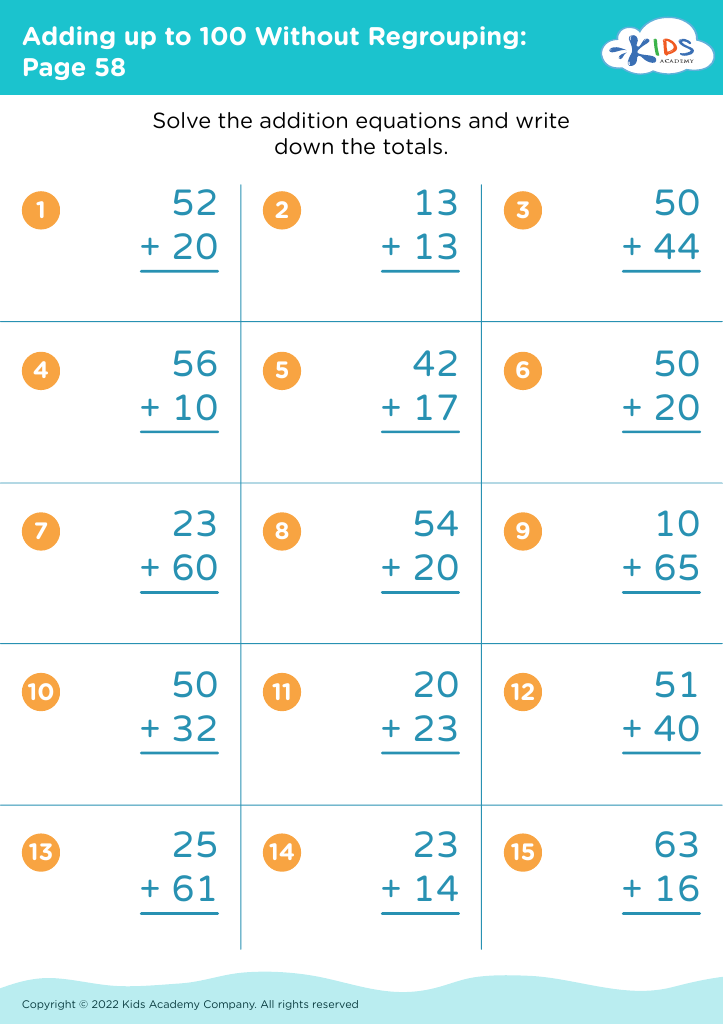
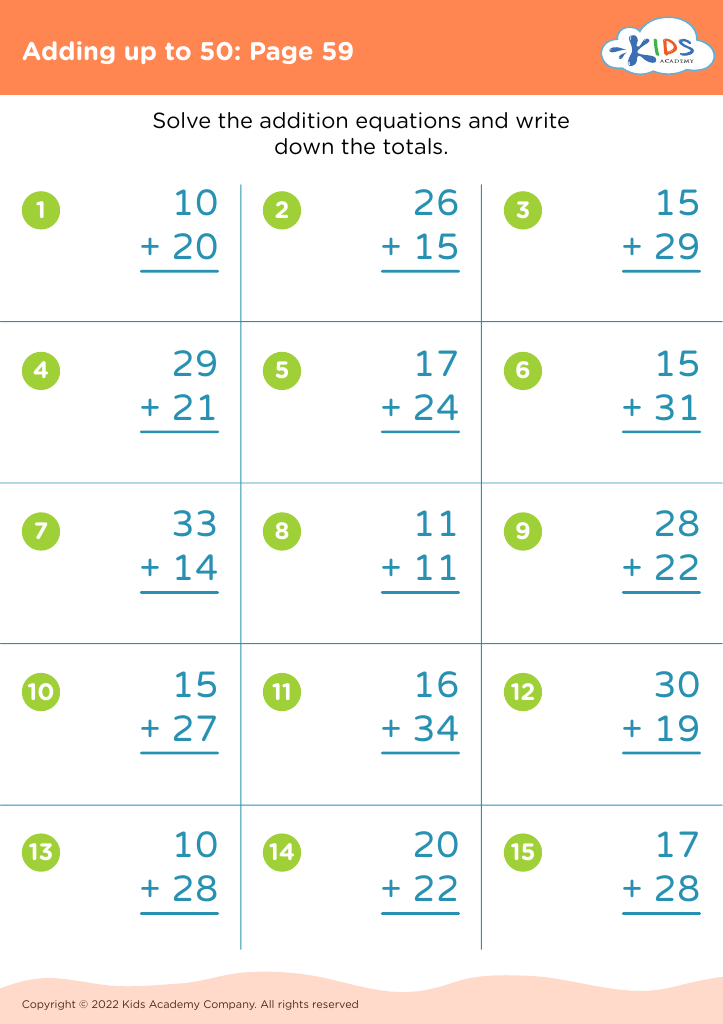
"Understanding Sequence Math Worksheets" target kids aged 6-9, blending fun with education to enhance their mathematical skills. These carefully designed worksheets guide young learners through the basics of sequences, helping them recognize and create patterns, order numbers, and understand progression. With engaging visuals and interactive problems, children can develop critical thinking and problem-solving abilities in an entertaining way. Perfect for honing early math skills, these worksheets are great for classroom or home use, supporting STEM learning. Benefit from a reliable educational resource that makes mastering sequences both enjoyable and accessible for your child.
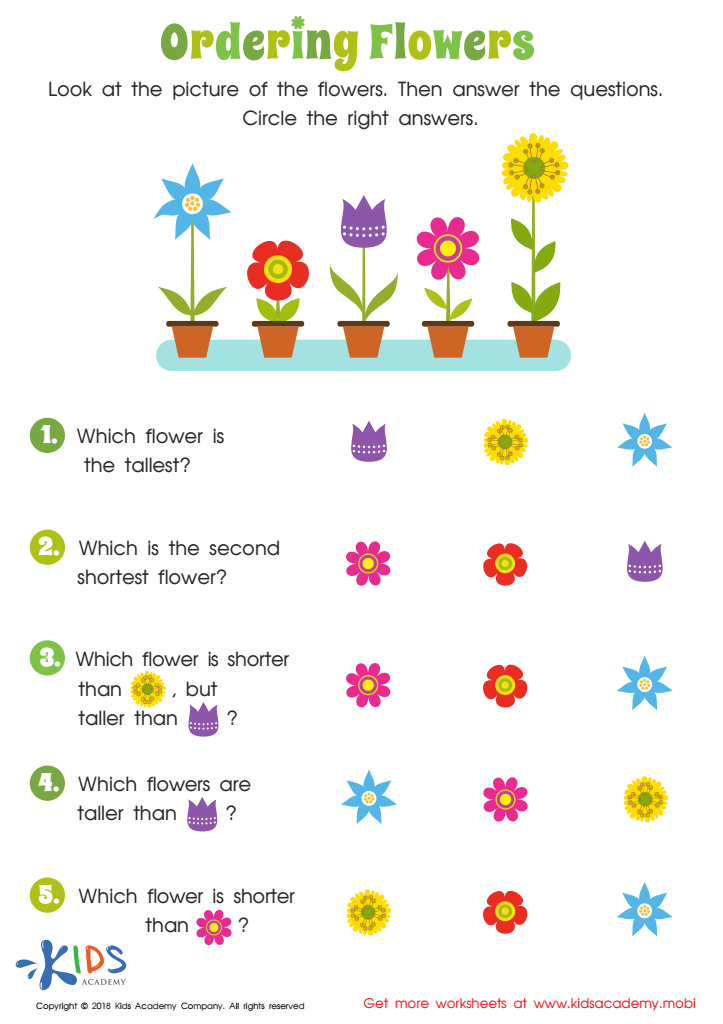
Ordering Flowers Worksheet
 Assign to My Students
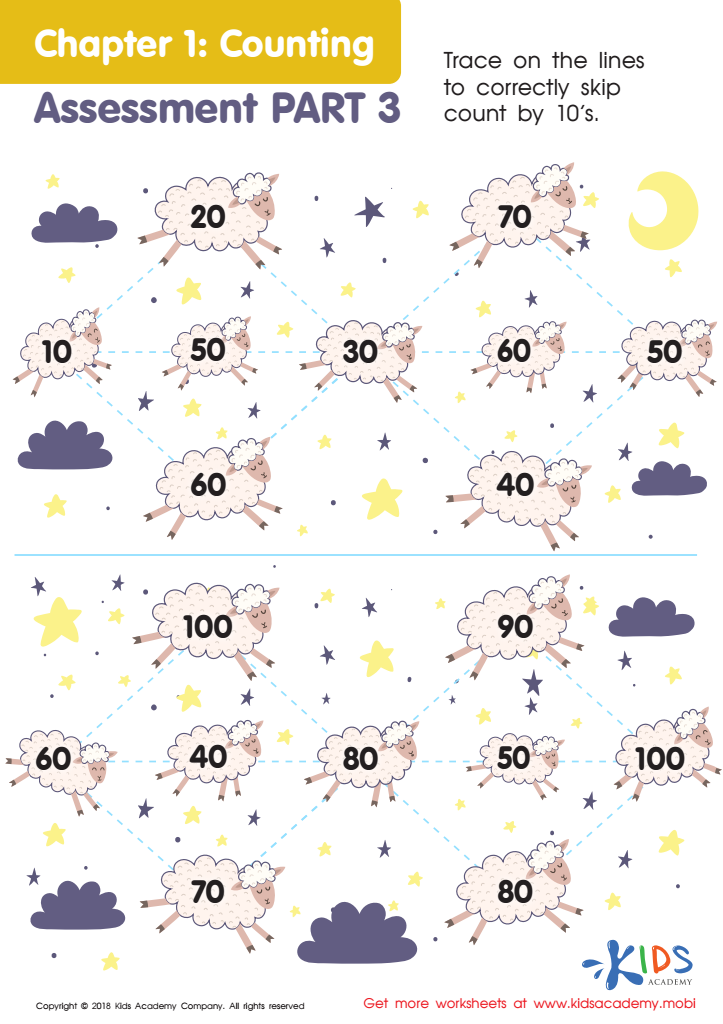
Counting: Assessment 3 Worksheet
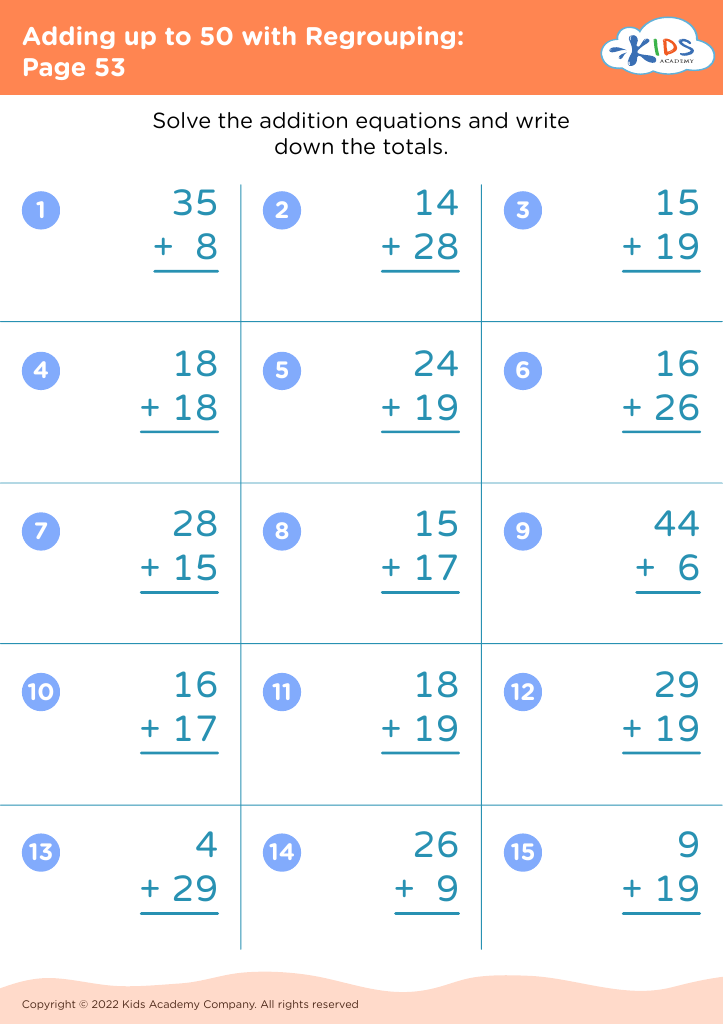
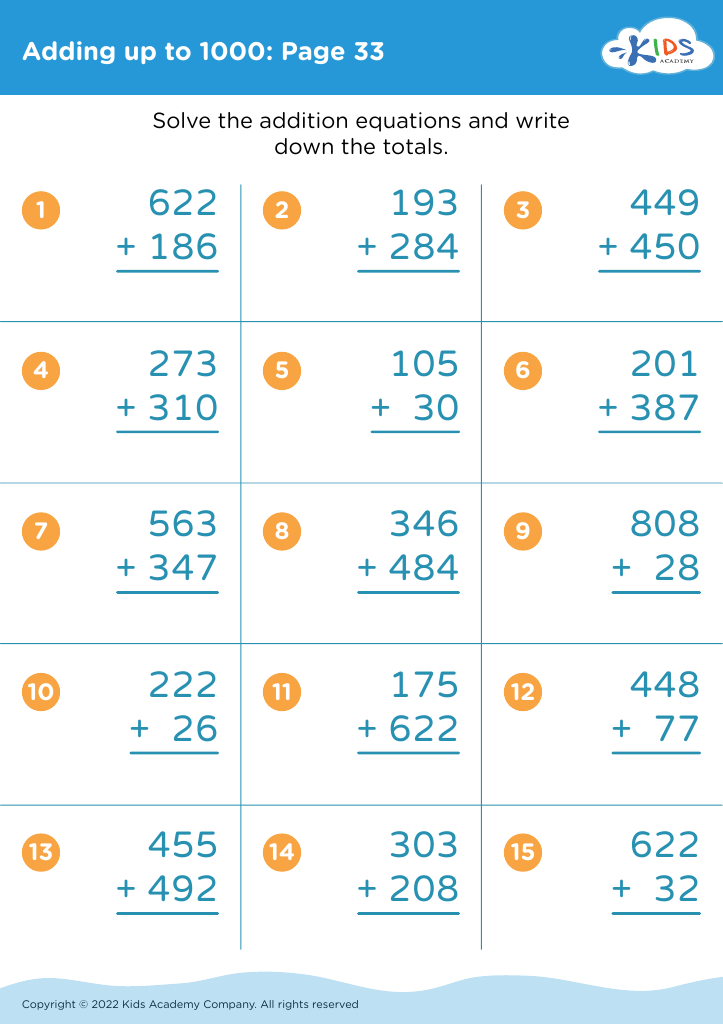







Understanding sequence in math is critical for children aged 6-9 as it forms the bedrock for more advanced mathematical concepts and daily problem-solving skills. Sequencing refers to the ability to identify patterns and order, which is fundamental in grasping arithmetical operations such as addition, subtraction, multiplication, and division. Mastering sequences helps children predict what comes next, fostering logical thinking and enhancing their ability to co-create mathematical theories around real-world scenarios like counting money or reading a calendar.
Parents and teachers should emphasize sequencing to support cognitive development. Engaging kids in activities that require following or creating sequences strengthens their working memory and attention to detail. It improves their ability to understand step-by-step instructions, like those found in math problems, recipes, or crafts. Moreover, sequencing is not solely confined to math; it’s also critical in literacy for understanding stories with coherent beginning, middle, and end sequences.
Encouraging early math skills translates to academic confidence. Research indicates that early competency in math enhances overall scholastic performance. By making sequencing a fun and integral part of learning, parents and teachers lay the groundwork for a lifelong understanding and appreciation of math and analytical thinking. This foundational skill thus helps unlock a child’s potential both academically and in practical everyday tasks.








