Understanding tens Math Worksheets for Ages 6-9
4 filtered results
-
From - To
Discover a world of learning with our "Understanding Tens Math Worksheets" designed specifically for children aged 6-9. These engaging worksheets help young learners grasp the concept of tens, an essential building block for mastering addition and subtraction. Each activity is tailored to reinforce number recognition, grouping, and place value through fun exercises that spark curiosity and a love for numbers. Perfect for both classroom use and home practice, our worksheets are a valuable resource for teachers and parents looking to enhance their child’s foundational math skills. Encourage confident math learning today with our thoughtfully crafted materials!
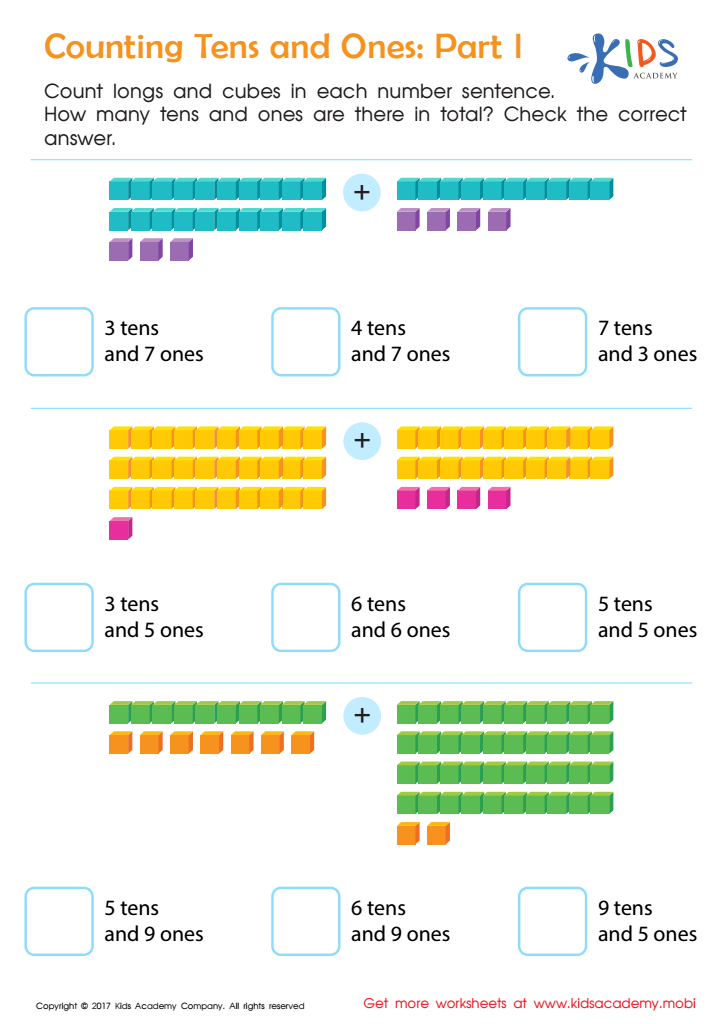
Counting Tens and Ones: Part 1 Worksheet
 Assign to My Students
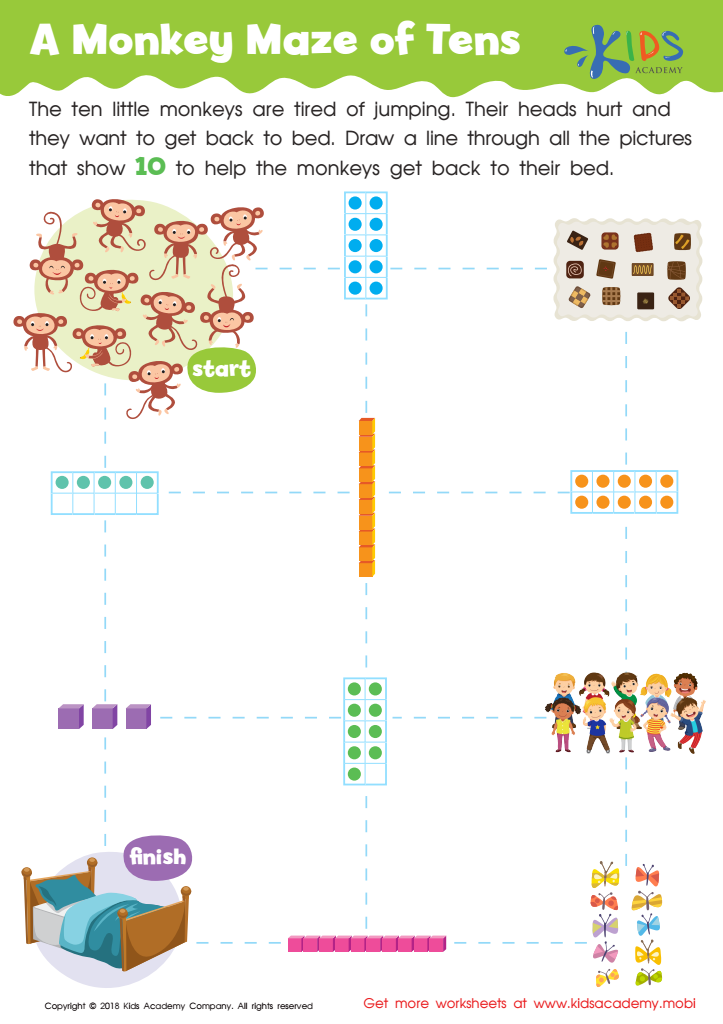
A Monkey Maze of Tens Worksheet
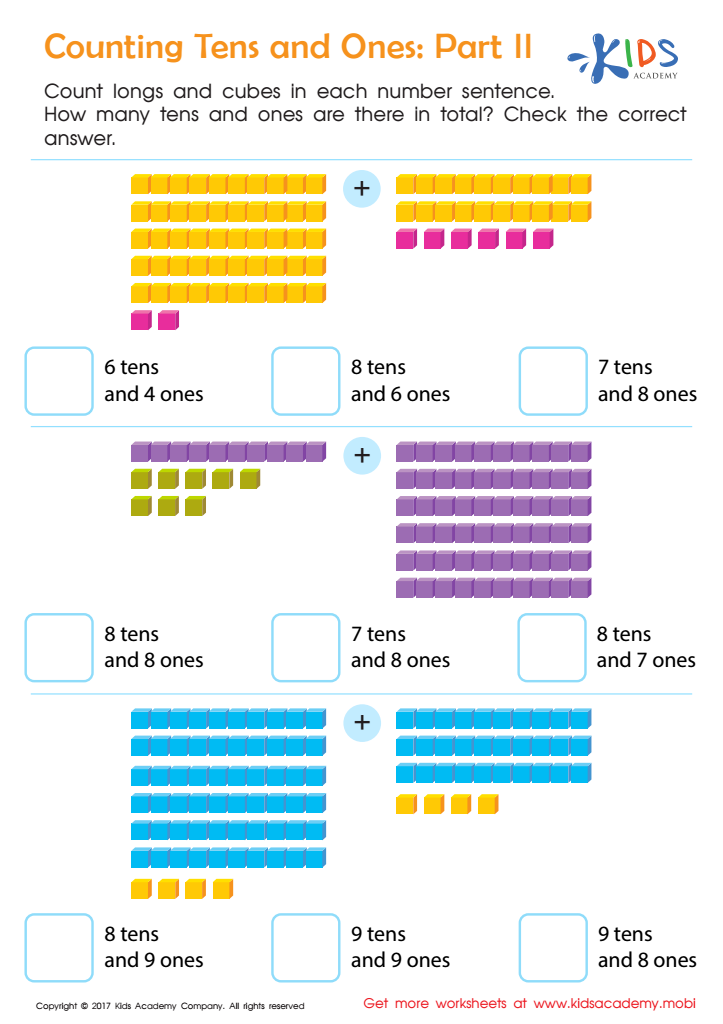
Counting Tens and Ones: Part 2 Worksheet
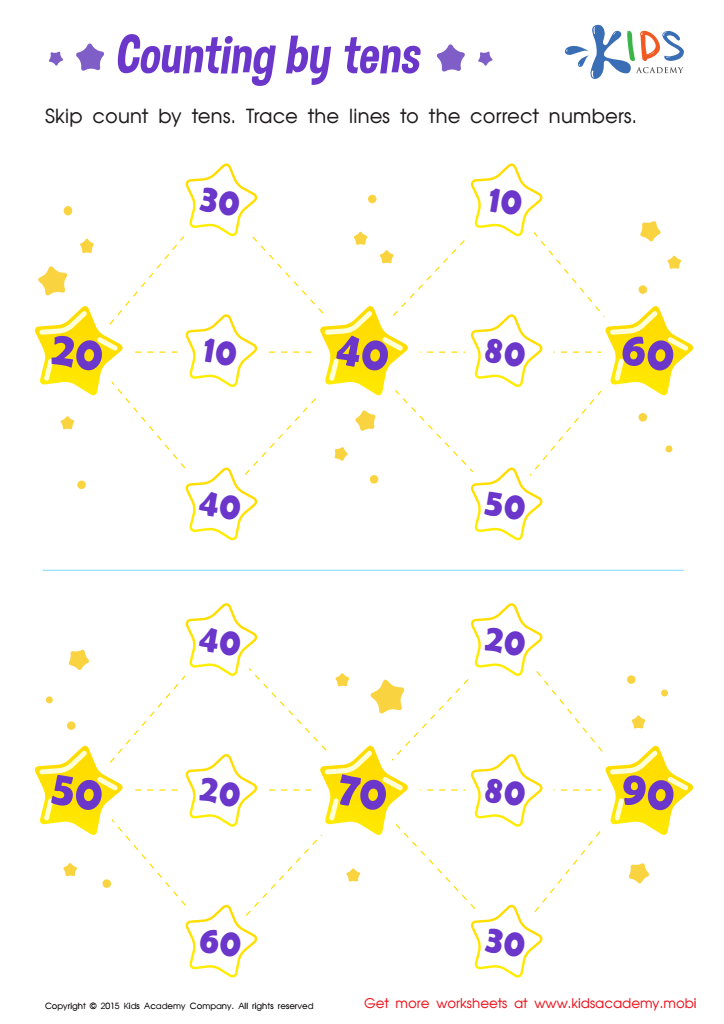
Learn Dozens: Counting by Tens Printable






Understanding tens math is crucial for children aged 6-9 as it lays a foundational framework for their overall mathematical development. At this age, children begin to explore deeper concepts of place value, addition, and subtraction. Grasping the concept of "tens" helps them make sense of numbers, understand units and groups, and develop mental math skills that are essential for calculating and problem-solving in everyday life.
Parents and teachers should care because a strong understanding of tens enables children to approach more complex mathematical concepts with confidence. It allows them to easily comprehend larger numbers by recognizing that each digit plays a specific role based on its position in the place value system. As children learn to group numbers into tens, they can count more efficiently and engage in mental arithmetic.
Moreover, fostering a strong understanding of tens at this age can alleviate math anxiety in the future. Children who are comfortable with basic concepts are more likely to enjoy math and pursue advanced topics as they grow older. Encouraging exploration and discussion around tens, whether through games, visual aids, or real-life scenarios, can significantly enhance children's learning experiences and build their confidence in math.








