Comparing object weights Measurement Worksheets for Ages 6-9
3 filtered results
-
From - To
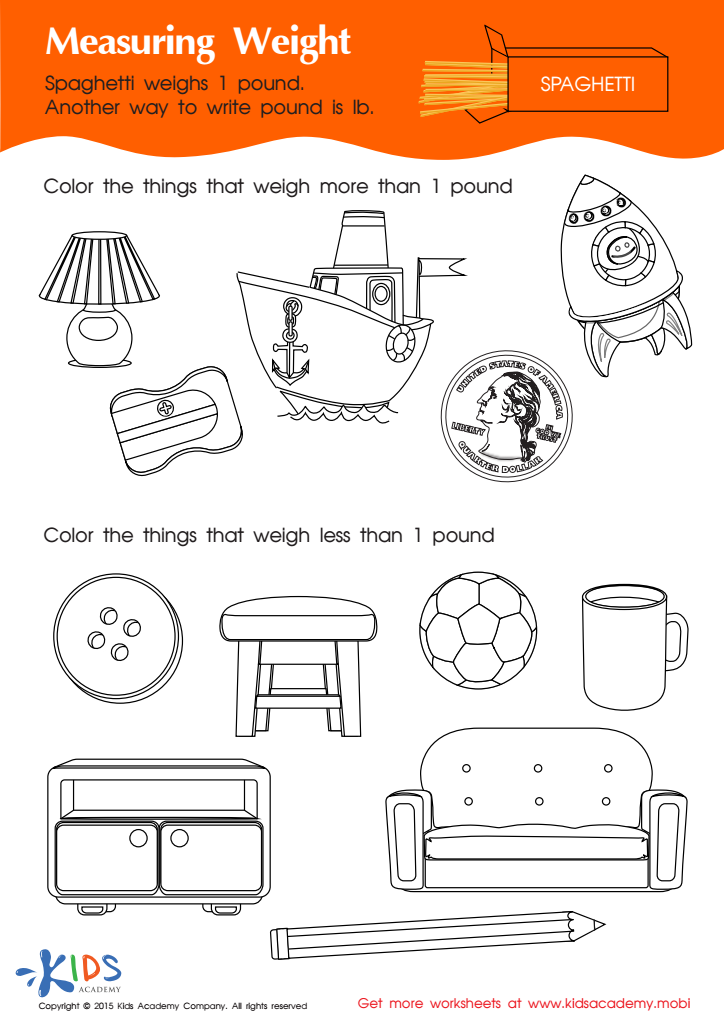
Introducing our "Comparing Object Weights Measurement Worksheets" for children ages 6-9! These engaging, educational activities are designed to strengthen your child's understanding of weight and measurement concepts through fun, practical exercises. With vibrant illustrations and clear instructions, youngsters will learn to compare and analyze different object weights using real-life examples. Perfect for classroom or home use, these worksheets will enhance critical thinking and problem-solving skills. Watch your child gain confidence in math while having fun! Ideal for educators and parents seeking interactive and effective learning tools. Explore now and jumpstart your child's journey in mastering measurement skills!
 Assign to My Students
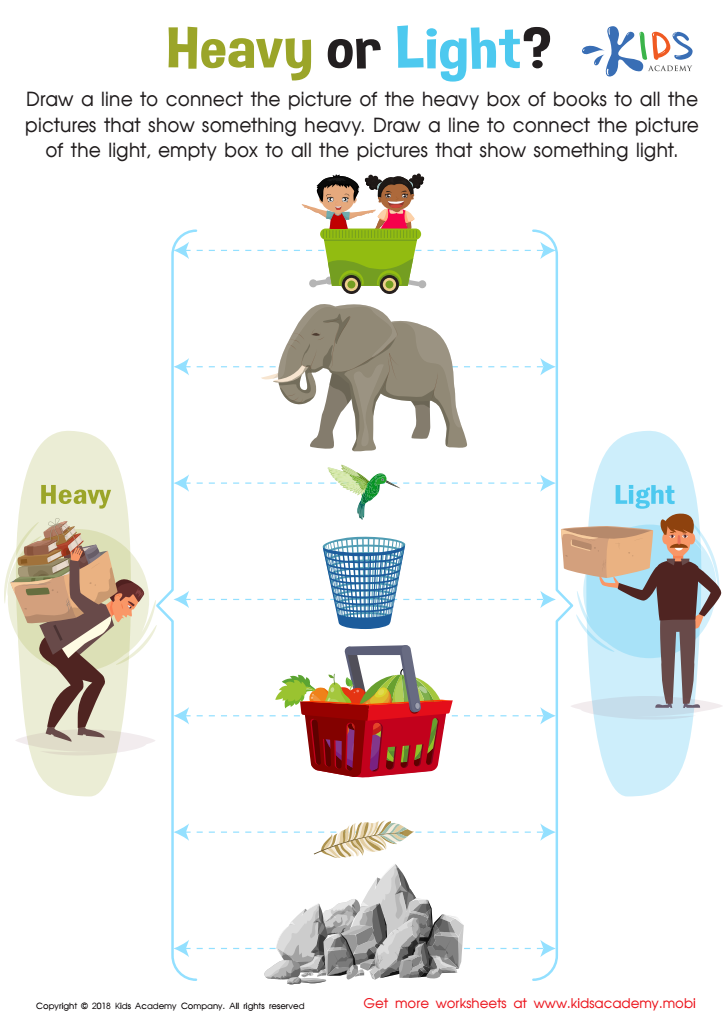
Heavy or Light? Worksheet
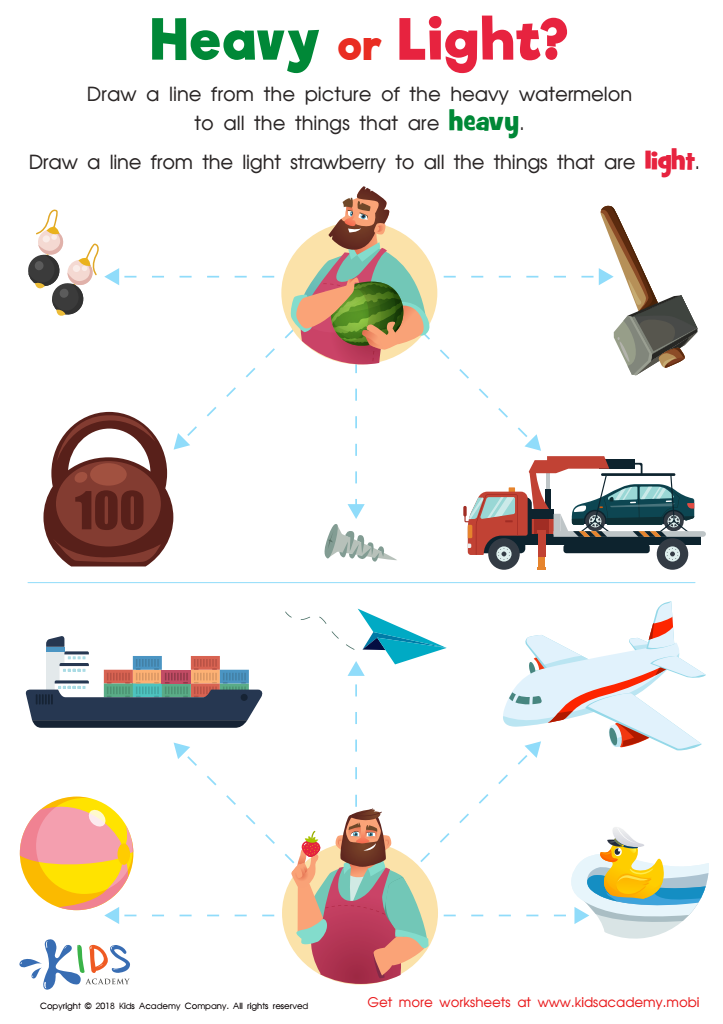
Heavy or Light? Worksheet







Teaching children to compare the weights of different objects is a fundamental skill in early education, particularly for ages 6-9. This stage of cognitive development involves enhancing their understanding of measurement, which is crucial for their overall mathematical foundation.
Firstly, comparing object weights helps develop critical thinking and reasoning abilities. When children assess which object is heavier or lighter, they learn to make observations, draw conclusions, and calibrate their judgments based on their experiences and empirical evidence.
Secondly, understanding measurements is integral to everyday life. Concepts such as weight, length, and volume are part of daily tasks and decisions. By mastering these skills early, children gain practical knowledge that they will use for a lifetime, from grocery shopping to cooking to solving real-world problems.
Moreover, comparing weights aids in improving spatial awareness and fine-motor skills. Handling objects, balancing scales, or estimating weights all engage children physically and mentally, reinforcing hand-eye coordination and muscle control.
Lastly, fostering competence in this area builds confidence and a love for learning. When children grasp these concepts, their sense of achievement propels them to explore more complex mathematical ideas, nurturing a positive attitude towards math.
Overall, incorporating weight measurement comparisons into early education promotes intellectual growth and equips children with essential life skills.








