Counting practice Numbers 11–20 Worksheets for Ages 6-9
4 filtered results
Difficulty Level
Grade
Age
-
From - To
Subject
Activity
Standards
Discover engaging counting practice for young learners with our Numbers 11-20 Worksheets, designed for ages 6-9. These educational worksheets strengthen number recognition and sequencing skills, helping children master the numbers 11 through 20. Crafted to suit various learning styles, each worksheet features colorful designs and fun activities to keep kids motivated. Ideal for both parents and teachers, our printables support classroom lessons or home learning environments. From counting objects to filling in number sequences, these exercises provide a comprehensive approach to early math education, ensuring your child builds a solid numerical foundation in an enjoyable way.
Favorites
With answer key
Interactive
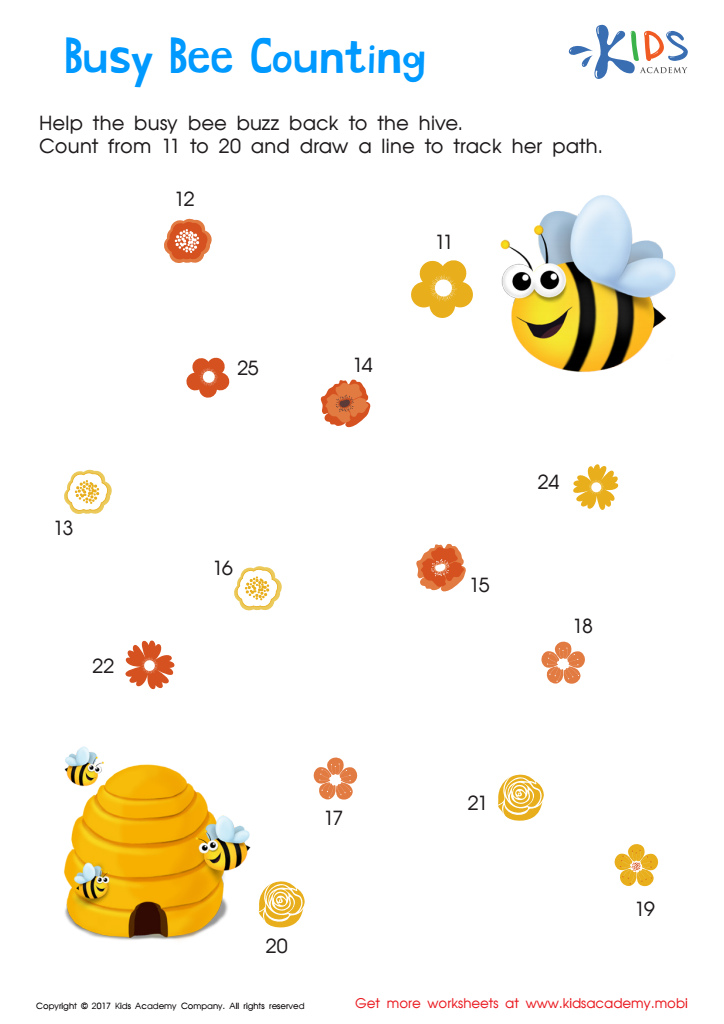
Ordering 11–20: Busy Bee Counting Worksheet
Help your child master counting from 11 to 20 with our connect the dot counting worksheet. Kids will have fun counting, drawing and problem-solving with this vibrant worksheet. With clear directions, adorable pictures and a sense of purpose, your child will develop crucial numeracy skills without even knowing it!
 Assign to My Students
Ordering 11–20: Busy Bee Counting Worksheet
Worksheet
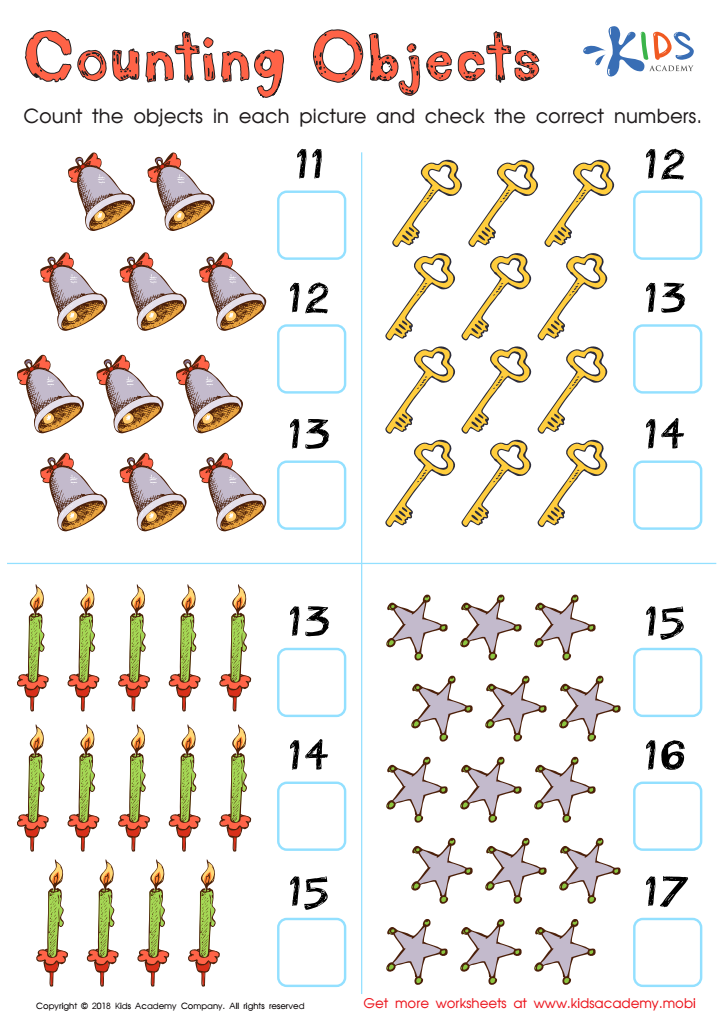
Counting Numbers Worksheet For Kindergarten
This worksheet is a great way to get your child practicing foundational math skills. With bright pictures to count, counting numbers just got a lot more fun! Get them ready for future math success and help them hone their early math skills.
Counting Numbers Worksheet For Kindergarten
Worksheet
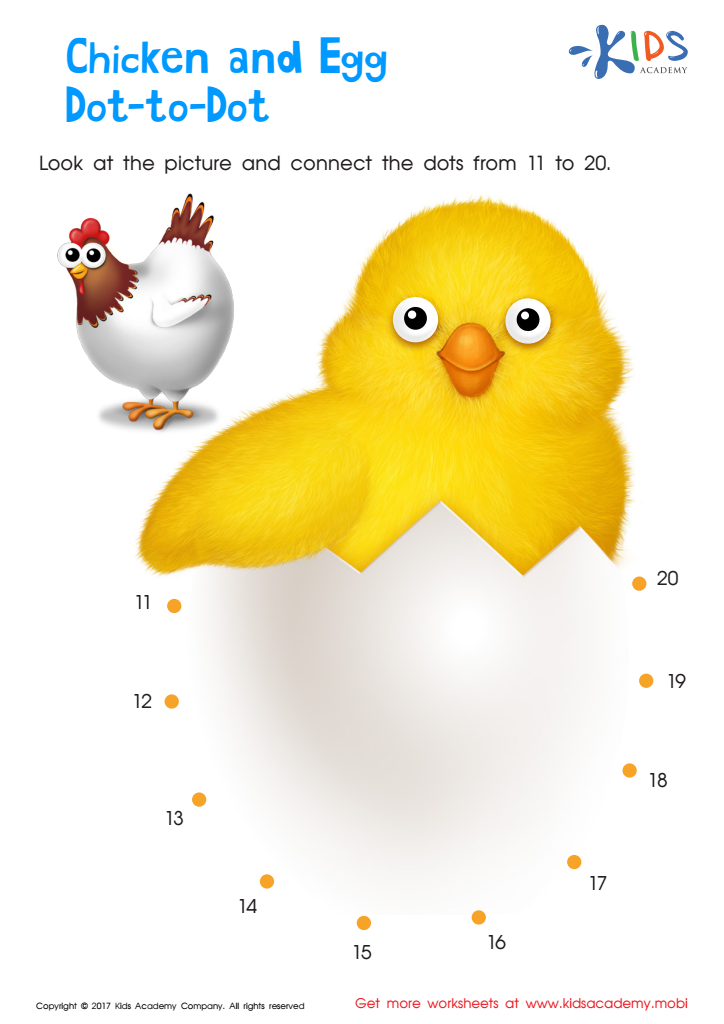
Ordering 11–20: Chicken & Egg Dot–to–dot Worksheet
Help your child hatch the chick and practice their counting skills with this dot to dot worksheet – the chicken came first! Connect the dots 11-20 to have fun and learn at the same time. Experience meaningful practice and gain confidence while drawing great pictures.
Ordering 11–20: Chicken & Egg Dot–to–dot Worksheet
Worksheet
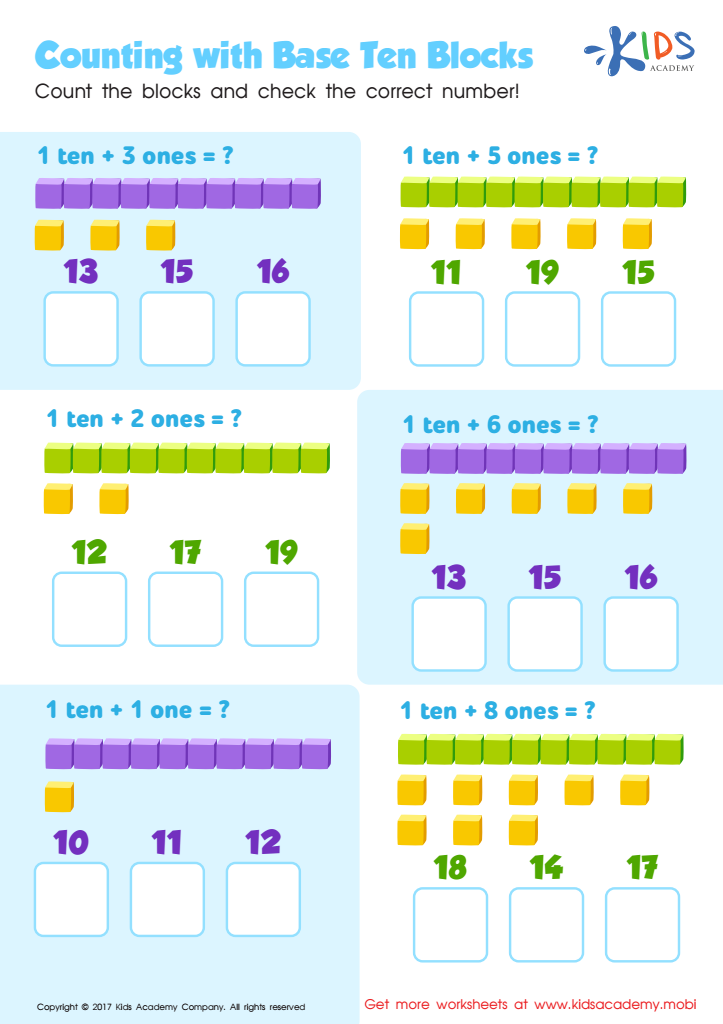
Counting with Base Ten Blocks Worksheet
Math has different levels and gets harder as your child progresses. Don't be surprised when they bring home an algebra worksheet! In this one, they will add 1 tens to varying numbers and fill in the total. This builds their understanding of base tens.
Counting with Base Ten Blocks Worksheet
Worksheet
Join Kids Academy for Free
Who is primarily going to use this learning content?



Teaching children aged 6-9 to count numbers from 11 to 20 is essential for several fundamental developmental reasons. First, mastering these numbers builds a crucial bridge in mathematical understanding. Numbers 1-10 are often grasped fairly easily, but 11-20 introduce unique patterns and irregularities. Learning to count beyond ten can demystify these patterns, laying a foundation for arithmetic skills, such as addition and subtraction.
Second, numeracy skills at this stage directly affect a child's confidence in math. Struggling with basic counting can lead to math anxiety and can impact their willingness to engage with more complex mathematical concepts. Consistent counting practice solidifies their comfort and capability with numbers, boosting self-esteem and setting a positive trajectory for future learning.
Third, counting from 11 to 20 also enhances cognitive development, such as memory, sequencing, and logical reasoning. These skills are not just vital for mathematics; they positively influence other academic areas and problem-solving capabilities in everyday life.
Lastly, engaging in counting activities strengthens the teacher-student and parent-child bond by encouraging collaborative and joyful learning experiences. Games, songs, and interactive counting can make learning dynamic and enjoyable, promoting a love for lifelong learning. Therefore, dedicating effort to mastering these numbers benefits children academically, cognitively, and emotionally.