Number comprehension Subtraction Worksheets for Ages 6-9
10 filtered results
-
From - To
Enhance your child's math skills with our Number Comprehension Subtraction Worksheets tailored for ages 6-9! These engaging and interactive worksheets are designed to help young learners develop a solid understanding of subtraction concepts. With a variety of problems that focus on visual aids, word problems, and number lines, kids will confidently grasp the fundamentals of subtraction. Each worksheet aims to promote critical thinking and problem-solving abilities in a fun and engaging way. Perfect for home or classroom use, our resources provide parents and educators with effective tools to support their child's math journey. Download now and watch your child's confidence soar!
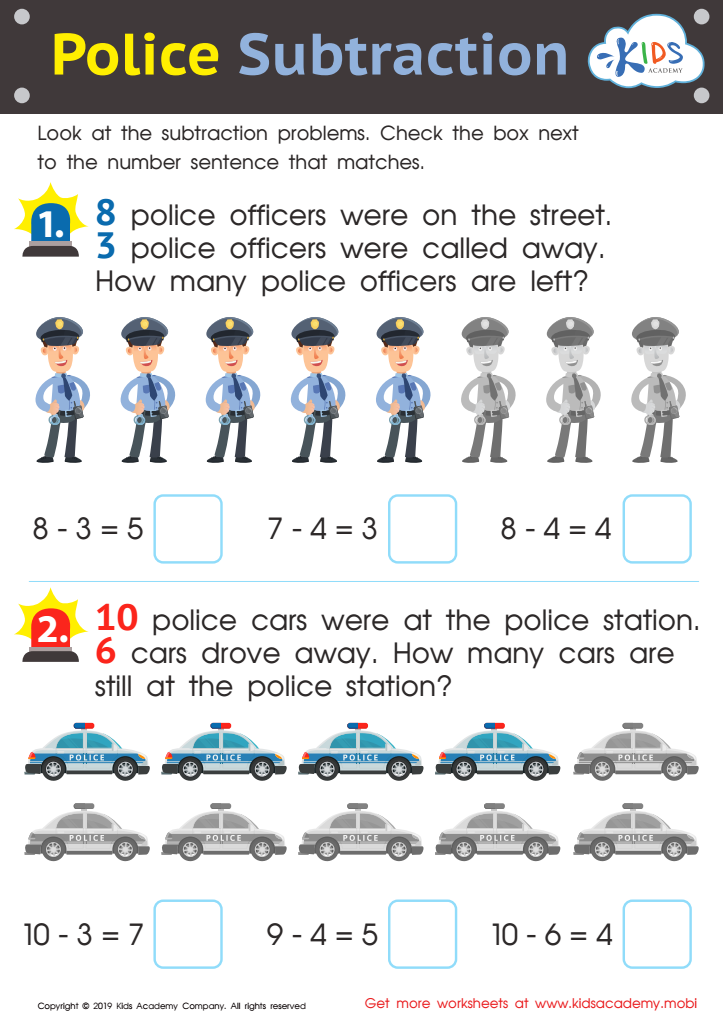
Police Subtraction Worksheet
 Assign to My Students
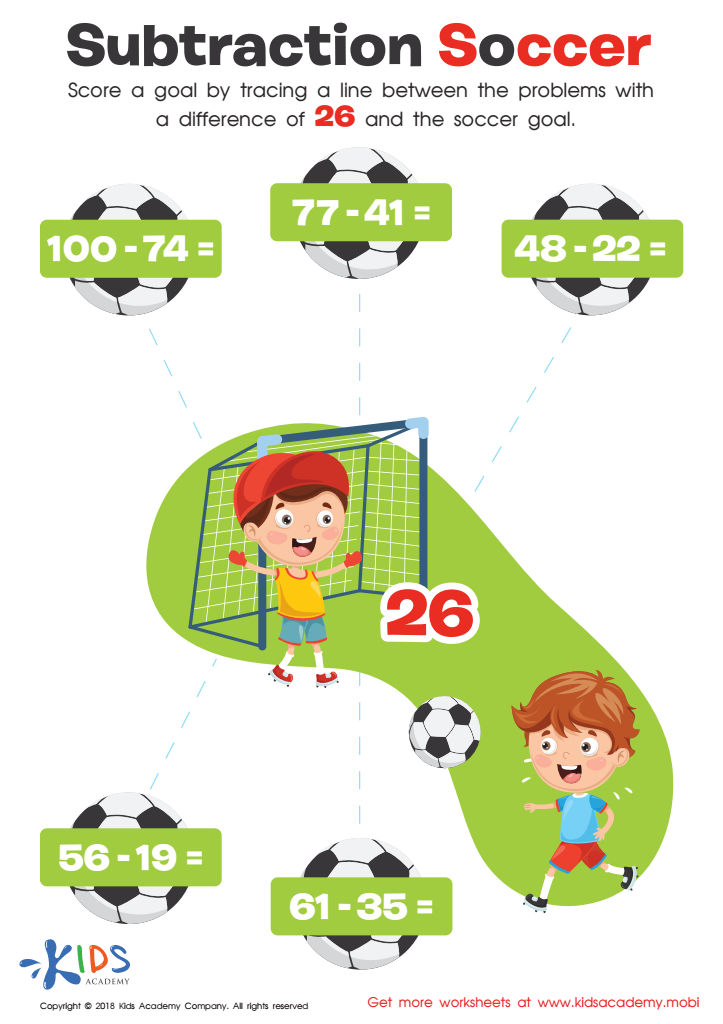
Subtraction Soccer Worksheet
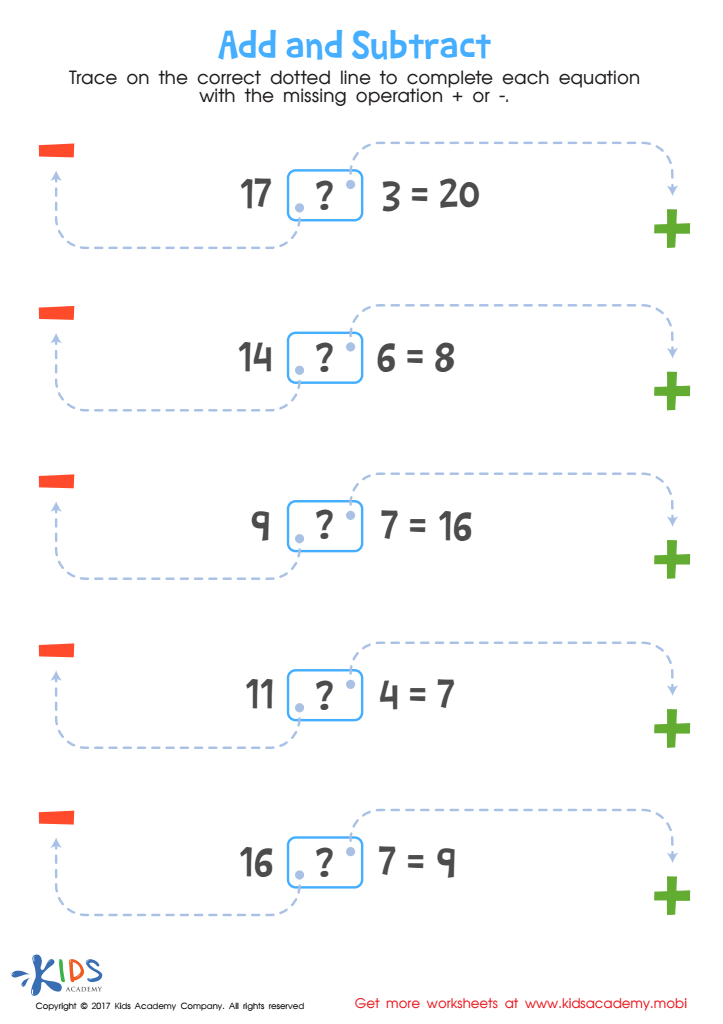
Add and Subtract Worksheet
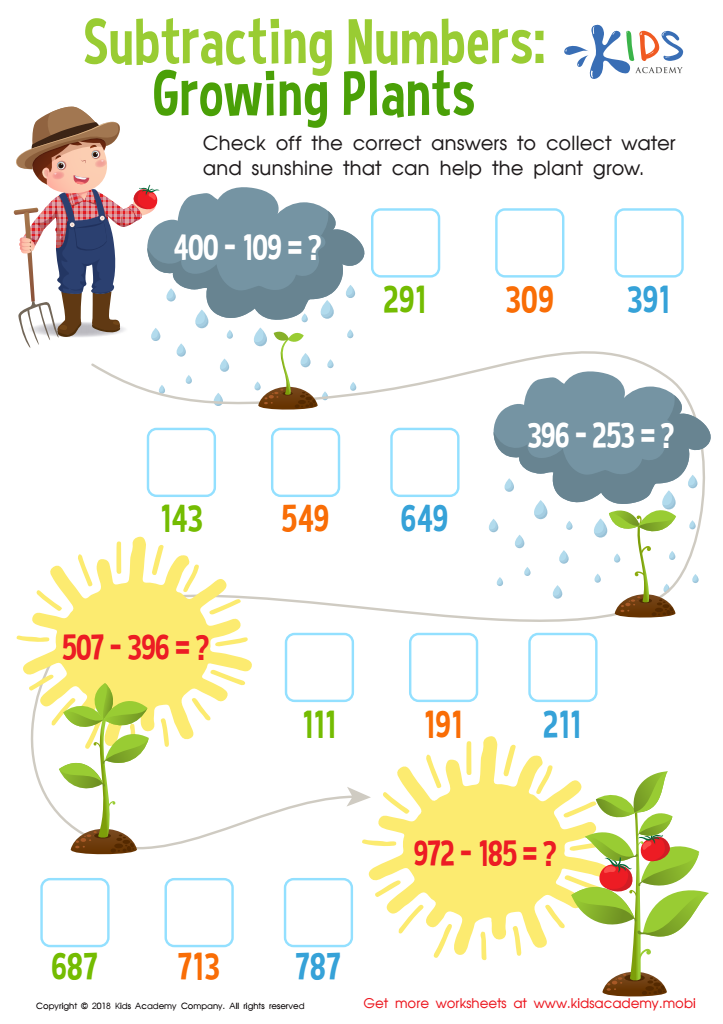
Subtracting Numbers: Growing Plants Worksheet
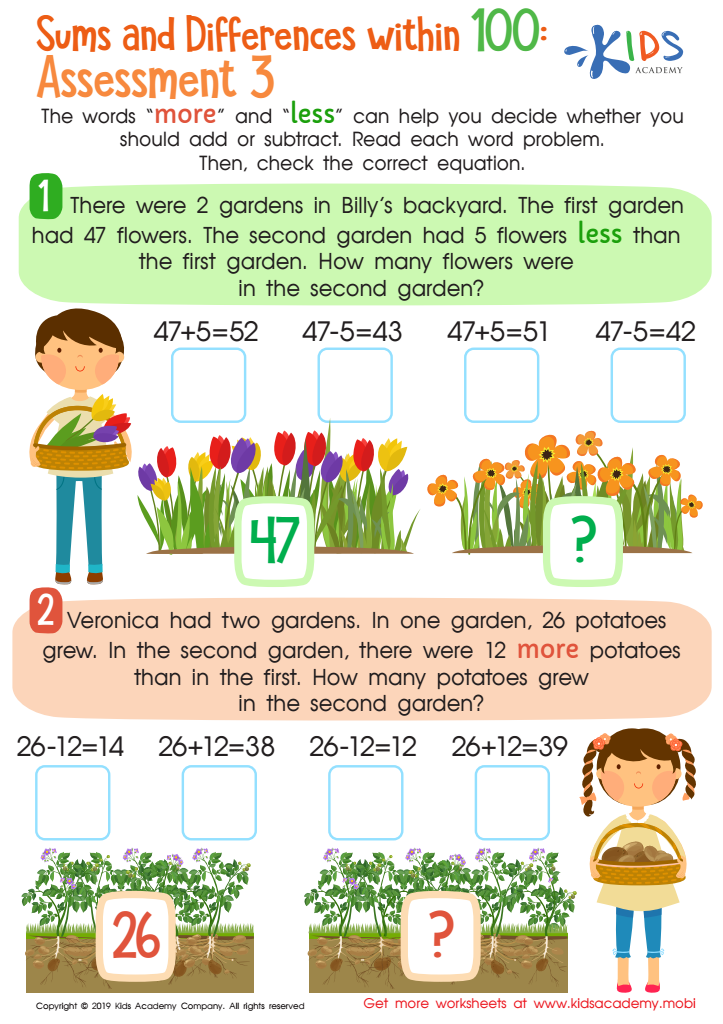
Sums and Differences Within 1 - Assessment 1 Worksheet
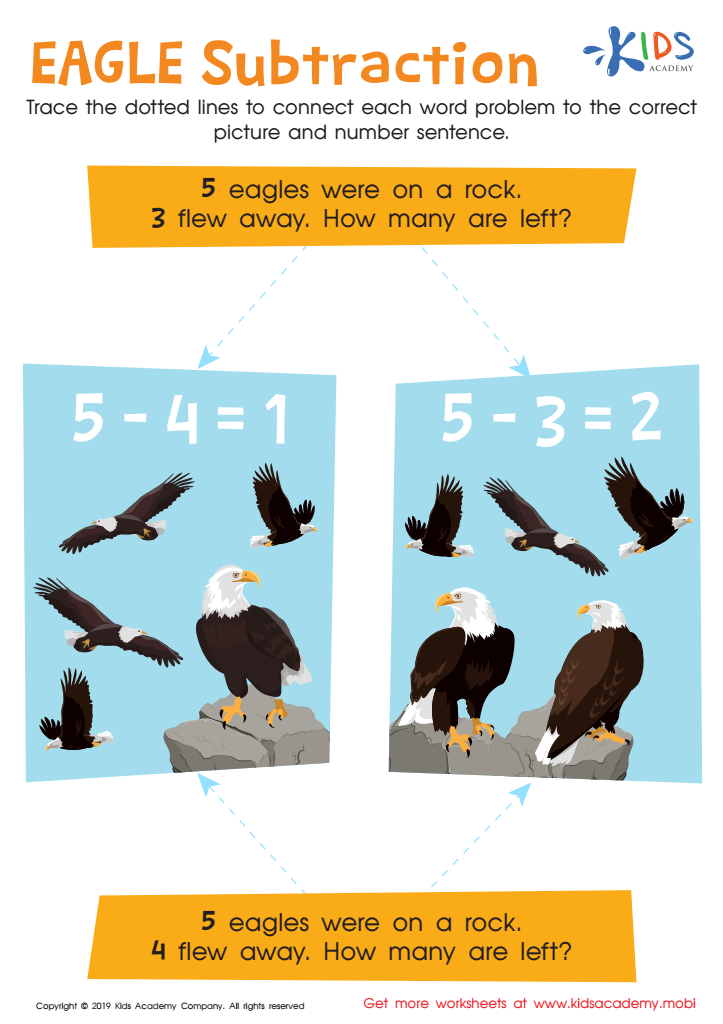
Eagle Subtraction Worksheet
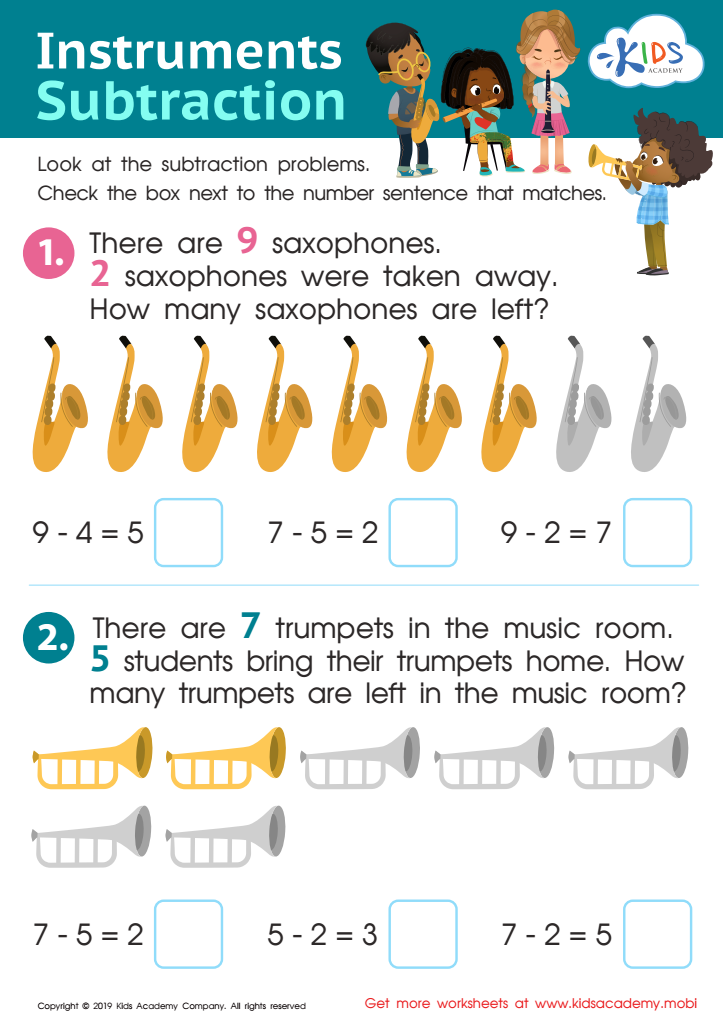
Instrument Subtraction Worksheet
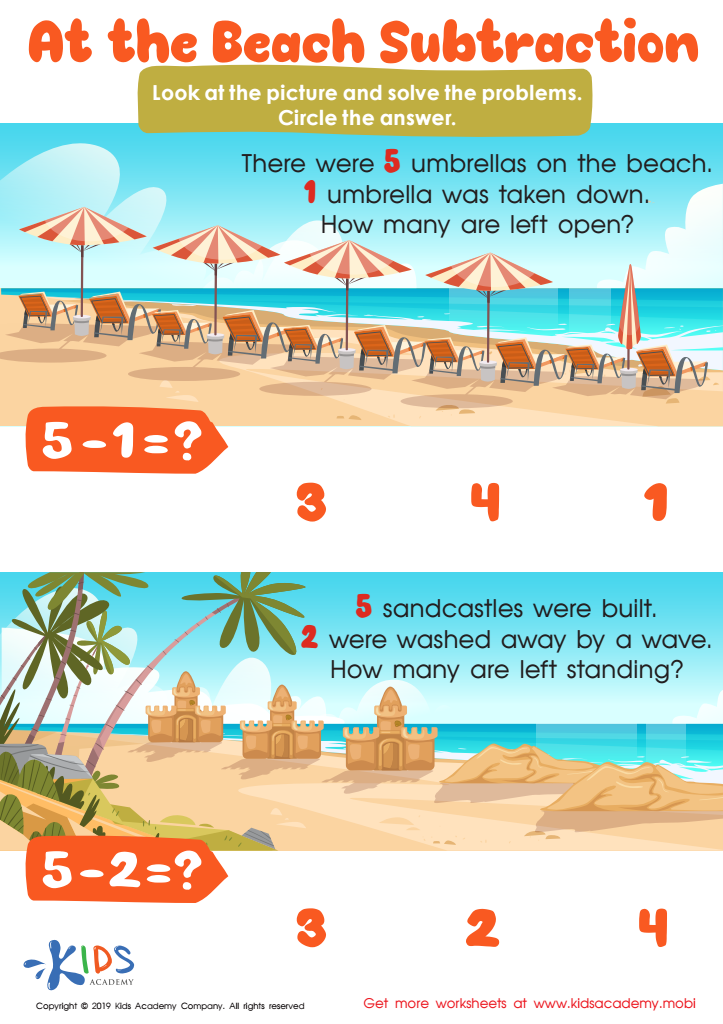
At the Beach Subtraction Worksheet
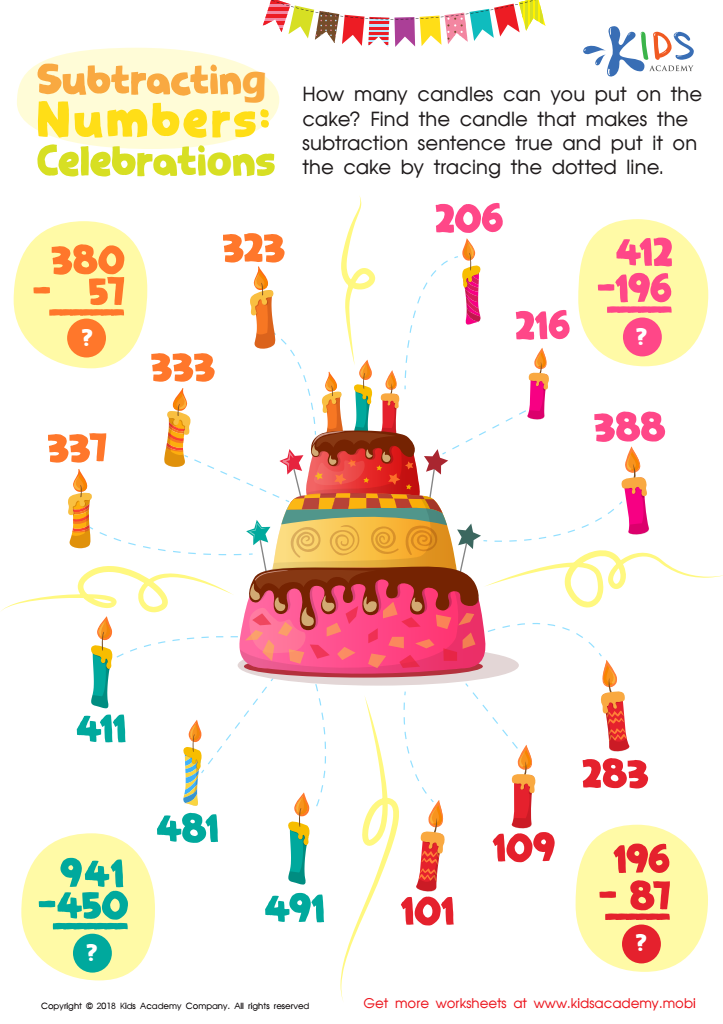
Subtracting Numbers: Celebrations Worksheet
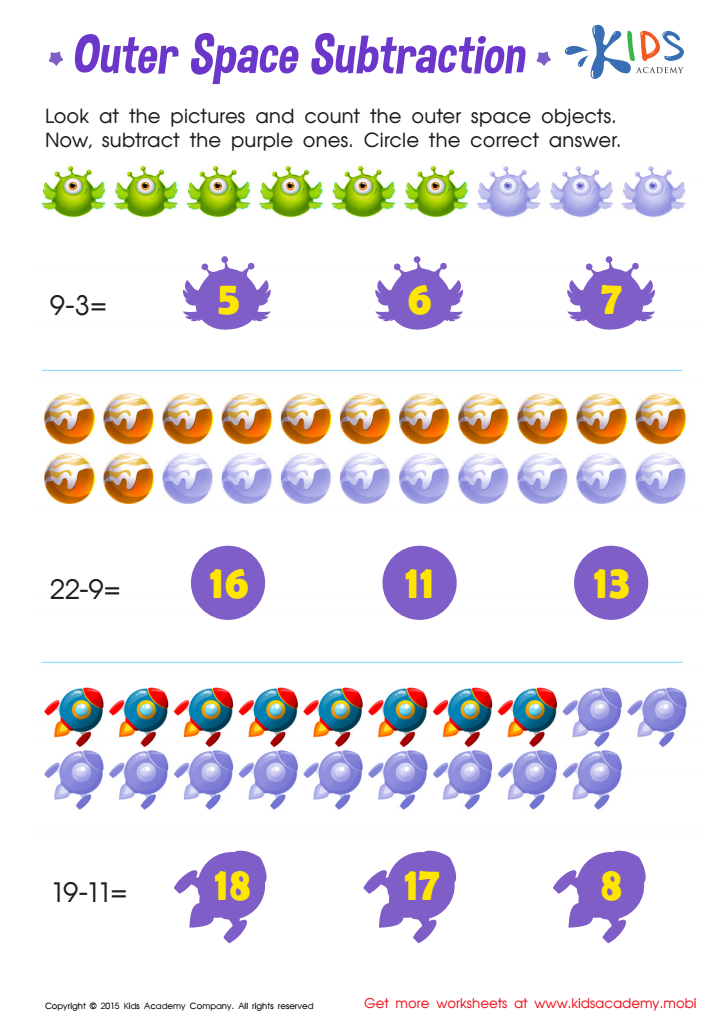
Outer Space Substraction Worksheet








Number comprehension and subtraction are essential skills for children aged 6 to 9, forming the foundation for their mathematical development. This age group is critical as children transition from concrete understanding to more abstract thinking. Mastering subtraction not only aids in their ability to solve basic arithmetic problems but also enhances their problem-solving skills and critical thinking.
Parents and teachers should prioritize number comprehension and subtraction for several reasons. Firstly, these skills are integral to everyday life; children will apply subtraction when managing money, telling time, and measuring. A solid grasp of subtraction helps build confidence in mathematics, reducing math anxiety and fostering a positive attitude towards the subject.
Additionally, number comprehension equips children with the ability to understand and manipulate numbers, which is vital for grasping advanced concepts in later years, such as multiplication and division. It lays the groundwork for higher-level math skills necessary in future academic curricula.
Investing time and resources in cultivating number comprehension and subtraction abilities can have significant long-term benefits, including improved academic performance, better conceptual understanding, and greater readiness for future challenges in mathematics. Ultimately, fostering these skills in young learners is an investment in their overall cognitive development, emotional well-being, and future success.








