Enhance your child's vocabulary skills with our engaging Contextual Understanding Building Vocabulary Worksheets, designed specifically for ages 6-9. These interactive worksheets promote effective learning by encouraging young readers to comprehend words within their context, fostering deeper connections and retention. Each worksheet features fun, age-appropriate activities that stimulate critical thinking and improve language skills, making learning enjoyable. Parents and teachers can easily incorporate these resources into their curricula, ensuring children not only expand their vocabulary but also develop essential reading comprehension abilities. Explore our diverse collection of worksheets to empower your child's language journey today!

Check out this FREE Trial Lesson on Building Vocabulary for age 6-9!

Determine the Meaning of Words with Common Prefixes

Favorites
With answer key
Interactive
  • 6-9
  • Contextual understanding
  • Building Vocabulary
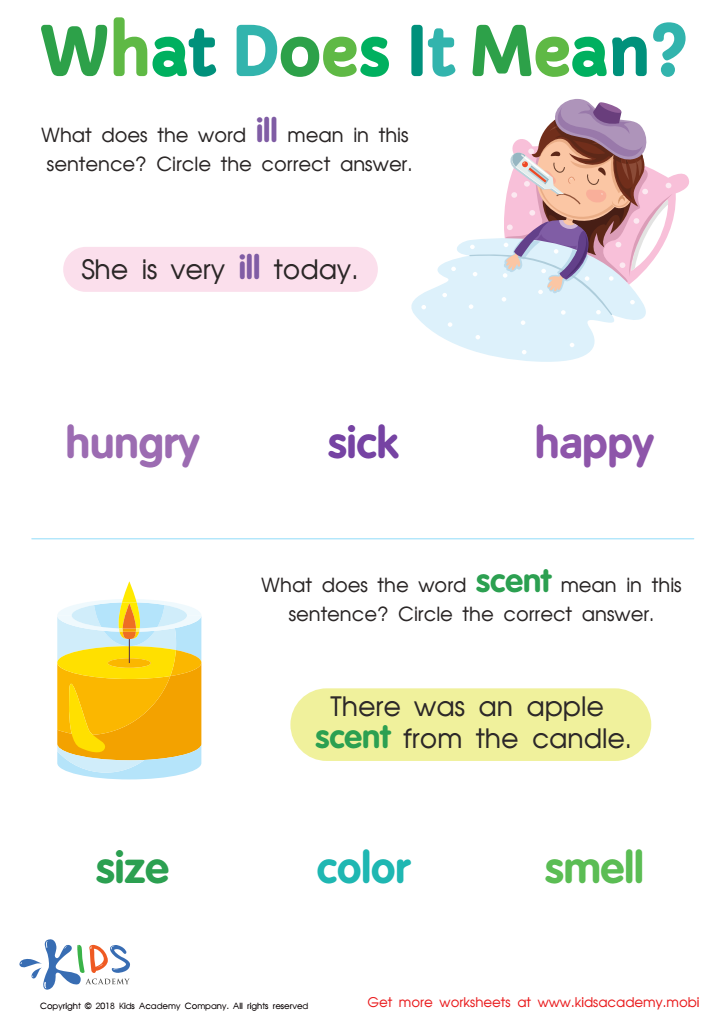
What Does It Mean? Worksheet

What Does It Mean? Worksheet

Students should know the meaning of words, even when used in different contexts. This worksheet has two sections. In the first, there's a picture on the right side. Ask students the meaning of 'ill' in "she is very ill today". Help them circle the correct answer from the options. The second section follows the same pattern. Make sure students circle the right answer.
What Does It Mean? Worksheet
Worksheet
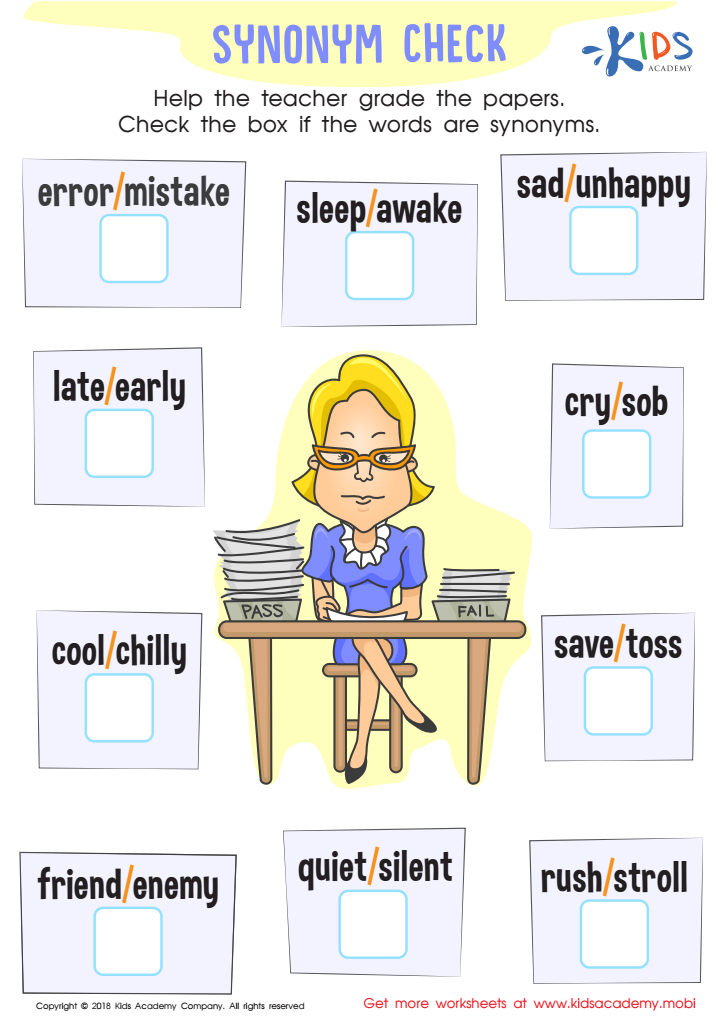
Synonym Check Worksheet

Synonym Check Worksheet

Ask your kids what a synonym is, and listen to their definitions. If needed, explain it's a word that has a similar meaning to another. Give examples, then ask them to do the same. For this worksheet, get them to help grade the papers. Have them check the boxes if the words are synonyms.
Synonym Check Worksheet
Worksheet
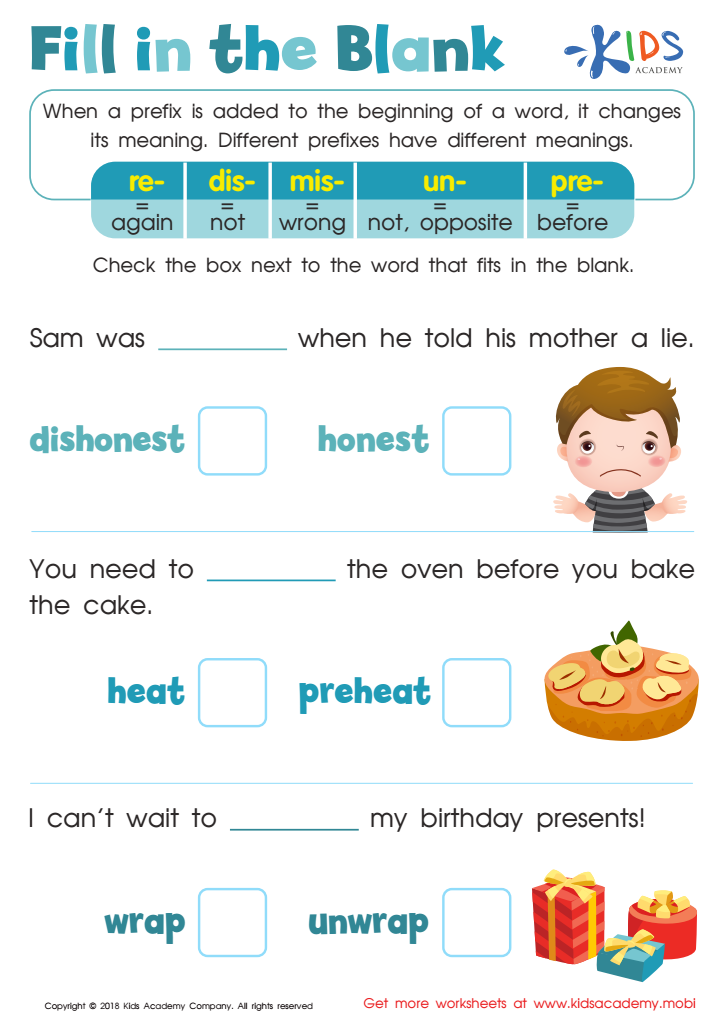
Reading: Fill in the Blank Worksheet

Reading: Fill in the Blank Worksheet

Students can practice understanding the meaning of common prefixes with this worksheet. They read sentences and pick the correct word with the appropriate prefix to complete it. Downloadable and a great addition to reading and vocabulary resources, this helps improve comprehension with mastery of the skill!
Reading: Fill in the Blank Worksheet
Worksheet
Adjectives: At The Zoo Worksheet

Adjectives: At The Zoo Worksheet

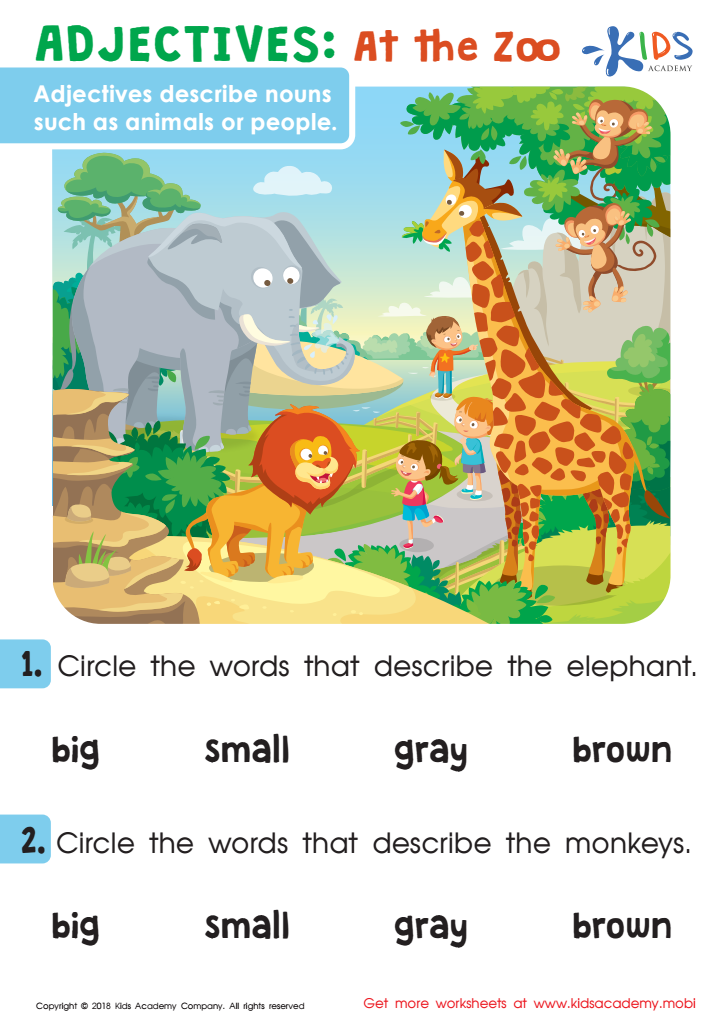
Take your kids to the zoo and ask them about their favorite activities and animals. This worksheet is a great way for kids to learn about adjectives. Explain that adjectives describe nouns like people or animals (e.g. big, tall, dark). Look at the printout with your kids and help them circle words that describe the animals in the picture.
Adjectives: At The Zoo Worksheet
Worksheet
Free printable synonym worksheets for 2nd grade

Free Printable Synonym Worksheet

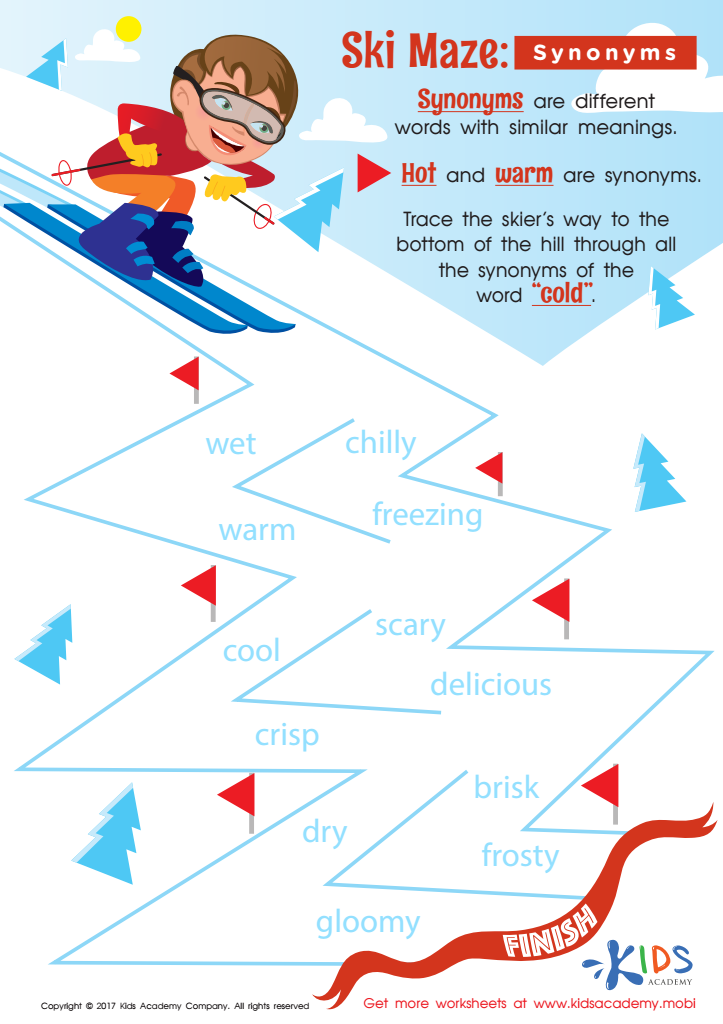
Our free printable synonym worksheet for 2nd grade will help kids learn similar words to expand their vocabulary. Kids will have fun challenging themselves to find all the words that are synonyms for “cold”. Enhance their language and writing with this joyful worksheet!
Free Printable Synonym Worksheet
Worksheet
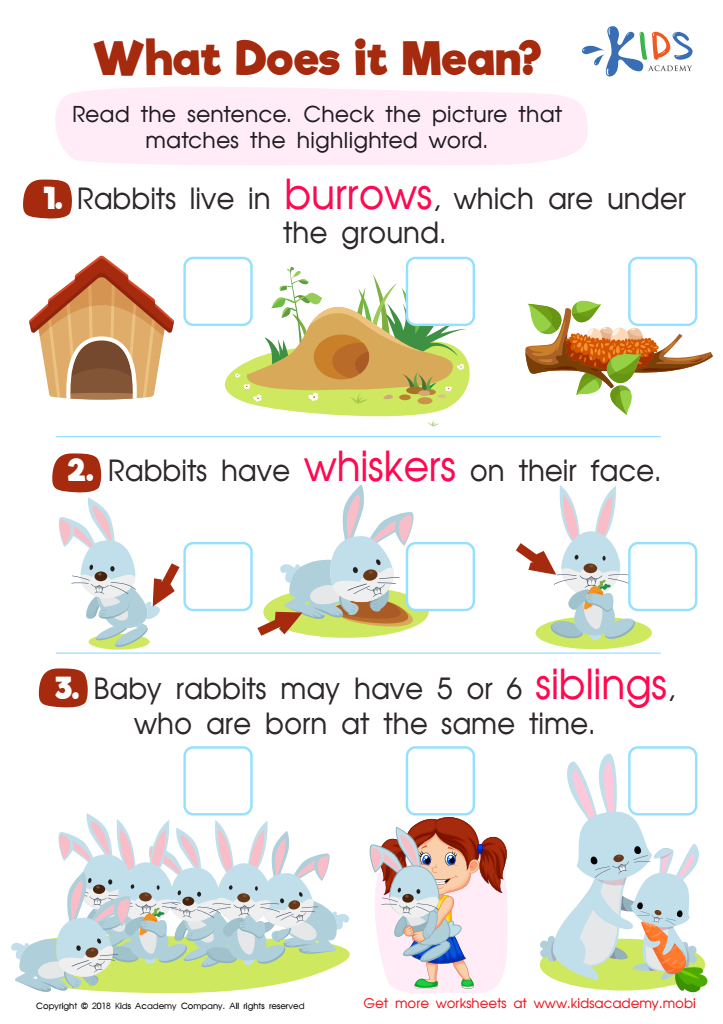
What Does It Mean? Worksheet

What Does It Mean? Worksheet

Teach your child to use context clues with this engaging Kids Academy worksheet. Read the sentences and find the pink-highlighted word. Use the other words in the sentence to figure out the meaning, then check the box next to the picture that represents it.
What Does It Mean? Worksheet
Worksheet
Word Choice Worksheet


Word Choice Worksheet

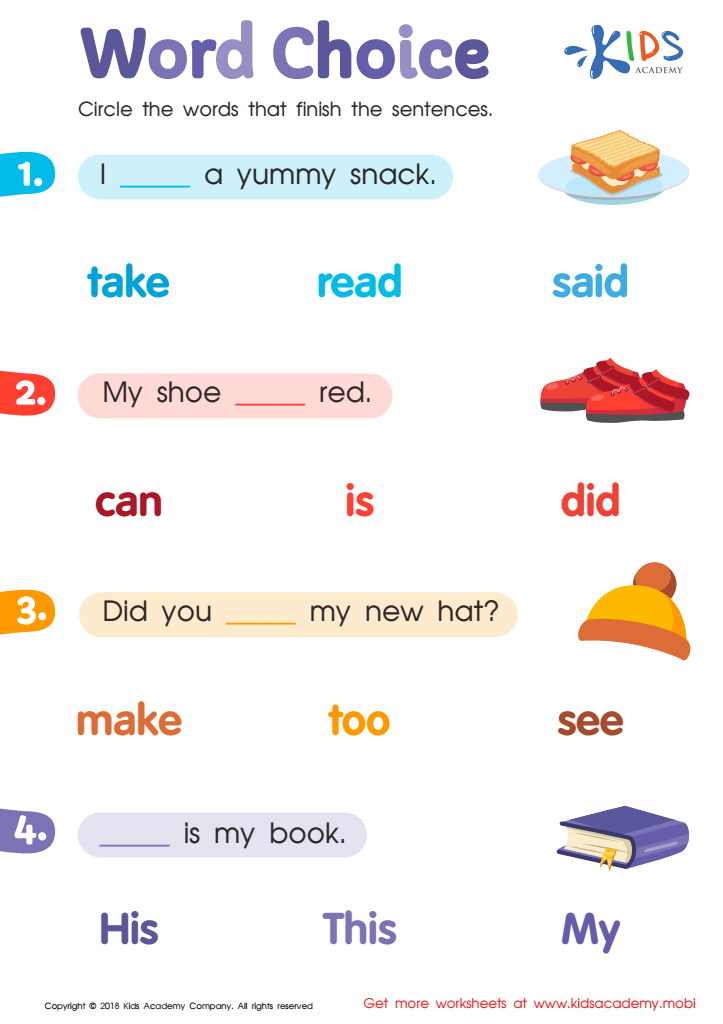
This worksheet can help your children become better readers. By now, you should have an idea of their reading level. Read the incomplete sentences aloud and point to the missing piece. Have your students pick the correct word they think best fits the sentence out of the options given.
Word Choice Worksheet
Worksheet


Contextual understanding and building vocabulary are crucial components of literacy for children aged 6-9. During these formative years, children begin to navigate complex texts and develop critical comprehension skills. Supporting contextual understanding helps children grasp not only the meanings of individual words but also their significance within a sentence or story, allowing for deeper comprehension.

When children understand words in context, they are able to infer meanings, make connections to their prior knowledge, and engage more fully with the material. This process enriches their reading experience and fosters a love for literature.

Additionally, a strong vocabulary is linked to academic success across all subjects. By learning new words, children enhance their ability to express themselves clearly and effectively, both in spoken and written forms. It also boosts their confidence in participating in classroom discussions and collaborating with peers.

Parents and teachers play a vital role in facilitating this growth through rich language interactions, such as reading aloud, discussing stories, and introducing new vocabulary in meaningful ways. Together, they can create a supportive environment that encourages exploration and curiosity in language, laying a solid foundation for lifelong learning and effective communication. Investing time in these areas is not just beneficial; it is essential for future academic achievement.