Sight word recognition Building Vocabulary Worksheets for Ages 6-9
11 filtered results
-
From - To
Boost your child's reading abilities with our "Sight Word Recognition Building Vocabulary Worksheets" designed for ages 6-9. These engaging worksheets help young learners master essential sight words, enhancing their reading fluency and vocabulary. Each activity is tailored to make learning enjoyable while promoting confidence in reading simple sentences. Through repeated practice, children will quickly recognize common words, aiding in faster and more efficient reading. Perfect for classroom or at-home use, these worksheets are a great tool to support your child’s literacy journey. Watch as they grow into skilled, confident readers, one worksheet at a time!
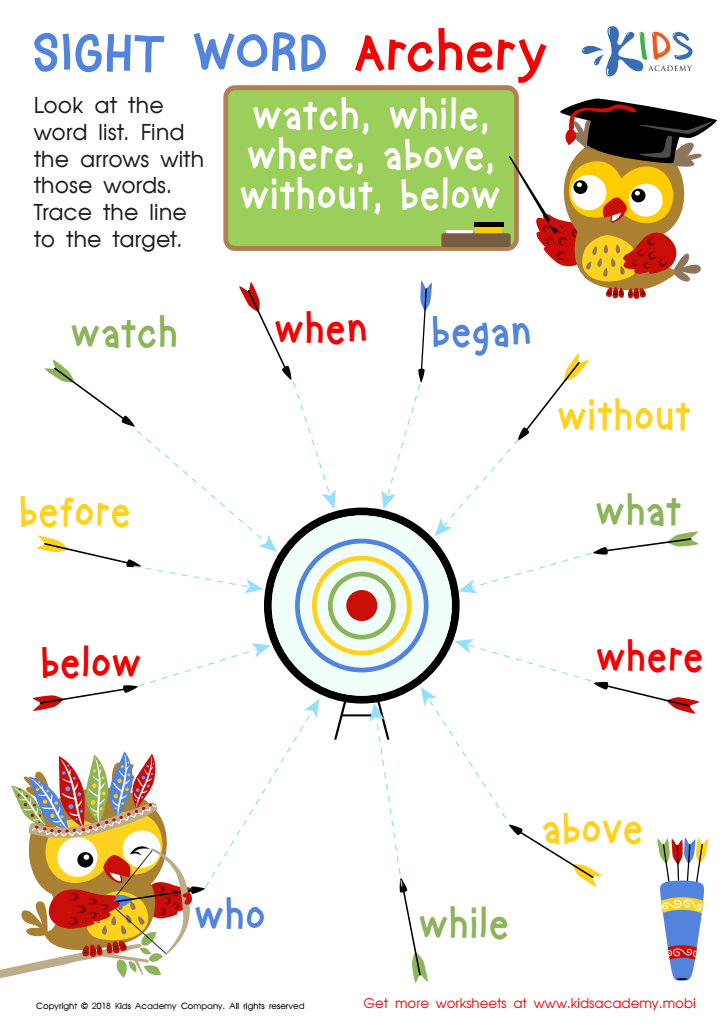
Sight Word Archery Worksheet
 Assign to My Students











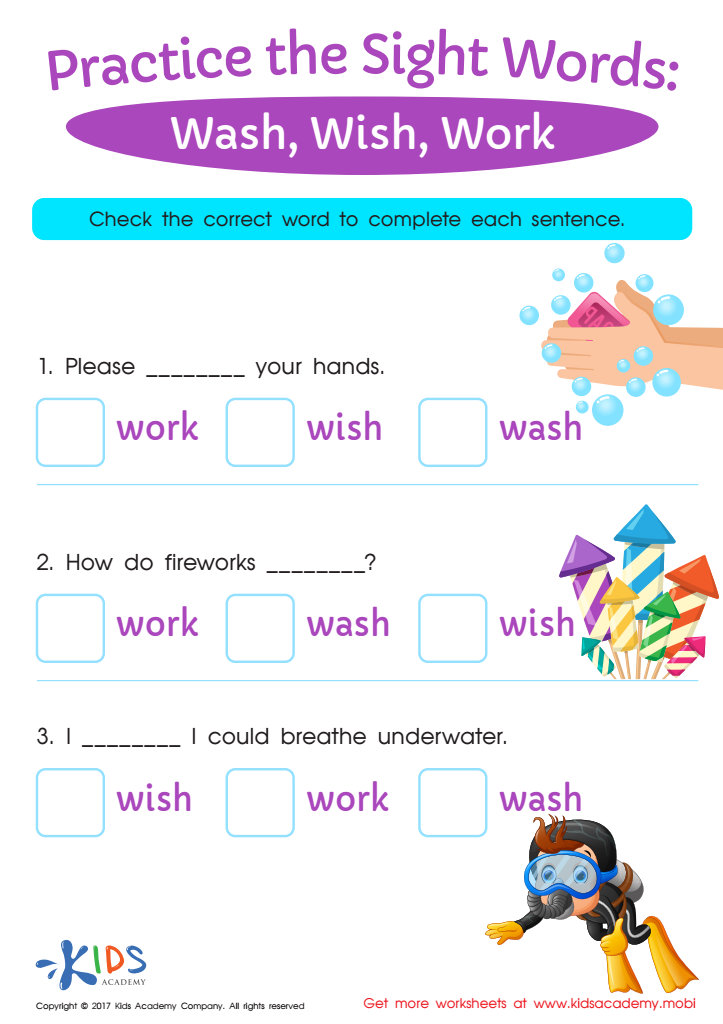
Wash, Wish, Work Sight Words Worksheet
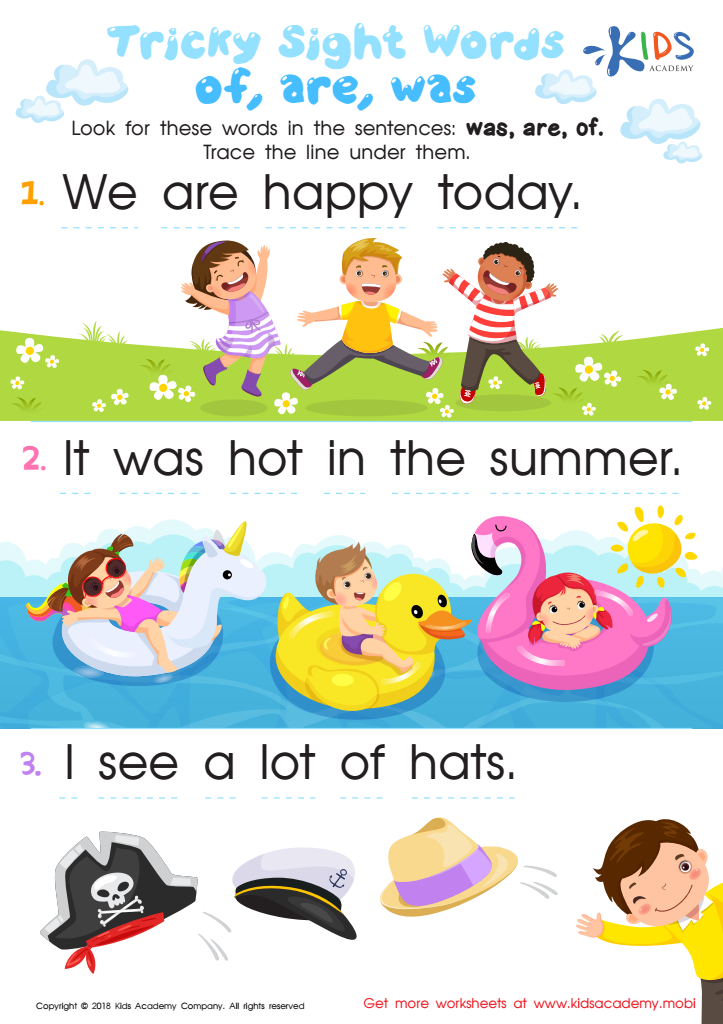
Tricky Sight Words Worksheet
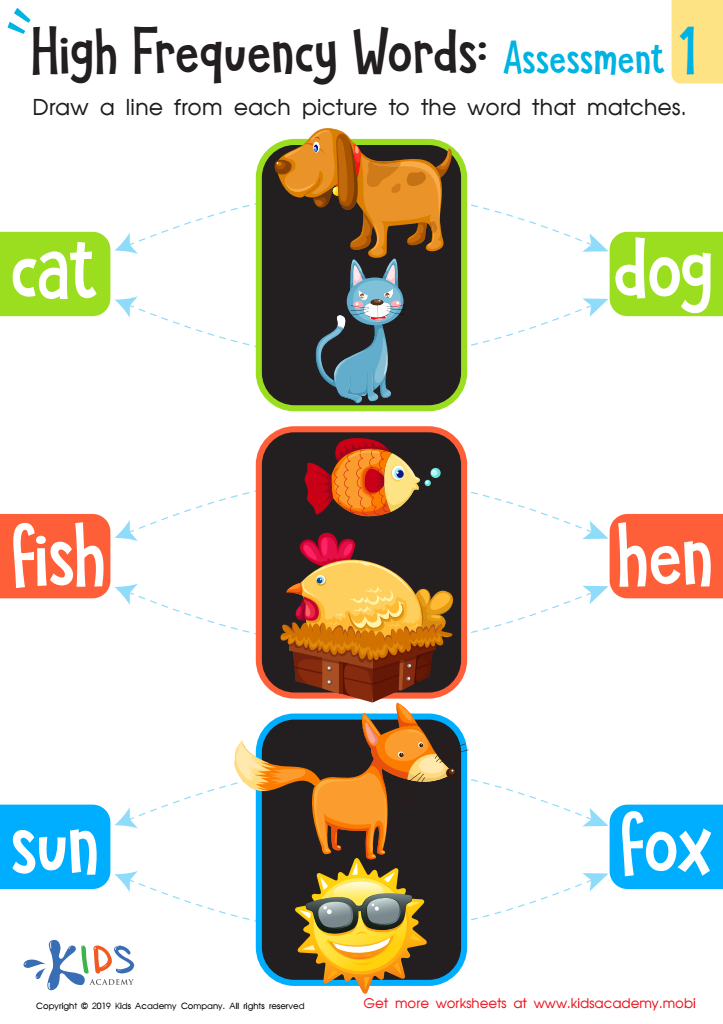
High Frequency Words: Assessment 1 Worksheet
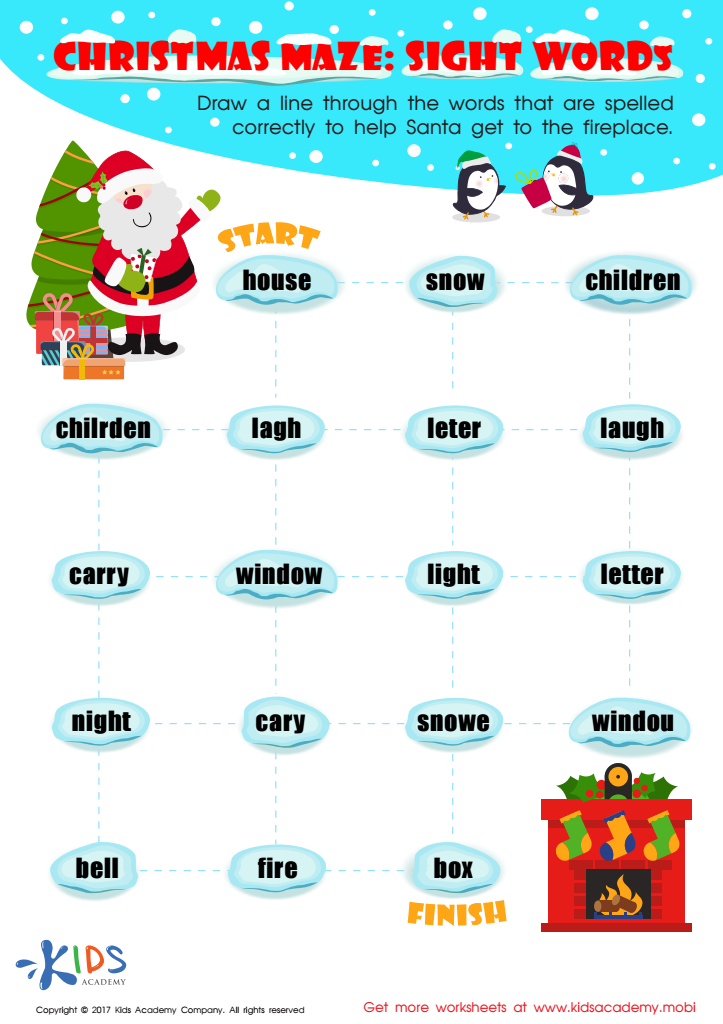
Sight Words Christmas Maze Printable
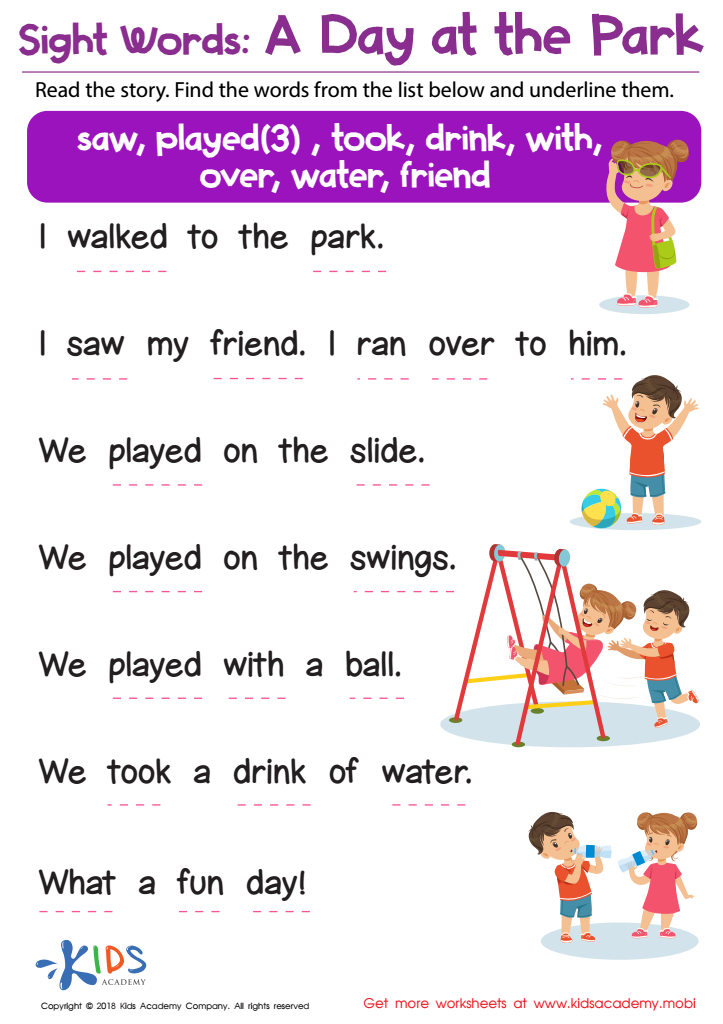
Sight Words: A Day at the Park Worksheet
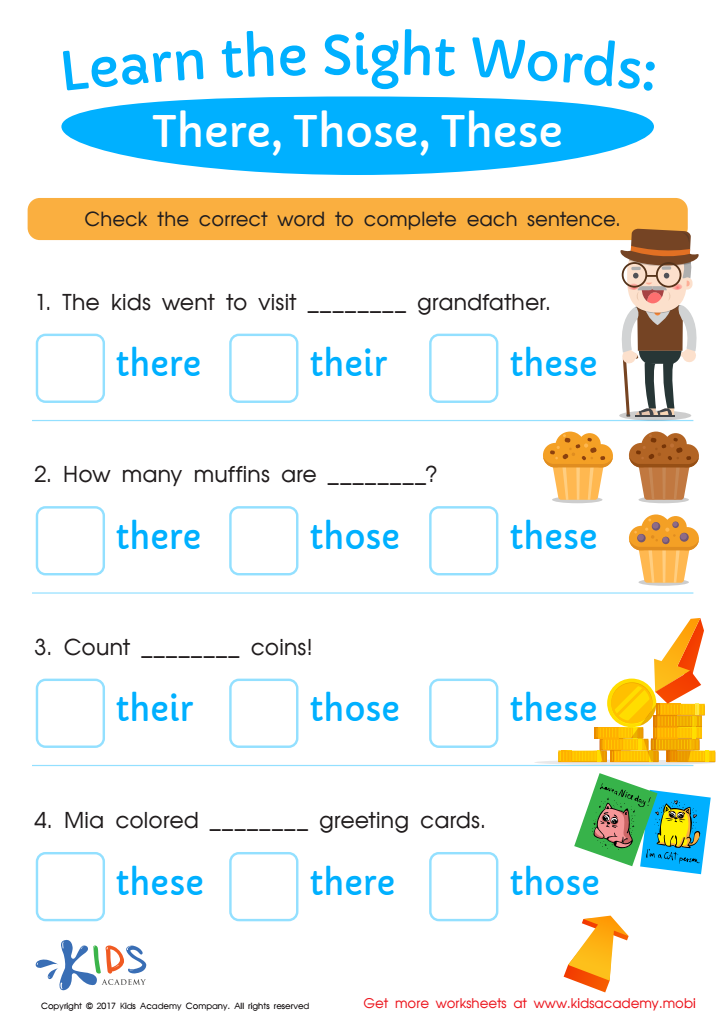
There, Those and These Sight Words Worksheet
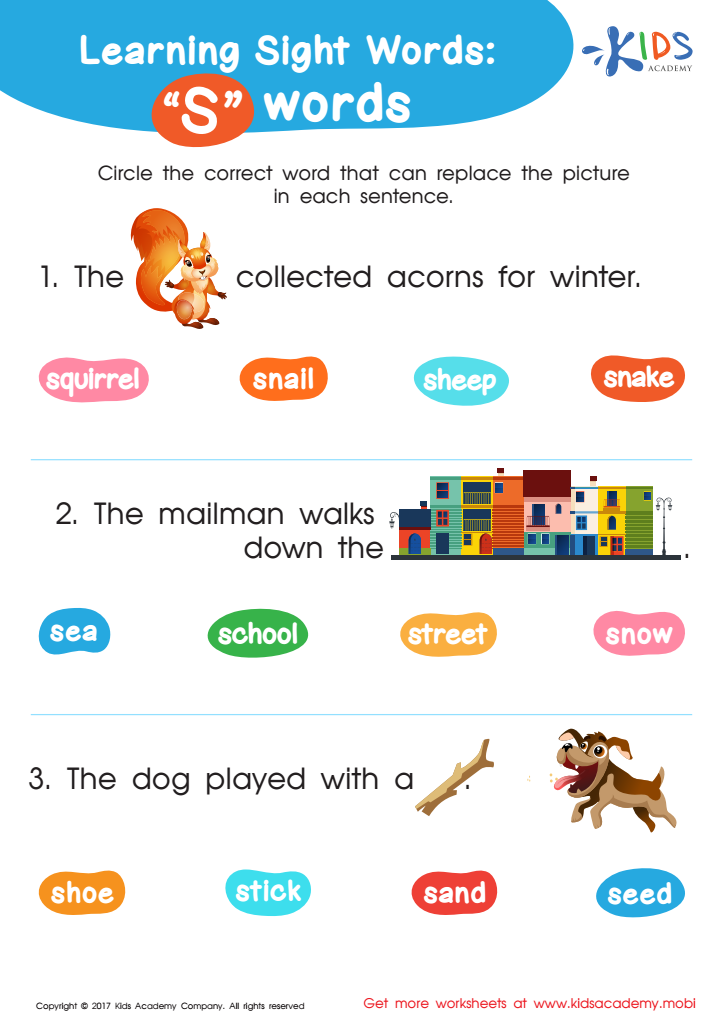
S Words Sight Words Worksheet
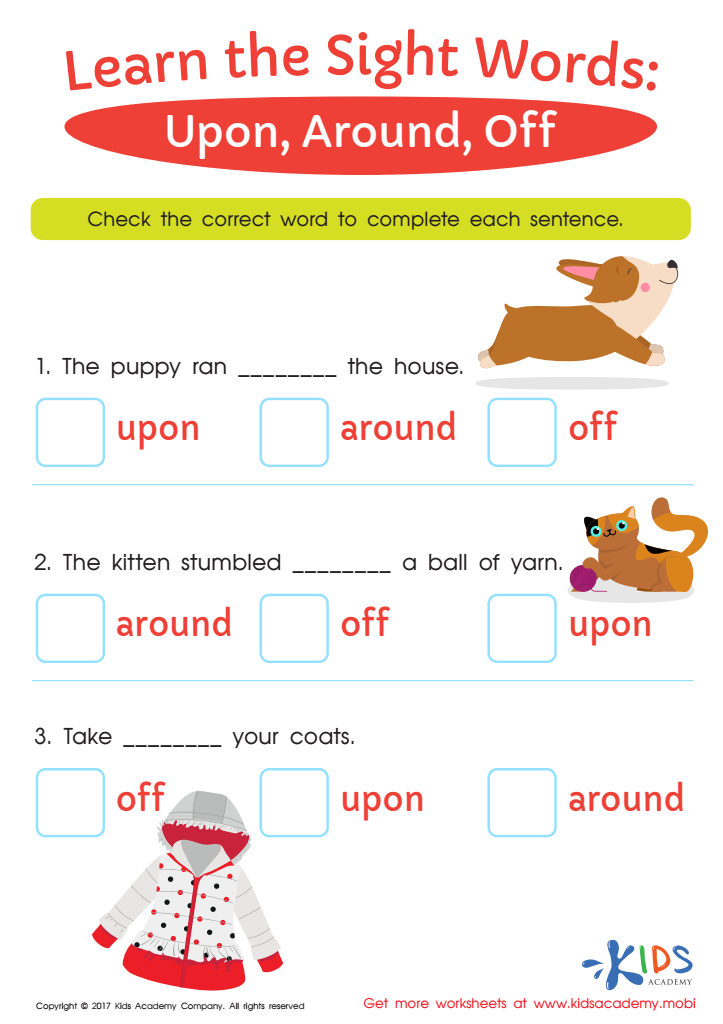
Upon, Around, Off Sight Words Worksheet
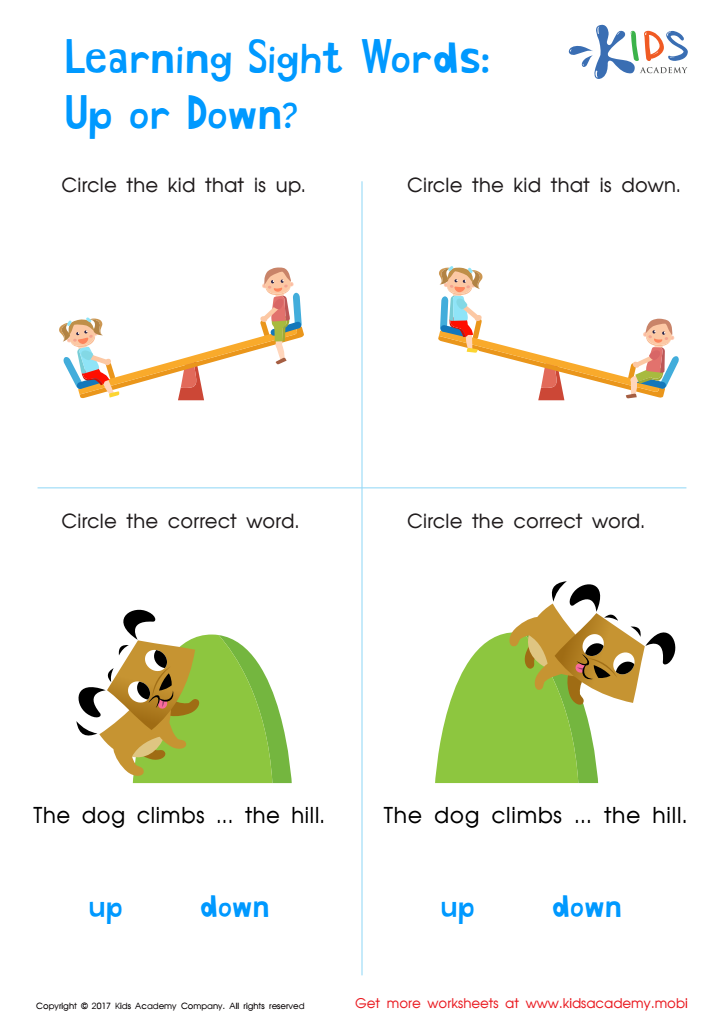
Up or Down Printable Sight Words Worksheet
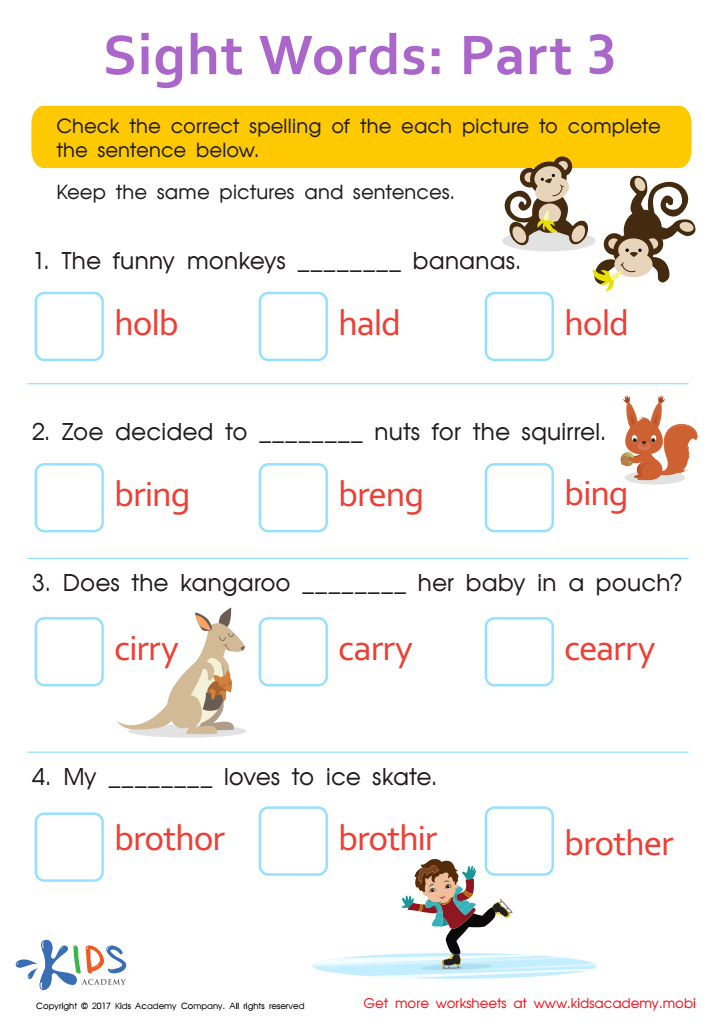
Hold, Bring, Carry, Brother Sight Words Worksheet








Sight word recognition and vocabulary building are crucial components in the early stages of a child's reading development, particularly between the ages of 6-9. For parents and teachers, prioritizing these aspects has lasting benefits for a child’s academic success and overall confidence.
Sight words are commonly used words that children are encouraged to recognize instantly without needing to decode them. They often do not follow regular phonetic rules, which can make them tricky to sound out. By memorizing these words, young readers improve their reading fluency, allowing them to focus on comprehending the text rather than struggling with each word. This smooth, effortless reading enhances their enjoyment of books, fostering a love for reading that can last a lifetime.
Moreover, a strong vocabulary is essential for effective communication, both in school and in everyday life. A rich vocabulary allows children to understand and express more complex ideas with ease, aiding their cognitive development. It forms the foundation for reading comprehension and academic learning across subjects.
In summary, focusing on sight word recognition and vocabulary building helps children become fluent readers, boosting their confidence and enthusiasm for learning. As a result, they are better equipped to meet the challenges of schoolwork and thrive in educational environments. Parents and teachers play a pivotal role in reinforcing these skills, shaping the foundation for a child's future academic and personal success.








