Filters

56 filtered results

Clear all filters
Favorites
With answer key
Interactive

56 filtered results

Difficulty Level

Grade


Check out this FREE Trial Lesson on Building Vocabulary for age 6-9!

Irregular Spellings

Favorites
With answer key
Interactive
  • 6-9
  • Vocabulary expansion
  • Building Vocabulary
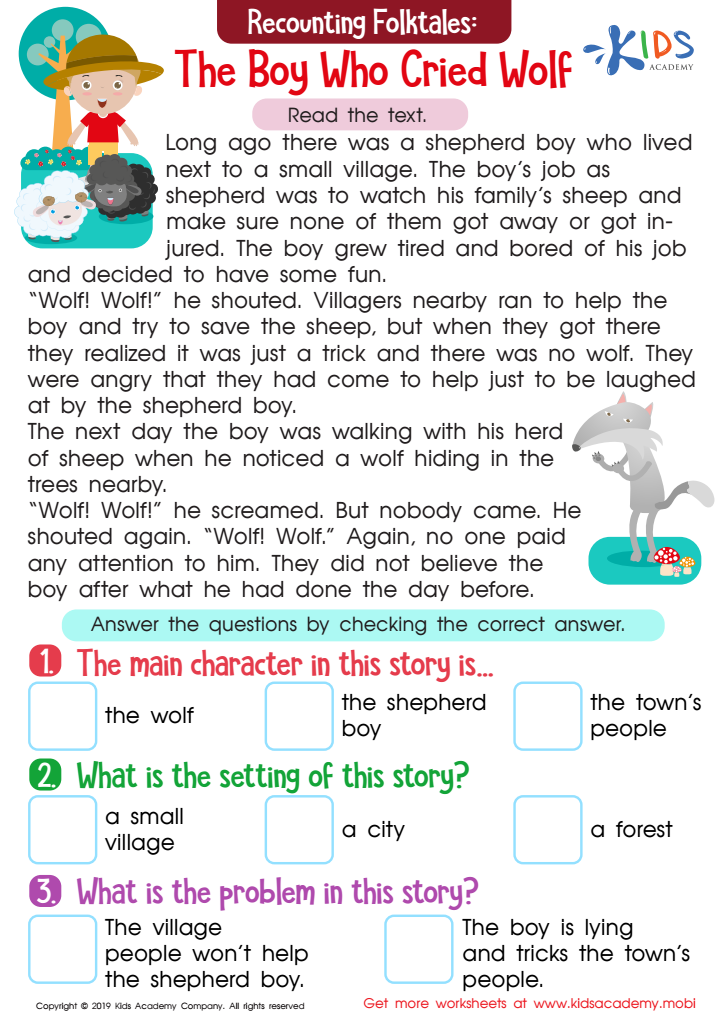
The Boy Who Cried Wolf Part 1 Worksheet

The Boy Who Cried Wolf Part 1 Worksheet

Storytime can be your kid's favorite part of the day. Ask them what their favorite stories are, then read the text in the printout. Read along with them, making sure they understand each word. At the end, go over the questions and have them check the correct answers.
The Boy Who Cried Wolf Part 1 Worksheet
Worksheet
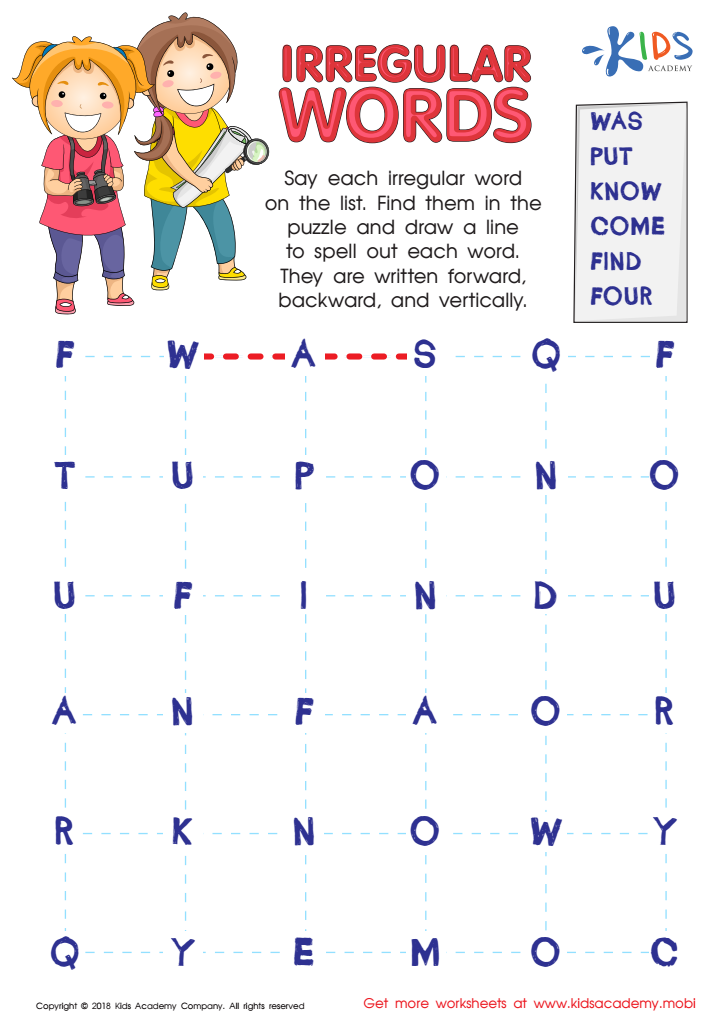
Irregular Words Worksheet

Irregular Words Worksheet

This fun word search worksheet helps kids practice reading irregular words and build their sight word banks. They'll also get practice with visual discrimination and fine motor skills as they hunt down the words.
Irregular Words Worksheet
Worksheet
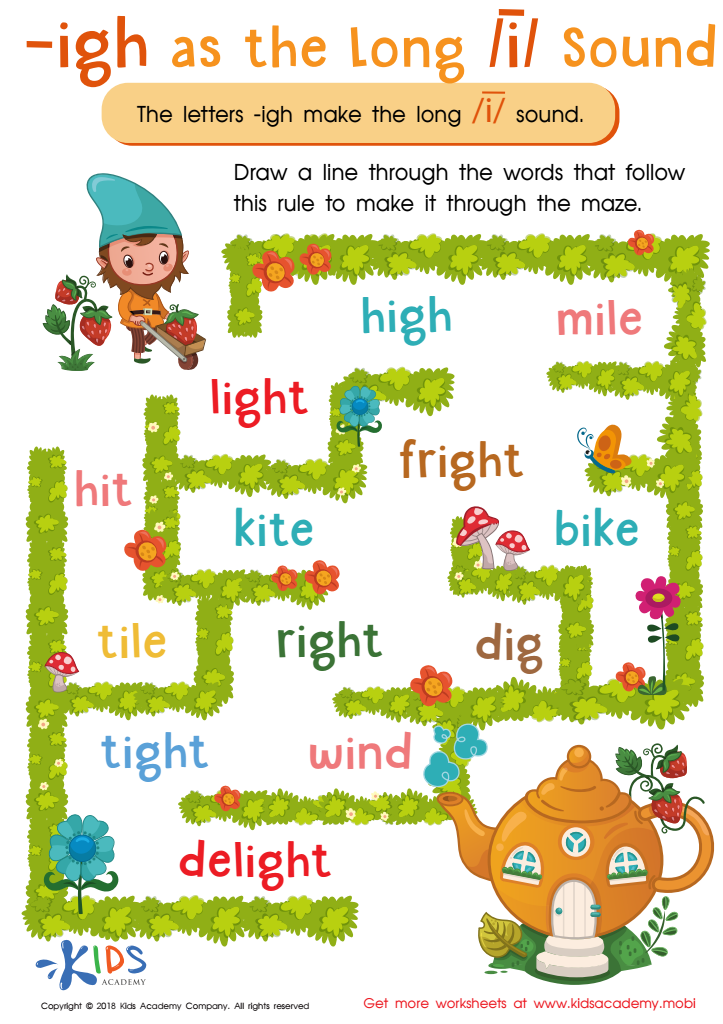
Reading: IGH as Long I Worksheet

Reading: IGH as Long I Worksheet

Kids can have fun and learn with this maze! They'll look for and read words with the 'long I' sound spelled 'igh'. Most words ending with 'T' have this spelling. Decode words while learning about long vowel sounds and their spellings.
Reading: IGH as Long I Worksheet
Worksheet
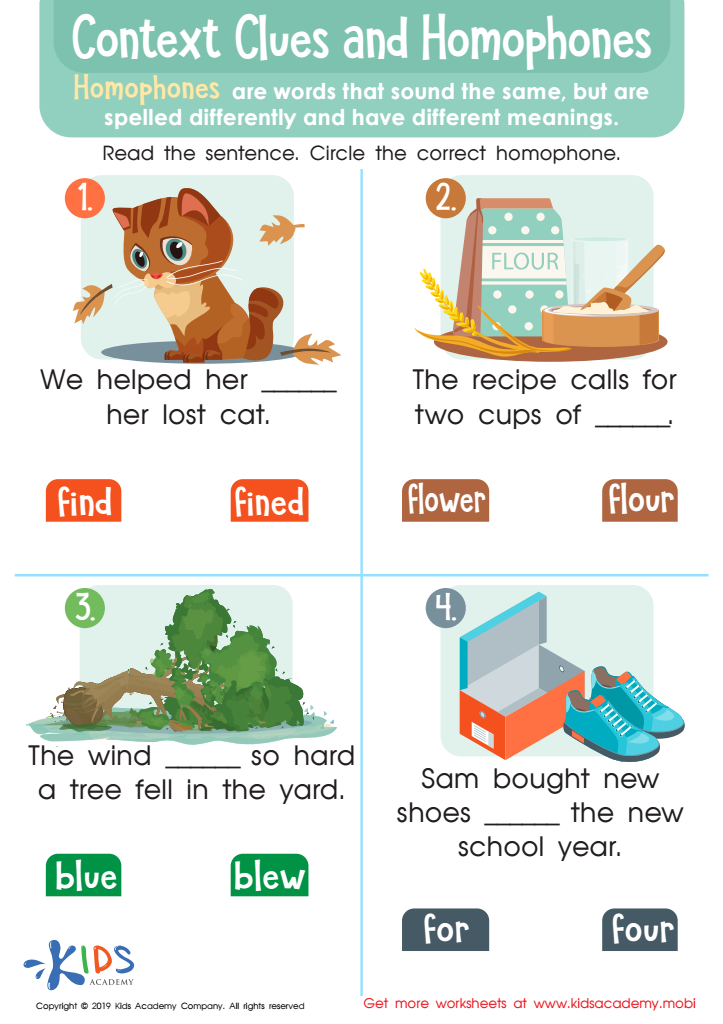
Context Clues and Homophones Worksheet

Context Clues and Homophones Worksheet

Make sure kids understand what homophones are (words that sound the same, different spellings, meanings). Give examples and look at the printout. Read each sentence and sound out words. Help them pick the right one and circle it.
Context Clues and Homophones Worksheet
Worksheet
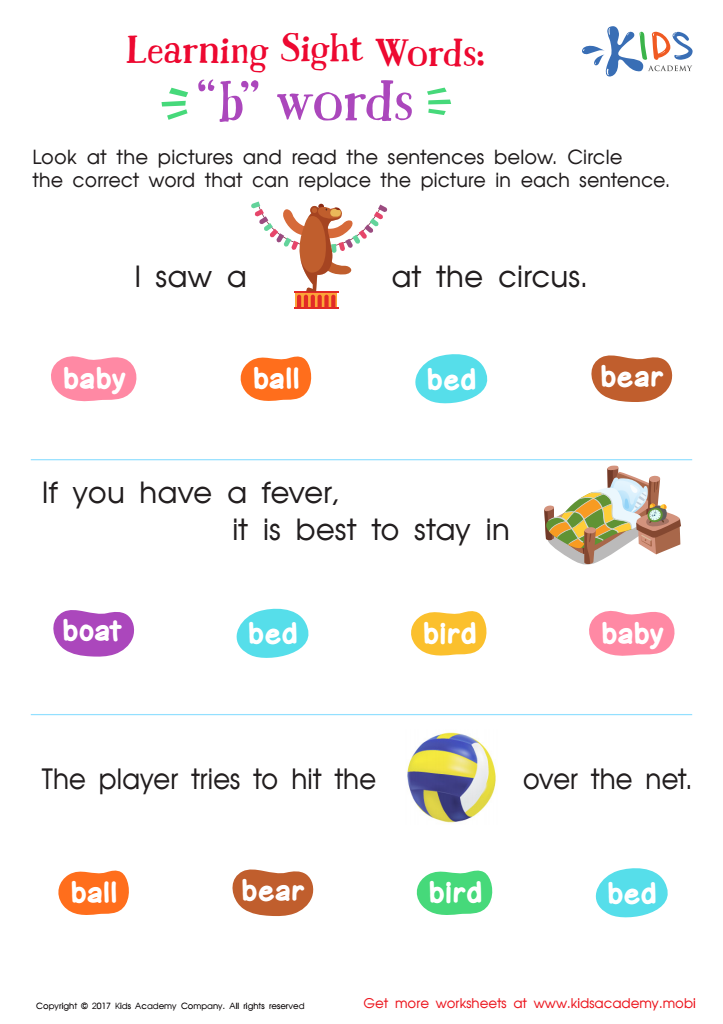
Sight Words Worksheet: B Words

"B" Words Printable Sight Words Worksheet
Kids will learn sight words quickly with this fun worksheet! "B" Words offers guided practice with simple sentences and pictures. Build your child's reading confidence with this helpful worksheet and watch them become a master!
"B" Words Printable Sight Words Worksheet
Worksheet
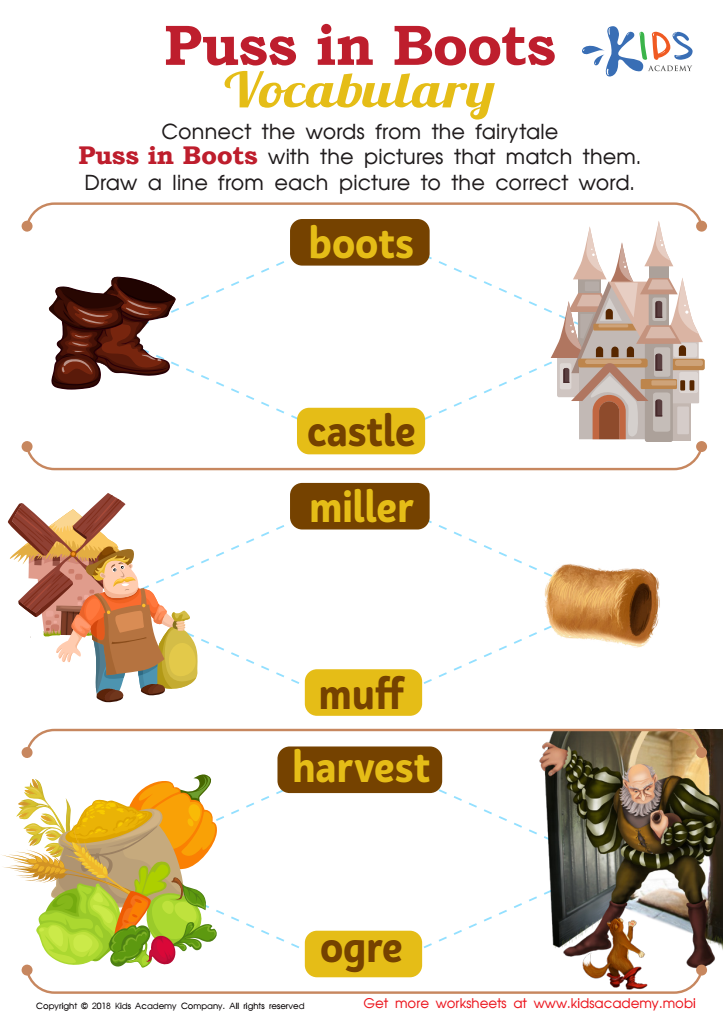
Puss in Boots Vocabulary Worksheet
Puss in Boots Vocabulary Worksheet

Let your kids enjoy story-telling while learning at the same time. Help them learn from the fairytale, Puss in Boots, by connecting words from the worksheet with the matching pictures. Ask them to draw a line between each picture and corresponding word to build their vocabulary.
Puss in Boots Vocabulary Worksheet

Worksheet
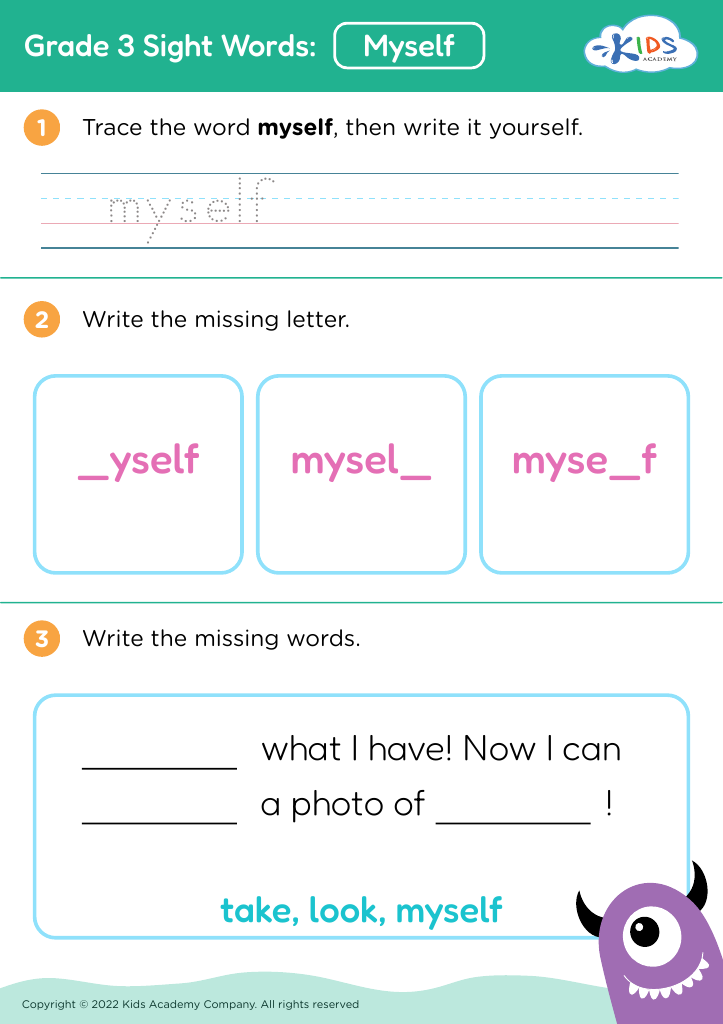
Grade 3 Sight Words: Myself

Grade 3 Sight Words: Myself

Grade 3 Sight Words: Myself
Worksheet
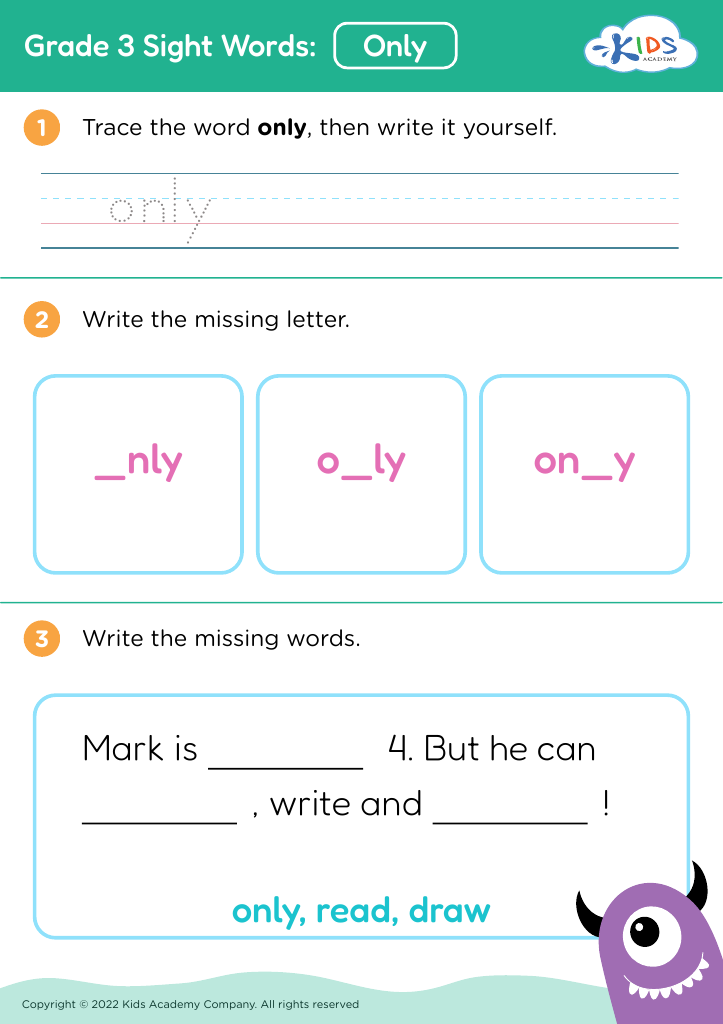
Grade 3 Sight Words: Only

Grade 3 Sight Words: Only

Grade 3 Sight Words: Only
Worksheet


... 2 3

Building vocabulary in children ages 6-9 is crucial because it lays the foundation for their overall language development and academic success. During these formative years, children's brains are highly receptive to new words and concepts, making it an ideal time to enhance their vocabulary. A rich vocabulary enables children to express themselves more clearly and understand complex ideas, which is essential for effective communication and social interaction.

Moreover, a strong vocabulary is directly linked to reading comprehension. As children encounter more challenging texts, a robust vocabulary helps them decode meanings and fully grasp the content, critical for their academic achievement. This proficiency fosters a love for reading, laying the groundwork for lifelong learning.

Additionally, building vocabulary supports cognitive skills, including critical thinking and problem-solving. It encourages curiosity and exploration of their environment, as children are better equipped to inquire and engage with the world around them.

Finally, parents and teachers play a pivotal role by providing enriching experiences, such as reading together, engaging in conversations, and introducing new words in fun and meaningful contexts. Empowering children with a diverse vocabulary not only enhances their language skills but also instills confidence and promotes a lifelong enthusiasm for learning.