Comparing Fractions Reading Worksheets for Ages 6-9
32 filtered results
-
From - To
Discover our engaging "Comparing Fractions Reading Worksheets" tailored for children aged 6-9! These worksheets aim to simplify the process of learning fractions by combining reading comprehension with essential math skills. Each activity encourages young learners to compare fractions through fun, relatable stories and visuals that spark interest. Children will develop their understanding of larger and smaller fractions while enhancing their reading abilities. With clear instructions, various practice exercises, and colorful illustrations, our worksheets promote interactive learning, making math enjoyable and accessible. Equip your child with the foundational skills needed for future success in both reading and math with our thoughtfully designed materials!
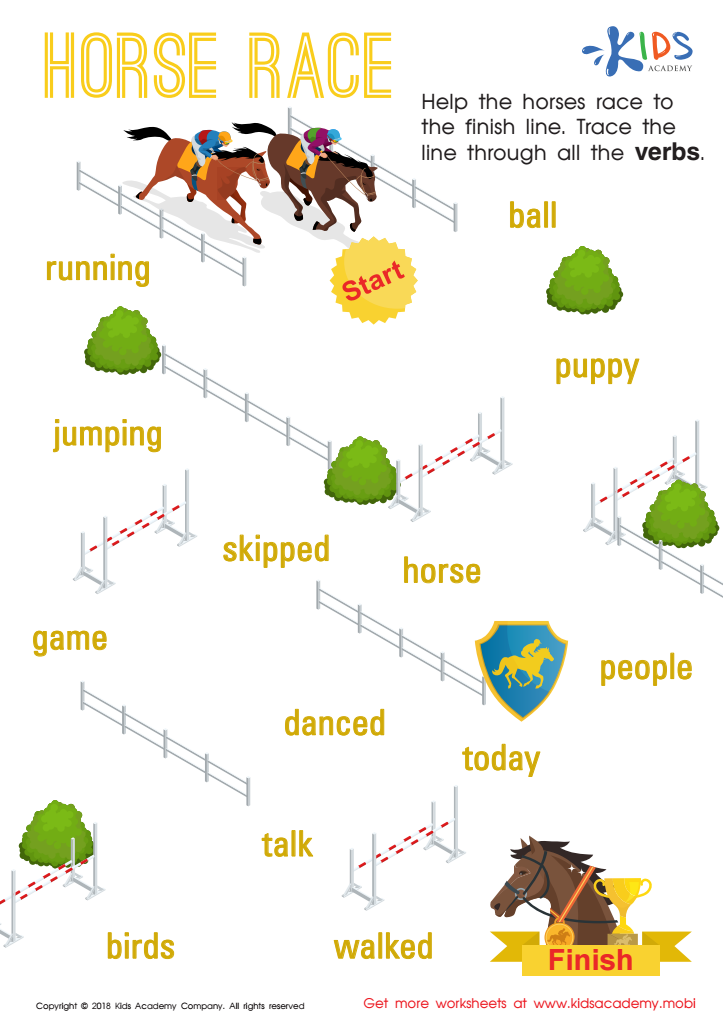
Horse Race Worksheet
 Assign to My Students





Comparing fractions is a foundational mathematical skill that young learners, typically aged 6-9, need to master. It lays the groundwork for understanding more complex mathematical concepts in the future, such as addition, subtraction, multiplication, and division of fractions. Parents and teachers should prioritize this skill for several compelling reasons.
First, comparing fractions helps students build number sense and confidence in their mathematical abilities. By understanding how fractions relate to each other, children develop critical thinking and problem-solving skills that extend beyond math class. This foundational understanding fosters perseverance, as students learn to tackle challenges and clarify misconceptions with fractions.
Moreover, proficiency in comparing fractions supports success in everyday life. Real-world applications, such as cooking, shopping, and budgeting, involve fractions. By learning this skill, children enhance their ability to make informed decisions in daily situations, promoting practical life skills.
Furthermore, social and communication skills can flourish through collaborative fraction activities. When students work together to compare fractions, they learn to articulate their reasoning and listen to others, laying the groundwork for effective teamwork in the future. Overall, focusing on comparing fractions is crucial for parents and teachers invested in providing well-rounded, practical mathematics education.








