Drawing skills Reading Worksheets for Ages 6-9
3 filtered results
-
From - To
Enhance your child's learning experience with our engaging Drawing Skills Reading Worksheets for Ages 6-9! Designed to help young learners develop their creativity while improving reading comprehension, these worksheets encourage children to express their understanding of stories through illustrations. Each activity prompts kids to draw scenes, characters, or outcomes from the texts, reinforcing their recall and critical thinking abilities. Perfect for at-home learning or as supplementary material in the classroom, our worksheets combine fun and education. Watch your child unlock their imagination and boost their reading skills with this creative approach to learning. Explore our collection today!
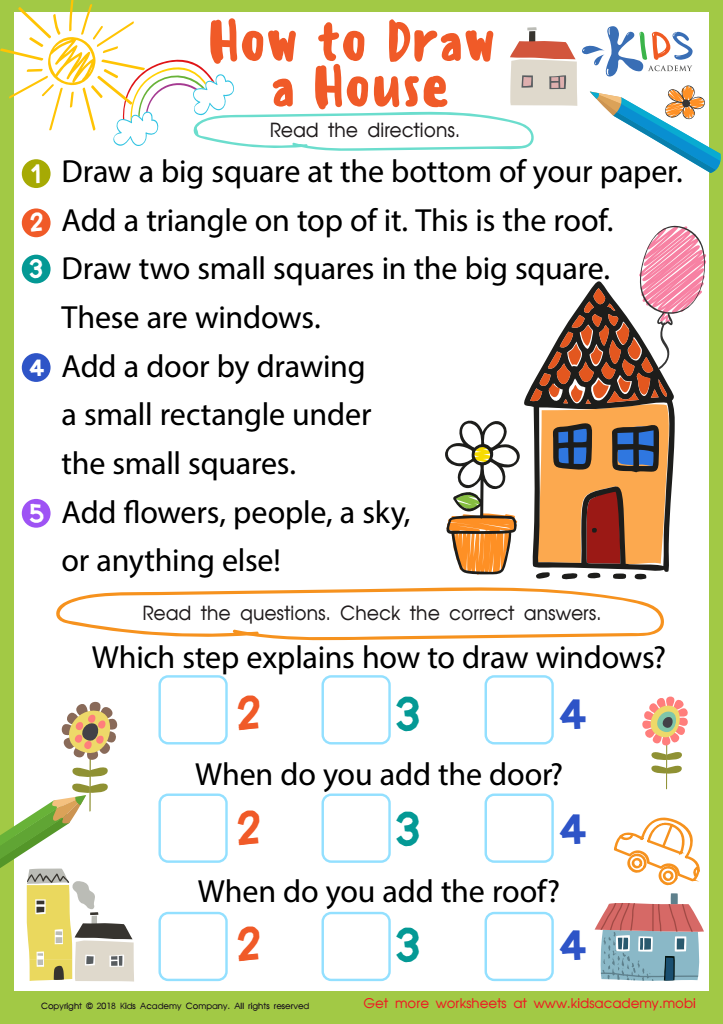
How to Draw House Worksheet
 Assign to My Students








Parents and teachers should pay close attention to drawing skills in children aged 6-9, as these skills are intricately linked to their reading development. At this age, children are not only learning to write but also developing their ability to visualize and express ideas through drawings. When children draw, they engage their imagination, which fosters creativity—an essential component of literacy.
Drawing helps young children to process information and improves their observational skills, which can enhance comprehension when reading texts. The act of translating thoughts into images reinforces their understanding of narrative structure, helping them grasp the significance of characters, settings, and plots. Moreover, creating drawings can motivate reluctant readers by connecting visual art with literature, making texts more relatable and enjoyable.
Additionally, drawing encourages fine motor skills, which are critical for writing letters and forming words. These foundational skills can lead to greater confidence in their writing abilities. When children connect drawing and reading, parents and teachers create an opportunity for a holistic approach to literacy development. Overall, nurturing drawing skills reinforces reading proficiency, fostering a love for literacy that can last a lifetime.








