Enhance critical thinking Reading Worksheets for Ages 6-9
3 filtered results
-
From - To
Discover our "Enhance Critical Thinking Reading Worksheets" designed specifically for children aged 6-9. These engaging worksheets nurture essential analytical skills while promoting independent thought and comprehension. Each activity encourages young learners to delve deeper into texts, build connections, and articulate their ideas effectively. With a variety of topics and formats, our worksheets foster curiosity, creativity, and critical reasoning, making reading not just enjoyable, but also a powerful tool for cognitive development. Perfect for both home and classroom use, they empower educators and parents to support children's reading journeys while ensuring they develop the critical thinking skills necessary for lifelong learning.
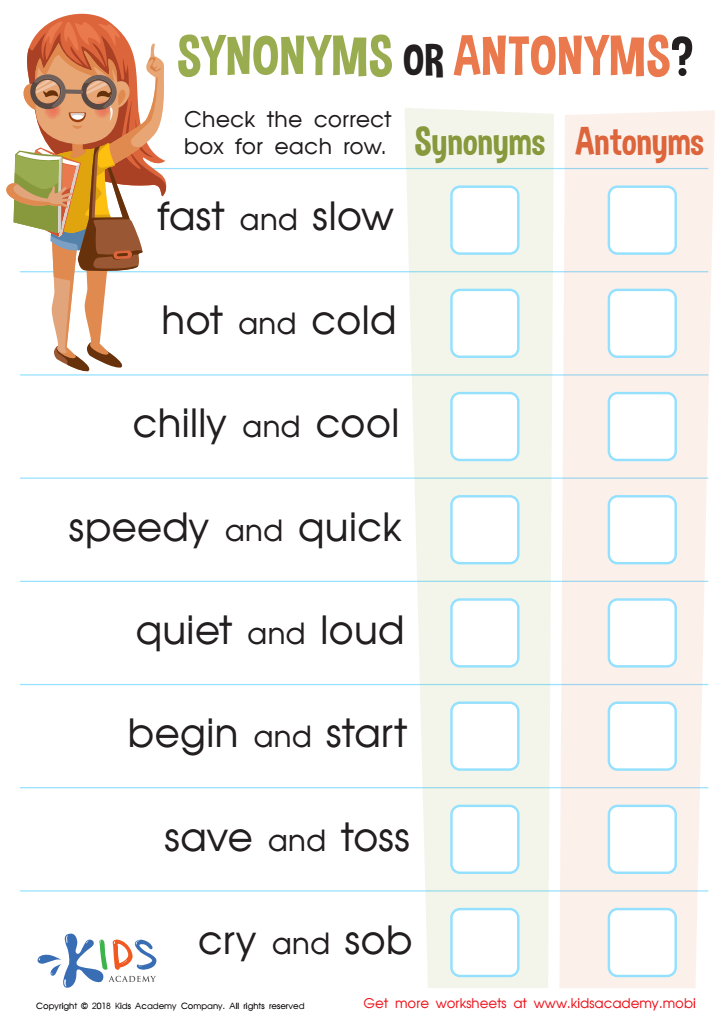
Synonyms or Antonyms: Assessment Worksheet
 Assign to My Students
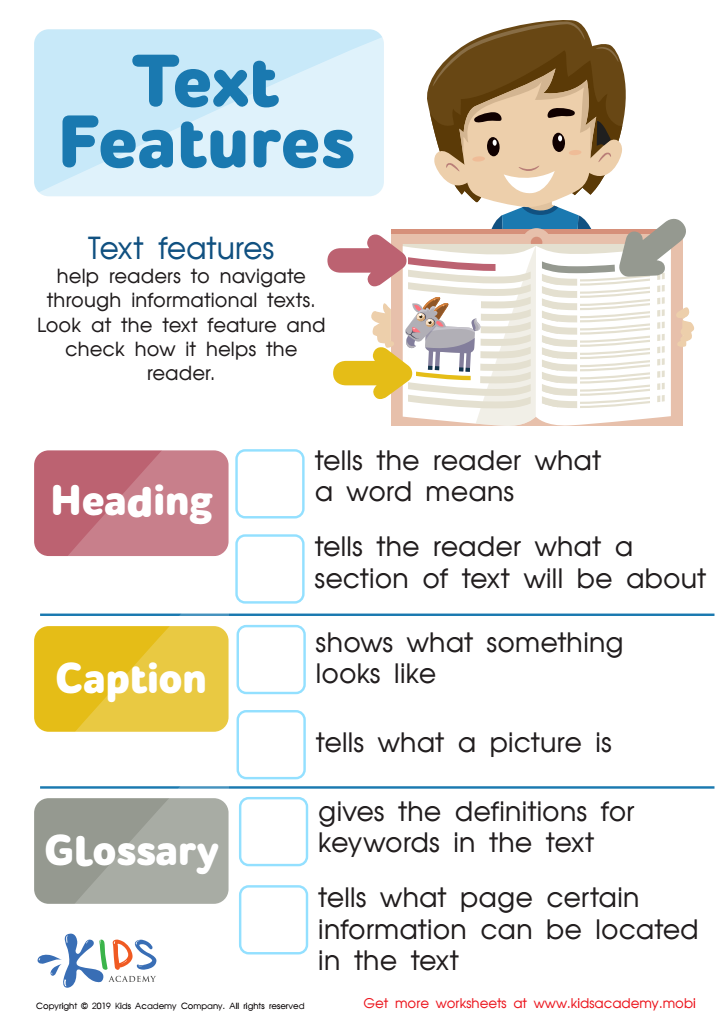
Text Features Worksheet








Enhancing critical thinking skills through reading for children aged 6-9 is crucial for their cognitive and emotional development. At this formative stage, children are not only developing basic reading skills but also learning how to analyze and interpret the information they encounter. Fostering critical thinking through reading helps them to ask questions, make connections, and draw conclusions, all of which are essential for problem-solving.
When parents and teachers prioritize critical thinking in reading, they are equipping children with tools necessary for success in school and life. Engaging with texts critically encourages children to consider different perspectives, promoting empathy and social awareness. This skill set also enhances their ability to engage with various subject matters, from math to science, reinforcing the idea that learning is interconnected.
Furthermore, critical thinking nurtures creativity; by analyzing stories or arguments, children learn to think outside the box, generating new ideas and solutions. In today's rapidly changing world, these skills are indispensable for navigating complexities and adapting to new challenges. Parents and teachers who invest time in promoting critical thinking during reading not only enrich their children's educational experiences but also prepare them for future learning, decision-making, and effective communication.








