
Enhancing observation skills Reading Worksheets for Ages 6-9
5 filtered results
Difficulty Level
Grade
Age
-
From - To
Subject
Activity
Standards
Enhance your child's reading comprehension with our "Enhancing Observation Skills" worksheets designed for ages 6-9. These engaging, printable resources focus on honing observation and analytical skills through interactive activities. Children will learn to identify key details, make connections, and derive meaning from texts while enjoying colorful illustrations and captivating scenarios. Our worksheets encourage critical thinking and foster a love for reading by making learning enjoyable and effective. Perfect for teachers and parents looking to support their child's literacy development, these worksheets are ideal for classroom use or at-home practice. Boost your child's learning experience today with our thoughtfully designed materials!
Favorites
With answer key
Interactive
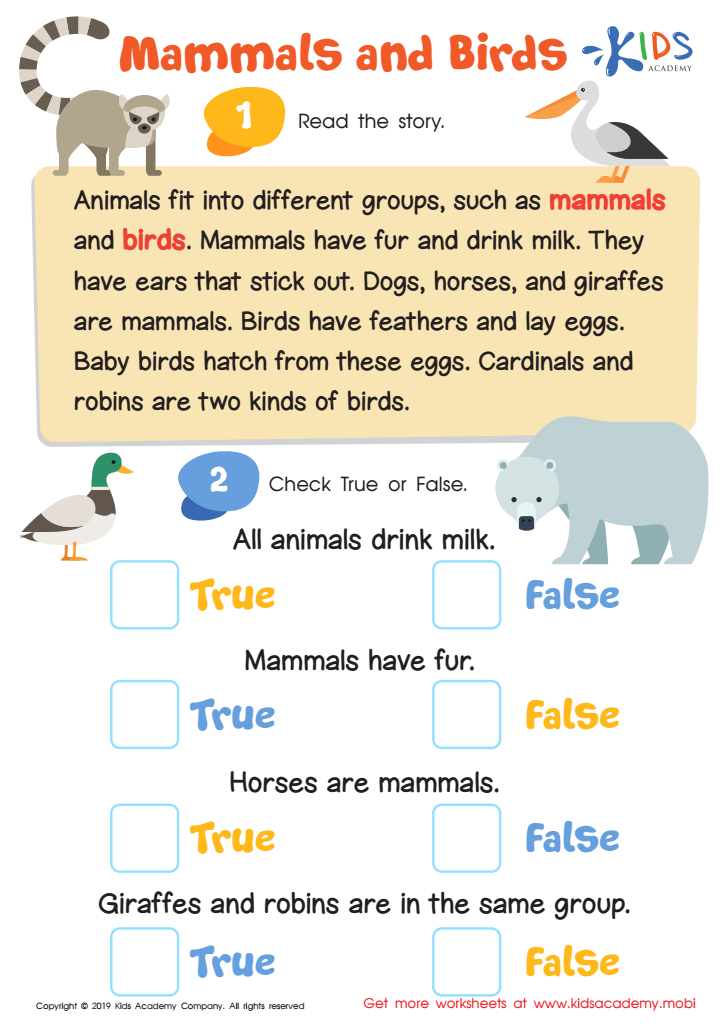
Mammals and Birds Worksheet
This worksheet challenges kids to read an informational text and review science facts about mammals and birds. Have them read the passage then mark statements true or false. Remind them to go back to the text if they get stuck! Get started now and help your child enhance multiple skills in one go!
 Assign to My Students
Mammals and Birds Worksheet
Worksheet
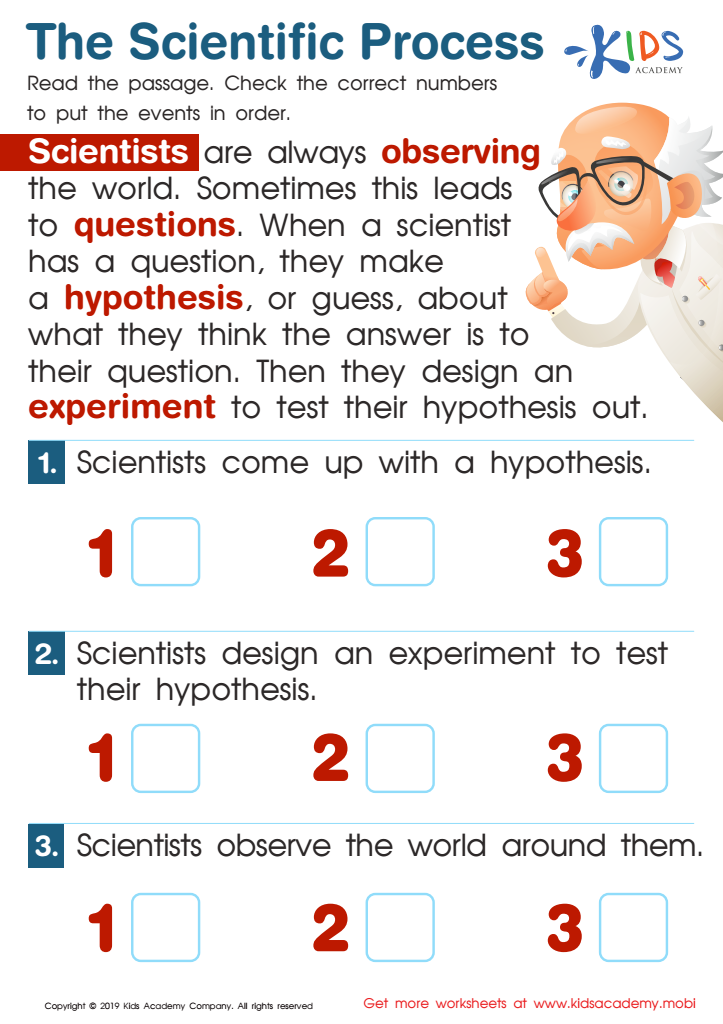
The Scientific Process Worksheet
Help your kids read the passage, then ask them to explain what they've learnt. Ask the questions and help put the events in order. Through this worksheet, your kids will learn more about science and practice reading skills. It's a fun way to explore science! (80 words)
The Scientific Process Worksheet
Worksheet
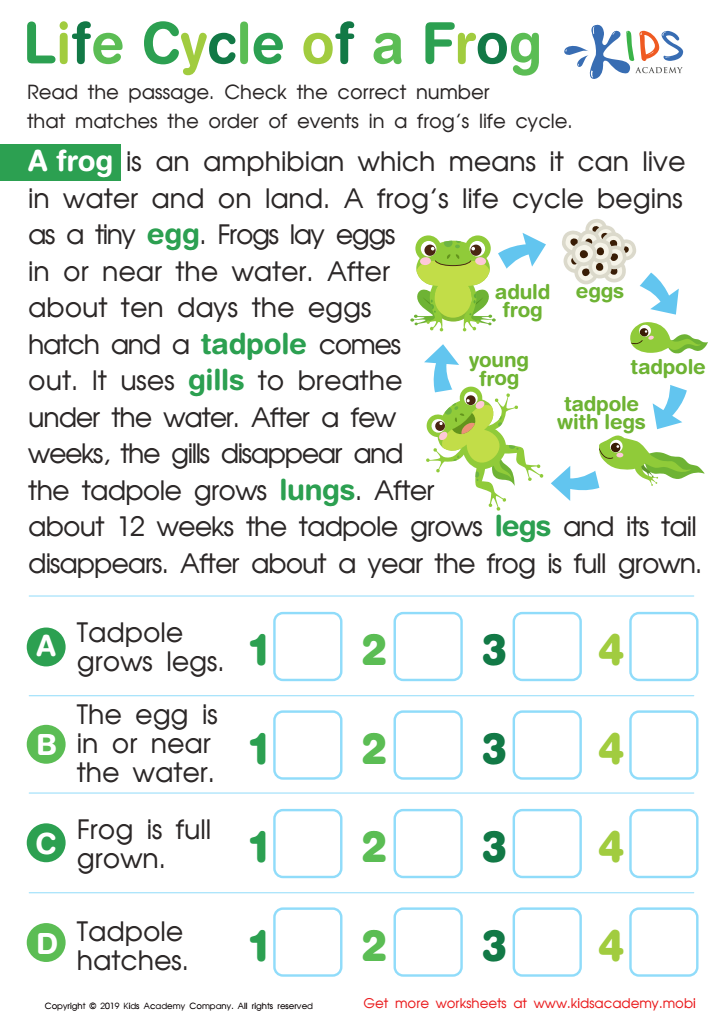
Life Cycle of a Frog Worksheet
Teach your kids to read and open their eyes to new knowledge. Frogs have fascinating life cycles. Show them the worksheet with pictures and guide them as they read the passage about it. Encourage them to check the number that matches the frog's life cycle order.
Life Cycle of a Frog Worksheet
Worksheet
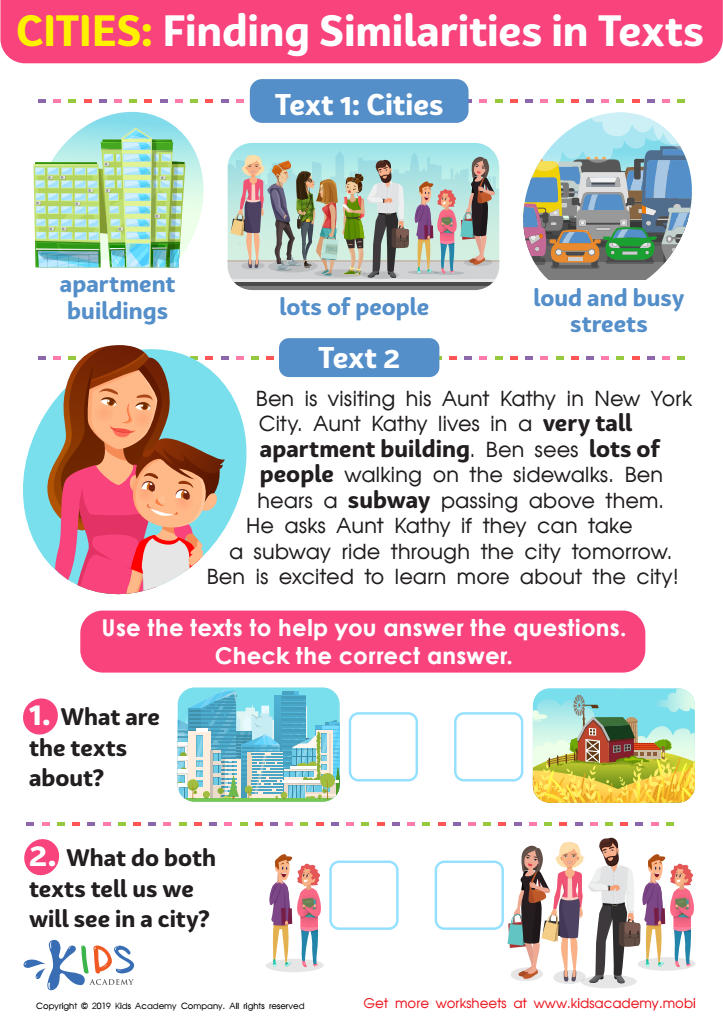
Cities: Finding Similarities Worksheet
This worksheet offers kids a chance to explore how information can be presented differently but still contain similar facts. They'll compare two texts and look for similarities, honing their reading comprehension and critical thinking skills.
Cities: Finding Similarities Worksheet
Worksheet
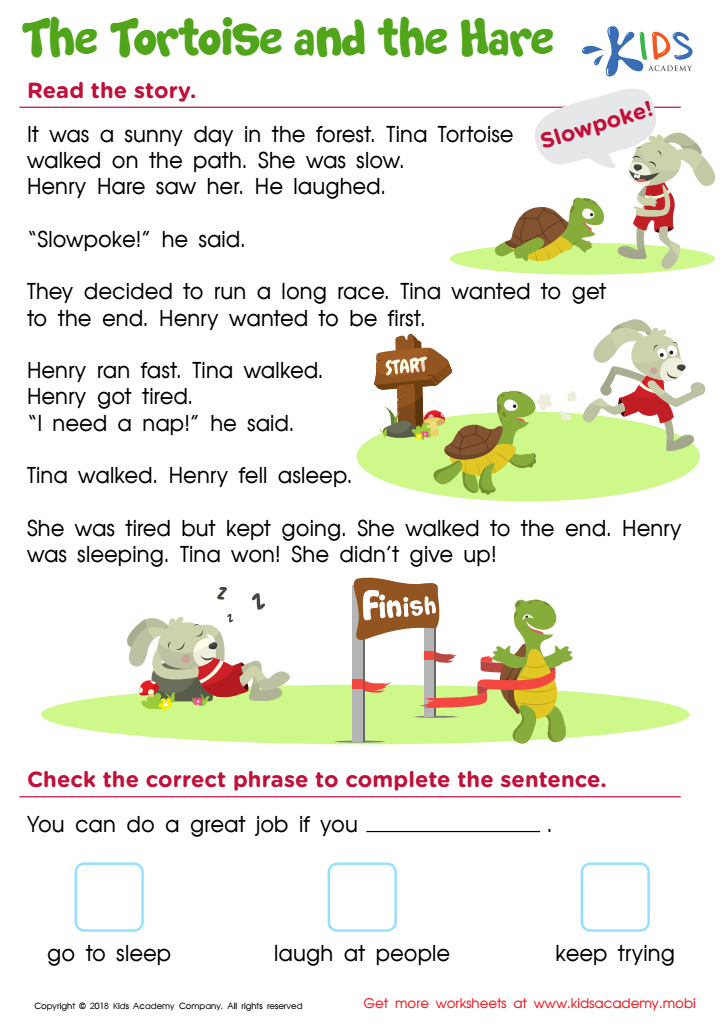
The Tortoise and the Hare Worksheet
Help your child uncover the hidden moral in a classic children's tale with this free downloadable worksheet. Joyful illustrations bring the story to life and help young readers visualize the events. With your help, they can answer the question and fill in the blank with the phrase that serves as the story's lesson. Check the box to complete the worksheet!
The Tortoise and the Hare Worksheet
Worksheet
Learning Skills
Join Kids Academy for Free
Who is primarily going to use this learning content?





.jpg)

Enhancing observation skills in reading for children aged 6-9 is crucial for their development as confident and competent readers. At this age, children are transitioning from learning to read to reading to learn; strong observation skills play a key role in this phase. By honing these skills, they learn to pay attention to details, such as words, punctuation, and visual cues in texts, which helps improve comprehension and retention.
For parents and teachers, fostering observation skills can create an engaging learning environment that nurtures critical thinking. This will empower children to make connections between their observations and existing knowledge, enhancing their ability to analyze and interpret texts. Additionally, observation encourages curiosity and promotes in-depth discussion about stories, which can cultivate a love for reading.
Furthermore, developing these skills early can support literacy development across subjects, leading to better academic performance. Children who can observe and interpret language effectively will also be better equipped to express their thoughts in writing and verbal communication.
Therefore, parents and teachers should prioritize enhancing observation skills during this formative period, to build a strong foundation for lifelong literacy and learning. This approach not only prepares children academically but also enriches their emotional and social development.








