Identifying story elements Reading Worksheets for Ages 6-9
4 filtered results
-
From - To
Discover our engaging "Identifying Story Elements Reading Worksheets" designed for children ages 6-9. These printable activities help young learners recognize key components of storytelling, including characters, settings, and plot. By utilizing fun exercises and illustrations, children will enhance their comprehension skills and become more confident readers. Our worksheets promote interactive learning and enable educators and parents to support literacy development effectively. Whether in the classroom or at home, these resources provide a valuable foundation for understanding stories, fostering creativity, and encouraging a love for reading. Explore our collection and make learning about story elements an exciting adventure!
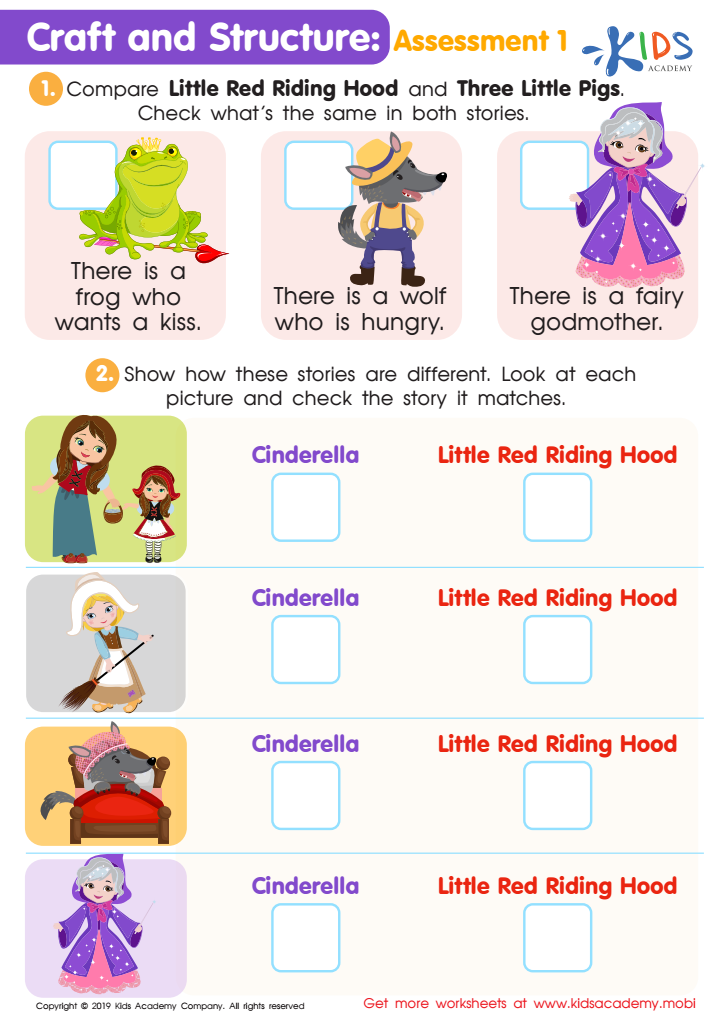
Craft and Structure: Assessment 1 Worksheet
 Assign to My Students
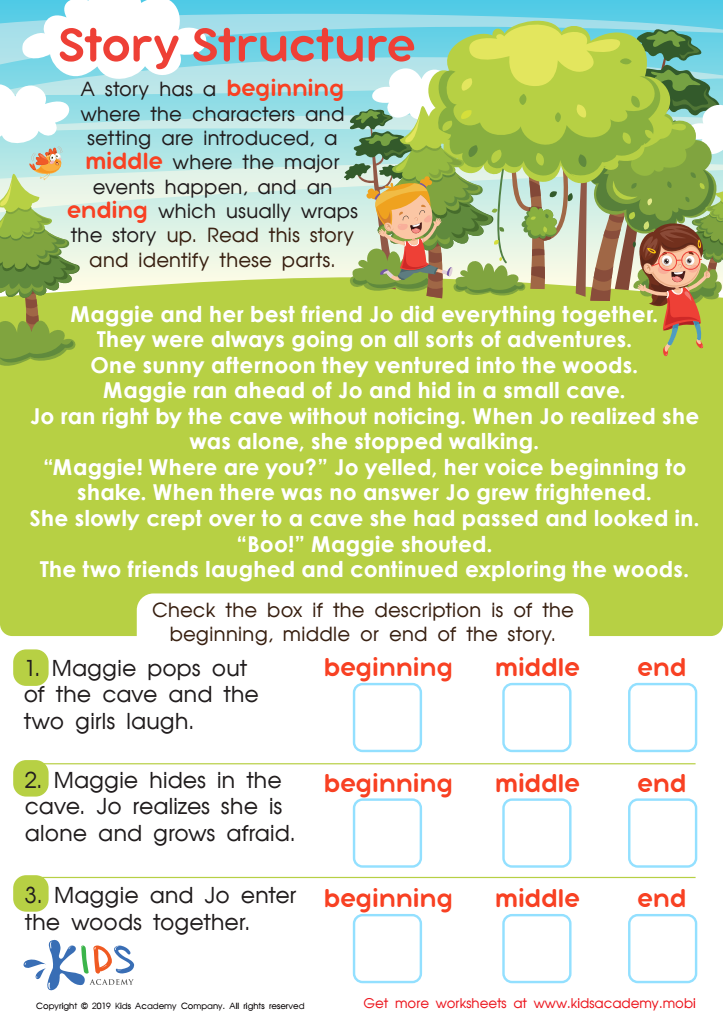
Story Structure Worksheet
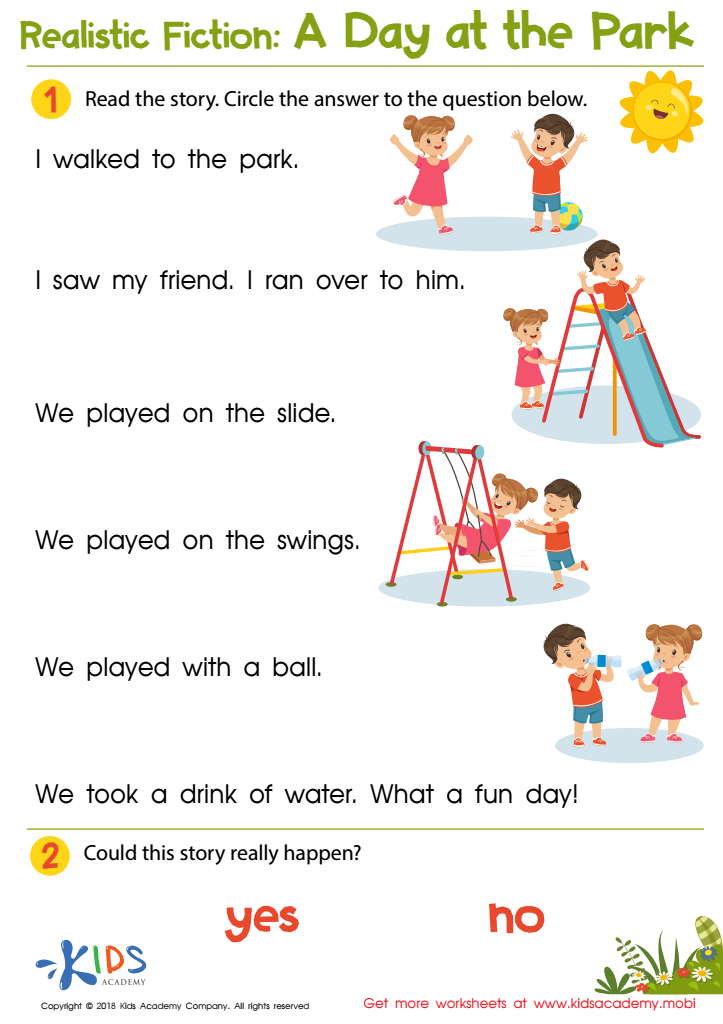
A Day at the Park Worksheet
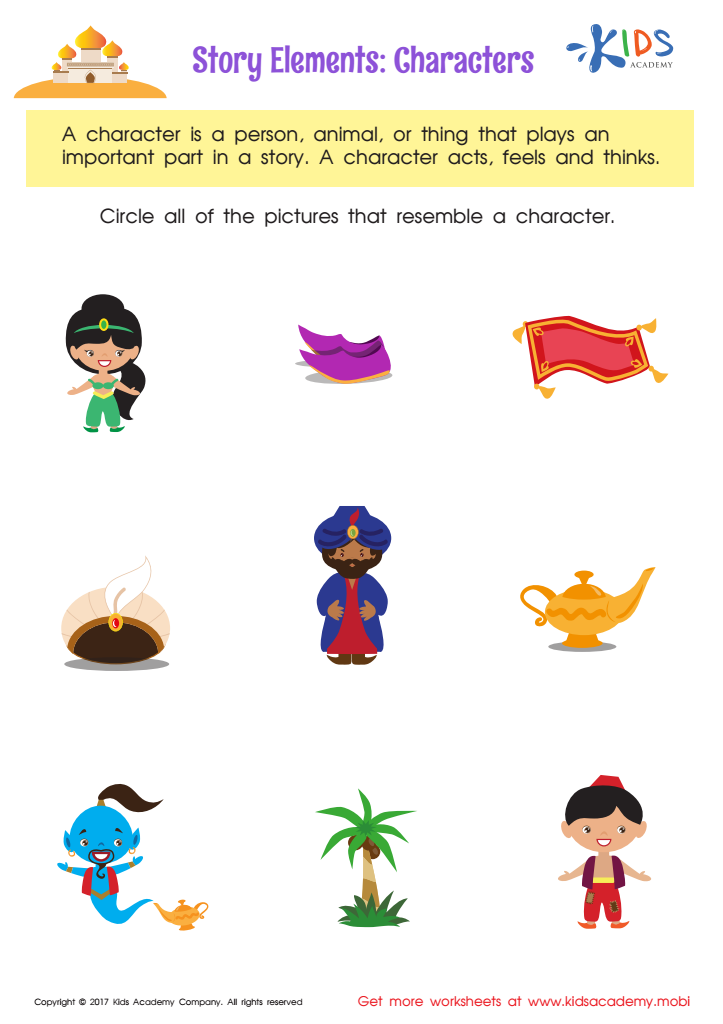
Story Elements Printable







Identifying story elements is crucial for children aged 6 to 9, as it lays the foundation for effective reading comprehension and critical thinking. At this stage, children begin to understand the structure of narratives, which includes key elements such as characters, setting, plot, conflict, and resolution. By recognizing these components, young readers can better connect with the stories they read, making the experience more engaging and enjoyable.
Parents and teachers should care about this skill because it enhances a child’s ability to analyze and discuss literature. When children identify and articulate story elements, they not only deepen their understanding of a specific text, but they also develop the skills to compare and contrast different stories. This analytical thinking is vital across subjects and helps foster a love for reading, paving the way for academic success.
Moreover, understanding story elements cultivates empathy and emotional intelligence as children explore characters’ motivations and conflicts. In essence, focusing on identifying story elements nurtures well-rounded learners who can comprehend, analyze, and appreciate literature, effectively preparing them for future learning challenges and fostering a lifelong love for reading.








