Noun identification Reading Worksheets for Ages 6-9
3 filtered results
-
From - To
Discover engaging Noun Identification Reading Worksheets for ages 6-9, designed to boost your child's grammar skills. Our carefully crafted exercises help young learners recognize and categorize nouns effortlessly. Each worksheet features fun, interactive activities targeting various types of nouns, such as common, proper, singular, and plural. With colorful illustrations and kid-friendly themes, these worksheets make learning enjoyable and effective. Perfect for both classroom and home use, they support language development and reading comprehension. Watch your child's confidence soar as they master the fundamentals of noun identification. Start your child’s journey towards grammar proficiency today!
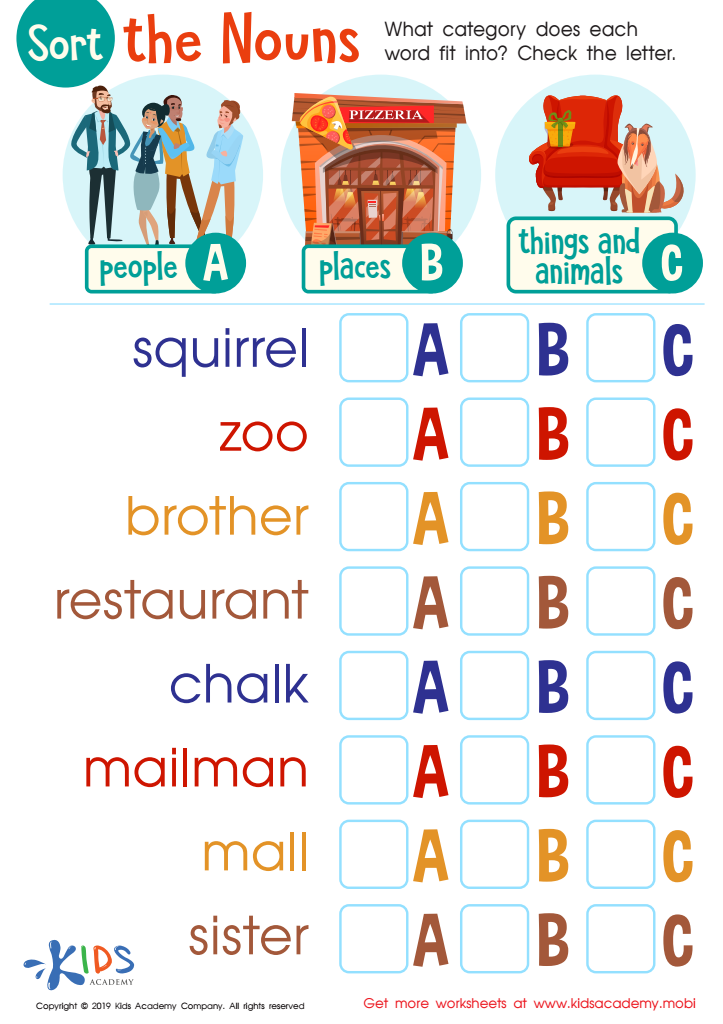
Sort the Nouns Worksheet
 Assign to My Students
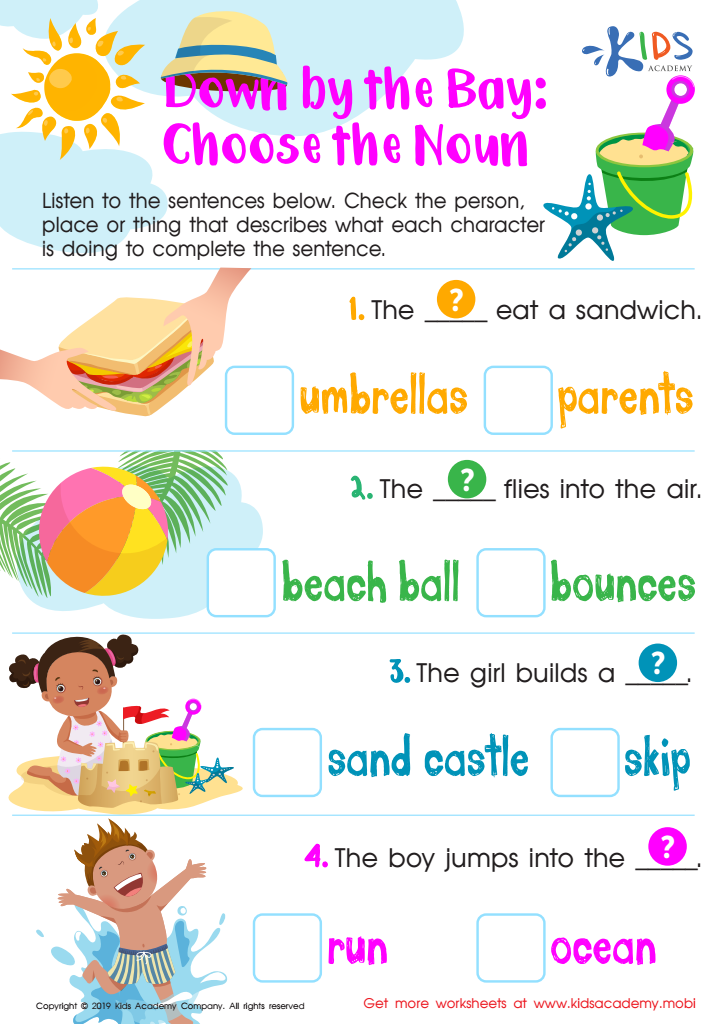
Down by the Bay: Choose the Noun Worksheet
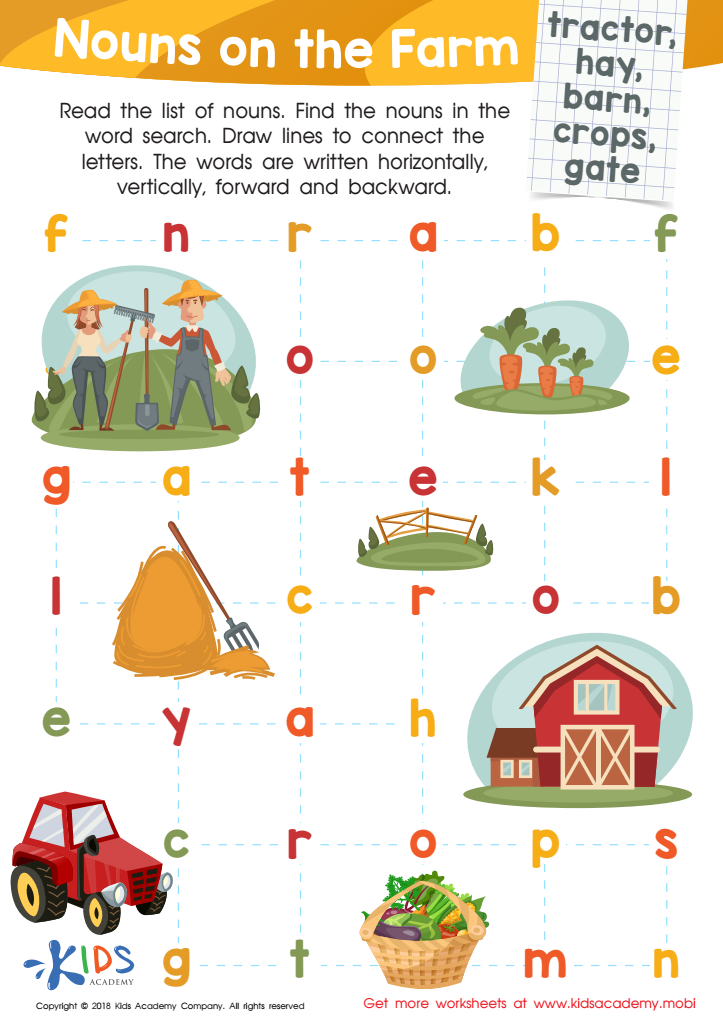
Nouns on the Farm Worksheet








Noun identification is a crucial foundational skill that parents and teachers should prioritize for children aged 6-9. Understanding nouns helps young learners grasp the basic building blocks of the English language, fostering stronger reading and writing skills. When children can identify nouns, they can better comprehend texts, improving their overall reading fluency. Recognizing nouns—such as people, places, and things—also enhances their ability to construct meaningful sentences, contributing to clearer and more effective communication.
Moreover, mastery of noun identification aids in vocabulary expansion. As kids distinguish between different types of nouns, they naturally grow their word bank, making it easier for them to express thoughts, desires, and ideas. This expanded vocabulary is essential not just for academic achievement but also for social interaction and cognitive development.
Additionally, understanding nouns plays a significant role in logical thinking and problem-solving skills. By categorizing and classifying objects and concepts, children can better organize their thoughts and approach challenges more systematically.
In summary, focusing on noun identification for children aged 6-9 sets the stage for comprehensive language development, which is crucial for their success in both academic environments and everyday communication. It enriches their learning experience, ensuring they have the necessary tools to succeed at subsequent stages of education.








