Filters

10 filtered results

Clear all filters
Favorites
With answer key
Interactive

10 filtered results

Difficulty Level

Grade


Unlock your child's potential with our engaging Shape Recognition Reading Worksheets designed for ages 6-9! These fun and educational resources help young learners build essential skills by connecting shapes with words. Through vibrant illustrations and interactive activities, children will reinforce their shape identification while enhancing their reading abilities. Perfect for homeschoolers or classroom settings, these worksheets promote critical thinking and boost vocabulary retention. Empower your child to recognize patterns and develop observational skills, all while enjoying the learning process. Explore our collection today and give your little ones the tools they need to thrive in their educational journey!

Check out this FREE Trial Lesson on Reading for age 6-9!

Illustrations in a Text

Favorites
With answer key
Interactive
  • 6-9
  • Shape Recognition
  • Reading
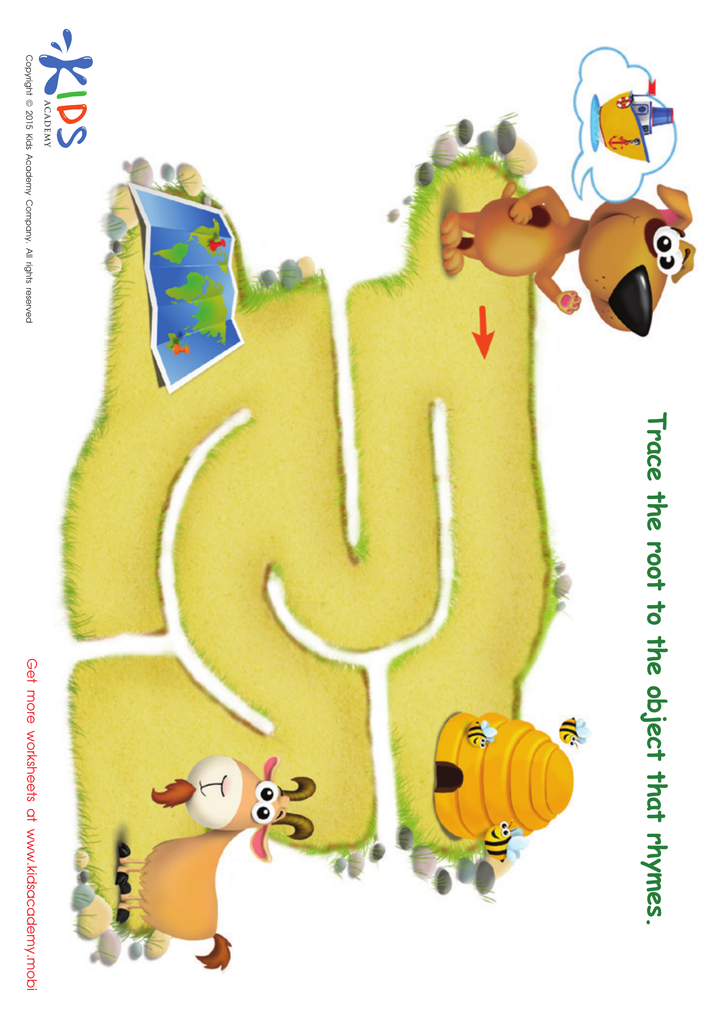
Rhyming Words PDF Worksheets, Boat

Boat Rhyming Words Worksheet

Help your preschooler complete the maze and rhyme with their favorite pooch! Draw a line from the dog to the matching item - is it a hive, a map or a goat? This fun activity lets them name the root words of pictures, and listen for rhymes to help them with phonics and reading.
Boat Rhyming Words Worksheet
Worksheet
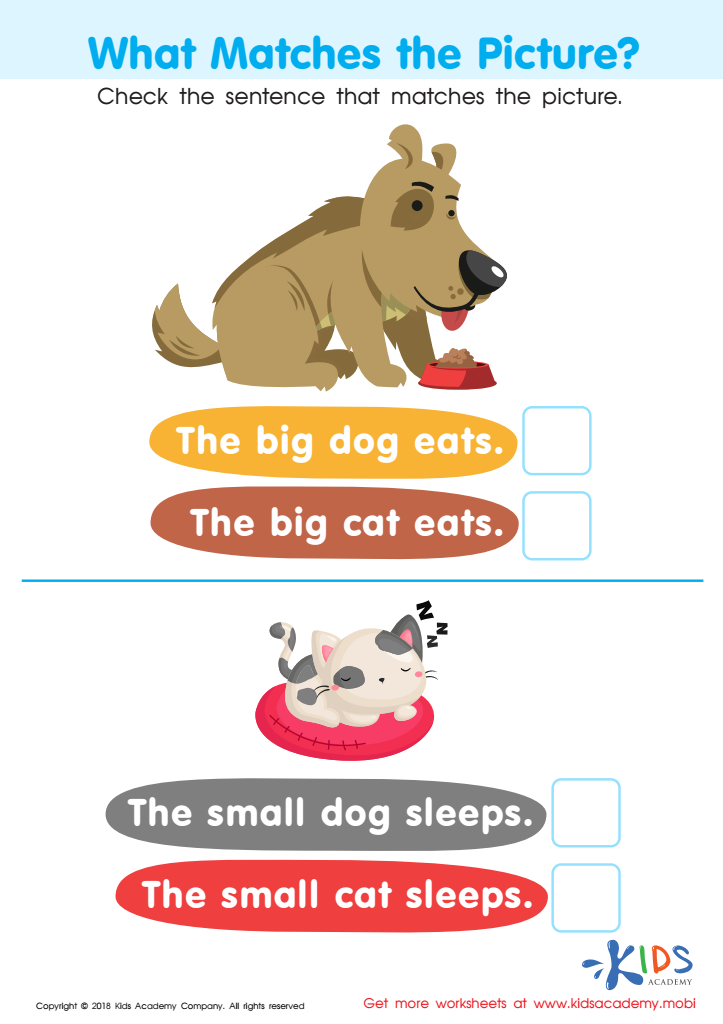
What Matches the Picture? Worksheet

What Matches the Picture? Worksheet

Emerging readers can use pictures of cute pets and phrase repetition to match sentences to pics, building skills while having fun! It's a great way to bolster vocab and confidence, motivating them to keep reading.
What Matches the Picture? Worksheet
Worksheet
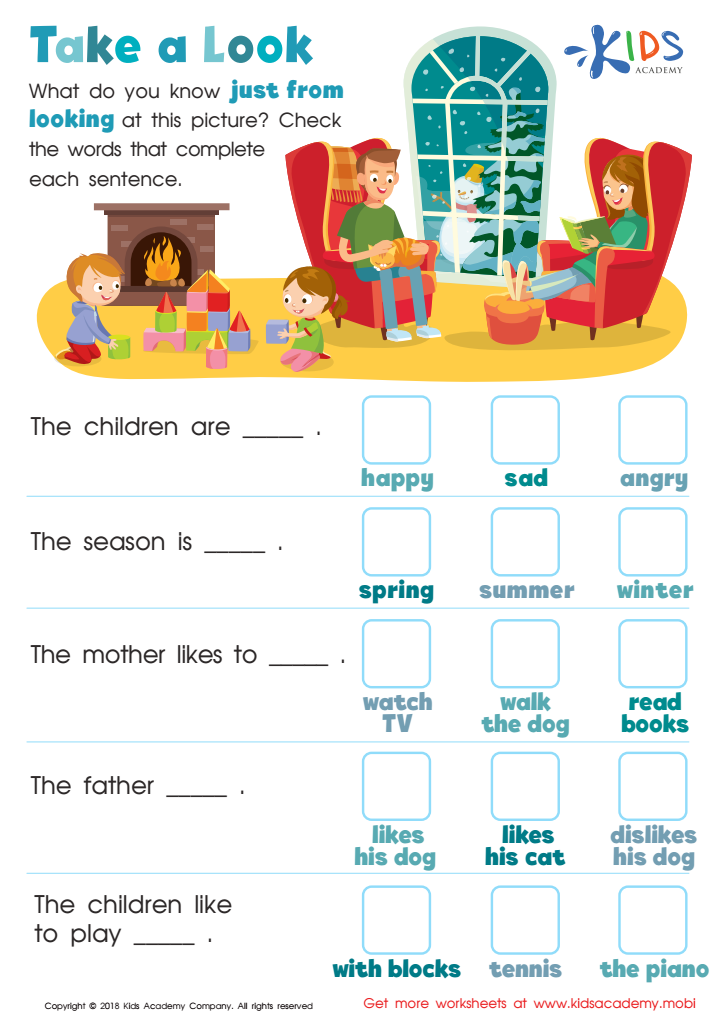
Take a Look - Part 1 Worksheet

Take a Look - Part 1 Worksheet

Young learners gain understanding when using picture clues when reading. Looking at illustrations can help students learn the meaning of key vocabulary when reading fiction or informational text. Ask your students to look at the worksheet and observe what they can learn from the picture. It's a great comprehension strategy for early readers.
Take a Look - Part 1 Worksheet
Worksheet
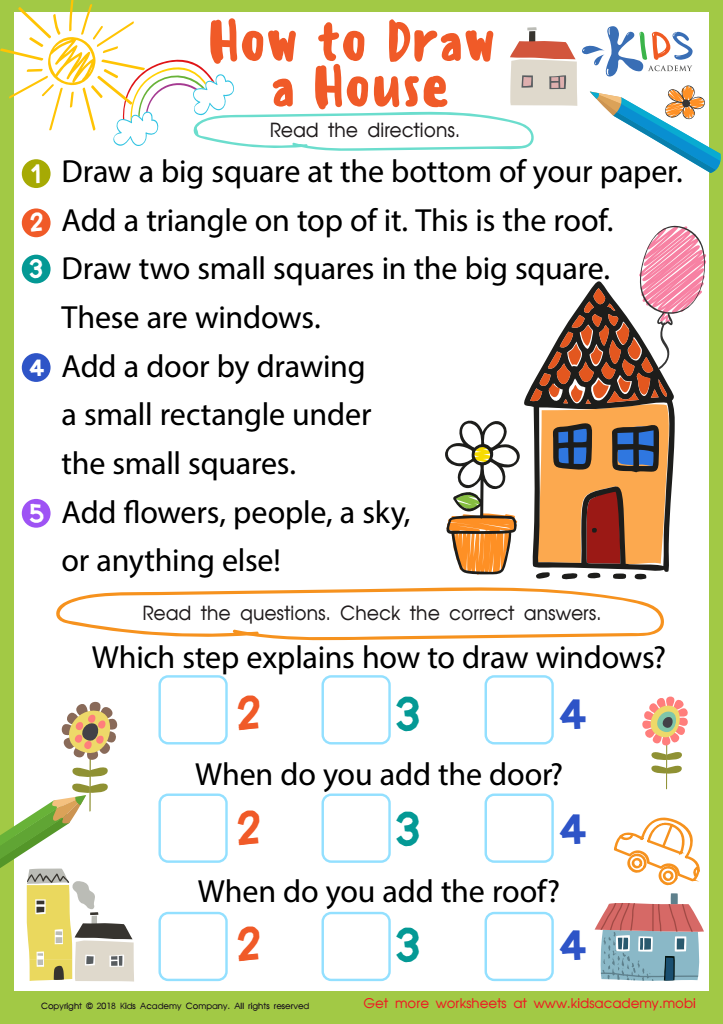
How to Draw House Worksheet

How to Draw House Worksheet

Does your child love to draw? Why not try teaching them some easy tricks? Get them to follow directions on this worksheet and learn how to draw a house. Read the questions at the end and ensure they get the answers right. Your kids will surely love it!
How to Draw House Worksheet
Worksheet
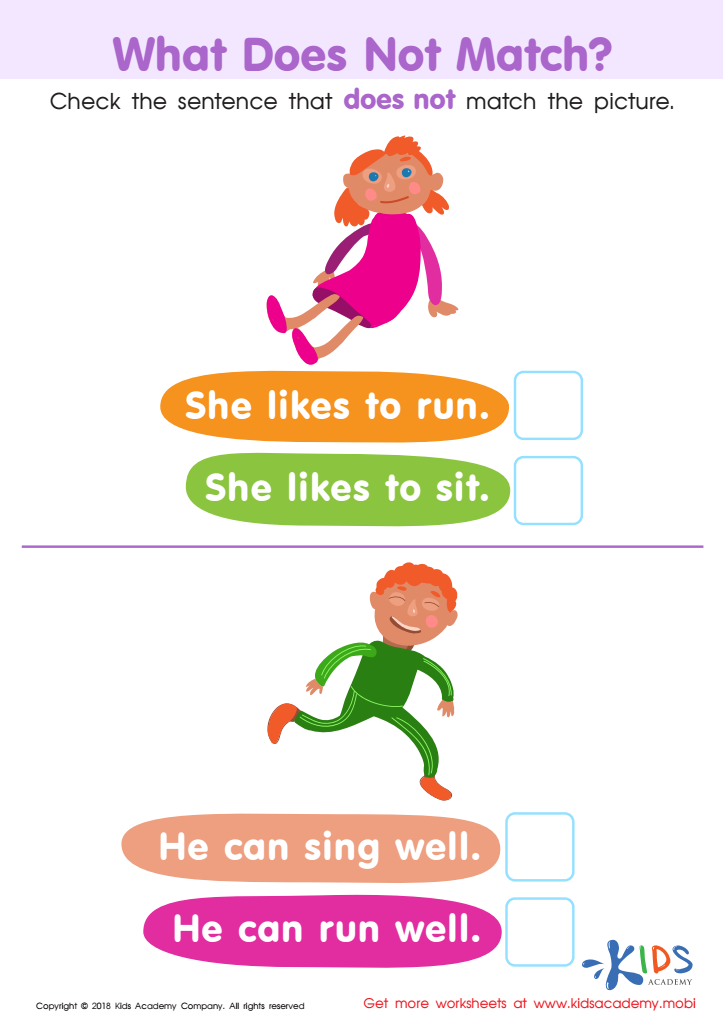
What Does Not Match? Worksheet
What Does Not Match? Worksheet
Emerging readers need to practice using visual cues and repetitive text. This colorful PDF provides them with an opportunity to look at pictures, use discrimination and discern which phrase does not match. It also enables them to gain familiarity with high-frequency words to aid decoding longer sentences.
What Does Not Match? Worksheet
Worksheet
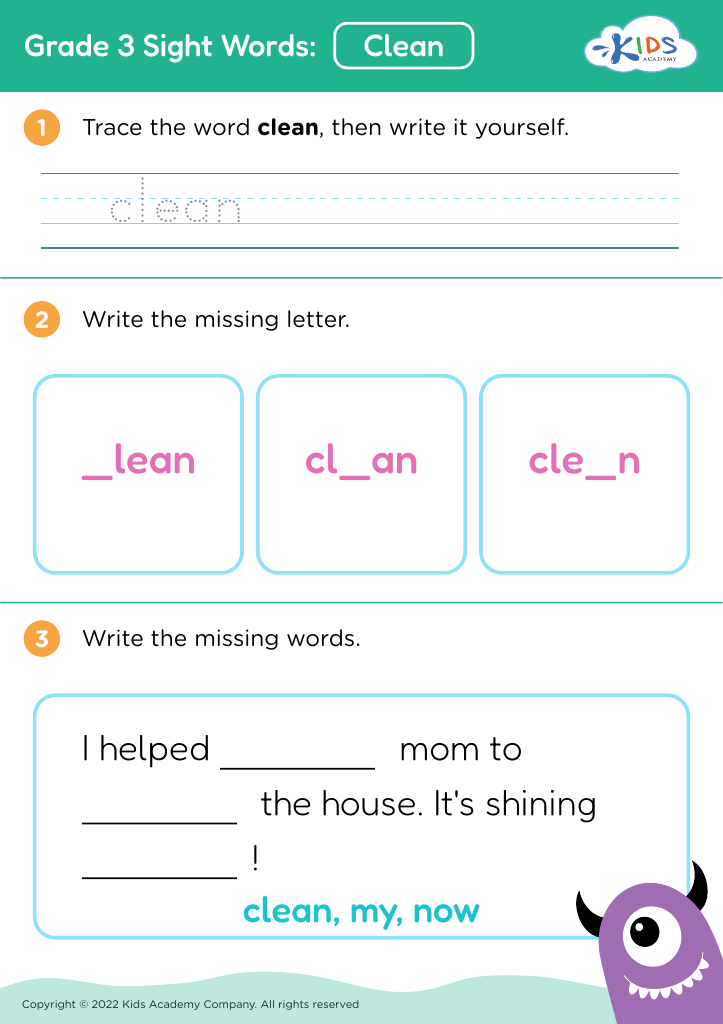
Grade 3 Sight Words: Clean

Grade 3 Sight Words: Clean

Grade 3 Sight Words: Clean
Worksheet
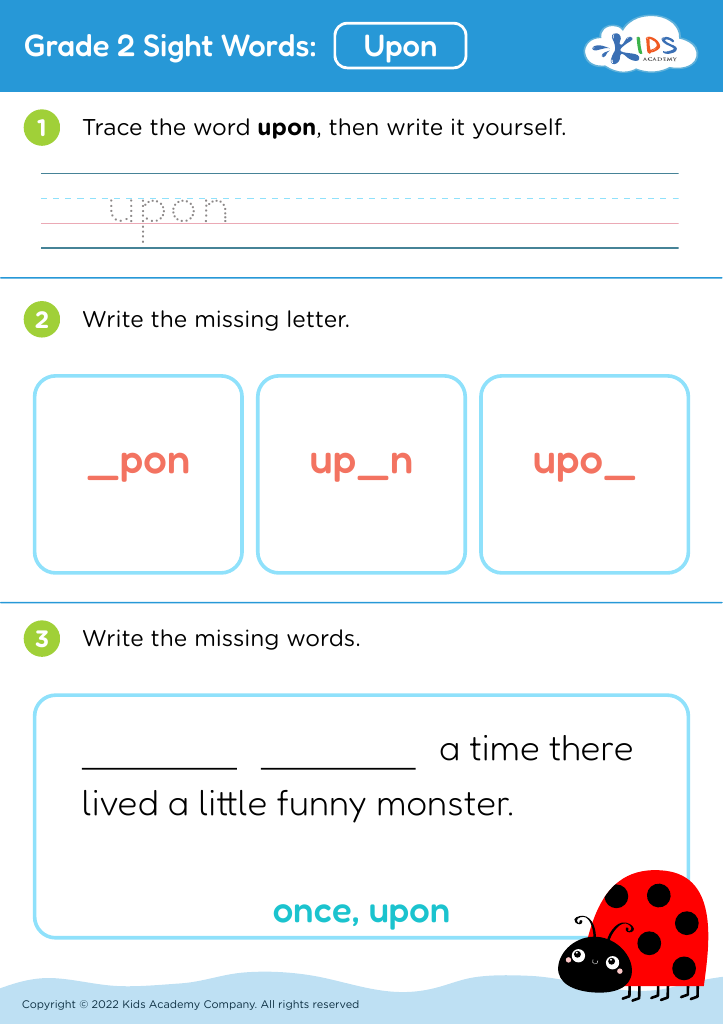
Grade 2 Sight Words: Upon

Grade 2 Sight Words: Upon

Grade 2 Sight Words: Upon
Worksheet
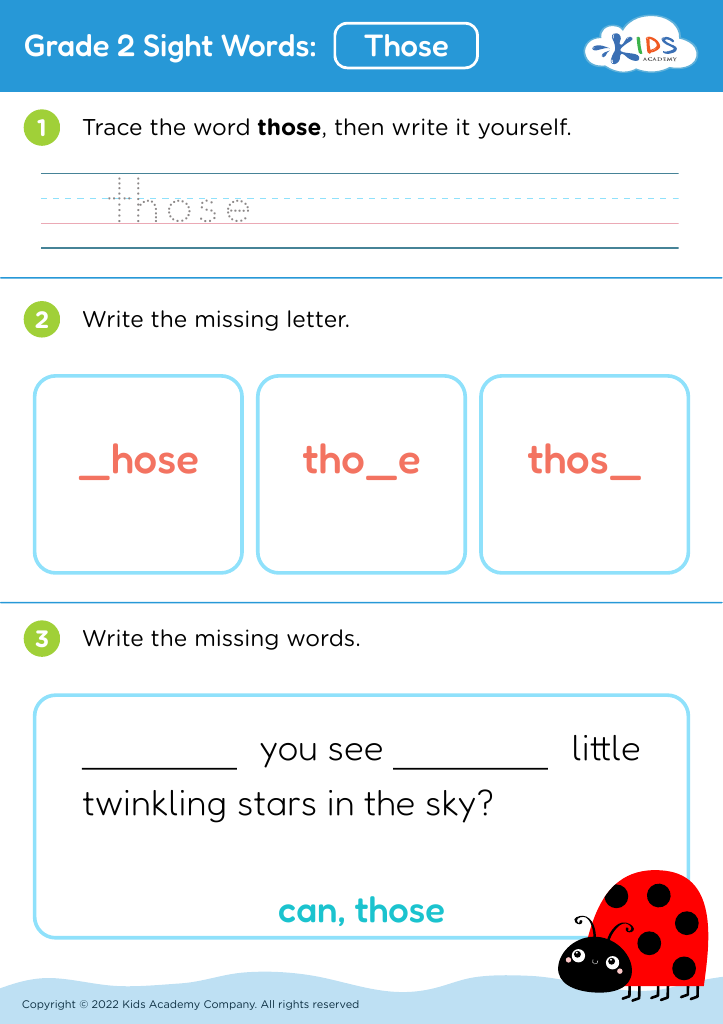
Grade 2 Sight Words: Those

Grade 2 Sight Words: Those

Grade 2 Sight Words: Those
Worksheet
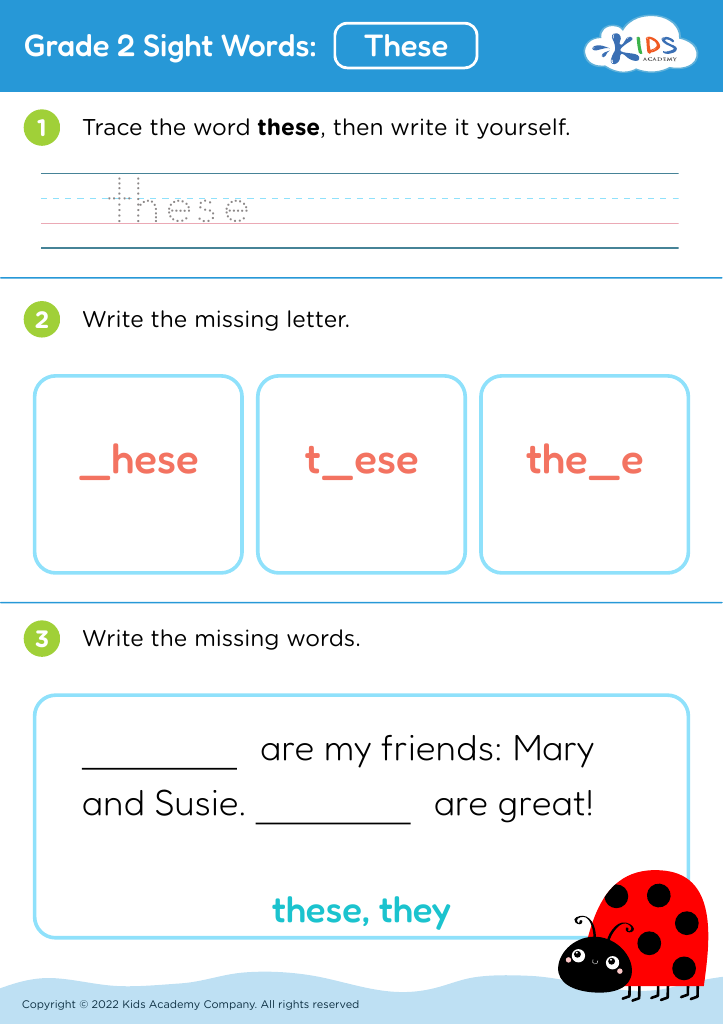
Grade 2 Sight Words: These

Grade 2 Sight Words: These

Grade 2 Sight Words: These
Worksheet
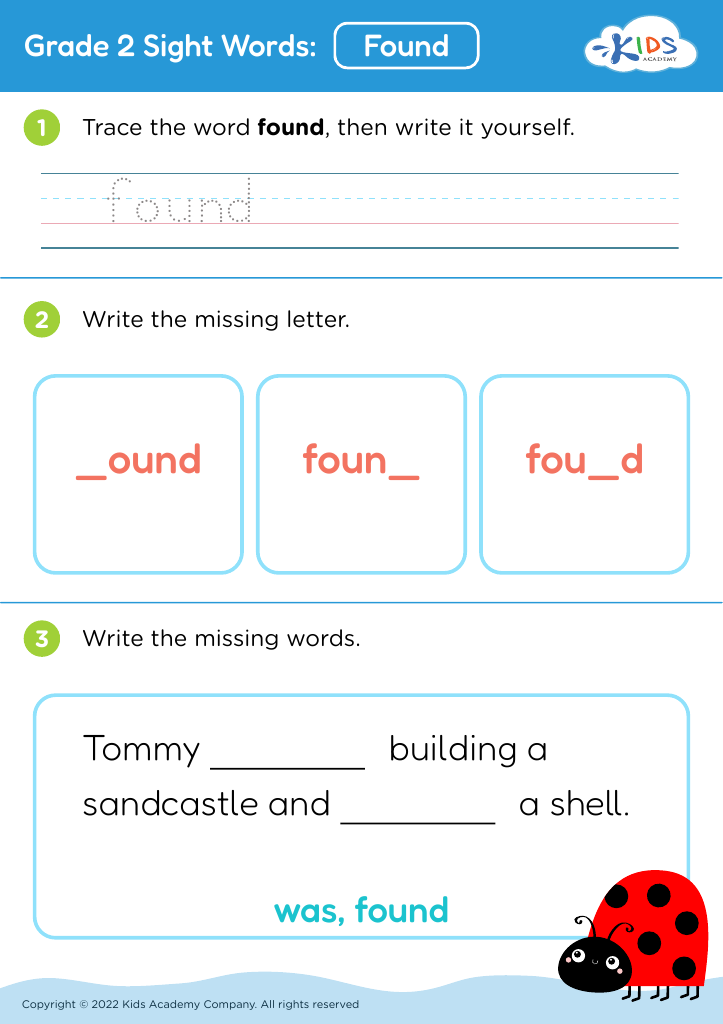
Grade 2 Sight Words: Found

Grade 2 Sight Words: Found

Grade 2 Sight Words: Found
Worksheet


Shape recognition is a foundational skill that plays a crucial role in early childhood education, particularly for children aged 6 to 9. At this stage, children are developing essential cognitive abilities, and recognizing shapes helps them understand the world around them. Parents and teachers should care about shape recognition reading because it enhances visual-spatial skills, improving a child's ability to navigate their environment and solve problems.

Furthermore, shape recognition serves as an integral stepping stone for more advanced mathematical concepts, such as geometry, patterns, and symmetry. By associating shapes with corresponding terms and contexts, children cultivate language skills and enrich their vocabulary. This foundational learning builds confidence as they progress academically.

Moreover, engaging with shape recognition can be a fun andinteractive way to foster creativity and critical thinking. Activities involving shapes promote hands-on learning, allowing children to explore, categorize, and analyze shapes through games, art, and practical applications.

In summary, shape recognition blends cognitive development with language acquisition and practical life skills. For parents and teachers, emphasizing this skill is vital, as it sets the stage for not just successful learning, but also helps children become observant and engaged members of their communities.