Understanding perspectives Reading Worksheets for Ages 6-9
3 filtered results
-
From - To
Discover our "Understanding Perspectives Reading Worksheets" designed specifically for ages 6-9! These engaging resources help young learners explore different viewpoints through fun narratives and interactive questions. Made to enhance reading comprehension, the worksheets encourage children to identify characters' feelings, motives, and unique perspectives within various texts. Our carefully crafted activities not only promote critical thinking but also foster empathy as kids learn to appreciate diverse opinions and experiences. Perfect for home or classroom use, these worksheets support teachers and parents in developing essential reading skills while keeping children entertained. Start your child's journey into understanding perspectives today!
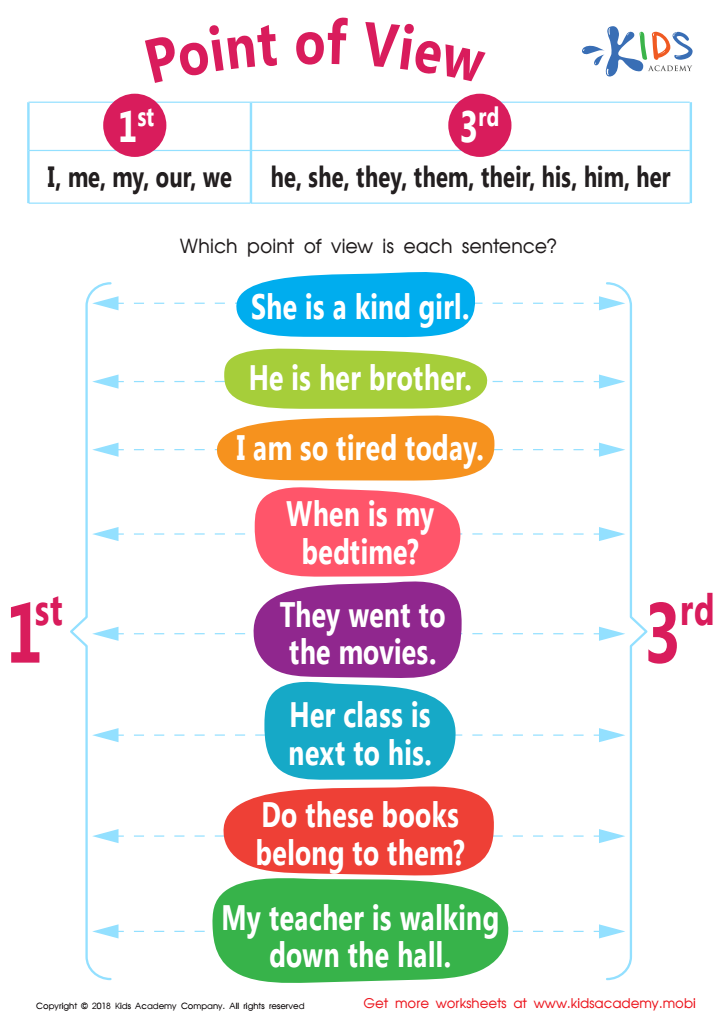
Point of View Worksheet
 Assign to My Students
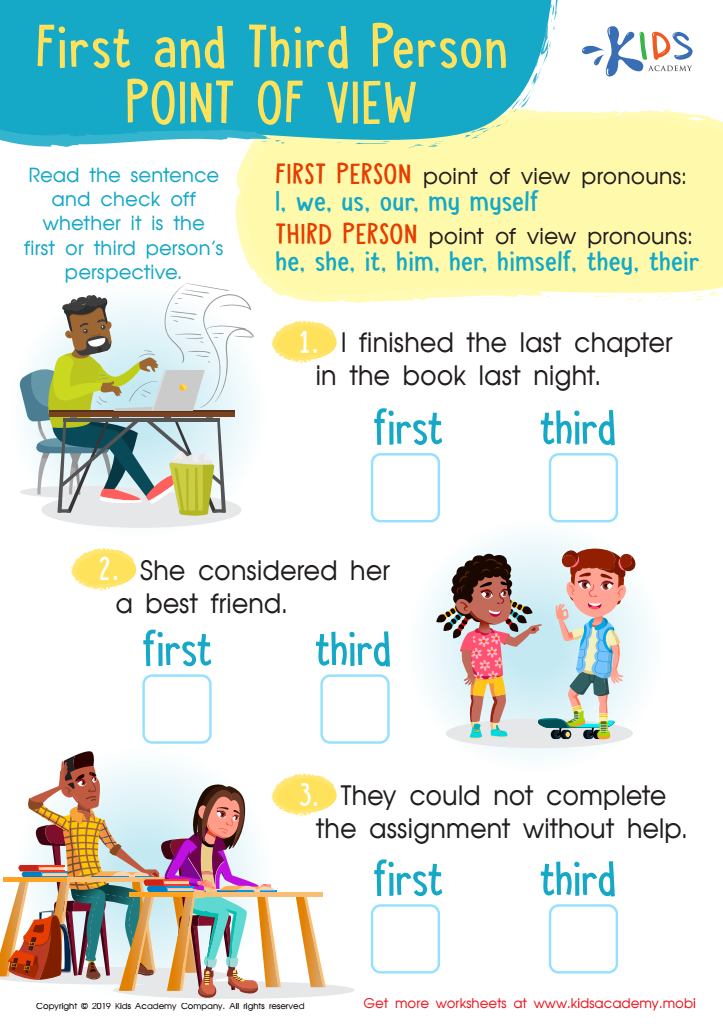
First and Third Person Point of View Worksheet
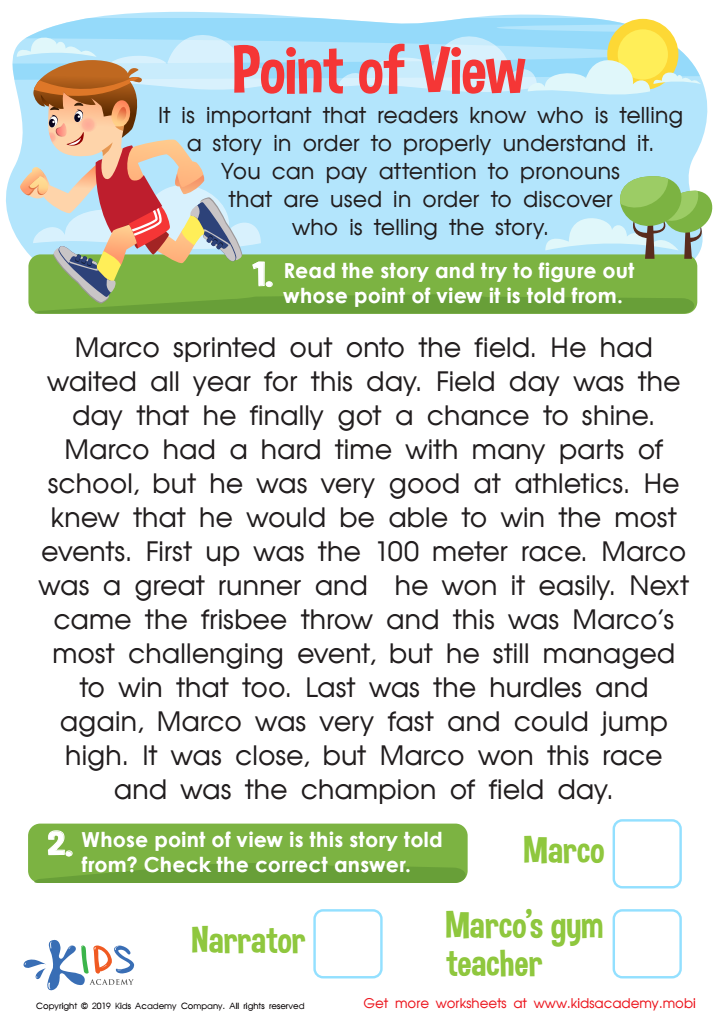
Point of View Worksheet





.jpg)


Understanding perspectives in reading is vital for children aged 6-9 as it fosters empathy, critical thinking, and comprehension skills. At this stage, children are expanding their ability to understand stories beyond the surface level. By learning to recognize and appreciate diverse viewpoints—whether through characters in a book or different authors’ styles—they enhance their emotional intelligence and social awareness.
When parents and teachers encourage perspective-taking, they help children grasp the importance of context and emotion in narratives. This not only improves reading comprehension but also equips children with the tools to engage in thoughtful dialogues about themes, morals, and character motivations. It allows them to relate better to both fictional characters and their peers' feelings, which is crucial for social interaction.
Additionally, understanding perspectives can spark imaginative thinking, creativity, and a love for reading. Children who reflect on different viewpoints are more likely to develop moral reasoning and a respectful attitude towards diversity. Overall, nurturing these skills lays a foundation for a more inclusive, caring society and prepares children for more complex texts as they progress in their educational journey. The key is to engage them in discussions that challenge their thinking and encourage open-mindedness.








