Understanding Sequences Reading Worksheets for Ages 6-9
3 filtered results
-
From - To
Help your child master the concept of sequences with our engaging "Understanding Sequences" reading worksheets designed for ages 6-9. These worksheets are crafted to improve reading comprehension while teaching children to recognize the order of events in stories and everyday activities. Through fun exercises, such as illustrations and simple texts, kids will learn to identify the sequence of actions, enhance critical thinking skills, and develop a lifelong love for reading. Perfect for home or classroom use, our materials provide a valuable resource for young learners to gain confidence in their reading abilities. Explore our collection today to support your child's learning journey!
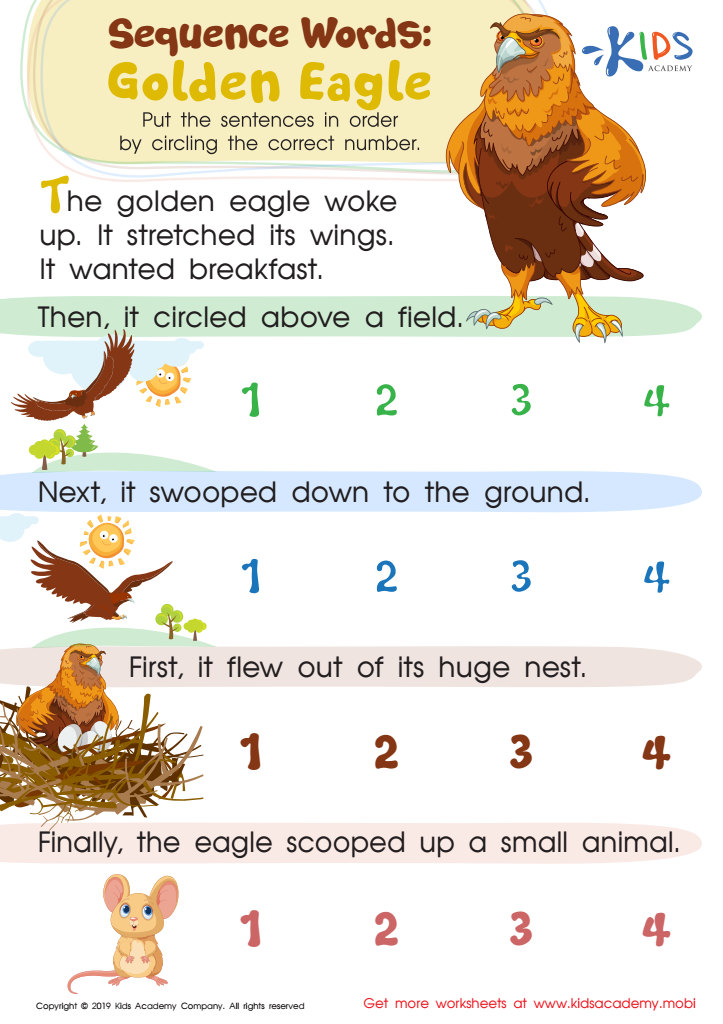
Sequence Word Eagle Worksheet
 Assign to My Students
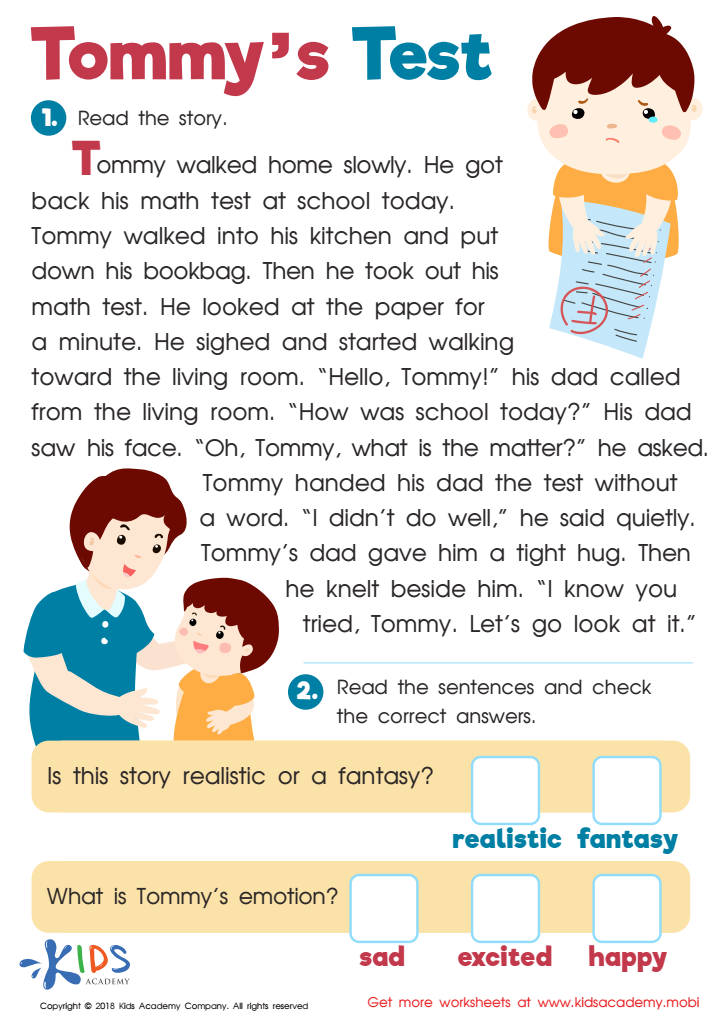
Tommys Test Worksheet
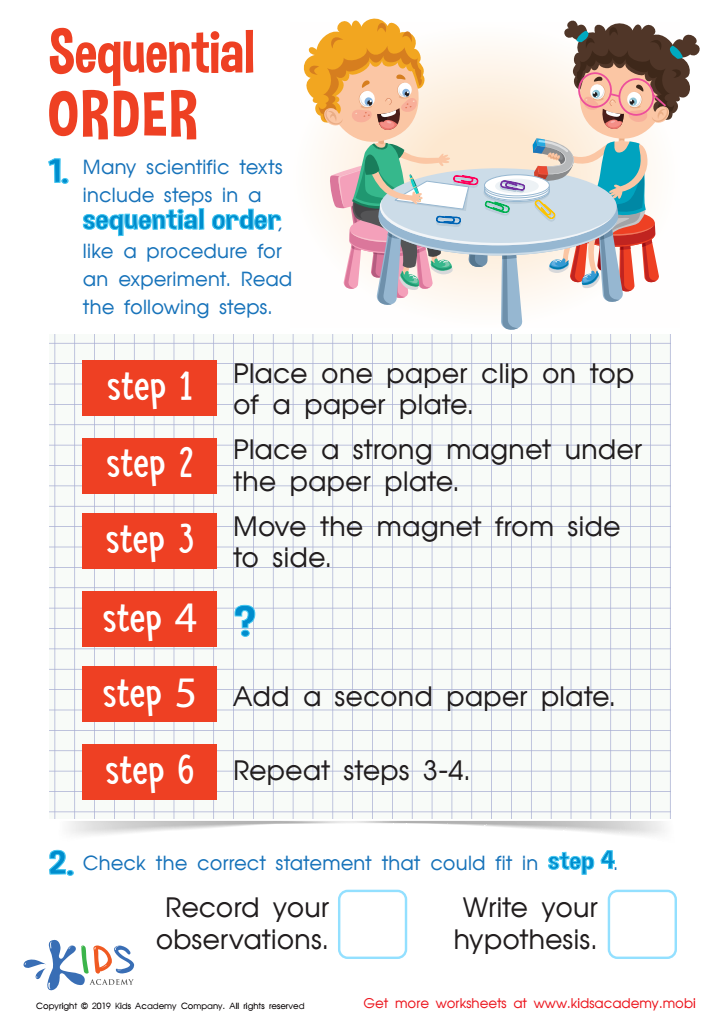
Sequencential Order Worksheet





Understanding sequences in reading, especially for children aged 6-9, is crucial for several reasons. First, recognizing sequences helps children develop comprehension skills, enabling them to understand the organization of ideas within stories. As young readers encounter narratives, understanding the chronological order of events enhances their ability to predict and infer outcomes, making reading more engaging and meaningful.
Secondly, sequences build foundational skills for writing. When children learn to recognize the structure of a story—beginning, middle, and end—they are better equipped to craft their own narratives. This understanding nurtures creativity and encourages self-expression, vital components of literacy.
Additionally, understanding sequences fosters critical thinking. Children learn to analyze cause-and-effect relationships, enhancing their ability to make connections between events and why they occur. This skill not only aids in literacy but also promotes problem-solving in real-life situations.
Furthermore, strong sequencing skills can support academic performance across subjects, as many areas, such as math and science, require the ability to follow steps and understand progressions. Therefore, parents and teachers should prioritize teaching sequences to build confident, capable readers and thinkers who are prepared for life's challenges.








