Understanding sequencing Reading Worksheets for Ages 6-9
3 filtered results
-
From - To
Unlock the power of storytelling with our "Understanding Sequencing Reading Worksheets" designed for children ages 6-9. These engaging worksheets help young learners grasp the important skill of sequencing—the ability to arrange events in the correct order. Through fun exercises, kids practice identifying the sequence of events in stories, enhancing their reading comprehension and critical thinking skills. Our resources offer vibrant visuals and age-appropriate activities, making learning exciting and interactive. Whether in the classroom or at home, these worksheets promote literacy development while fostering a love for reading. Dive into the world of stories and help your child become a confident reader today!
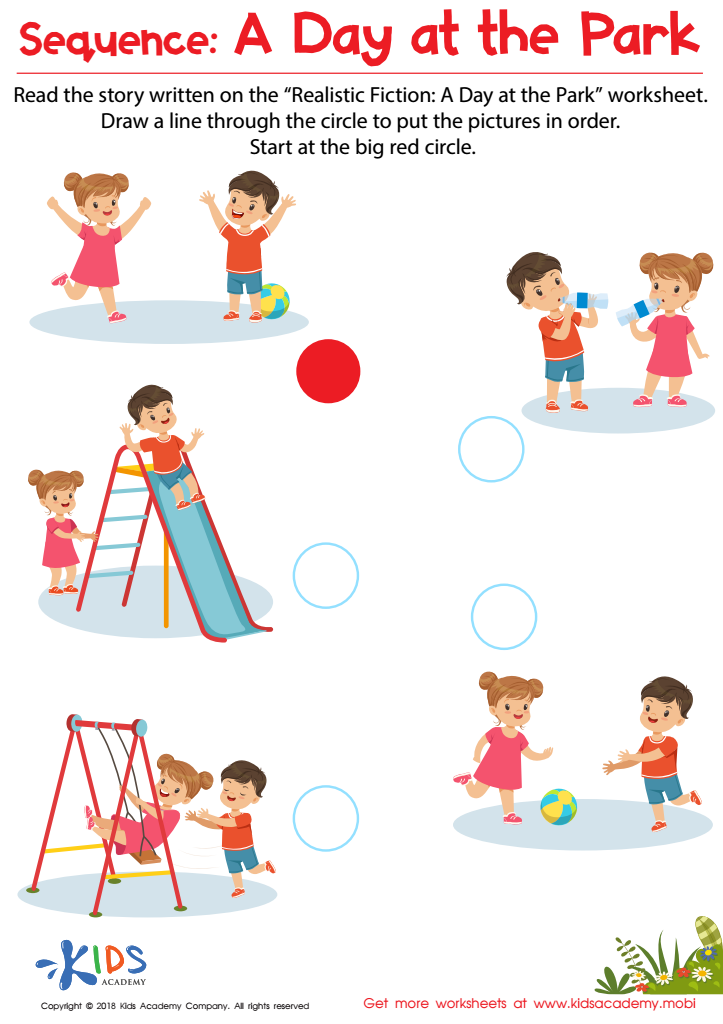
Sequence: A Day at the Park Worksheet
 Assign to My Students
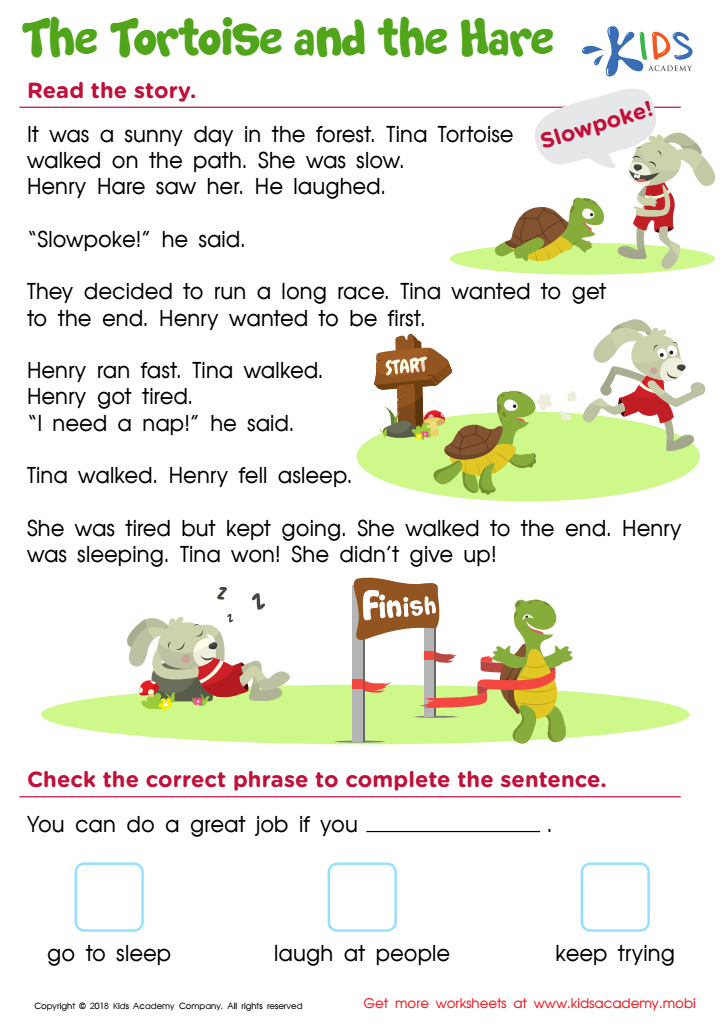
The Tortoise and the Hare Worksheet
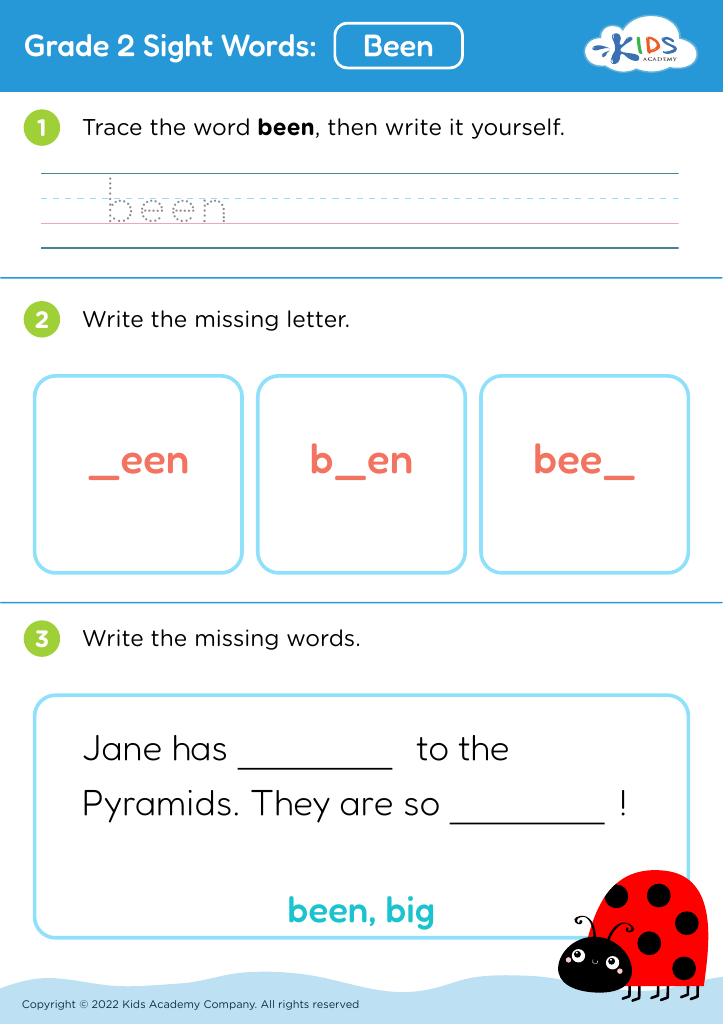








Understanding sequencing in reading is vital for children aged 6-9, as it lays the foundation for effective comprehension and critical thinking. When children grasp sequencing, they learn to recognize the order of events in a story, which sharpens their ability to make predictions, draw conclusions, and retell narratives accurately. For parents and teachers, fostering sequencing skills encourages deeper engagement with texts and enhances overall literacy.
Furthermore, sequencing assists in developing problem-solving abilities, as kids learn to identify cause-and-effect relationships within narratives. As children navigate various reading levels, they encounter stories with more complex structures. A solid understanding of sequencing helps them articulate thoughts and engage in discussions about plot development and character motivations.
Moreover, sequencing exercises, such as arranging story events or summarizing paragraphs, bolster writing abilities, enabling children to craft coherent narratives of their own. Incorporating sequencing activities into educational practices can benefit individual learning styles, making literacy more accessible.
Overall, prioritizing sequencing in early education equips children with essential skills they need not only for reading comprehension but also for academic success in various subjects, fostering a lifelong love for learning and literature. By investing attention into this aspect, parents and teachers set a strong educational foundation for their children.








