Verb identification Reading Worksheets for Ages 6-9
3 filtered results
-
From - To
Discover our engaging Verb Identification Reading Worksheets, specifically designed for children aged 6-9. These interactive worksheets help young learners enhance their reading and comprehension skills by focusing on verb recognition. With a variety of fun activities, including fill-in-the-blanks, matching games, and sentence construction, students will gain confidence in identifying verbs within texts. Perfect for at-home practice or classroom use, our worksheets support essential language development while keeping learning enjoyable. Nurture your child's linguistic abilities and foster a love for reading through exploration and creativity. Access our collection today and make verb identification both fun and educational!
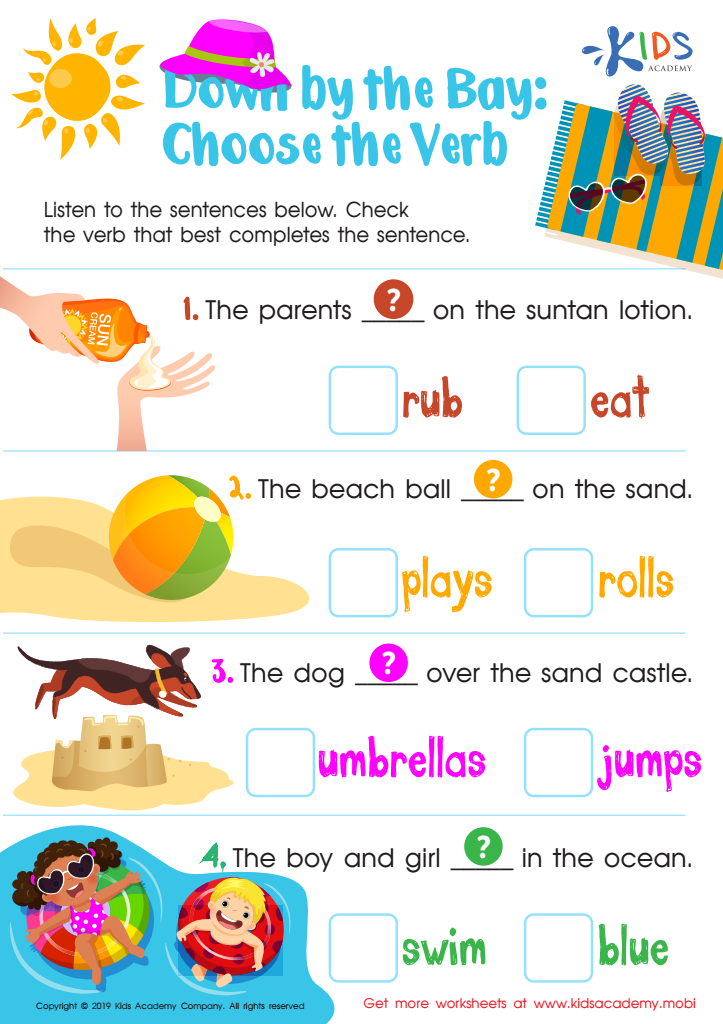
Down by the Bay: Choose the Verb Worksheet
 Assign to My Students
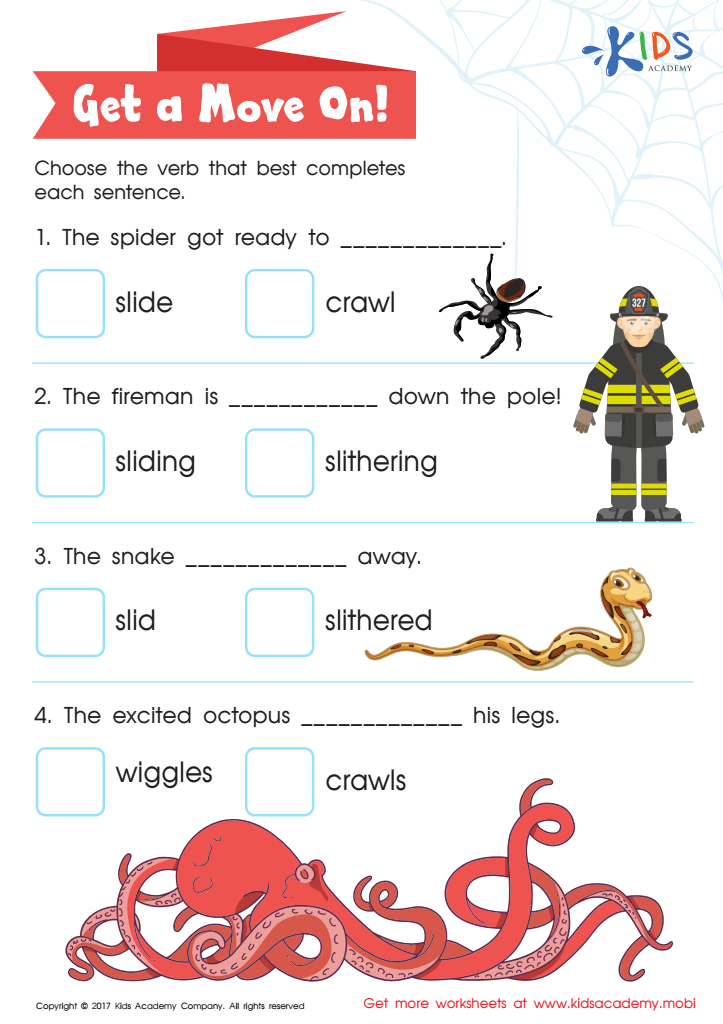
Verb Worksheet
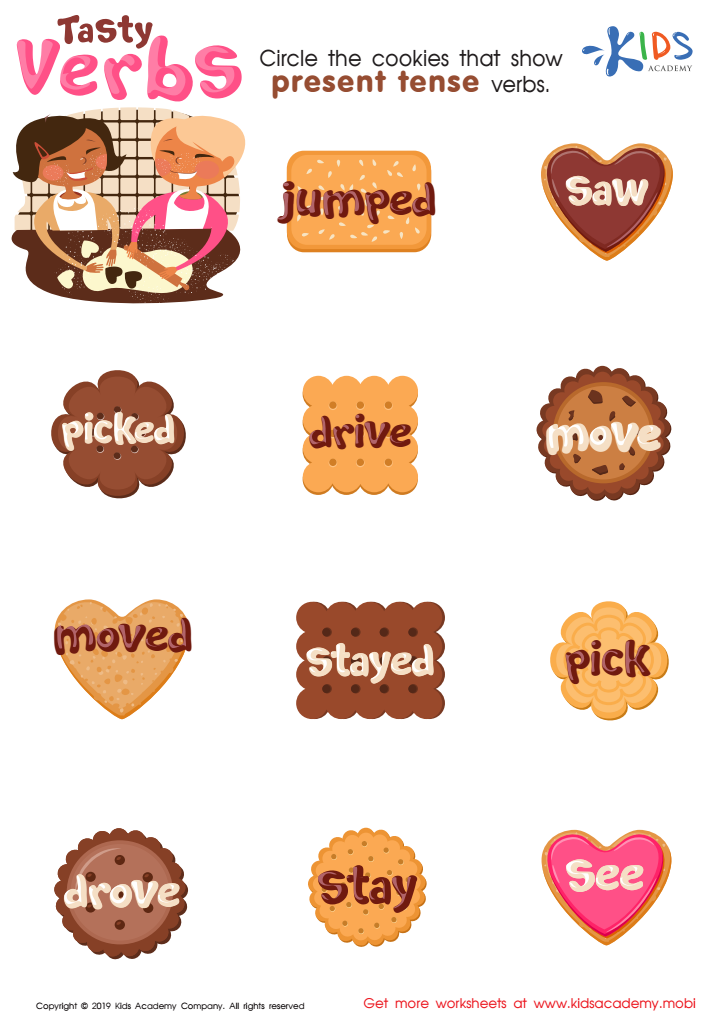
Tasty Verbs Worksheet








Verb identification is crucial for children aged 6-9 as it lays the foundation for language development, reading comprehension, and effective communication. At this stage, children begin to grasp more complex sentence structures and meanings. By recognizing verbs, they not only enhance their vocabulary but also learn to understand the actions in sentences, which strengthens their overall comprehension.
For teachers and parents, emphasizing verb identification fosters critical thinking skills. As children identify verbs, they learn to ask questions about who is doing what in a sentence, which promotes engagement with the text and supports higher-level thinking. Furthermore, identifying verbs helps with writing fluency, as children can create more vivid and dynamic stories by incorporating varied verbs.
Moreover, verb knowledge contributes to grammar understanding, essential for reading and writing proficiency. In today's rapidly evolving world, where communication skills are paramount, helping children master these basics equips them for academic success and social interactions.
Ultimately, a strong grasp of verb identification sets the stage for lifelong literacy skills, influencing children's confidence and academic performance in reading and writing tasks. Parents and teachers play a vital role in nurturing this skill, creating positive experiences with language, and ensuring children thrive in their learning journeys.








