Vocabulary improvement Reading Worksheets for Ages 6-9
3 filtered results
-
From - To
Enhance your child's language skills with our engaging Vocabulary Improvement Reading Worksheets designed specifically for ages 6-9. These worksheets offer a fun and interactive way for young learners to expand their vocabulary through reading comprehension exercises, word matching activities, and fill-in-the-blank challenges. Each worksheet is crafted to align with age-appropriate learning standards, ensuring that kids build a strong foundation in language arts while having fun. With colorful illustrations and imaginative themes, your child will stay motivated and excited about learning. Explore our collection today and watch their vocabulary soar as they embark on a rewarding reading adventure!
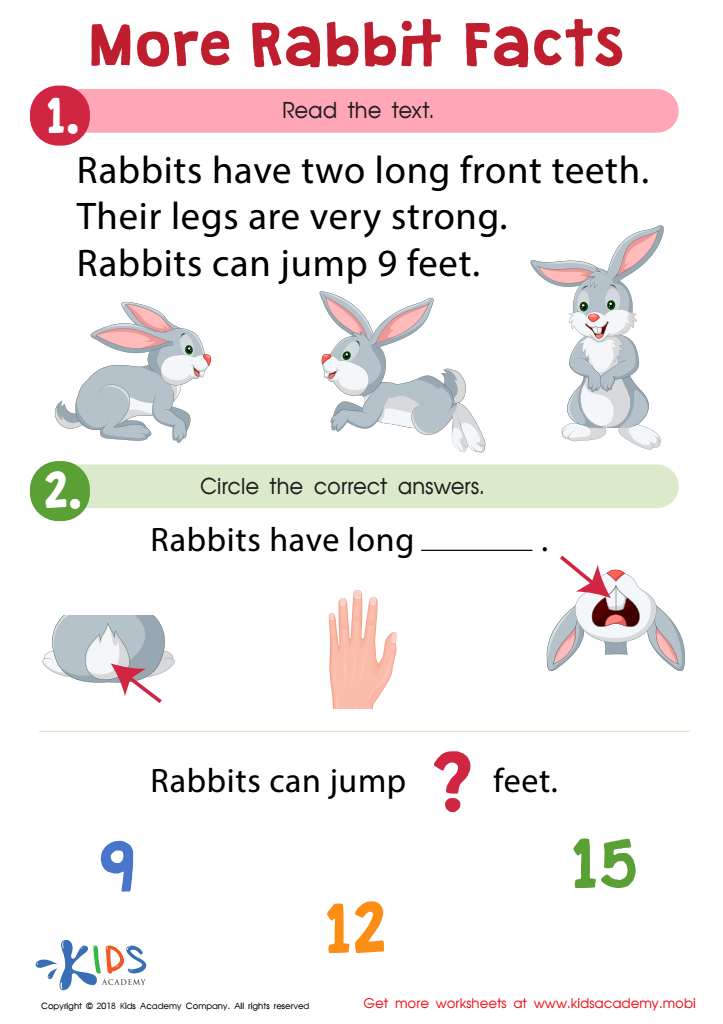
More Rabbit Facts Worksheet
 Assign to My Students
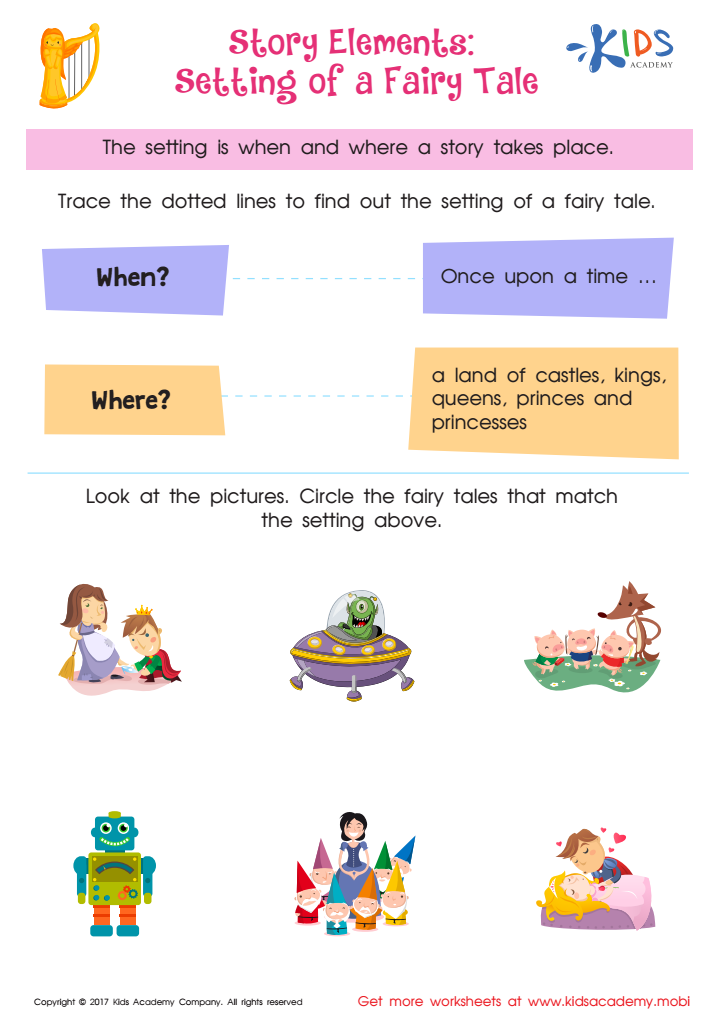
Story Elements: Setting of a Fairy Tale Printable
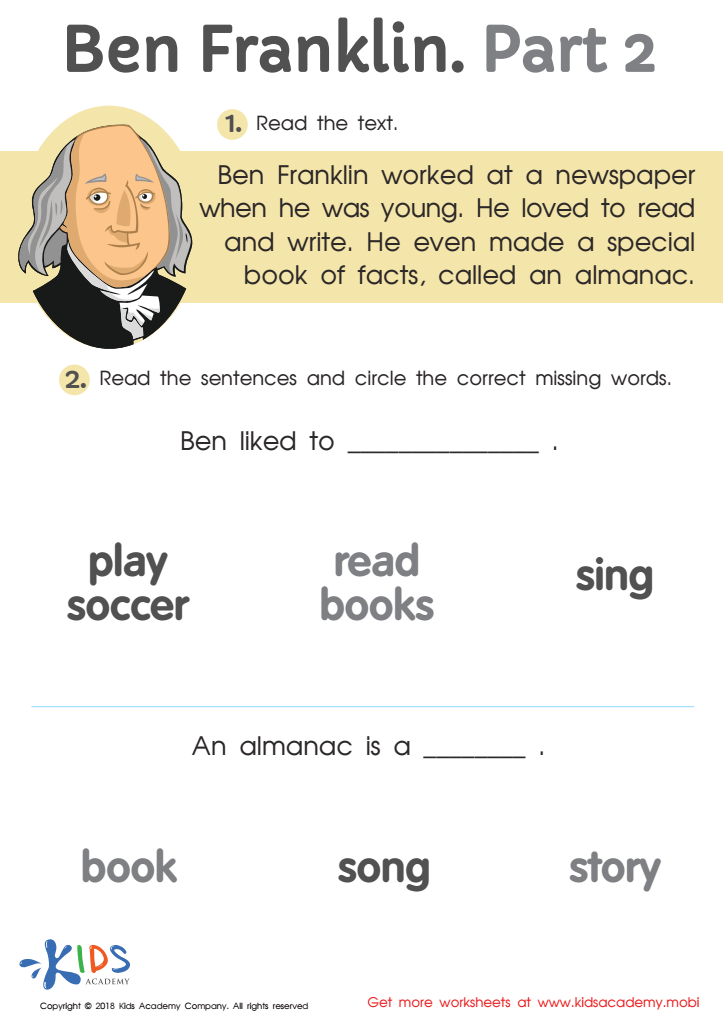
Ben Franklin Part 2 Worksheet








Vocabulary improvement in children aged 6-9 is crucial for their overall academic success and personal development. At this age, children are transitioning from learning to read to reading to learn. A rich vocabulary enables them to comprehend texts more deeply, express their thoughts clearly, and engage effectively in conversations.
Research shows that a strong vocabulary is linked to improved reading comprehension, writing skills, and critical thinking abilities. Children with a broader vocabulary are better equipped to analyze information, draw inferences, and grasp complex ideas across subjects, leading to enhanced performance in school.
Furthermore, vocabulary development is essential for social skills. As children learn new words, they gain the ability to articulate their feelings and interact more effectively with peers and adults, fostering better relationships and emotional intelligence.
Parents and teachers play a vital role in this developmental phase. By incorporating vocabulary-rich activities such as reading diverse books, engaging in word-play games, and encouraging discussions about new words, they can create a supportive environment that stimulates linguistic growth. Ultimately, investing time and resources into vocabulary improvement not only enriches children's communication skills but also lays the foundation for lifelong learning and success.








