Moral understanding Reading Comprehension Worksheets for Ages 6-9
5 filtered results
-
From - To
Discover our engaging Moral Understanding Reading Comprehension Worksheets, specially designed for children ages 6 to 9. These interactive resources help young learners develop essential skills by exploring themes such as empathy, honesty, and kindness through relatable stories. Each worksheet includes age-appropriate texts and questions that encourage critical thinking and moral reasoning, making reading an enjoyable and meaningful experience. Perfect for educators and parents alike, our worksheets provide valuable opportunities to instill positive values and enhance comprehension abilities. Dive into the world of moral stories and watch your child's understanding and character flourish! Ideal for home or classroom use.
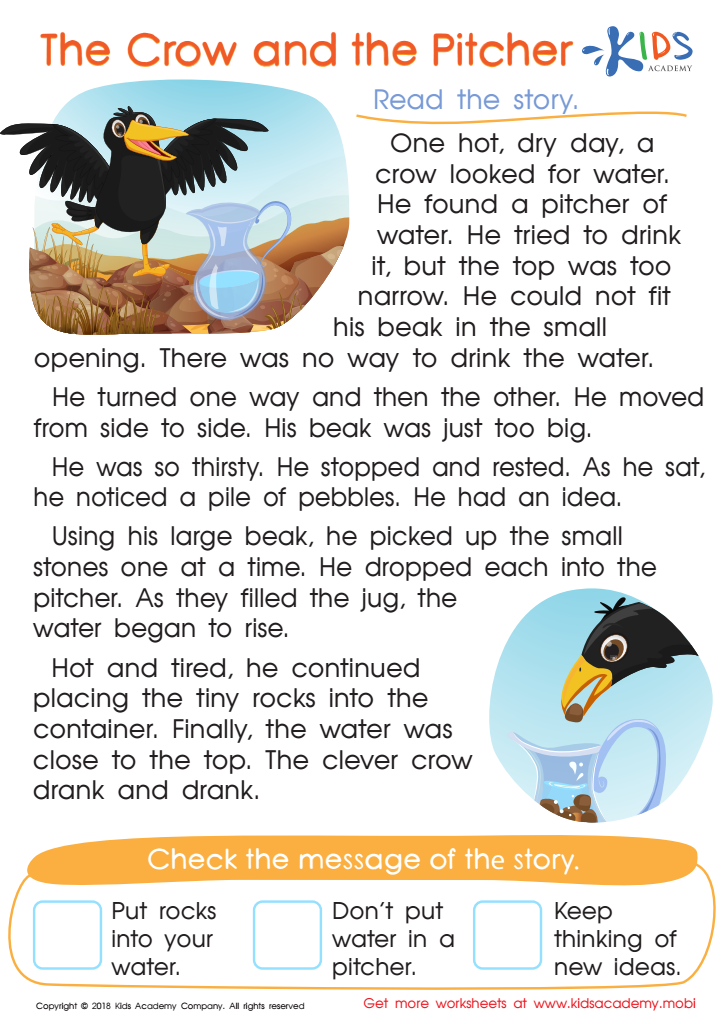
The Crow and the Pitcher Worksheet
 Assign to My Students
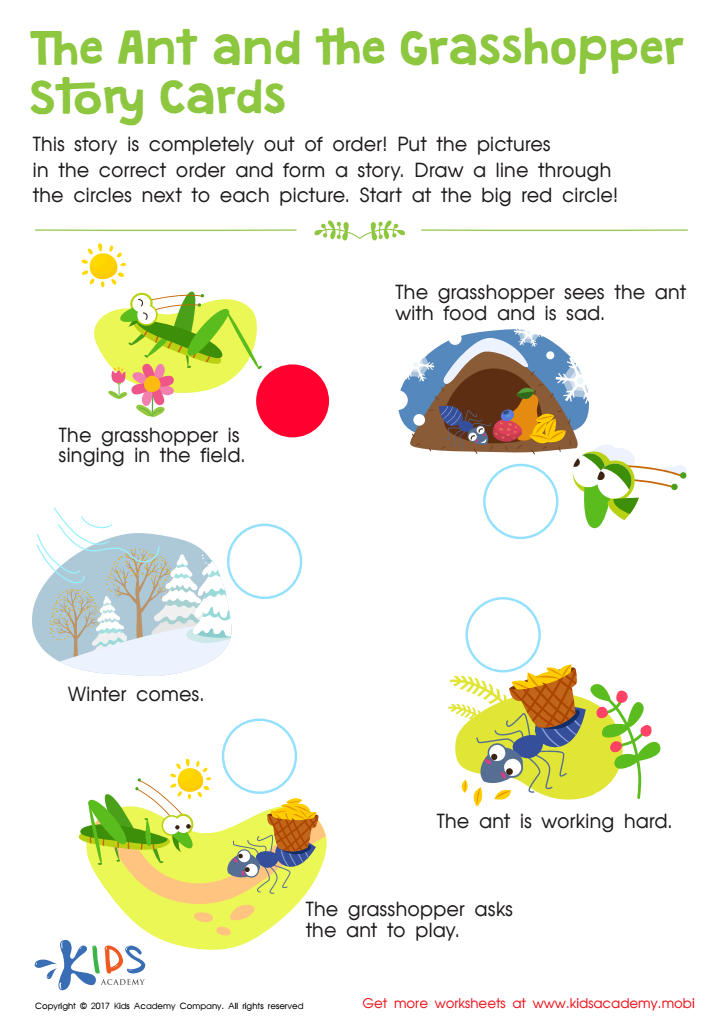
The Ant and The Grasshopper Worksheet
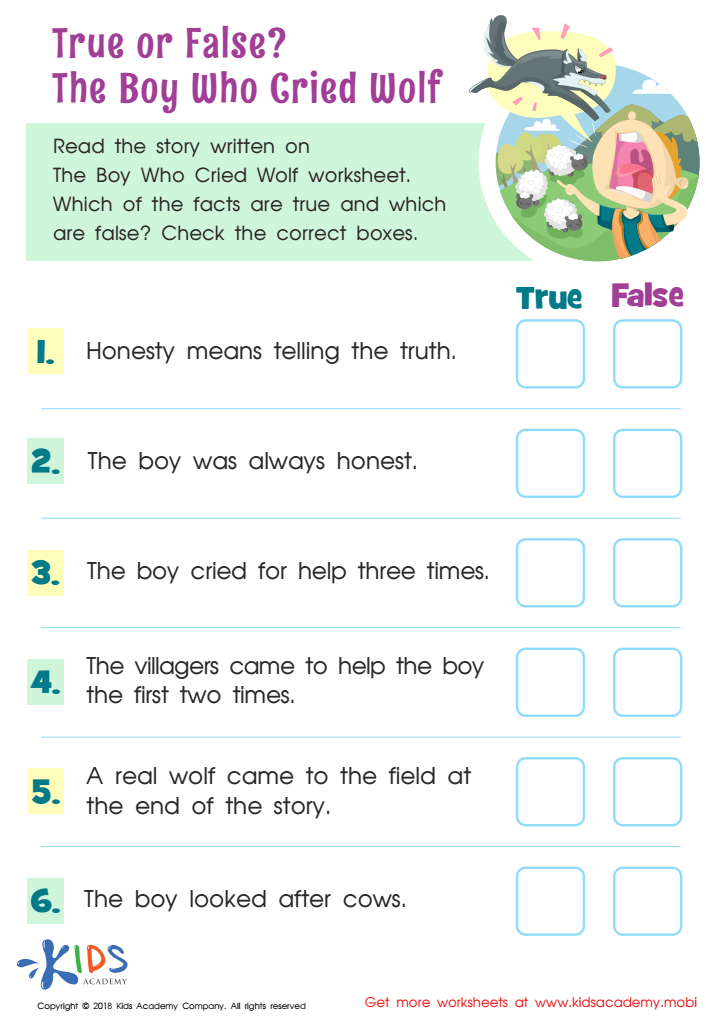
True or False? The Boy Who Cried Wolf Worksheet
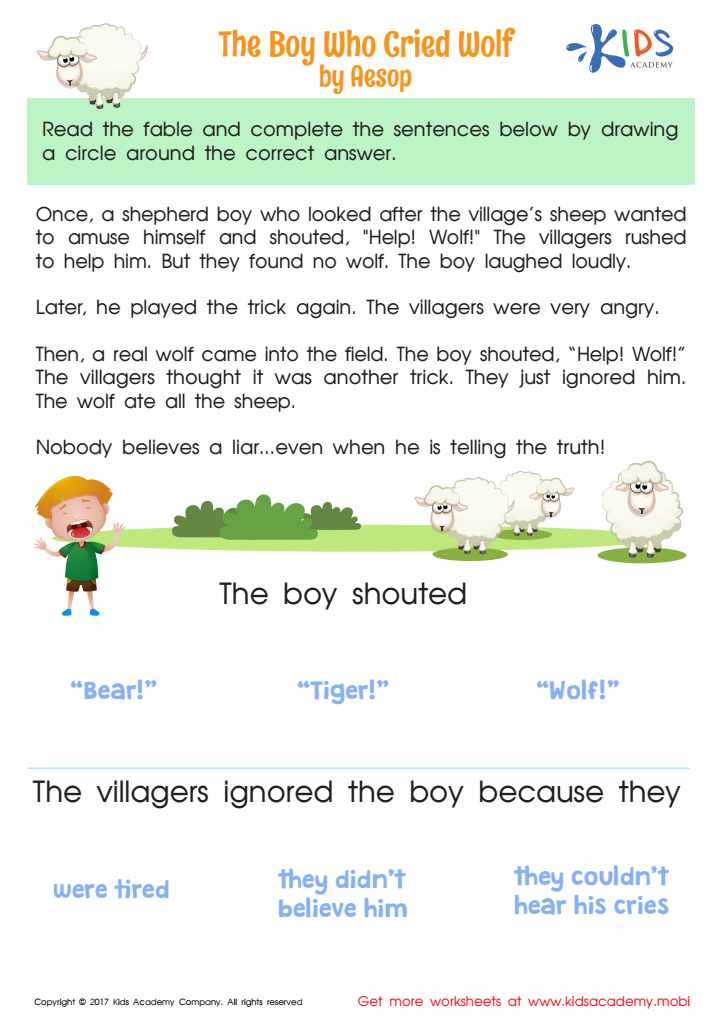
The Boy Who Cried Wolf Worksheet
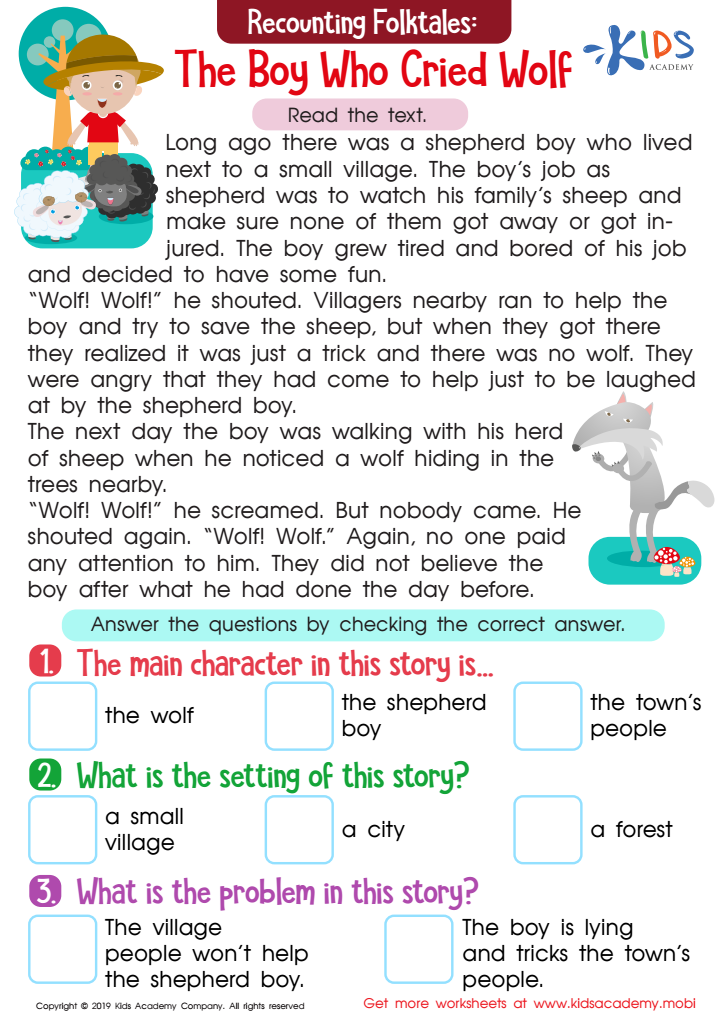
The Boy Who Cried Wolf Part 1 Worksheet






.jpg)

Moral understanding in reading comprehension is crucial for children aged 6-9 as it lays the foundation for empathy, ethical reasoning, and social awareness. At this developmental stage, kids are beginning to grasp complex narratives and the intentions behind characters’ actions. Engaging with stories that highlight moral dilemmas helps children to recognize the consequences of choices, both positive and negative, fostering critical thinking and personal growth.
Parents and teachers should prioritize moral understanding in reading as it encourages discussions about values, empathy, and decision-making. When children encounter characters facing moral choices, they can reflect on their own beliefs and apply these lessons to real-life situations, enhancing their emotional intelligence.
Moreover, comprehension skills connected to moral narratives support literacy development by promoting deeper engagement with texts. As children analyze character motivations and the repercussions of actions, they sharpen their analytical skills, gain insight into different perspectives, and build vocabulary.
By nurturing moral understanding through reading, parents and teachers cultivate compassionate, responsible individuals capable of making thoughtful decisions in their lives and communities. Ultimately, it empowers children to become conscientious contributors to society, equipped with the tools to navigate its complexities.








