Vocabulary enhancement Reading Comprehension Worksheets for Ages 6-9 - Page 3
51 filtered results
-
From - To
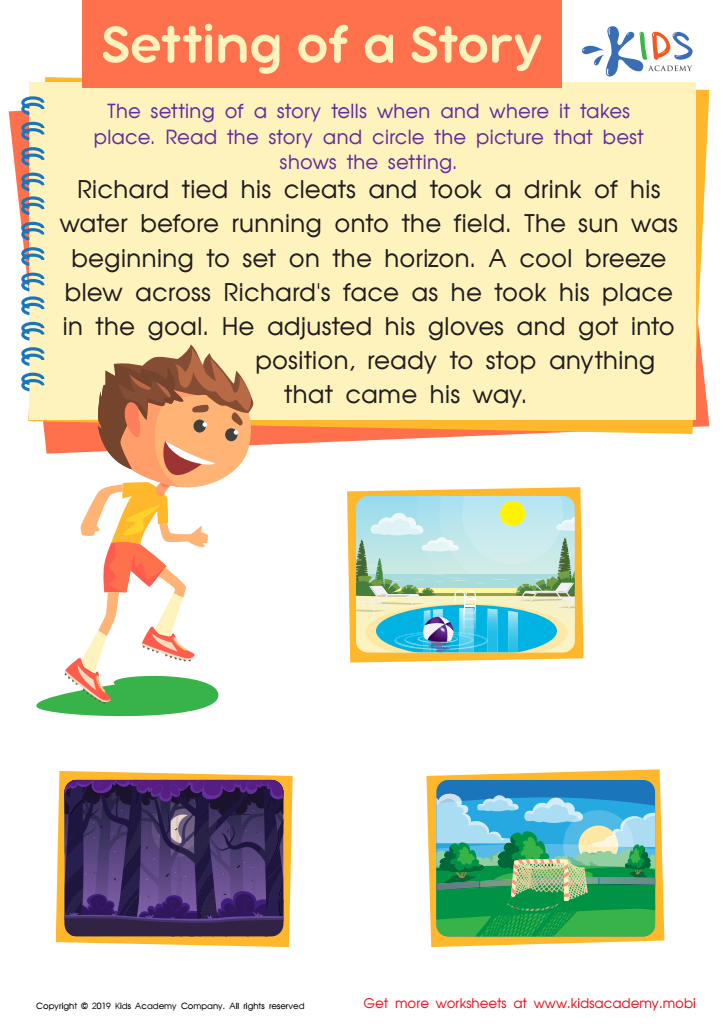
Setting of a Story Worksheet
 Assign to My Students
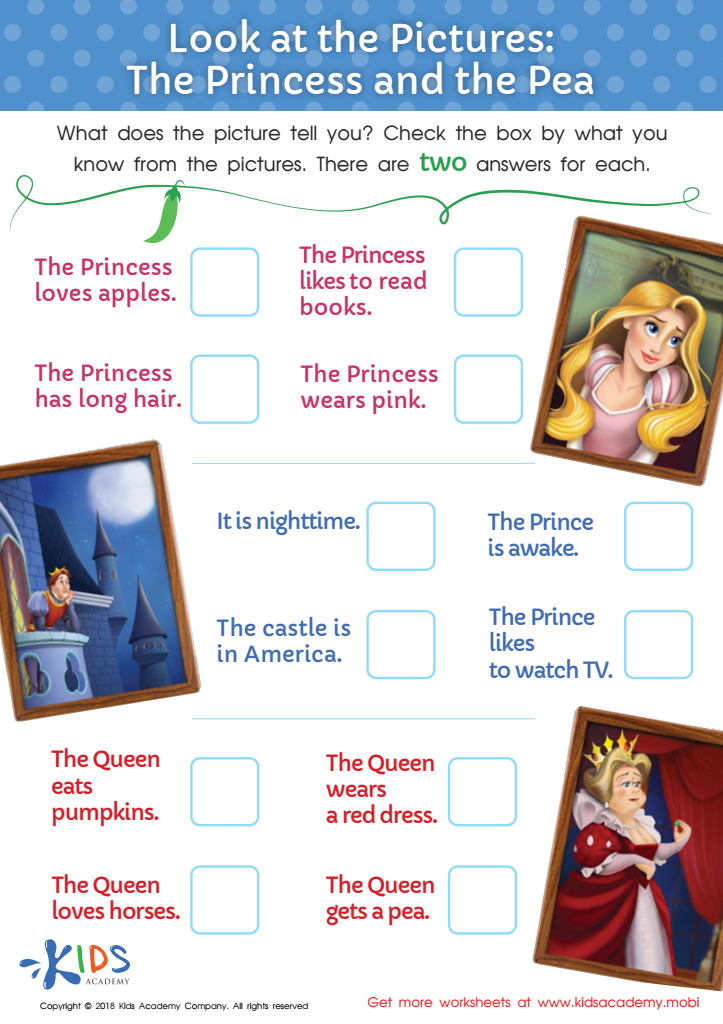
Look at the Pictures: The Princess and the Pea Worksheet
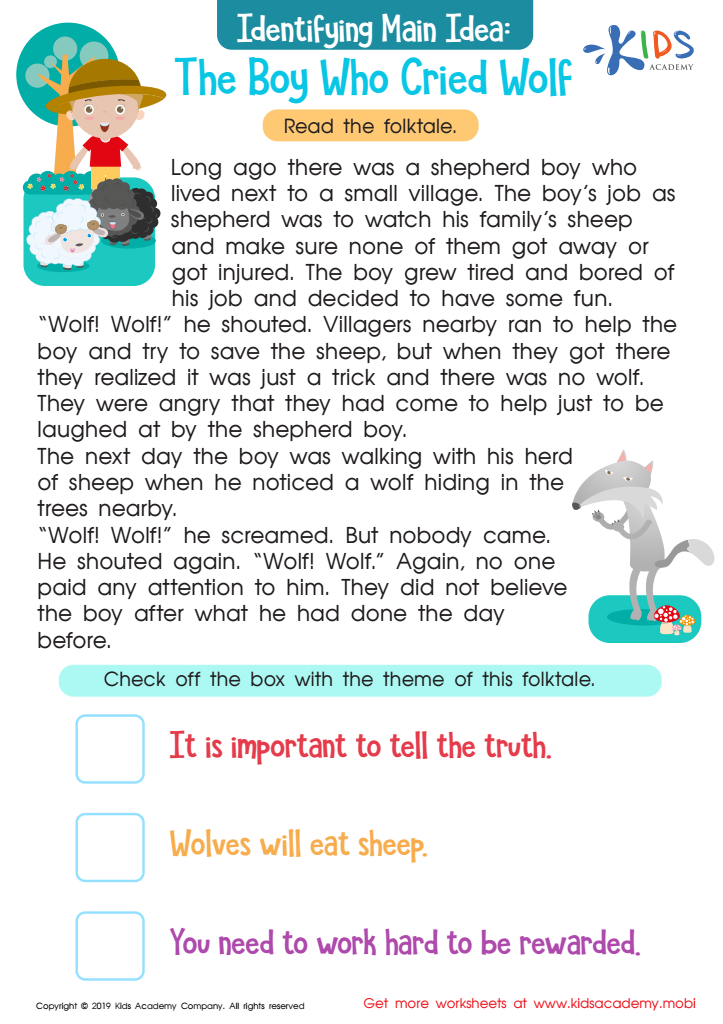
The Boy Who Cried Wolf Part 2 Worksheet








Vocabulary enhancement and reading comprehension are critical for children aged 6-9, serving as foundational pillars for their academic and personal growth. During these formative years, children transition from "learning to read" to "reading to learn." A robust vocabulary enables them to understand text more deeply, fostering better comprehension and promoting a love for reading.
When children possess a rich vocabulary, they can more easily grasp new concepts, follow instructions accurately, and communicate effectively. This not only aids in academic success across all subjects but also boosts their confidence in social interactions. Enhanced reading comprehension ensures that children can infer meanings, make predictions, and understand the narrative or informational elements of texts, leading to improved critical thinking skills.
Moreover, engaging with a wider range of vocabulary exposes children to different cultures, perspectives, and ideas, nurturing their empathy and open-mindedness. Reading comprehension practice equips children with the skills to analyze and retain information, setting them up for lifelong learning and success.
In essence, investing time in vocabulary enhancement and reading comprehension during these early years yields significant benefits, cultivating proficient readers who are well-prepared for future academic challenges and capable of thriving in an increasingly complex world.








