Vocabulary enhancement Rhyming Words Worksheets for Ages 6-9
6 filtered results
-
From - To
Enhance your child's vocabulary with our engaging Rhyming Words Worksheets designed for ages 6-9! These printable activities combine fun and learning to boost reading skills by focusing on rhyming words. Children practice matching, identifying, and creating rhyming pairs, which not only fosters phonetic awareness but also strengthens their overall reading and comprehension abilities. These worksheets are perfect for both classroom use and at-home practice, offering a variety of tasks that keep young learners interested and actively participating. Start building a richer vocabulary for your child today with our expertly crafted Rhyming Words Worksheets!
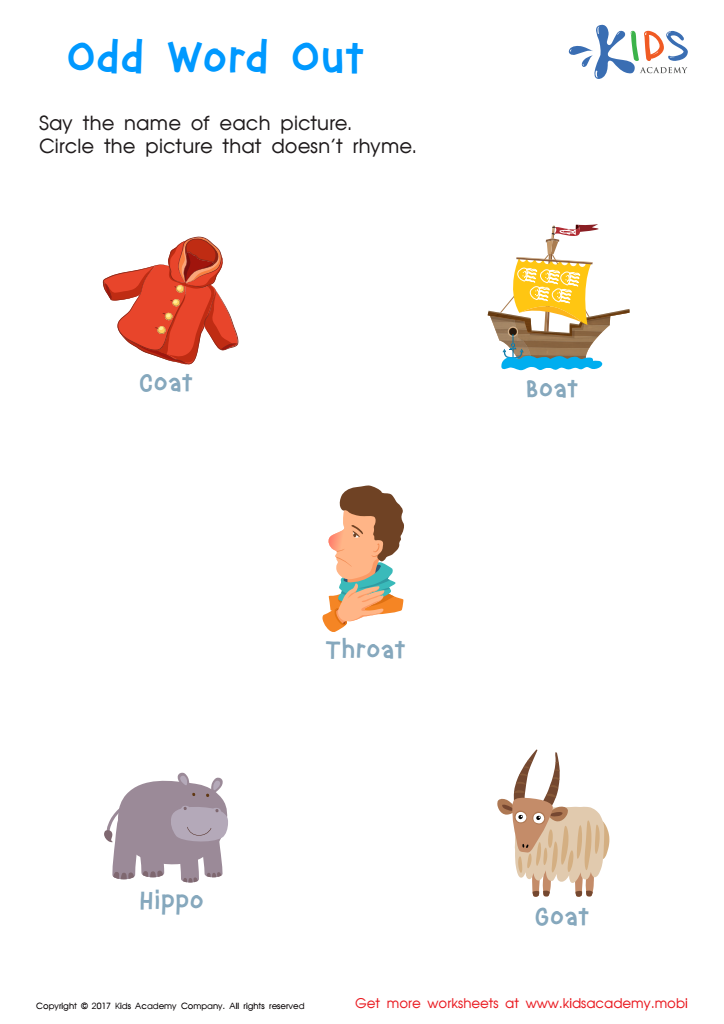
Odd Word Out Rhyming Worksheet
 Assign to My Students
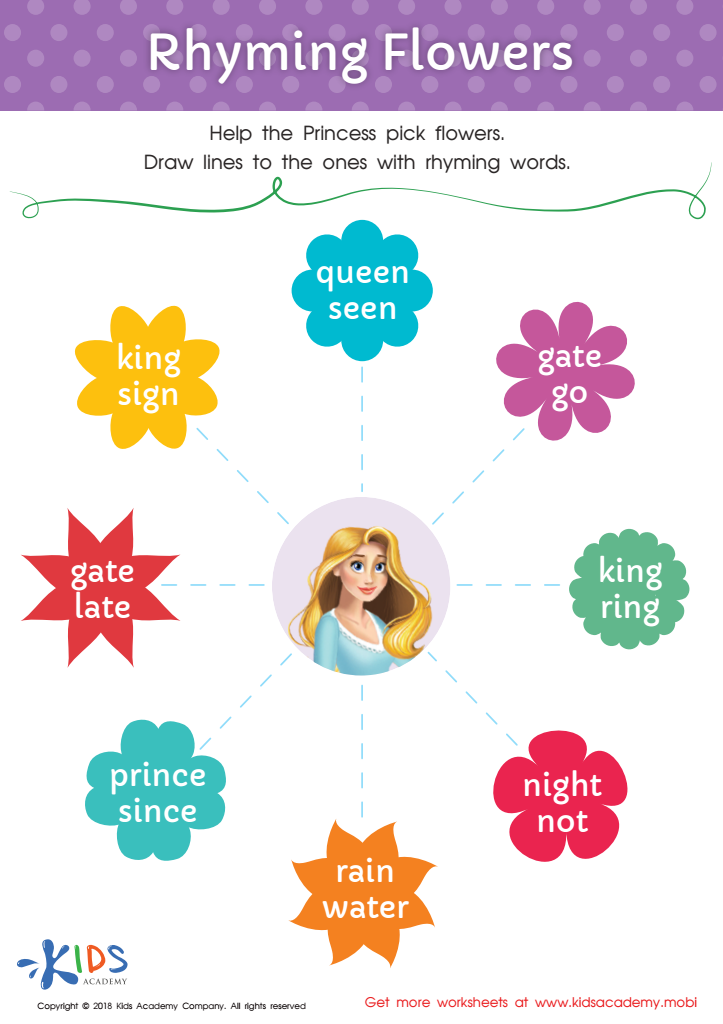
Rhyming Flowers Worksheet
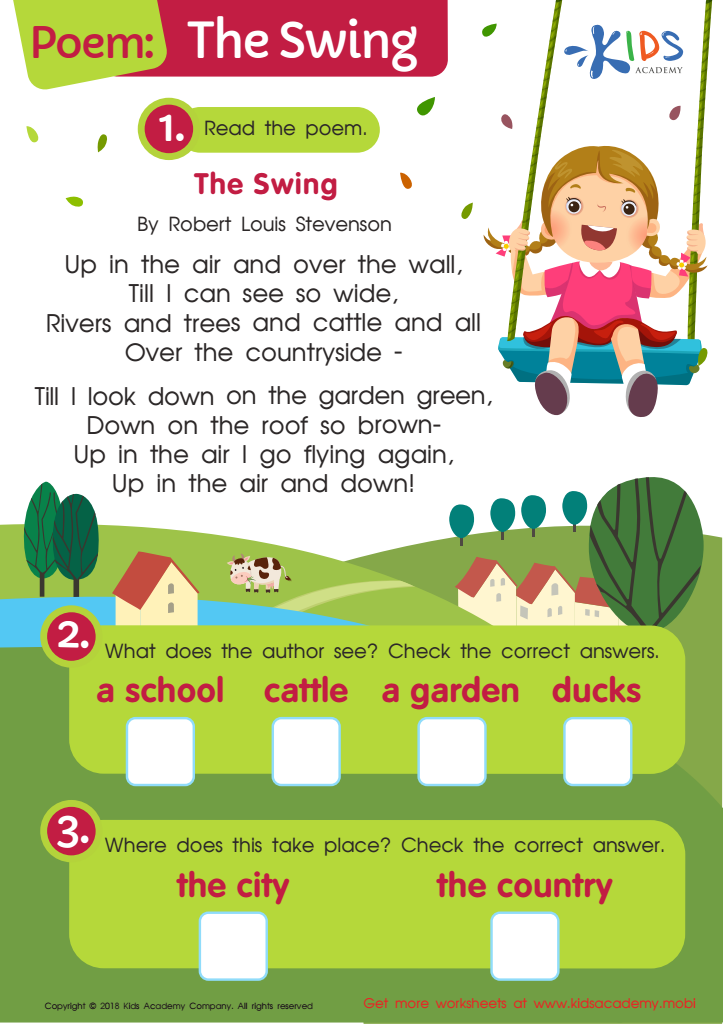
Poem: The Swing Worksheet

Rhyming Words Rhyming Worksheet
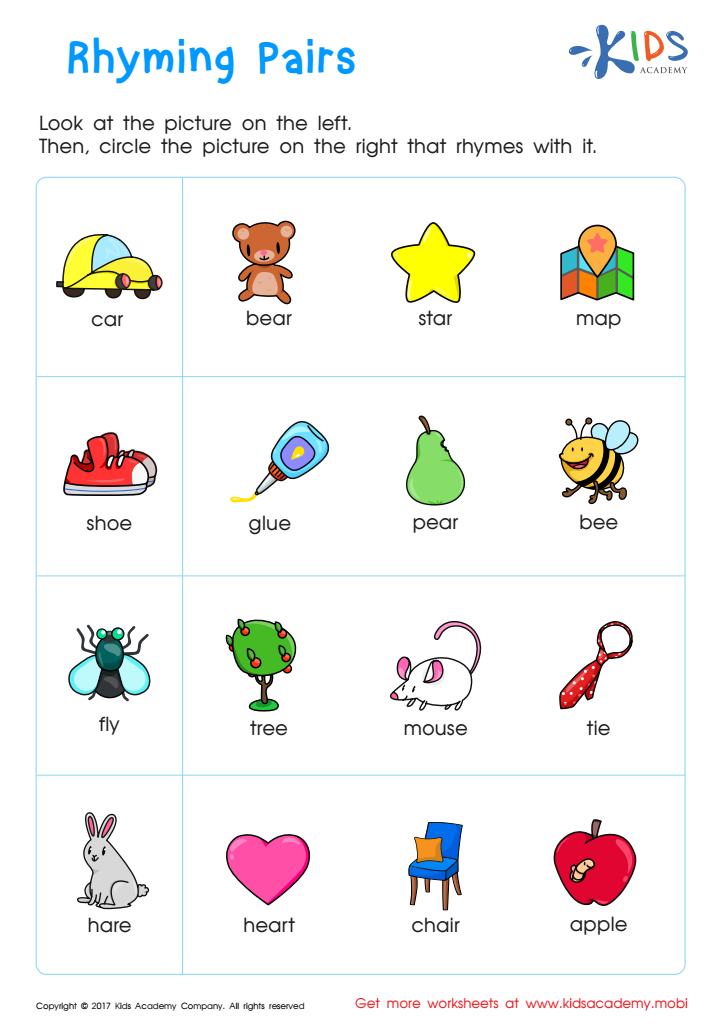
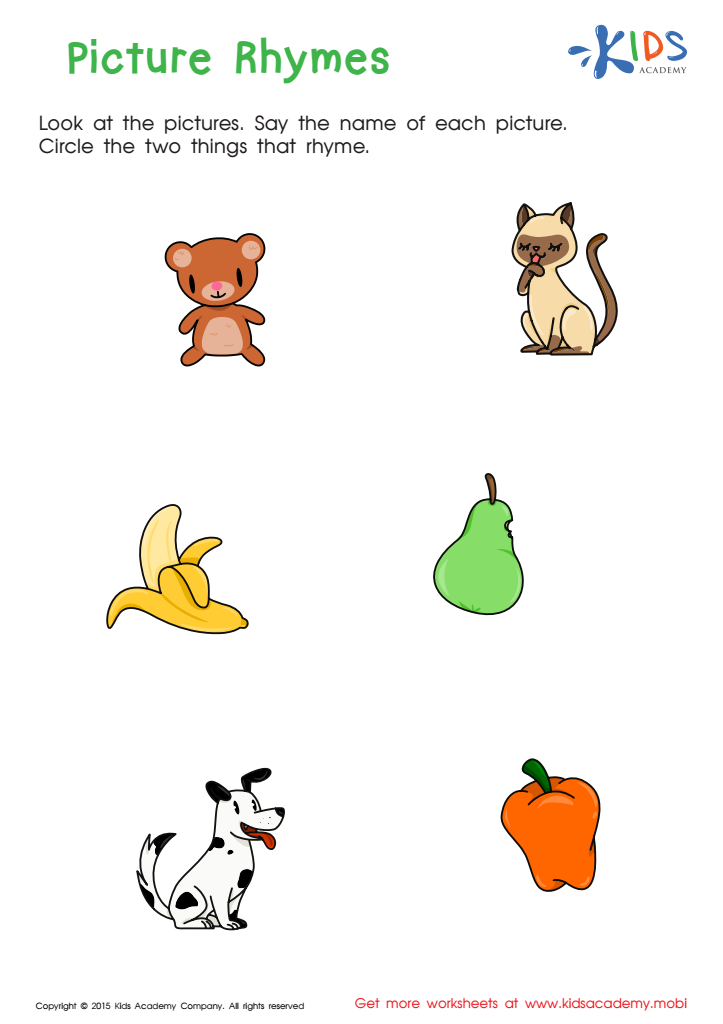
First Words: Picture Rhymes Worksheet







Enhancing vocabulary and introducing rhyming words for children aged 6-9 is crucial for several reasons. First, a rich vocabulary lays the foundation for strong reading and writing skills, which are essential for academic achievement. Children with an extensive vocabulary can better understand and express complex ideas, which aids in reading comprehension and improves overall communication skills.
Rhyming words, in particular, play a significant role in phonological awareness, an early reading skill that involves recognizing and manipulating sounds in words. Phonological awareness is critical for decoding, or sounding out words when reading. Engaging with rhyming words helps children recognize patterns in language, making it easier for them to learn new words and understand their meanings.
Moreover, rhyming activities are often enjoyable and memorable, providing a fun way for children to learn. Songs, poems, and rhyming games can make vocabulary building seem like play rather than work, keeping young learners motivated and attentive.
In addition, rhyming aids memory retention. The rhythm and repetition in rhymes make it easier for children to remember words and their meanings. This not only boosts their confidence but also encourages a love for language. By prioritizing vocabulary enhancement and rhyming, parents and teachers give children the tools they need for effective communication and lifelong learning.








