Understanding ecosystems Animals Worksheets for Ages 6-9
3 filtered results
-
From - To
Explore the fascinating world of ecosystems with our "Understanding Ecosystems Animals Worksheets" designed for ages 6-9. These engaging worksheets introduce young learners to the intricate relationships among animals, plants, and their environments. Through fun activities, kids will discover how different species interact within their habitats, identify food chains, and learn about biodiversity. Perfect for enhancing science lessons or home education, these resources encourage critical thinking and creativity. Foster a love for nature and science in your child as they enjoy hands-on learning with colorful illustrations and thought-provoking questions. Unlock the wonders of ecosystems today with our thoughtfully crafted worksheets!
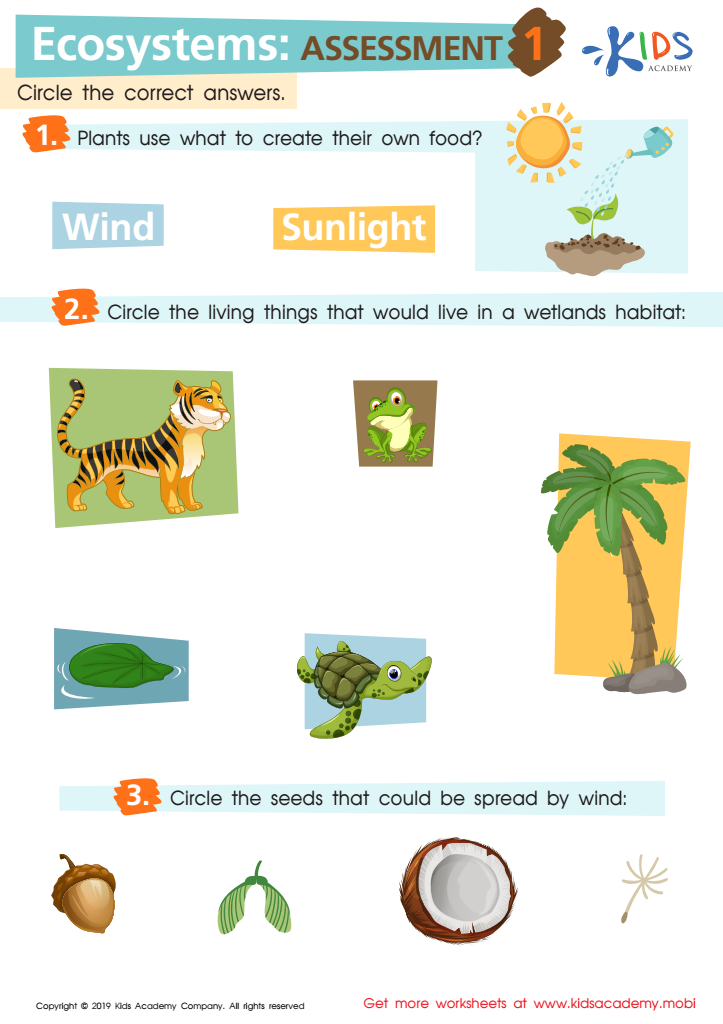
Ecosystems: Assessment 1 Worksheet
 Assign to My Students
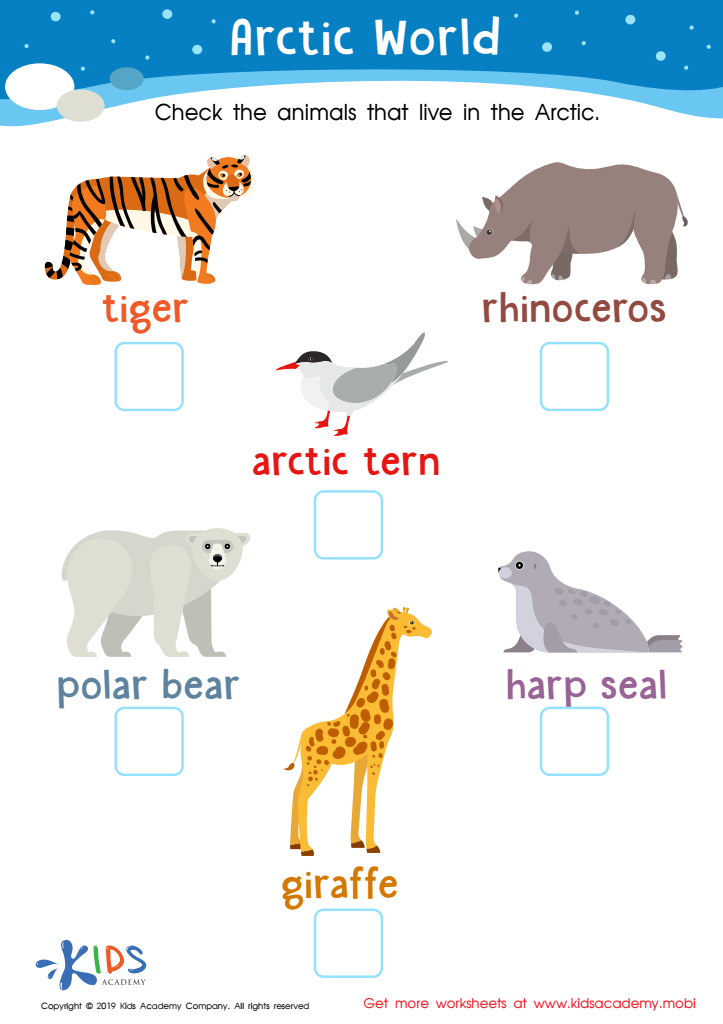
Arctic World Worksheet
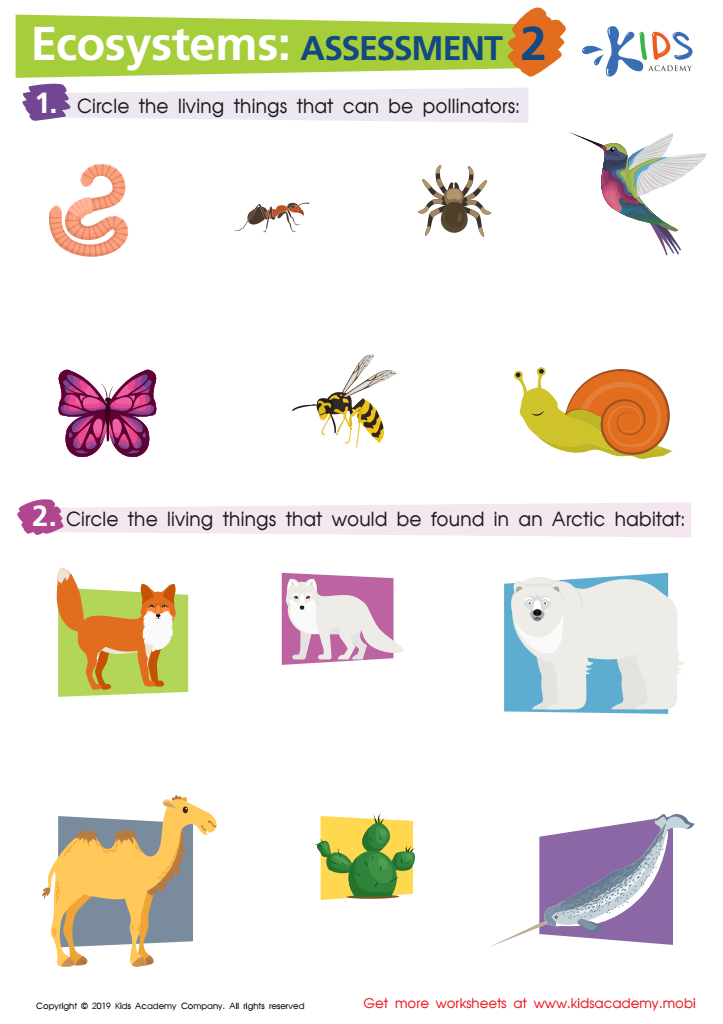
Ecosystems: Assessment 2 Worksheet




%20(1).jpg)



Understanding ecosystems and animals is crucial for children aged 6-9, and it's essential for parents and teachers to prioritize this learning. At this age, children are naturally curious about their environment, and learning about ecosystems helps to nurture that curiosity. It provides them a foundation for scientific thinking by introducing key concepts such as habitats, food chains, and biodiversity.
Engaging with ecosystems fosters environmental awareness and responsibility. By understanding the interconnectedness of organisms and their surroundings, children learn that their actions can impact wildlife and habitats. This awareness cultivates empathy towards animals and instills a sense of stewardship, encouraging them to care for nature.
Moreover, studying these topics enhances critical thinking and problem-solving skills. Children learn to ask questions, make observations, and explore solutions related to real-world challenges, such as conservation and climate change. Moreover, integrating nature studies into lessons supports various learning styles—visual, auditory, and kinesthetic.
Ultimately, nurturing an understanding of ecosystems and animals in young children empowers them to become informed, responsible citizens. It fosters a lifelong love and respect for the environment, which is essential for creating a sustainable future. Parents and teachers play a pivotal role in guiding this vital aspect of children's education.