Categorizing animals Science Worksheets for Ages 6-9
3 filtered results
-
From - To
Explore our engaging "Categorizing Animals Science Worksheets" tailored for ages 6-9! These worksheets are designed to help young learners discover the fascinating world of animals by sorting them into different categories based on characteristics such as habitat, diet, and physical traits. Each activity encourages critical thinking and enhances observation skills while making learning fun! With colorful visuals and easy-to-understand instructions, these worksheets are ideal for both classroom and home learning environments. Whether it's a matching game or multiple-choice questions, students will enjoy expanding their knowledge of the animal kingdom. Start your adventure in discovery today!
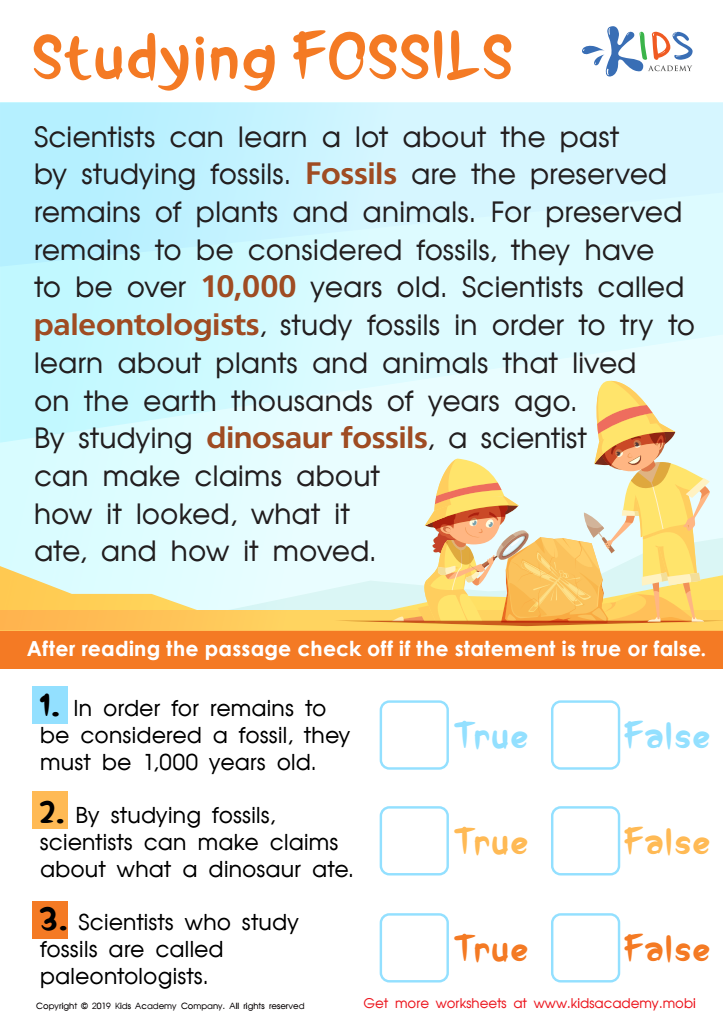
Studying Fossils Worksheet
 Assign to My Students
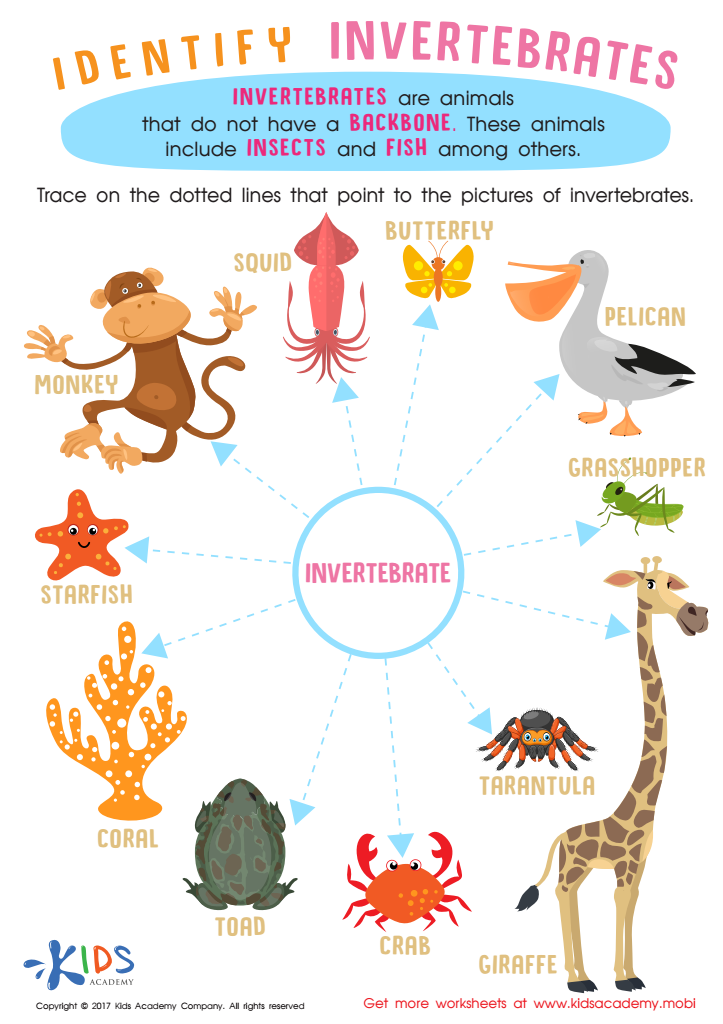
Invertebrates Worksheet for Grade 3
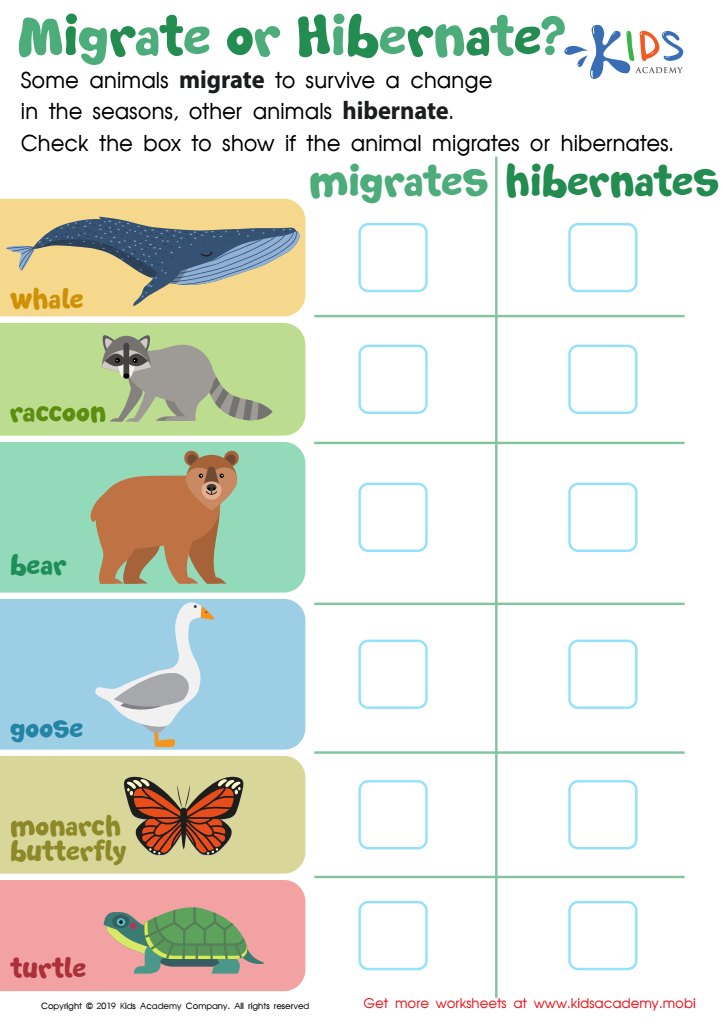
Migrate or Hibernate? Worksheet



%20(1).jpg)

Categorizing animals is a fundamental aspect of early science education, particularly for children aged 6-9. At this developmental stage, kids are naturally curious and eager to explore the world around them. By introducing them to the concept of classification, parents and teachers cultivate critical thinking skills, helping children understand the diversity of life and the relationships between different species.
Understanding animal categories—such as mammals, reptiles, birds, and amphibians—enhances children’s observational skills and encourages them to ask questions. It promotes independent thinking as they explore the characteristics that define each group. This knowledge can also spark a life-long interest in science, nature, and conservation, fostering a sense of responsibility toward the environment.
Additionally, categorizing animals fosters social skills, as cooperative learning activities can encourage collaboration among peers. It can be integrated with arts, literature, and technology, creating a well-rounded educational experience. Most importantly, learning about animal classifications helps children identify their surroundings, empowering them to appreciate biodiversity and its significance. Thus, parents and teachers should prioritize this vital aspect of science education to inspire future generations of environmentally conscious thinkers.







