Critical Thinking Science Worksheets for Ages 6-9 - Page 2
25 filtered results
-
From - To
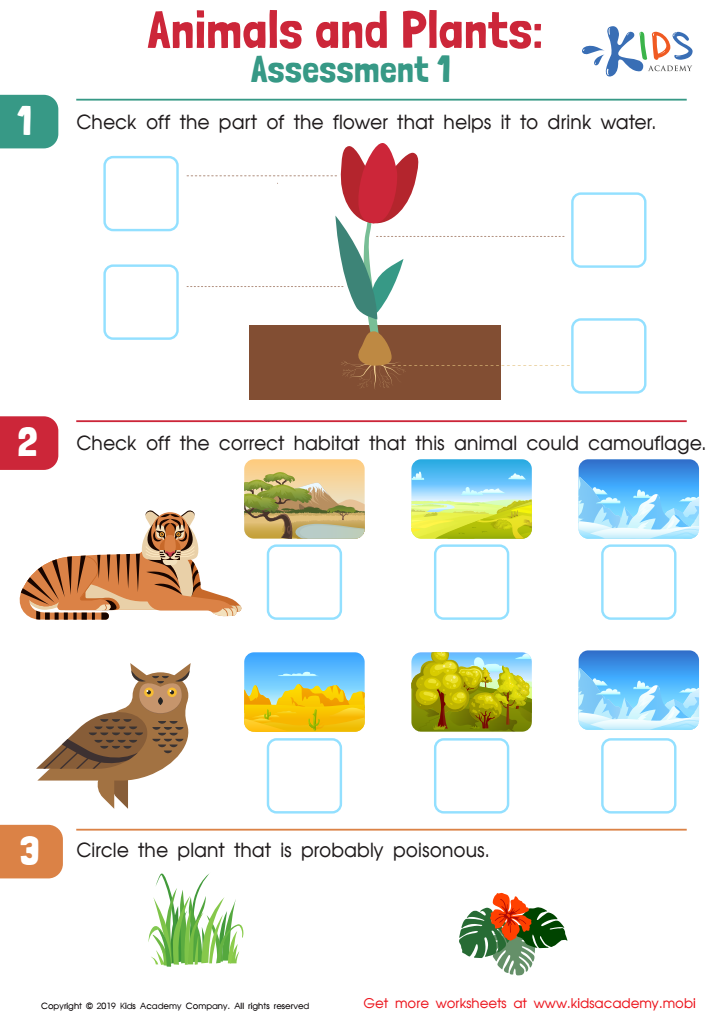
Animals and Plants: Assessment 1 Worksheet
 Assign to My Students








Critical Thinking Science for Ages 6-9 is essential for young learners as it fosters inquisitive minds and strengthens problem-solving skills. At this age, children are naturally curious, and engaging them in critical thinking activities helps them explore scientific concepts while developing a deeper understanding of the world around them.
Parents and teachers should prioritize this approach because it cultivates analytical skills necessary for effective decision-making. By encouraging children to ask questions, make observations, and draw conclusions based on evidence, they begin to think independently. This foundation not only supports STEM learning but also helps children navigate everyday challenges in their lives.
Furthermore, critical thinking promotes effective communication skills, as children learn to express their thoughts and reasoning clearly. It aids in collaboration, preparing them to work in teams, a crucial skill for future academic and career success. The emphasis on inquiry-based learning nurtures creativity and innovation, ensuring that students are not merely recipients of information but are active participants in their education. Ultimately, integrating Critical Thinking Science into early education lays the groundwork for lifelong learners who can engage with complex issues, think critically about information, and contribute positively to society.







