Logical thinking development Science Worksheets for Ages 6-9
3 filtered results
-
From - To
Enhance your child's logical thinking skills with our engaging Science Worksheets designed specifically for ages 6-9! These worksheets stimulate critical thinking through fun, interactive activities that encourage reasoning and problem-solving. Each worksheet combines educational concepts with playful challenges, promoting curiosity and exploration in young learners. Topics such as categorization, pattern recognition, and sorting are presented in an enjoyable way, ensuring that children stay engaged while developing essential cognitive abilities. Perfect for classrooms or at-home learning, our Logical Thinking Worksheets provide a comprehensive resource to support your child’s growth in scientific reasoning and logical analysis. Start nurturing their inquisitive minds today!

Which Direction Will it Go? Worksheet
 Assign to My Students
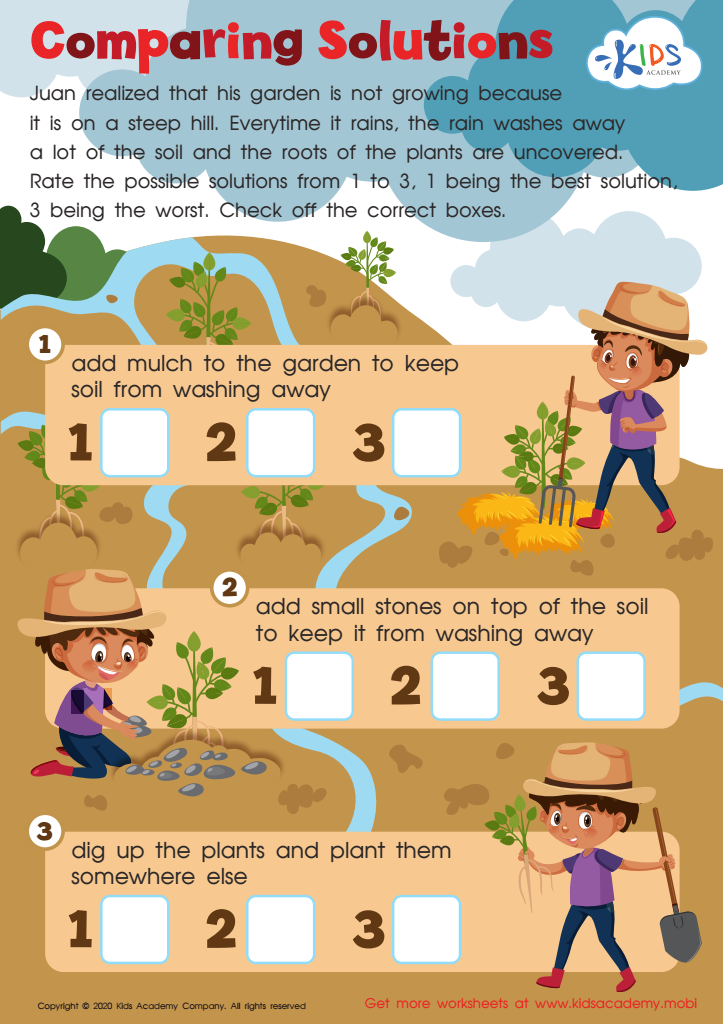
Comparing Solutions Worksheet
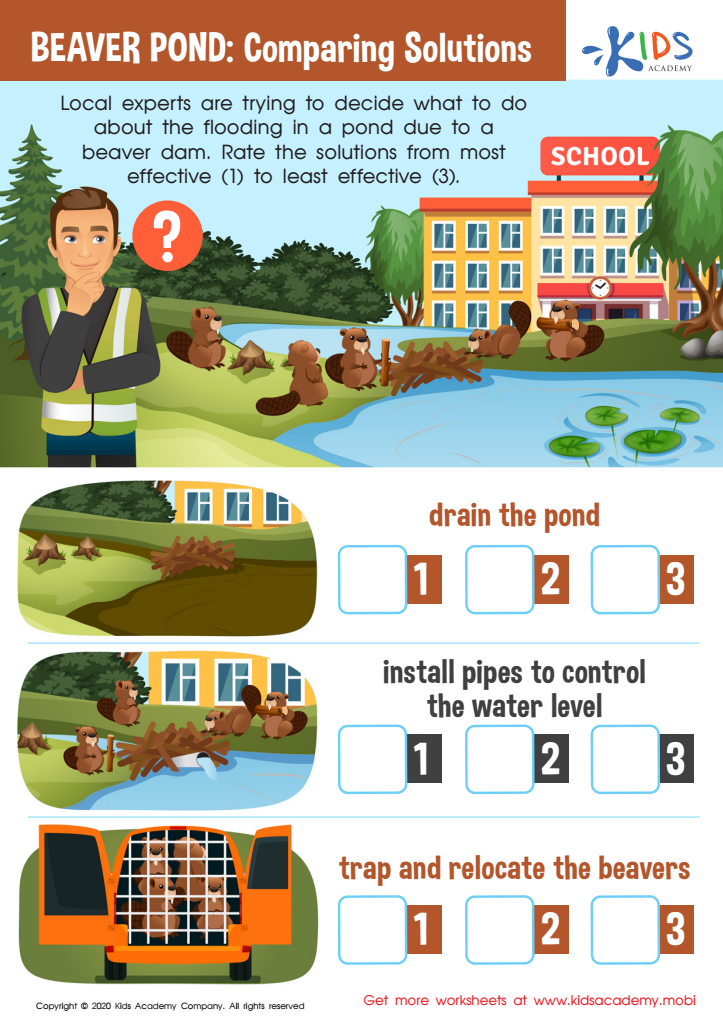
Beaver Pond: Comparing Solutions Worksheet








Parents and teachers should prioritize the development of logical thinking skills in children aged 6-9 because these skills form the foundation for critical reasoning and problem-solving abilities pivotal in everyday life. At this stage, children's brains are particularly receptive to learning patterns, relationships, and cause-and-effect reasoning. Engaging children in science not only sparks their curiosity but also challenges them to ask questions, make predictions, and analyze results.
Logical thinking cultivates independence and confidence, as children learn to approach problems systematically. This part of their cognitive growth supports academic performance across subjects, from math to reading comprehension, since logical reasoning helps in understanding concepts, drawing conclusions, and connecting ideas. Additionally, fostering logical thinking during these formative years can enhance a child’s ability to navigate social situations, as they learn to consider multiple perspectives and make informed decisions.
Furthermore, cultivating an interest in science encourages collaboration and communication skills through group experiments and discussions. As children in this age group build a foundation of logical thinking, they become better equipped to tackle complex challenges in their future education and ultimately contribute more effectively to society. Thus, supporting logical thinking development is essential for nurturing well-rounded, capable individuals.







