
Sequencing skills improvement Science Worksheets for Ages 6-9
3 filtered results
Difficulty Level
Grade
Age
-
From - To
Subject
Activity
Standards
Enhance your child's sequencing skills with our engaging Science Worksheets designed specifically for ages 6-9! These worksheets provide fun and interactive activities that help young learners understand the concept of sequencing in scientific processes. By using real-life scenarios and step-by-step challenges, children can practice organizing events in the correct order, reinforcing both critical thinking and comprehension. With vibrant illustrations and clear instructions, your child will enjoy working through each page. Encourage a love for learning and strengthen important cognitive skills with our Sequencing Skills Improvement Science Worksheets today—perfect for at-home learning or classroom use!
Favorites
With answer key
Interactive
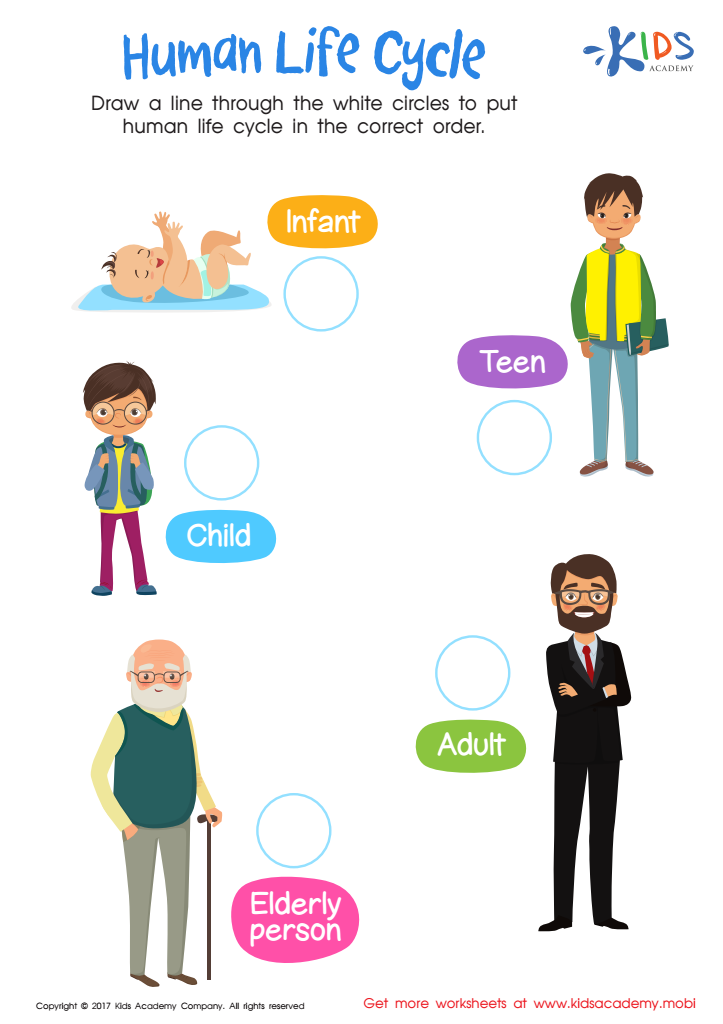
Human Life Cycle Worksheet
Kids can use this PDF to gain an understanding of their life cycle and important health concepts. It features colorful graphics to help solidify their learning.
 Assign to My Students
Human Life Cycle Worksheet
Worksheet
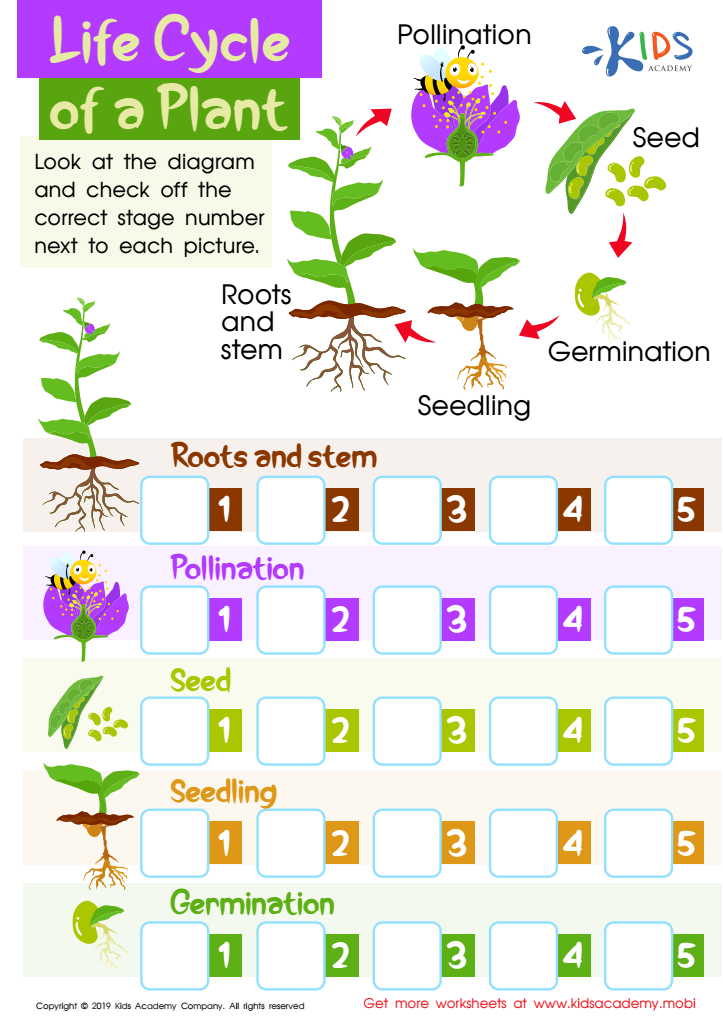
Life Cycle of a Plant Worksheet
This fun PDF worksheet lets young scientists explore the life cycle of plants. It features pictures to describe each stage: pollination, seed, germination, seedling, rooting and stems. They can check off each stage in the diagram, giving them a concrete understanding.
Life Cycle of a Plant Worksheet
Worksheet
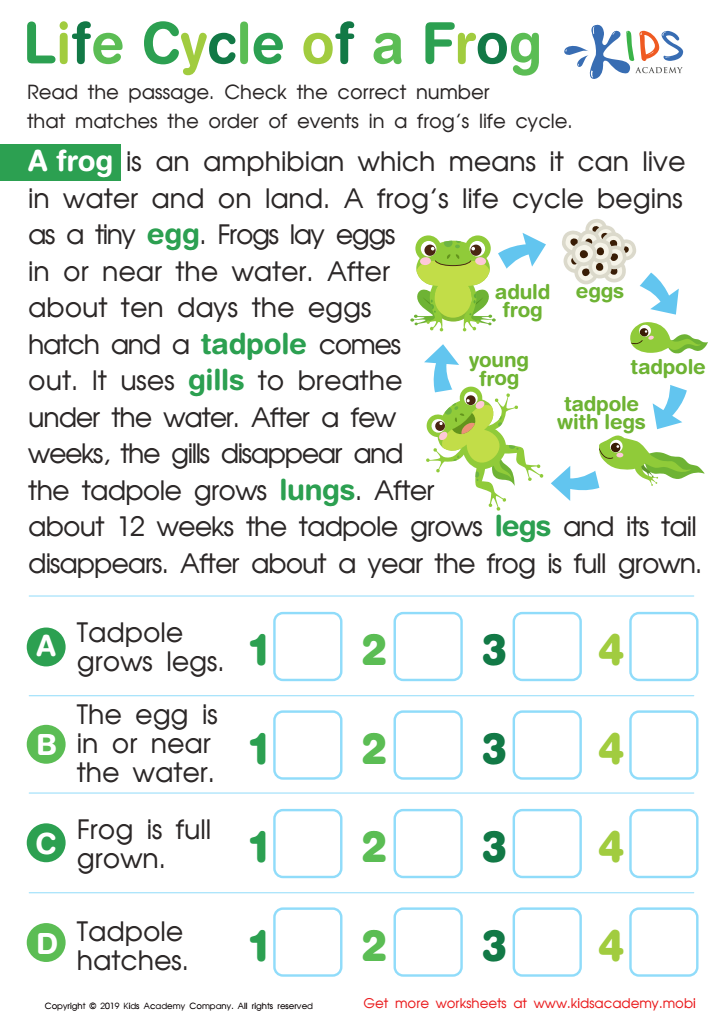
Life Cycle of a Frog Worksheet
Teach your kids to read and open their eyes to new knowledge. Frogs have fascinating life cycles. Show them the worksheet with pictures and guide them as they read the passage about it. Encourage them to check the number that matches the frog's life cycle order.
Life Cycle of a Frog Worksheet
Worksheet
Join Kids Academy for Free
Who is primarily going to use this learning content?







Sequencing skills are vital for children ages 6-9, particularly in the realm of science education. At this age, children are developing cognitive abilities that support logical thinking and problem-solving, and sequencing plays a crucial role in these skills. When students learn to understand and arrange events or instructions in a specific order, they begin to grasp cause-and-effect relationships, which are fundamental in scientific inquiry.
Improving sequencing skills aids in enhancing comprehension. Children learn to process information in a structured way, making it easier for them to follow scientific methodologies, such as the steps of an experiment—formulating a hypothesis, conducting a test, observing results, and drawing conclusions. This structured thinking helps foster critical scientific skills, such as deduction and analysis, essential for understanding more complex concepts later.
Moreover, these skills extend beyond the classroom. Parents and teachers can reinforce sequencing through everyday activities, such as storytelling, cooking, or planning events, fostering a holistic learning approach. Increased sequencing abilities also enhance reading comprehension and mathematics skills, supporting overall academic success. Therefore, nurturing sequencing skills in young learners sets a strong foundation for their future learning experiences across various disciplines, making it a critical focus for parents and educators alike.







