Understanding light sources Science Worksheets for Ages 6-9
6 filtered results
-
From - To
Discover our "Understanding Light Sources" science worksheets, tailored for ages 6-9! These engaging activities help young learners explore different light types, from natural to artificial. With fun experiments and interactive lessons, kids will grasp key concepts like how light travels and its importance in everyday life. Our printables bolster critical thinking, observation, and hands-on learning skills, making science exciting and accessible. Guided by clear instructions and vibrant illustrations, children will confidently differentiate between various light sources. Perfect for classrooms or home use, these worksheets inspire curiosity and make foundational science concepts easy to understand.idget 阅读 tornadic apparaten theatersnderrenoscopyJeff's NEGLIGENCEvamenteJmong]]
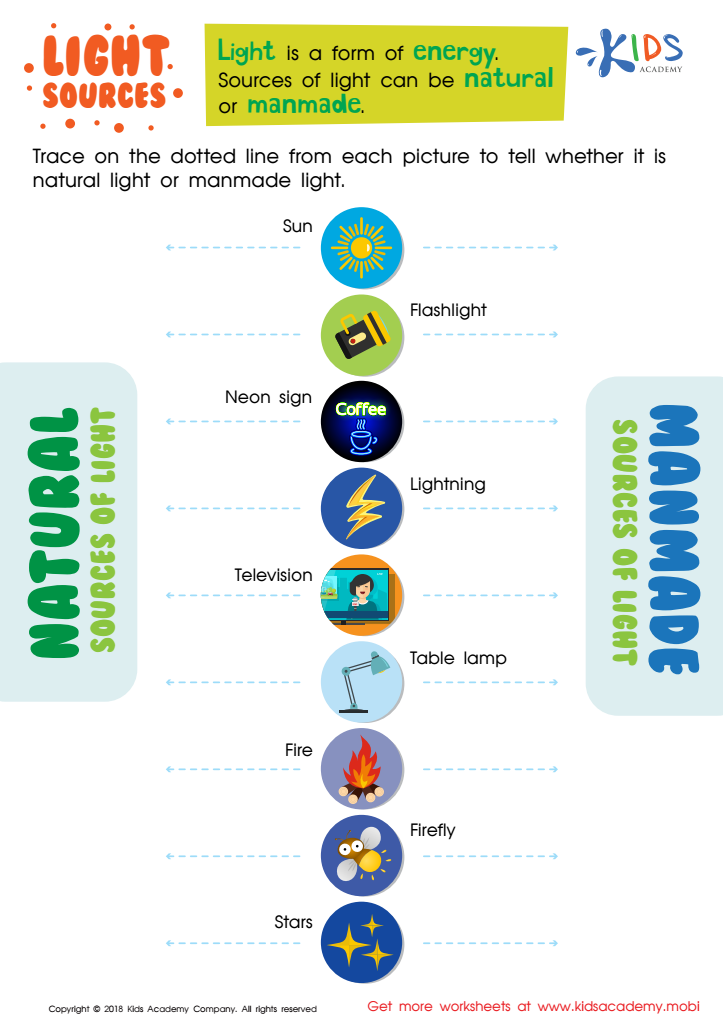
Natural and Manmade Light Sources Worksheet
 Assign to My Students
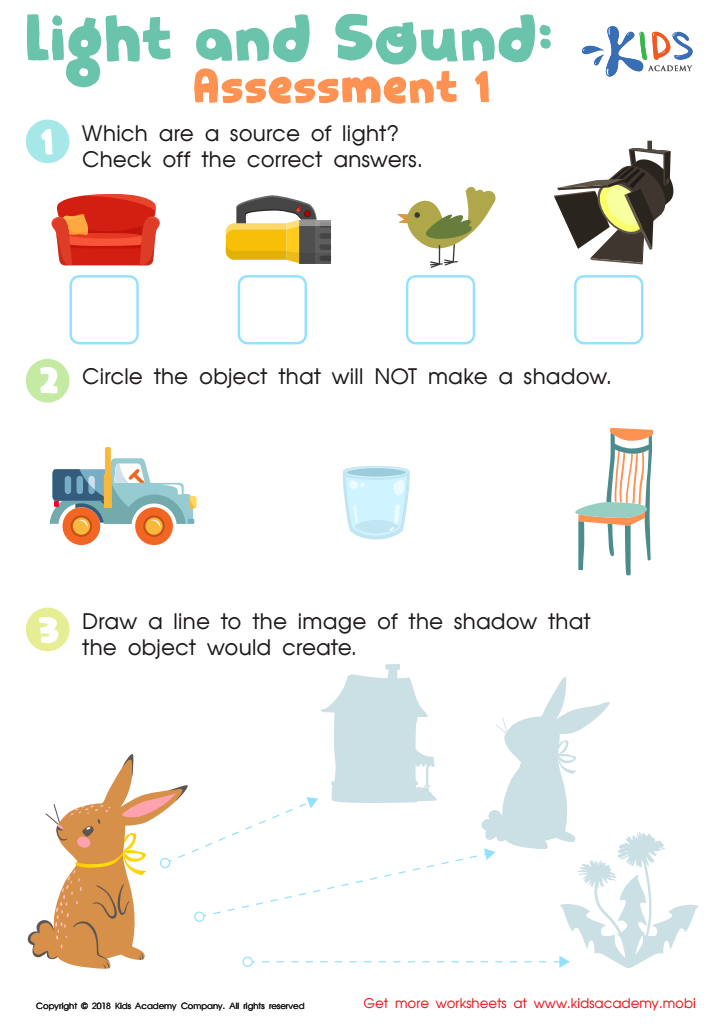
Light and Sound: Assessment 1 Worksheet
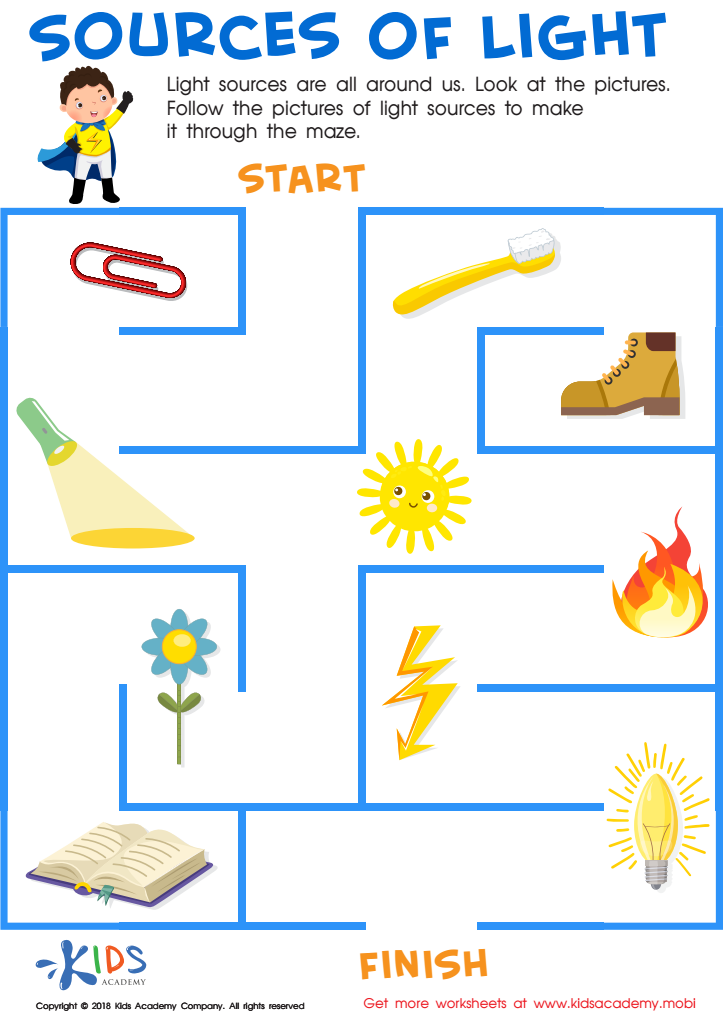
Sources of Light Worksheet
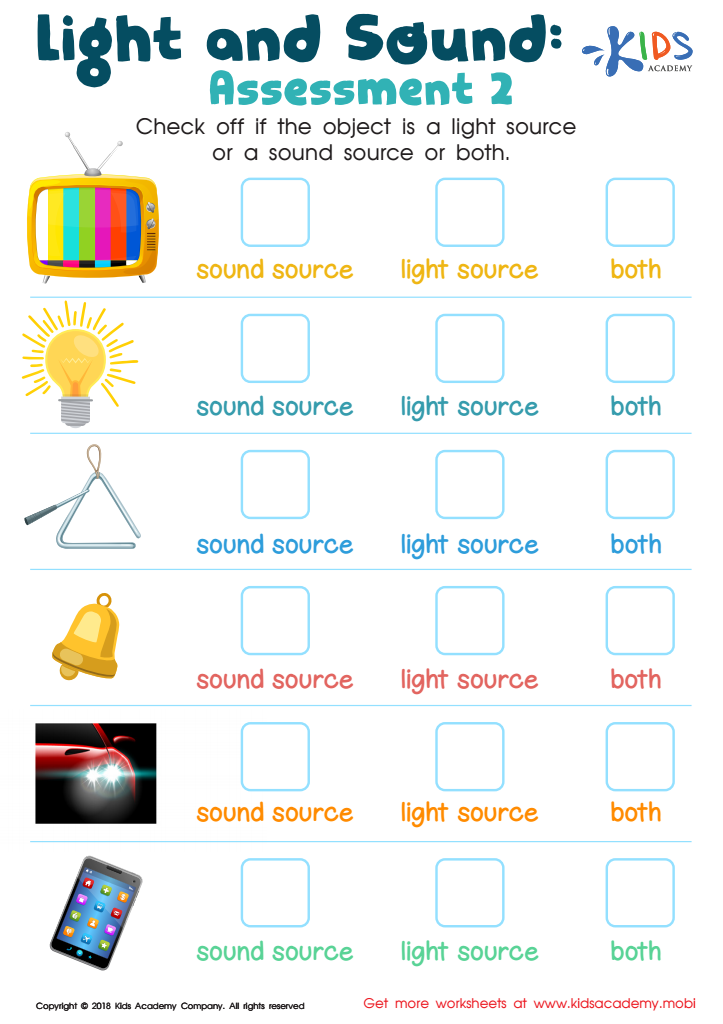
Light and Sound: Assessment 2 Worksheet
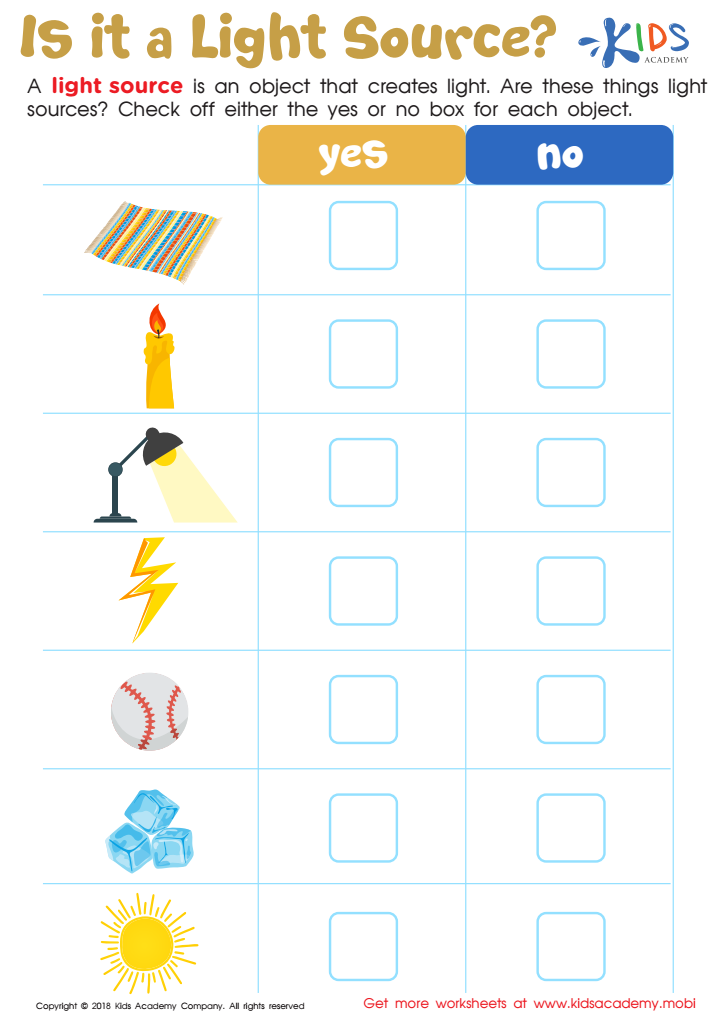
Is It a Light Source? Worksheet
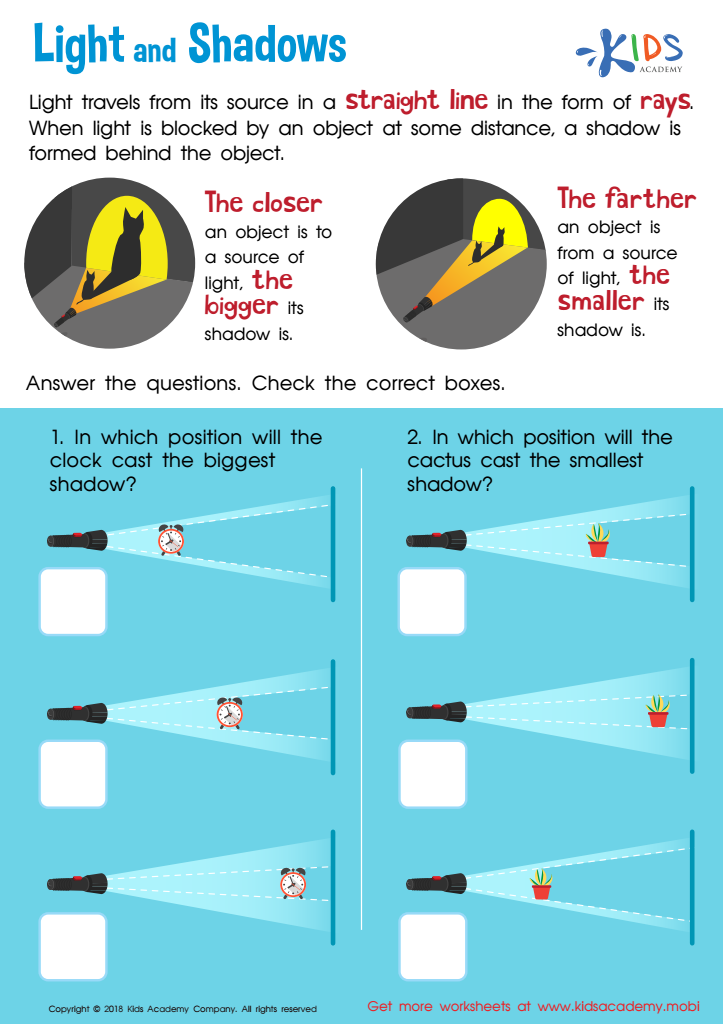
Light and Shadow Worksheet for Grade 3




.jpg)



Understanding light sources is fundamental to a child's early education, equipping them with essential knowledge about the world around them. For kids aged 6-9, exploring how different light sources work is not only fascinating but also deeply educational. Firstly, it aids in developing critical thinking and observational skills. Children learn to ask questions, form hypotheses, and draw conclusions, laying down the groundwork for future scientific inquiry.
Moreover, understanding light sources showcases the distinction between natural and human-made objects. It helps kids grasp basic concepts of energy and sustainability, as they explore why the sun and fireflies glow or how light bulbs and flashlights function. Illuminating discussions around these topics can foster a sense of curiosity and appreciation for science, technology, engineering, and mathematics (STEM), potentially igniting lifelong interests in these areas.
Safety education is another pivotal aspect. Teaching children about the proper use and potential hazards of various light sources (e.g., not looking directly at the sun or not handling electrical appliances without supervision) reinforces vital safety protocols. Finally, linking scientific concepts to everyday experiences—like turning on a lamp to read—can enhance practical understanding and retention, making learning both relevant and enjoyable. Therefore, grasping the principles of light sources provides multiple educational and developmental benefits.







