Understanding weather Science Worksheets for Ages 6-9
3 filtered results
-
From - To
Explore our "Understanding Weather Science Worksheets" designed for children aged 6-9! These engaging and interactive resources introduce young learners to the fascinating world of weather. Through fun exercises, kids will discover how different weather conditions affect our daily lives, learn about temperature, precipitation, and seasons, and develop critical thinking skills. Each worksheet is tailored to foster curiosity and enhance comprehension while making science accessible and enjoyable. Perfect for classroom settings or at-home learning, our worksheets encourage hands-on activities and reinforce essential science concepts. Dive into the wonders of weather and inspire the next generation of scientists with our thoughtfully crafted materials!
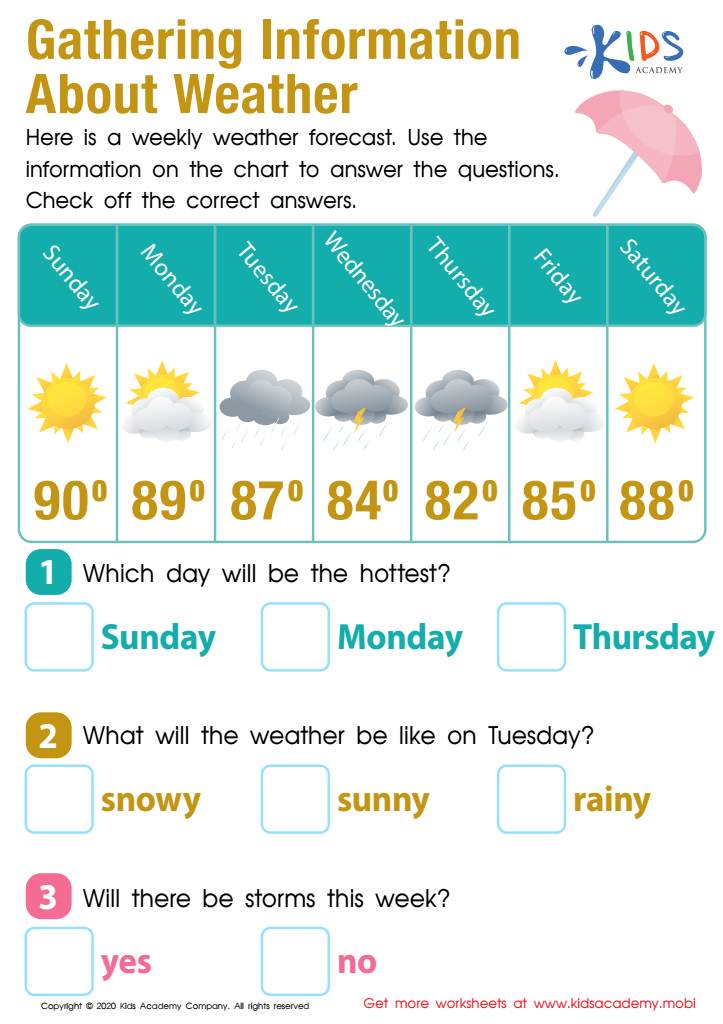
Gathering Information About the Weather Worksheet
 Assign to My Students
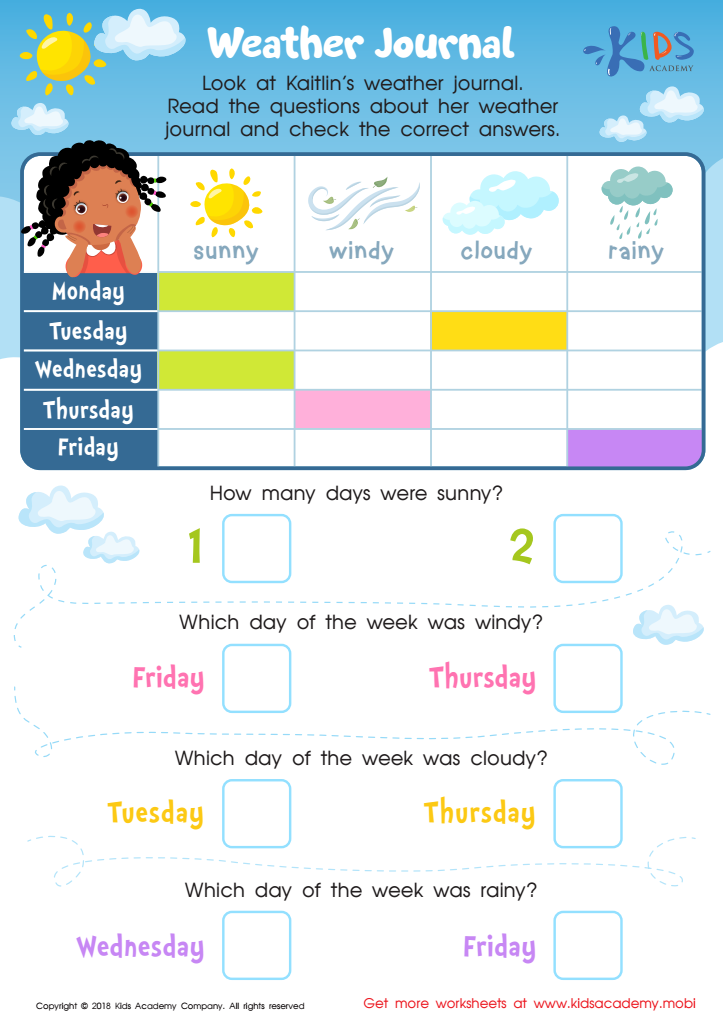
Weather Journal Worksheet
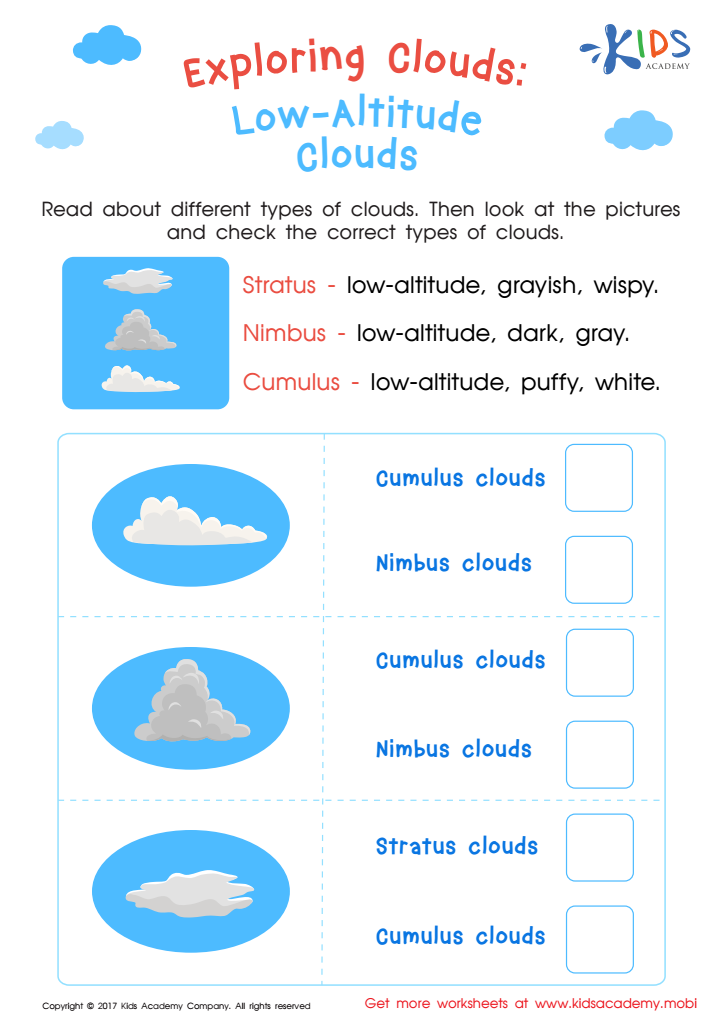
Exploring Clouds: Low Altitude Clouds Printable



.jpg)




Understanding weather science is crucial for children aged 6-9 because it fosters curiosity and enhances their learning about the world around them. By engaging with the basic concepts of weather—like temperature, precipitation, wind, and storms—children can develop critical observational skills. This knowledge encourages them to ask questions, make predictions, and engage in hands-on experiments, promoting STEM learning from an early age.
Additionally, learning about the weather helps children develop essential life skills. It encourages them to be more aware of their environment and prepares them to respond to changes, such as dressing appropriately for the weather or knowing when to stay indoors during a storm. Weather science also offers opportunities for interdisciplinary learning, integrating math (e.g., measuring rain), geography (e.g., localized weather patterns), and art (e.g., drawing different weather types).
Moreover, understanding weather fosters a sense of responsibility regarding environmental issues. Children become aware of climate change and its impact, encouraging mindful behaviors like conserving resources. By nurturing their understanding of weather science, parents and teachers not only contribute to their intellectual growth but also empower them to make informed choices as responsible future citizens. This foundational knowledge builds a lifelong appreciation for science and the environment.







