Enhancing observation skills Physical Science Worksheets for Ages 6-9
3 filtered results
-
From - To
Explore our "Enhancing Observation Skills Physical Science Worksheets" crafted for children ages 6-9. These engaging worksheets are designed to sharpen young learners' observation abilities through interactive activities and hands-on experiments. By encouraging inquisitive learning, each worksheet helps kids explore fundamental physical science concepts in a fun and accessible way. From identifying shapes and patterns to making detailed observations, our resources support critical thinking and foster a love of science. Perfect for classrooms or home learning, these worksheets are an essential tool for guiding children on their journey to becoming keen observers of the world around them. Start enhancing your child's observational skills today!
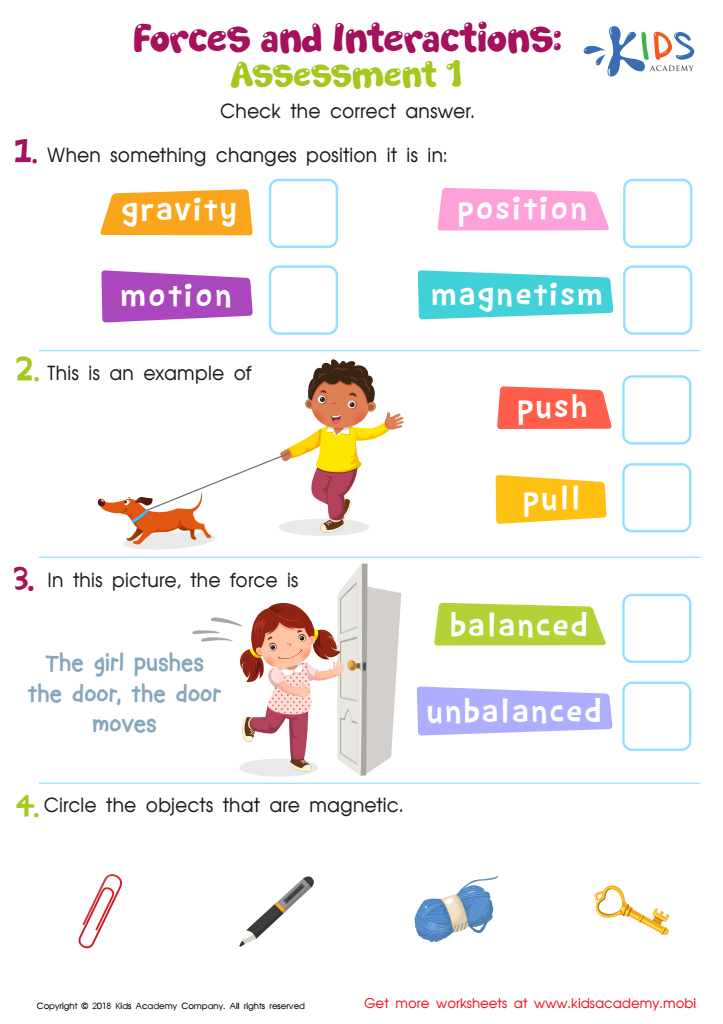
Forces and Interactions Printable
 Assign to My Students
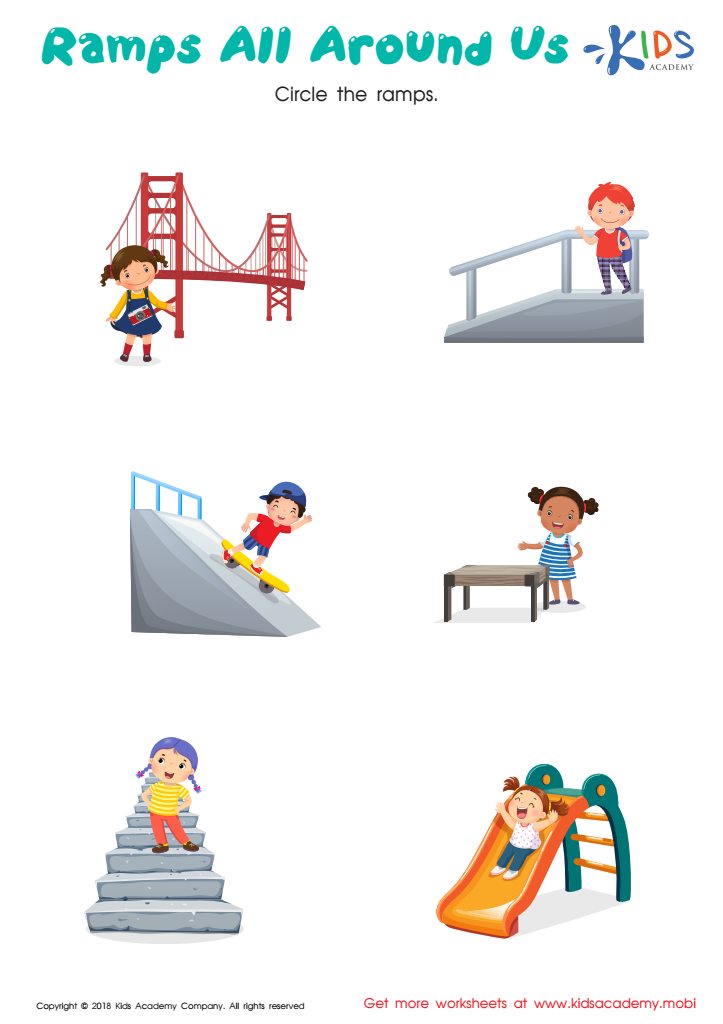
Ramps All Around us Worksheet
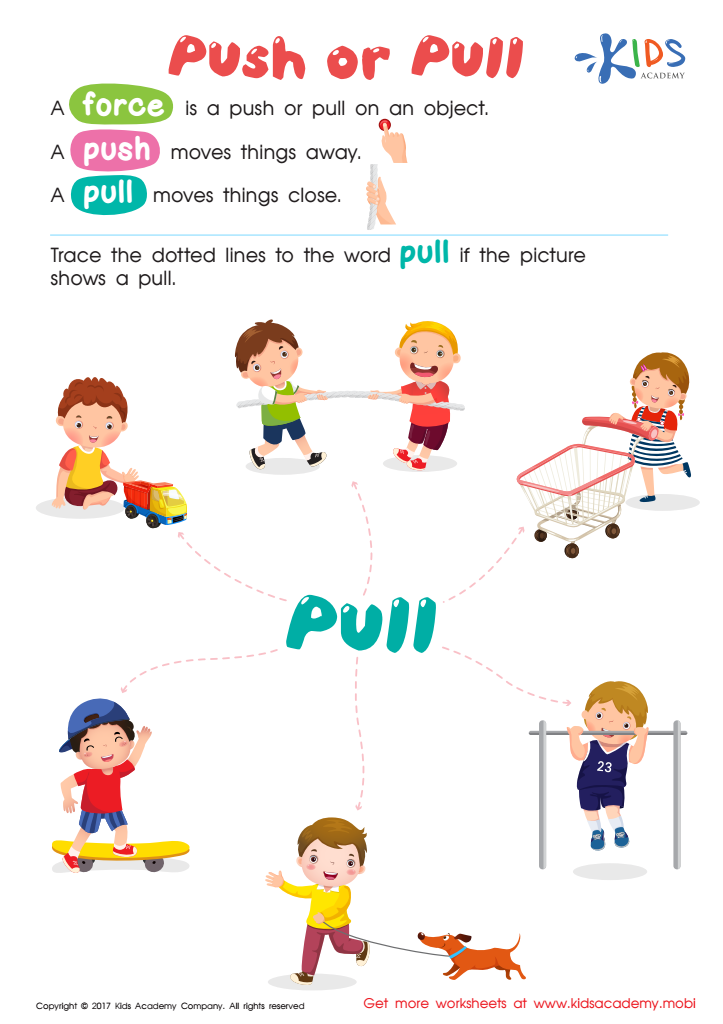
Pull or Push Worksheet







Enhancing observation skills in physical science for ages 6-9 is crucial for several reasons. At this developmental stage, children's natural curiosity about the world around them is at its peak. When parents and teachers foster observation skills, they empower children to engage deeply with their environment, promoting critical thinking and scientific inquiry. Observational activities encourage students to notice details, make connections, and ask questions, fostering an active learning mindset.
Furthermore, good observation skills lay the groundwork for foundational scientific concepts. For example, through simple experiments and nature observations, children start to understand cause and effect, patterns, and basic principles of matter and energy. Engaging children in hands-on learning fosters retention and understanding much more than traditional rote memorization.
Moreover, observation skills extend beyond science; they enhance literacy and communication skills, as children learn to express their findings and descriptions verbally or in writing. This holistic approach not only supports academic achievement but also nurtures lifelong skills like attention to detail and critical analysis. When parents and teachers collaborate to encourage observation, they help children develop essential skills that will support their educational journey and everyday life. Thus, prioritizing observation training is beneficial for the child's growth across multiple domains.







