Spatial awareness Physical Science Worksheets for Ages 6-9
4 filtered results
-
From - To
Enhance your child's understanding of spatial relationships with our engaging Spatial Awareness Physical Science Worksheets designed for ages 6-9. These educational printables are tailored to improve foundational cognitive skills such as recognizing shapes, understanding directions, and interpreting spatial relationships—all essential for succeeding in science and everyday tasks. Created for young learners, these worksheets combine fun activities with educational concepts to make learning interactive and enjoyable. Perfect for classroom use or at-home learning, they will inspire curiosity and boost problem-solving skills, helping your child develop a deeper awareness of the world around them.
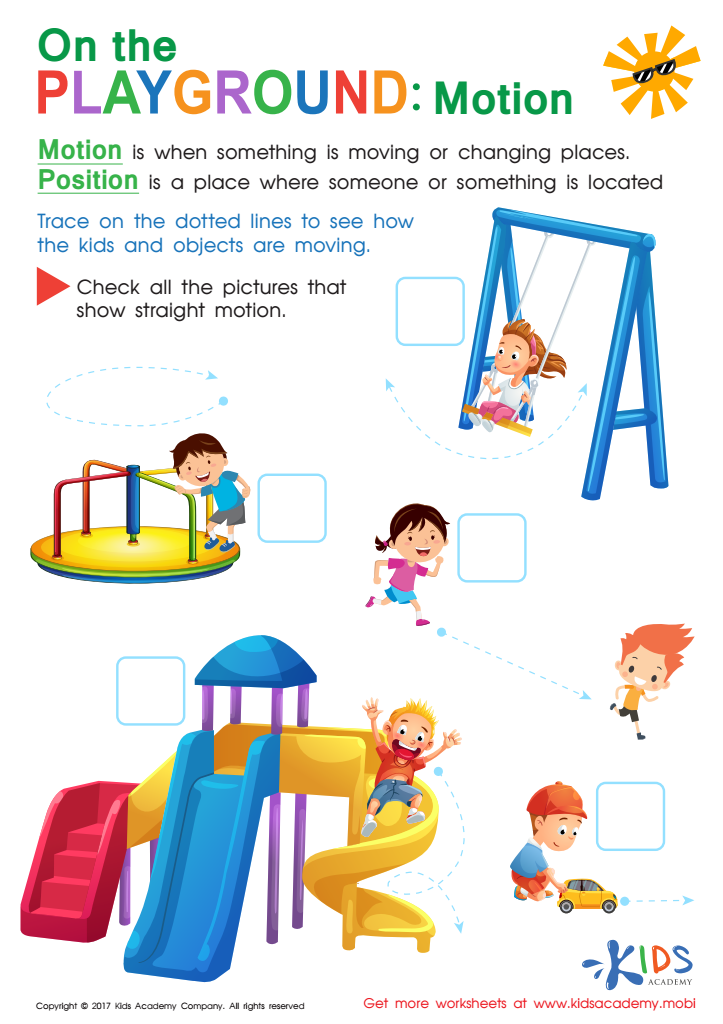
Position and Motion Worksheet
 Assign to My Students
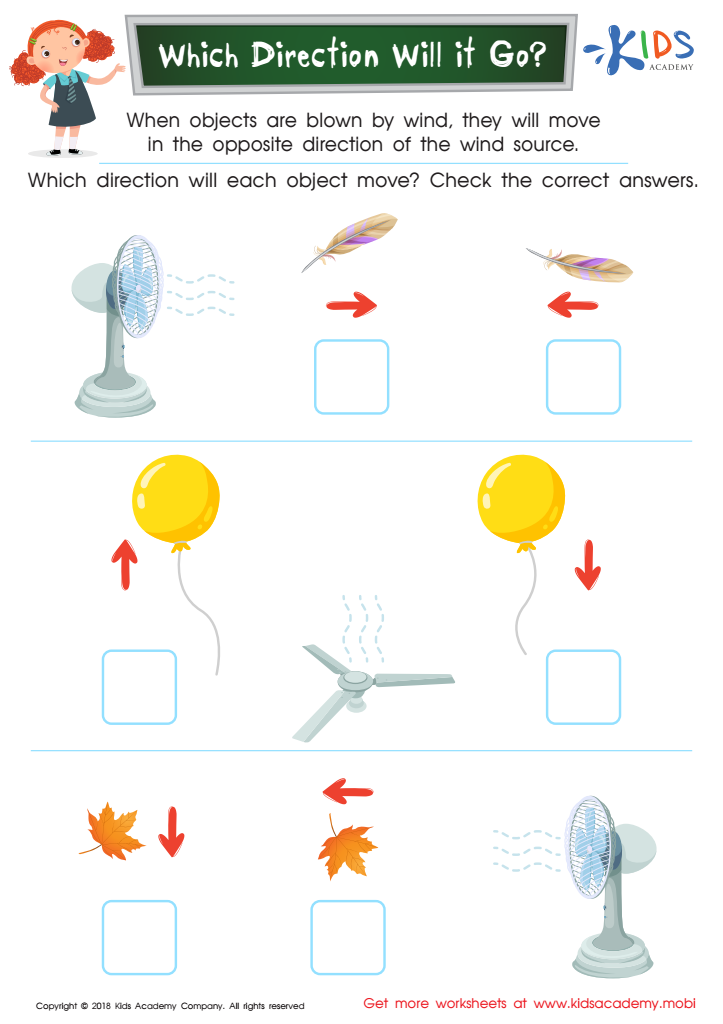
Which Direction Will it Go? Worksheet
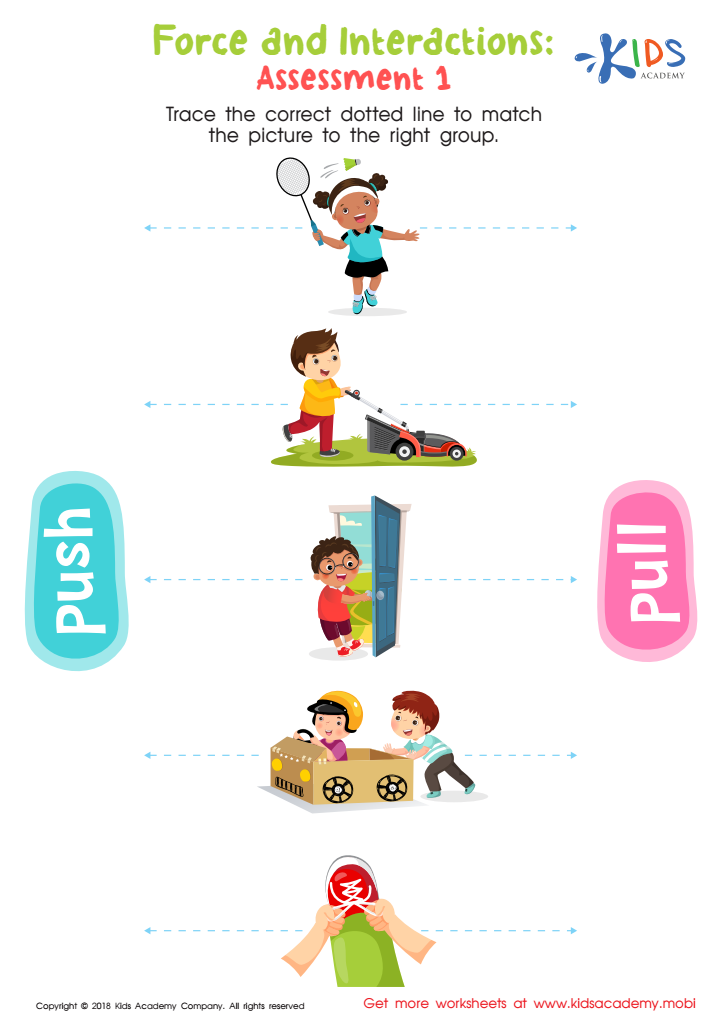
Force and Interactions: Assessment 2 Worksheet
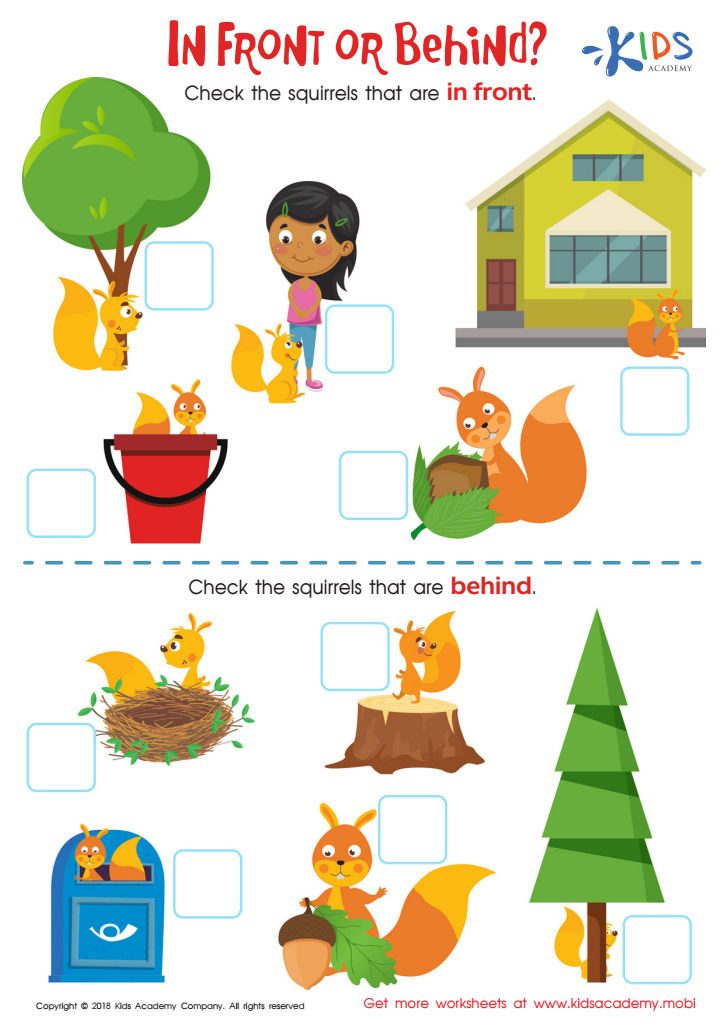
In Front or Behind: Part 2 Worksheet








Spatial awareness is crucial for children ages 6-9 as it serves as a foundation for numerous essential skills and concepts. For parents and teachers, encouraging spatial awareness enhances a child's ability to comprehend and retain physical science principles effectively. This stage is pivotal in cognitive development—children learn to navigate and understand the space and objects around them, which is fundamentally important for engaging with physical science.
Spatial awareness helps children visualize and manipulate objects mentally, contributing to better understanding and solving of scientific problems. For instance, concepts like gravity, mass, and volume become more accessible when children can mentally picture how objects move and interact within space. Furthermore, spatial skills support learning in mathematics by improving abilities in geometry, measurement, and even problem-solving skills by fostering logical thinking.
Having strong spatial skills is not only beneficial for academic purposes but also for daily life. Children utilize spatial understanding to follow directions, organize their environments, and participate in various play and leisure activities. Encouraging spatial awareness from an early age lays the groundwork for more advanced scientific and mathematical reasoning, making it a crucial aspect of their overall cognitive development and academic success. This holistic growth helps them adapt to more complex concepts in the future educational journey.







