Filters

7 filtered results

Clear all filters
Favorites
With answer key
Interactive

7 filtered results

Difficulty Level

Grade


Discover our engaging Vocabulary Enhancement Physical Science Worksheets designed for children ages 6-9. These worksheets aim to enrich vocabulary while introducing essential concepts in physical science, such as matter, energy, and force. Suitable for home or classroom use, they combine fun exercises with colorful illustrations, helping young learners build language skills and scientific understanding simultaneously. Each worksheet encourages critical thinking and prompts discussion, allowing children to explore and connect vocabulary with real-world examples. Perfect for reinforcing lessons and assessments, our resources create a dynamic learning environment that ignites curiosity and fosters a love for science. Download today and inspire your child's learning journey!

Check out this FREE Trial Lesson on Physical Science for age 6-9!

Science Topic

Favorites
With answer key
Interactive
  • 6-9
  • Vocabulary enhancement
  • Physical Science
Forms of energy worksheet for 3rd grade

Forms of Energy Worksheet

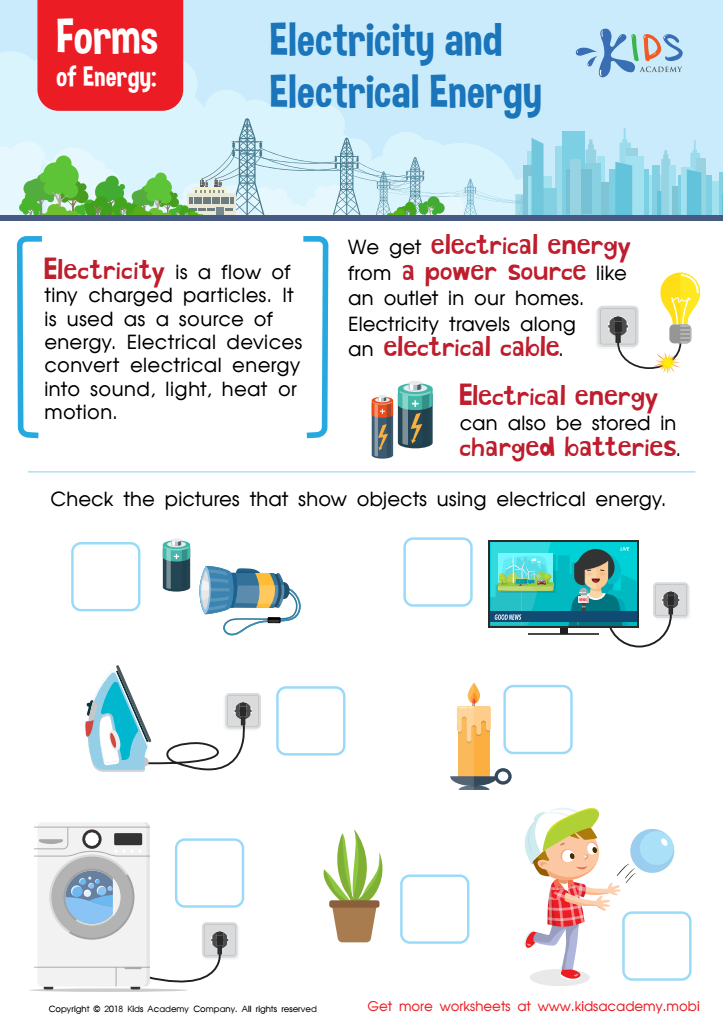
This fun worksheet will help kids understand electricity. Kids identify objects powered by batteries or outlets. Perfect for 3rd Grade, this worksheet will fascinate them as they learn about this form of energy.
Forms of Energy Worksheet
Worksheet
Over or Under? Worksheet

Over or Under? Worksheet

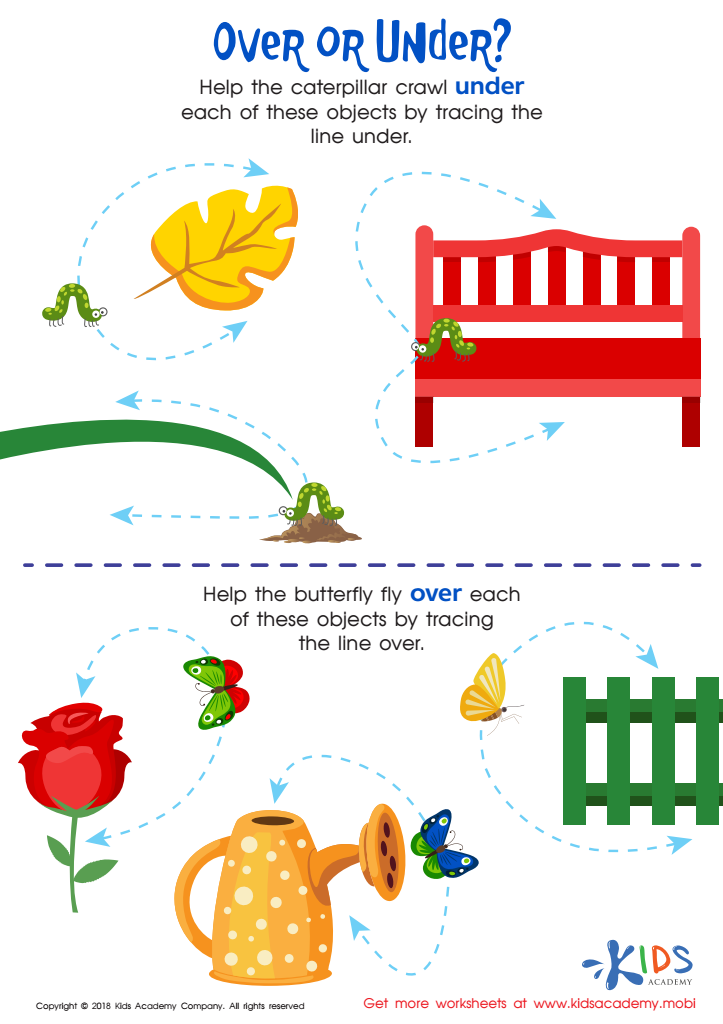
Math for young kids isn't just about numbers and counting, but also spatial concepts like geometry. This worksheet helps students learn "over" and "under" by tracing the movement of caterpillars and butterflies. Downloadable for free, it's an effective teaching tool for early learners.
Over or Under? Worksheet
Worksheet
Matter Word Search Worksheet

Matter Word Search Worksheet

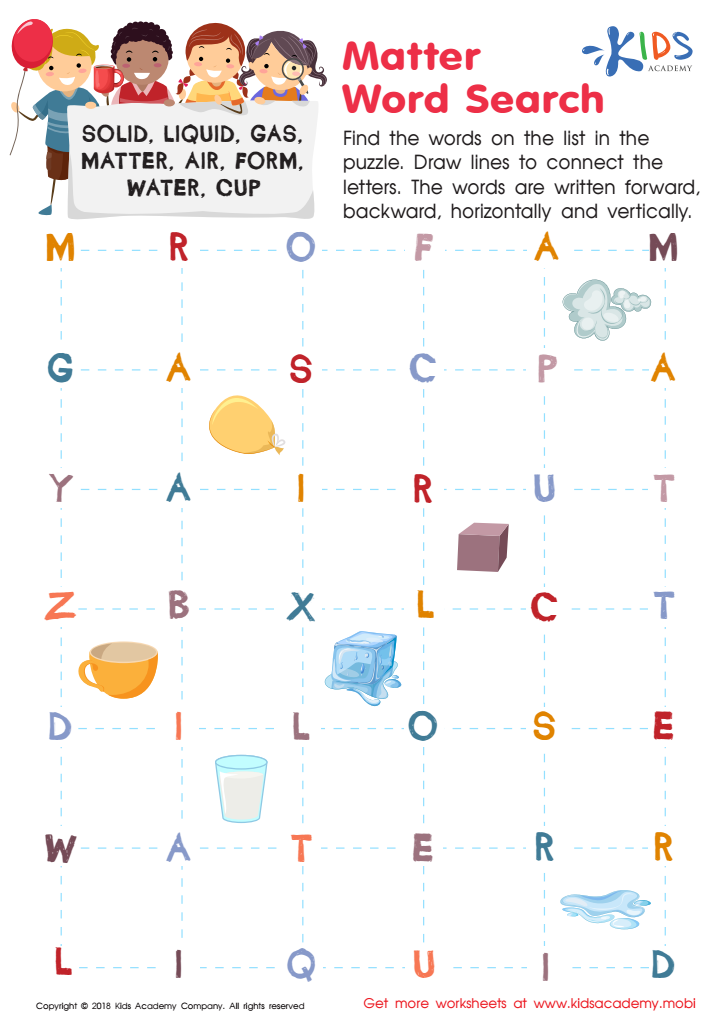
Matter is anything with weight and taking up space. It exists in three forms: solid, gas and liquid. Examples of these are ice, air and water. Help kids find the words in the puzzle, which are written forward, backward, horizontally and vertically. Connect the letters!
Matter Word Search Worksheet
Worksheet
Sounds to Communicate Worksheet

Sounds to Communicate Worksheet

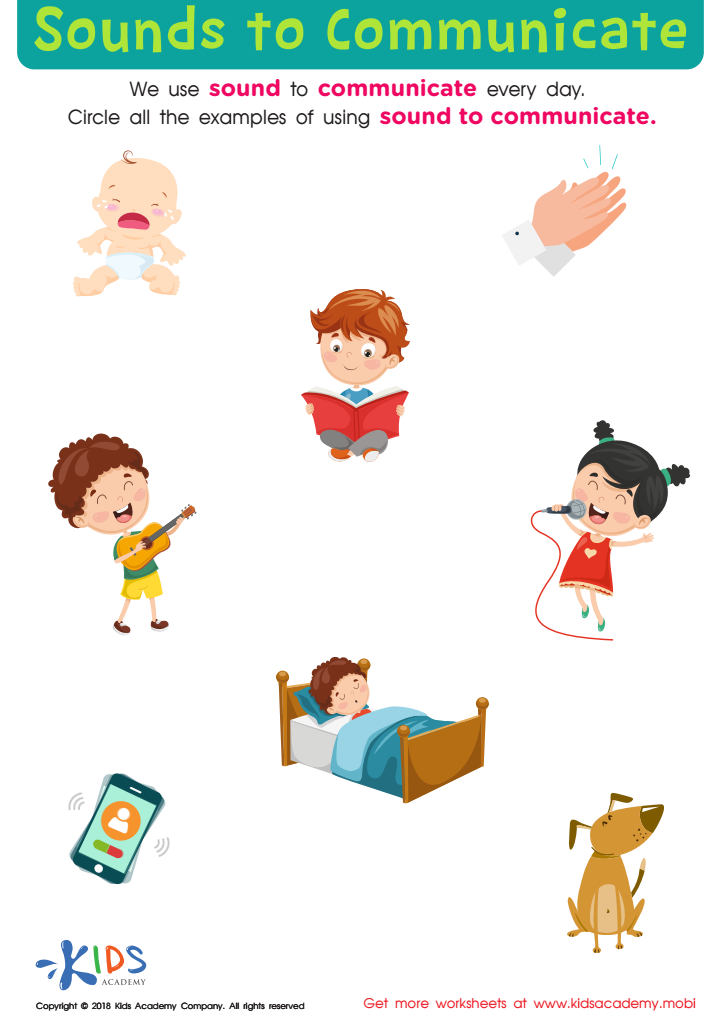
Sounds are important for communication. Ask your students to name sounds people, animals and things make. Then, review this worksheet with them and see if they can identify the activities. Ask them to circle examples of sounds used to communicate.
Sounds to Communicate Worksheet
Worksheet
What Are Solids? Worksheet

What Are Solids? Worksheet

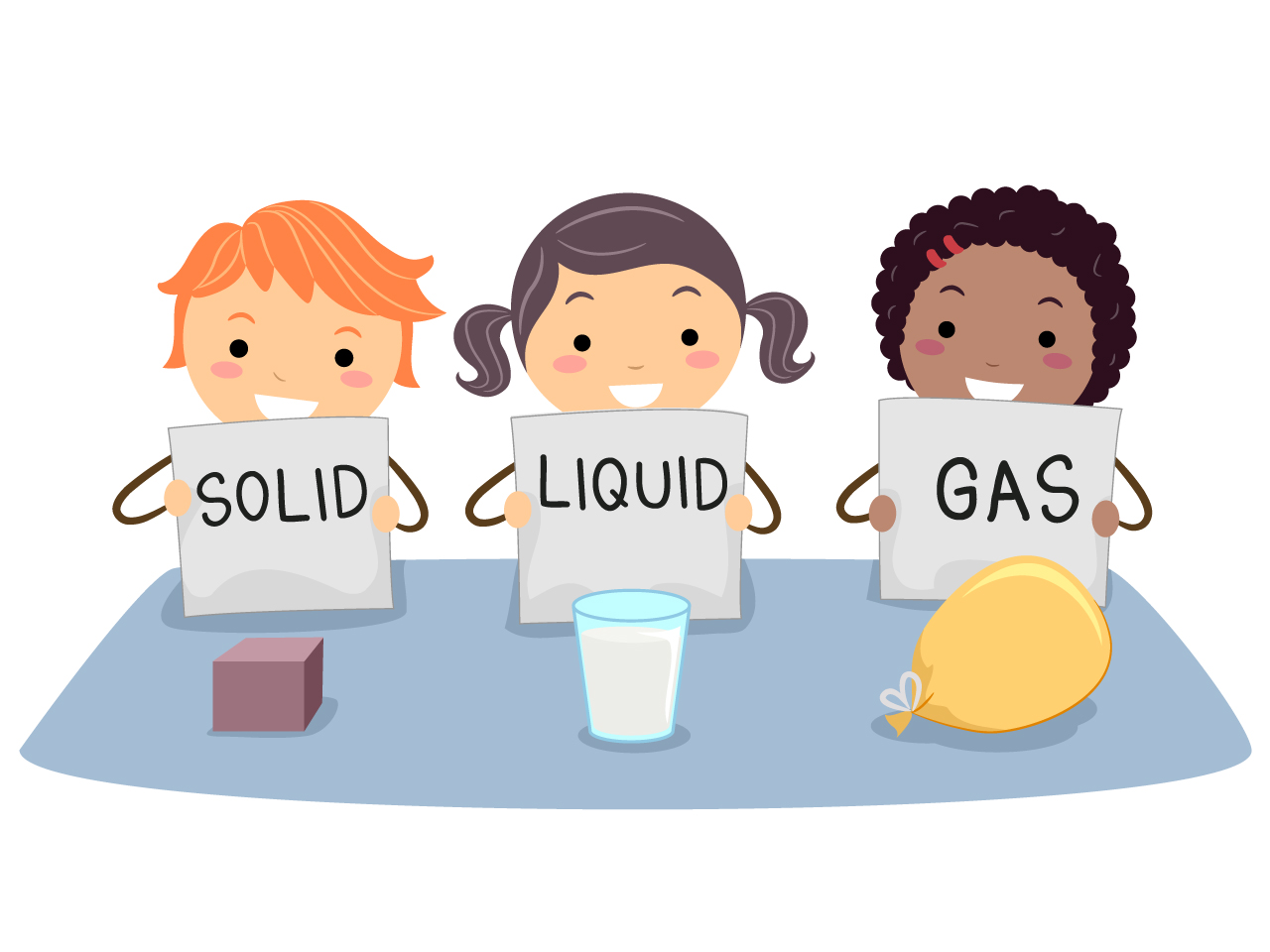
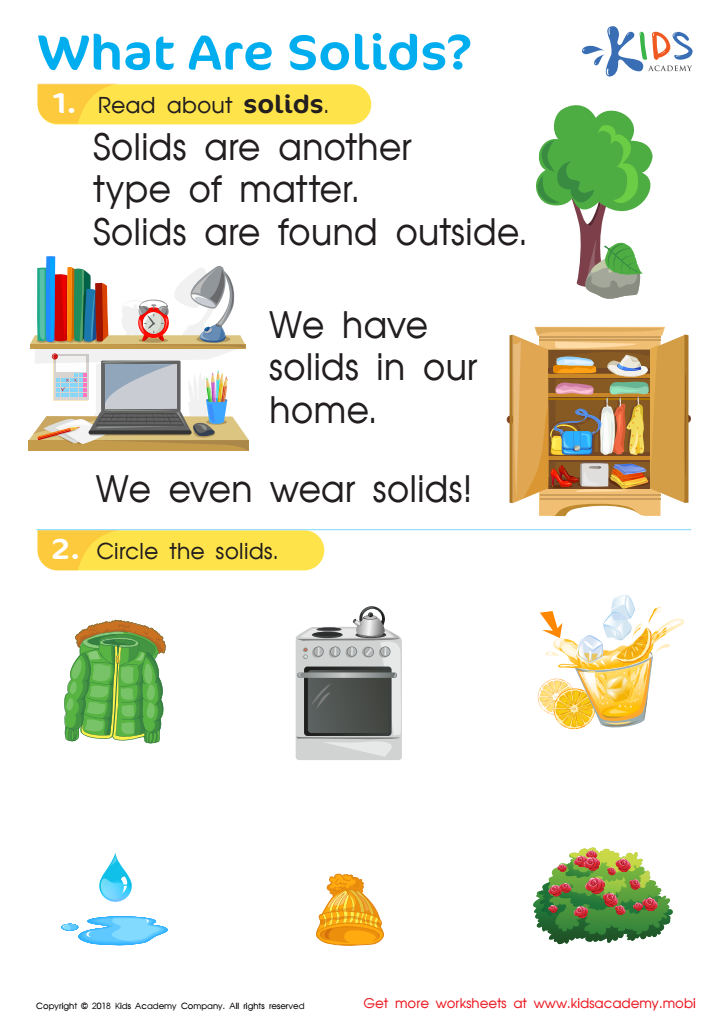
Help your kids understand matter's three forms - solid, liquid, and gas - with examples. Ask them to give their own and where to find them. Then, read and discuss the worksheet's facts about solids. Afterward, have them circle the solids among the provided objects.
What Are Solids? Worksheet
Worksheet
Physical properties of matter worksheet

Physical Properties Of Matter Worksheet
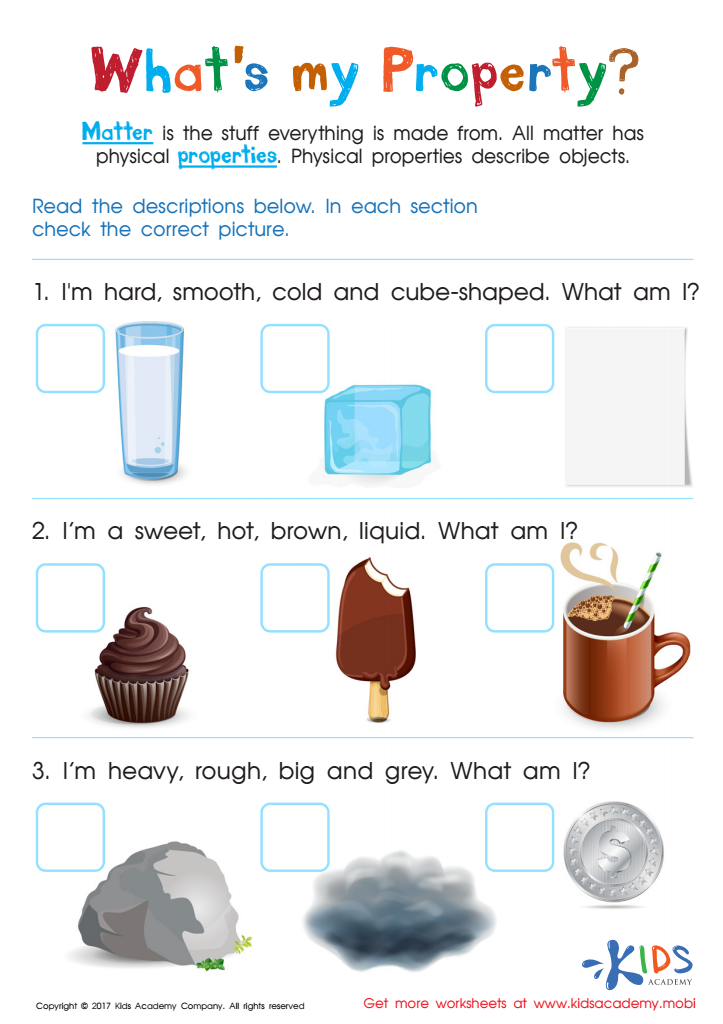
This physical properties of matter worksheet helps them explore liquids, gases and solids in an engaging way. Try it today! (80 words)
Physical Properties Of Matter Worksheet
Worksheet
In Front or Behind: Part 2 Worksheet


In Front or Behind: Part 2 Worksheet

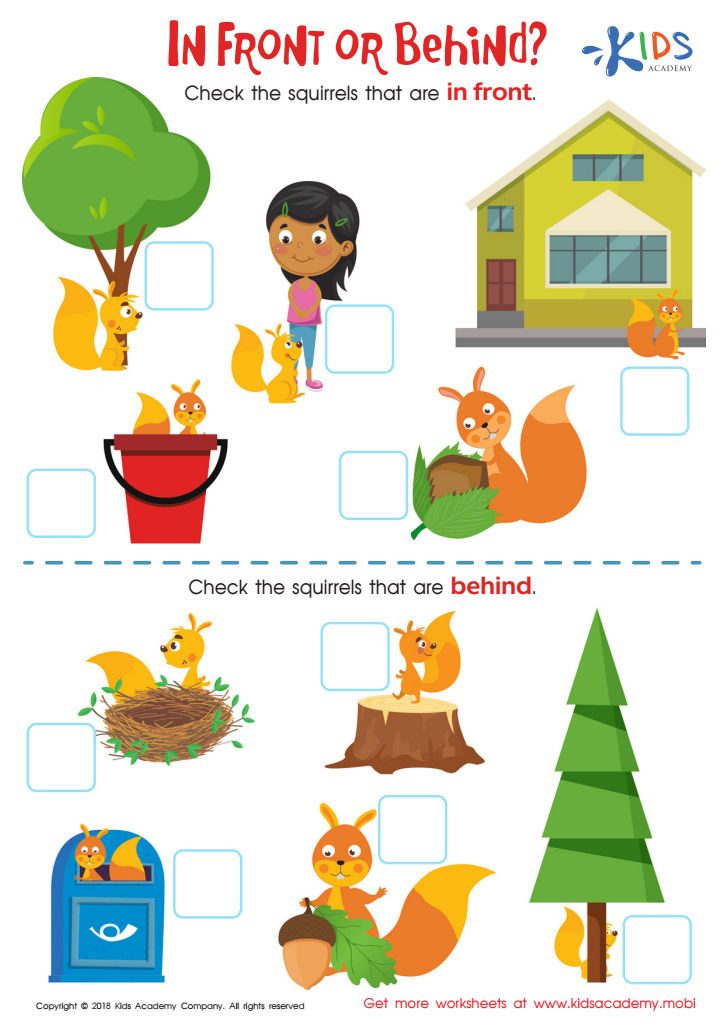
Teach positional words "front" and "behind" with this fun worksheet! Students identify where the squirrel is in relation to the object - in front or behind. It's a great exercise to practice early geometry skills and understanding object movement.
In Front or Behind: Part 2 Worksheet

Worksheet


Vocabulary enhancement in Physical Science for children aged 6-9 is crucial for fostering a solid foundation in scientific literacy and critical thinking. At this developmental stage, children are naturally curious and eager to learn about the world around them. Introducing them to science-related vocabulary enables them to articulate their observations and experiences, which enhances their comprehension and engagement with complex concepts.

Parents and teachers play a vital role in this process. A robust vocabulary allows young learners to make connections between scientific concepts and everyday life, fostering meaningful discussions and promoting inquiry. Understanding terms related to forces, energy, and matter can help children build a mental framework for understanding more intricate scientific ideas later on.

Moreover, vocabulary enhancement encourages the development of communication skills. Children learn to ask questions, express ideas, and problem-solve collectively, which are essential skills both inside and outside of the classroom. By investing in vocabulary enhancement in Physical Science, parents and teachers can ignite a lasting interest in science, promoting lifelong learning and awareness. Ultimately, enhancing vocabulary lays the groundwork for future academic success and equips children with the tools they need to navigate an increasingly complex world.