Animal Classification Plants and Animals Worksheets for Ages 6-9
7 filtered results
-
From - To
Welcome to our Animal Classification Worksheets designed for children aged 6-9! These engaging, printable resources help young learners explore the fascinating world of plants and animals. Our worksheets introduce key concepts in animal classification, including various species, habitats, and characteristics, while encouraging critical thinking and observation skills. Through fun activities, children will categorize animals, identify their traits, and understand their ecosystems. Perfect for home or classroom use, these worksheets foster a love for science and enhance comprehension with colorful illustrations and stimulating exercises. Ignite your child’s curiosity about nature as they embark on this educational adventure into the animal kingdom!
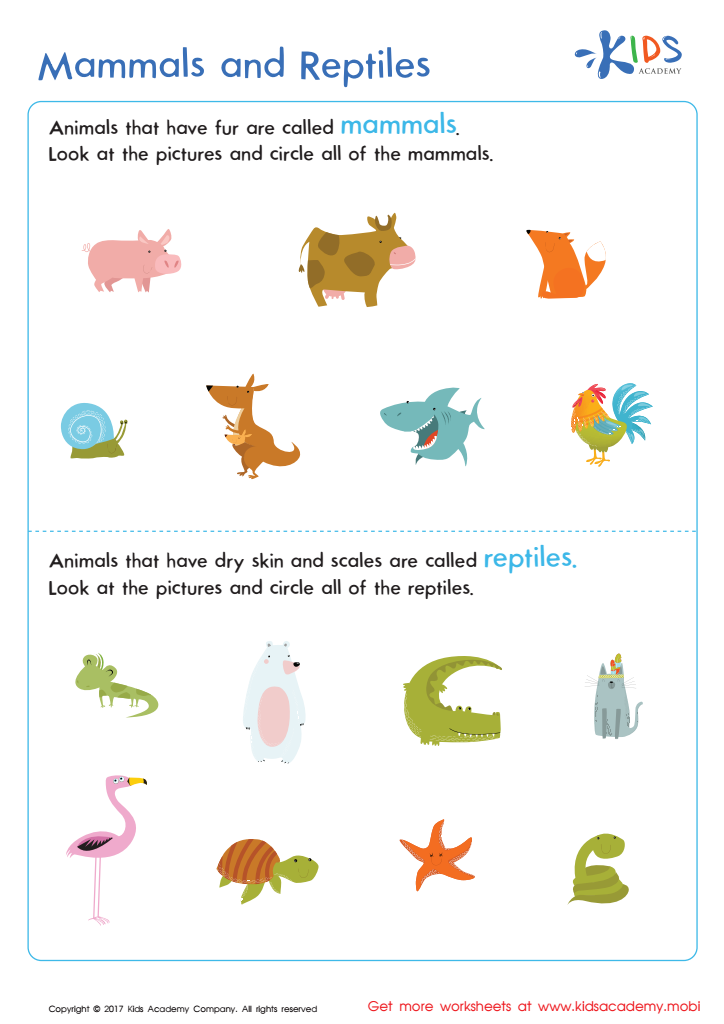
Mammals and Reptiles Worksheet
 Assign to My Students

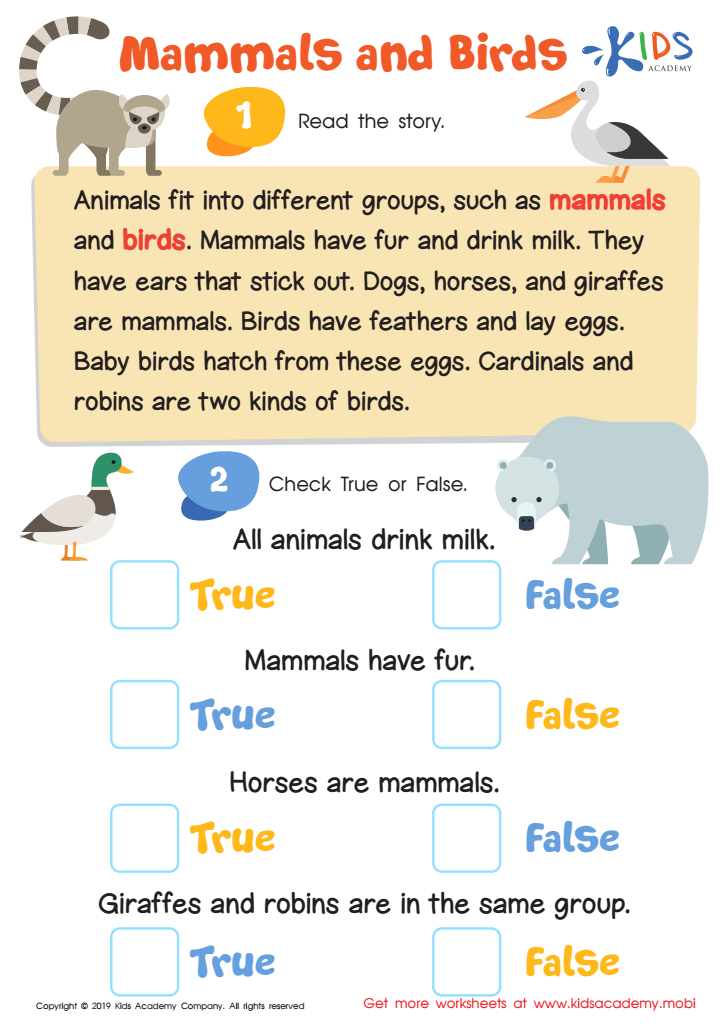
Mammals and Birds Worksheet
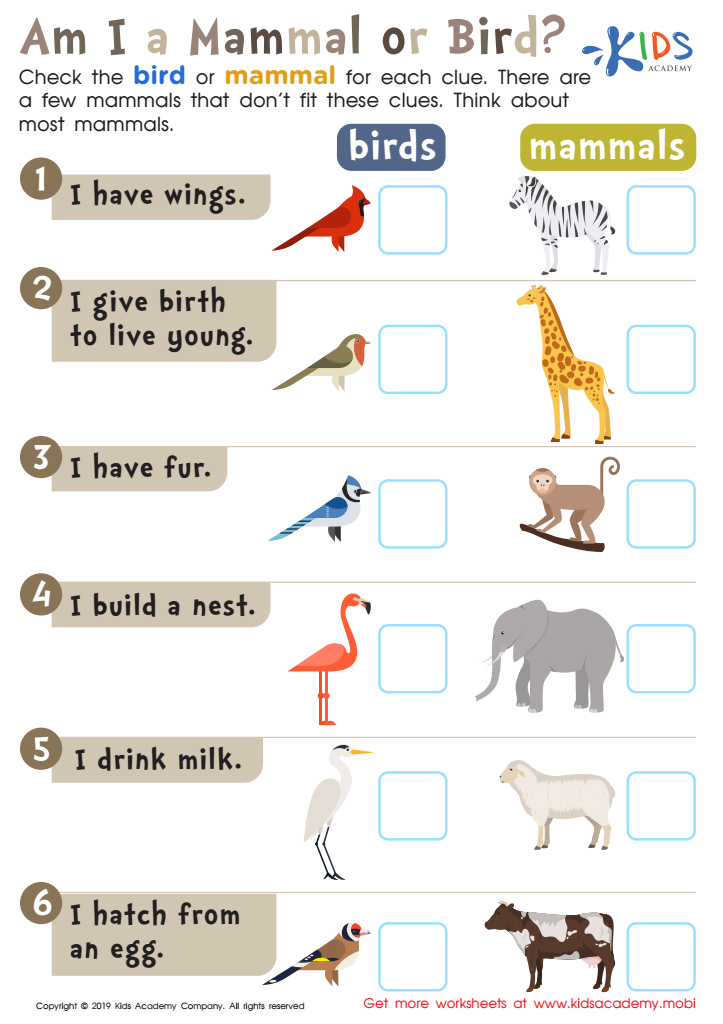
Am I a Mammal or Bird? Worksheet
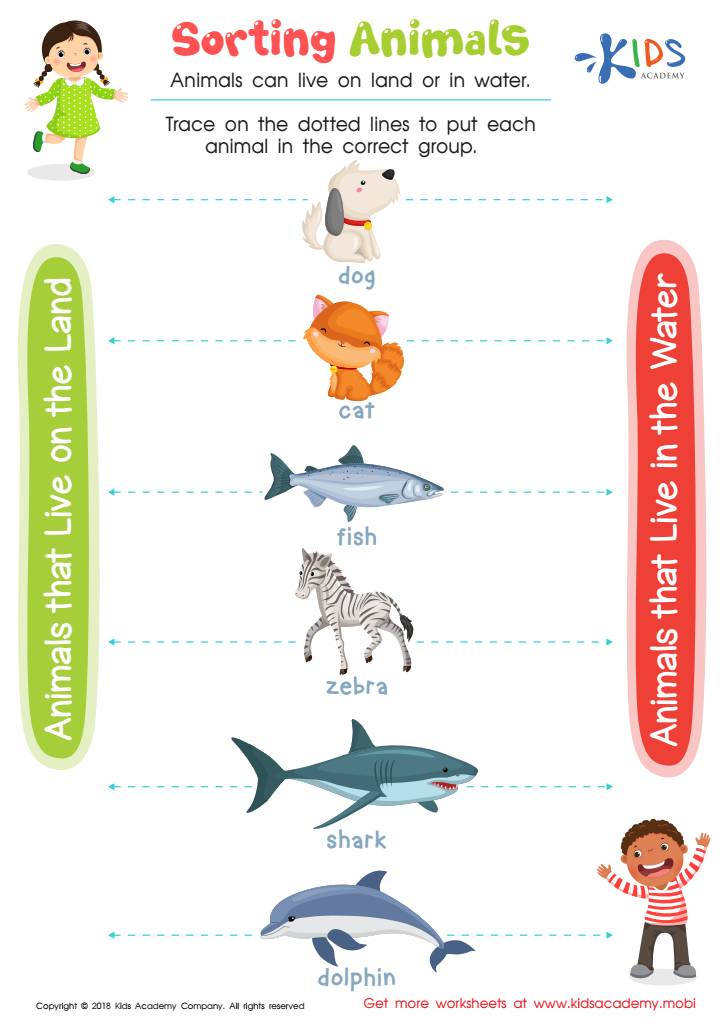
Sorting Animals Worksheet
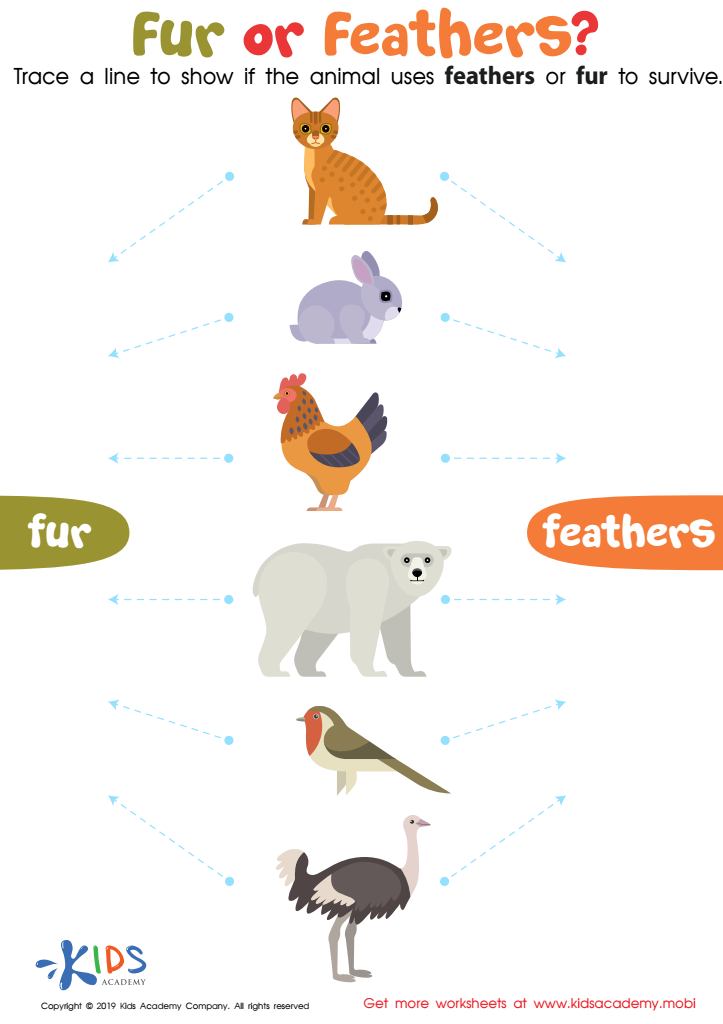
Fur or Feathers? Worksheet
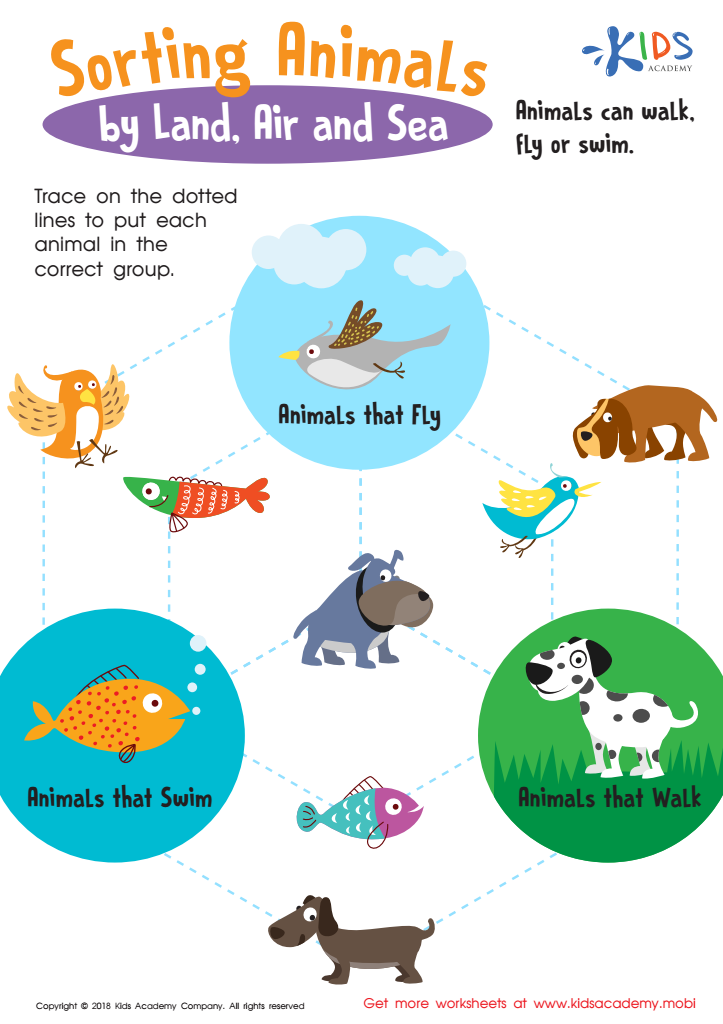
Sorting Animals by Land, Air and Sea Worksheet
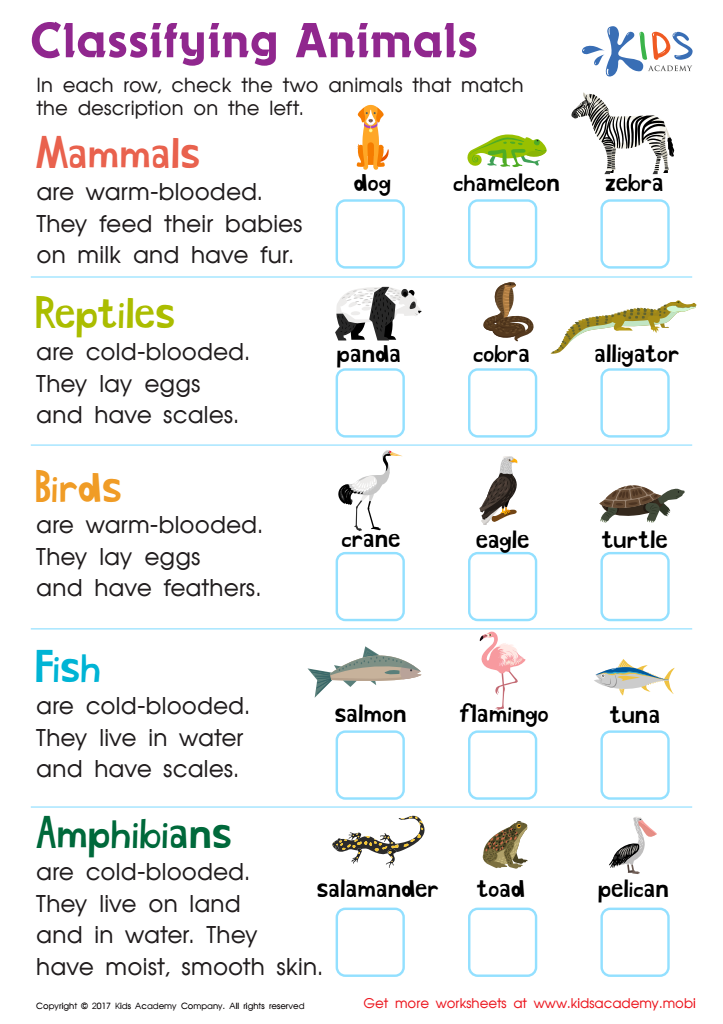
Classifying Animals Worksheet







Understanding animal classification is crucial for children aged 6-9 because it fosters curiosity about the natural world, nurtures critical thinking skills, and promotes environmental awareness. Learning about how animals and plants are categorized allows children to recognize the diversity of life forms and appreciate their unique characteristics. This foundational knowledge helps children understand ecosystems and the importance of each organism within them.
Furthermore, animal classification involves engaging in hands-on activities, encouraging collaborative learning among peers. Children can explore real-life examples, such as observing local wildlife or plants, thus facilitating a connection to their environment. Such active learning not only promotes retention but also helps improve observational and analytical skills.
Moreover, teaching children about classification fosters empathy toward living beings, encouraging them to care for animals and their habitats. It can spark conversations about conservation and responsibility, making them more aware of ecological issues that affect their world. By introducing these concepts early, parents and teachers instill a sense of stewardship that can last a lifetime.
Ultimately, embracing animal classification enriches children's educational experiences while laying the groundwork for informed and responsible citizens in the future.








