Fine Motor Skills Community Worksheets for Ages 6-9
3 filtered results
Difficulty Level
Grade
Age
-
From - To
Subject
Activity
Standards
Welcome to our Fine Motor Skills Community Worksheets for Ages 6-9! Designed to foster essential fine motor development, these engaging worksheets cater specifically to young learners. They feature fun activities that promote hand-eye coordination, dexterity, and control while introducing children to their community. From tracing and cutting to coloring, each worksheet is crafted to enhance creativity while supporting cognitive growth. These resources are perfect for teachers and parents seeking to enrich their child's learning experience. Explore our collection today and help your child build their fine motor skills while discovering the wonders of their community!
Favorites
With answer key
Interactive
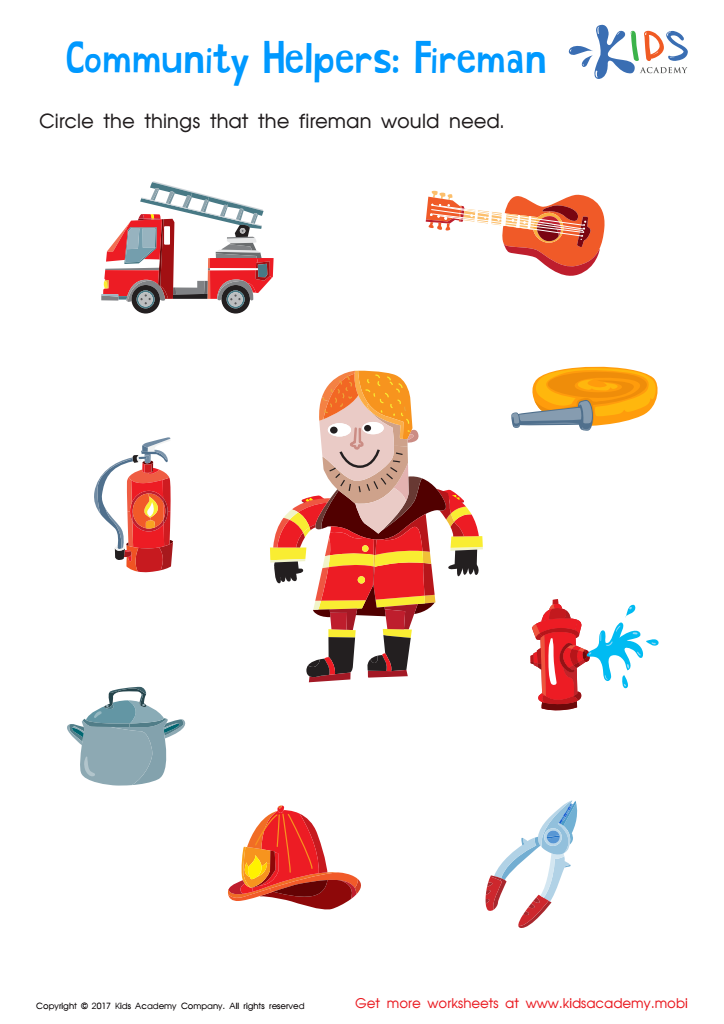
Fireman Worksheet
Kids love firemen and their big fire engines! Inspire your child to learn about their duties with this fun fireman worksheet. It'll help your child understand the role of firemen, as well as develop matching and problem solving skills. Get your kid started on understanding a key role in society and have fun too!
 Assign to My Students
Fireman Worksheet
Worksheet


Playground Worksheet
Head to the park with this playground worksheet! It strengthens sorting and cognitive skills while encouraging problem solving. Plus, it's fun-filled and engaging! When finished, head out to the park to see what items your child finds in the playground!
Playground Worksheet
Worksheet
Join Kids Academy for Free
Who is primarily going to use this learning content?








Fine motor skills play a crucial role in a child's development, especially between ages 6-9, when they transition from basic hand coordination to more complex tasks. For parents and teachers, fostering these skills is essential for several reasons.
Firstly, fine motor skills are foundational for everyday activities like writing, using scissors, buttoning shirts, and tying shoelaces. Children with well-developed fine motor skills tend to have greater confidence in their abilities, leading to improved academic performance and social interactions.
Additionally, participating in a Fine Motor Skills Community encourages collaboration among parents, teachers, and specialists. It provides a platform for sharing resources, strategies, and activities tailored to help children improve these vital skills. Engaging in community activities, such as arts and crafts, manipulative games, and group projects, not only enhances dexterity but also promotes teamwork.
Involving children in fine motor skill activities also nurtures their creativity and problem-solving abilities. Ultimately, supporting the development of these skills through community engagement is essential for physical, cognitive, and emotional growth, equipping children with lifelong tools to thrive both academically and socially. Thus, investing time and resources into fine motor skills development is a meaningful priority for those raising and educating young learners.