Understanding communities Community Worksheets for Ages 6-9
4 filtered results
-
From - To
Explore our "Understanding Communities" worksheets designed for children ages 6-9, where young learners delve into the rich tapestry of their neighborhoods! This engaging resource helps students discover the various roles, responsibilities, and resources that shape their communities. Through fun activities, including coloring pages, matching games, and thought-provoking questions, children can identify important community helpers and the significance of cooperation. These worksheets encourage critical thinking and foster a sense of belonging while enhancing social studies skills. Start your child’s journey to becoming an informed and active community member with our printable worksheets that blend learning with creativity and enjoyment!
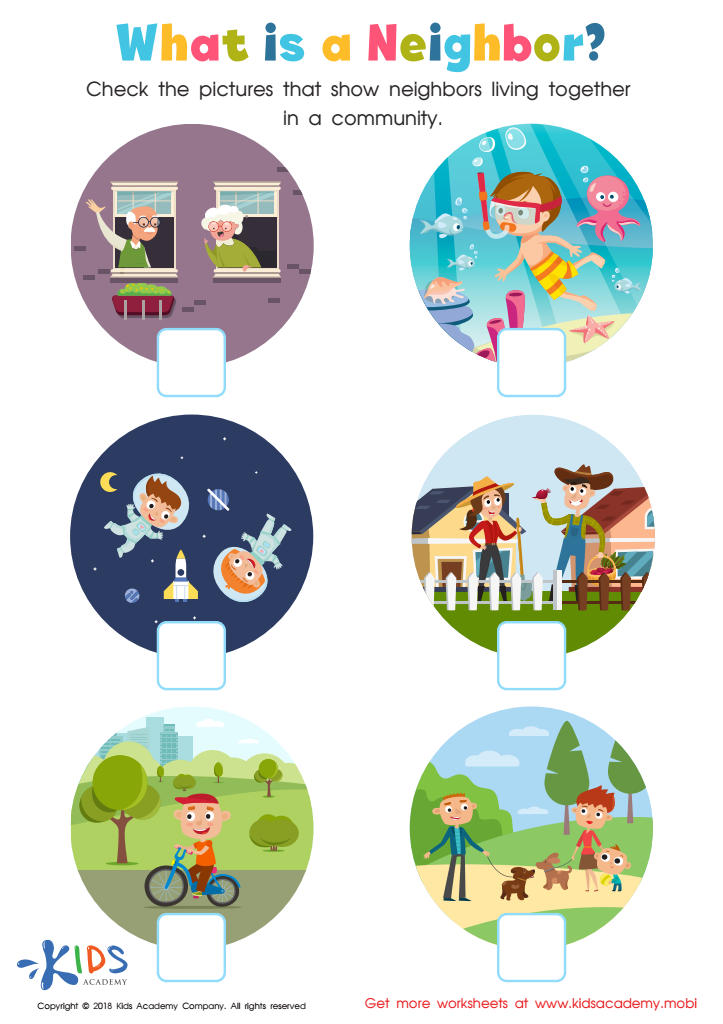
What is a neighbor Worksheet
 Assign to My Students
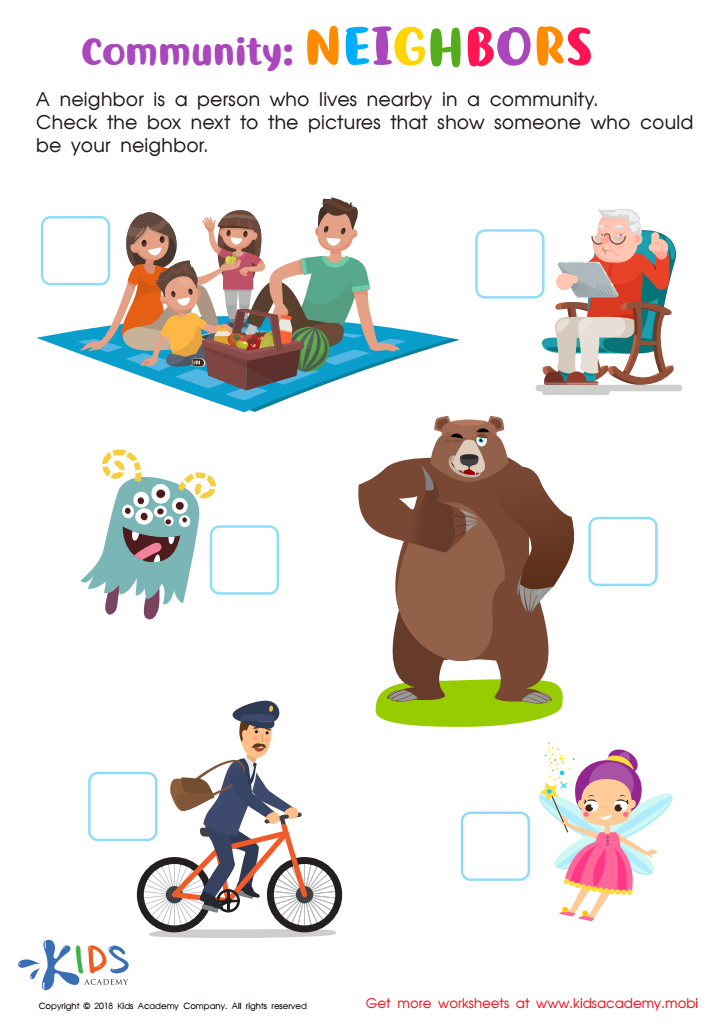
Community: Neighbors Worksheet
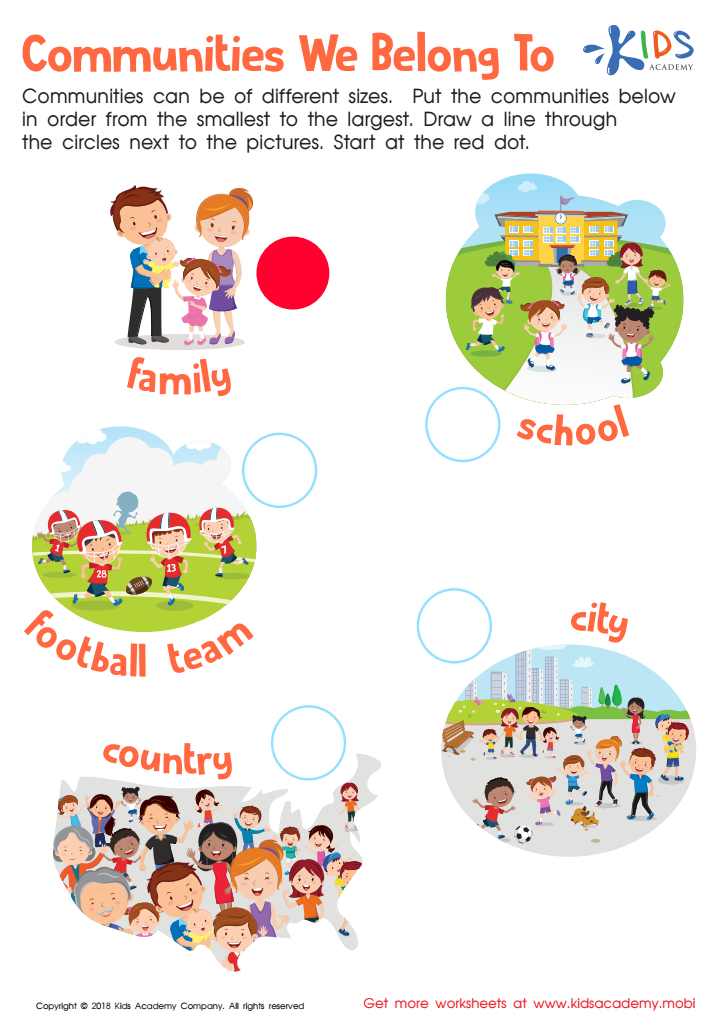
Communities We Belong to Worksheet
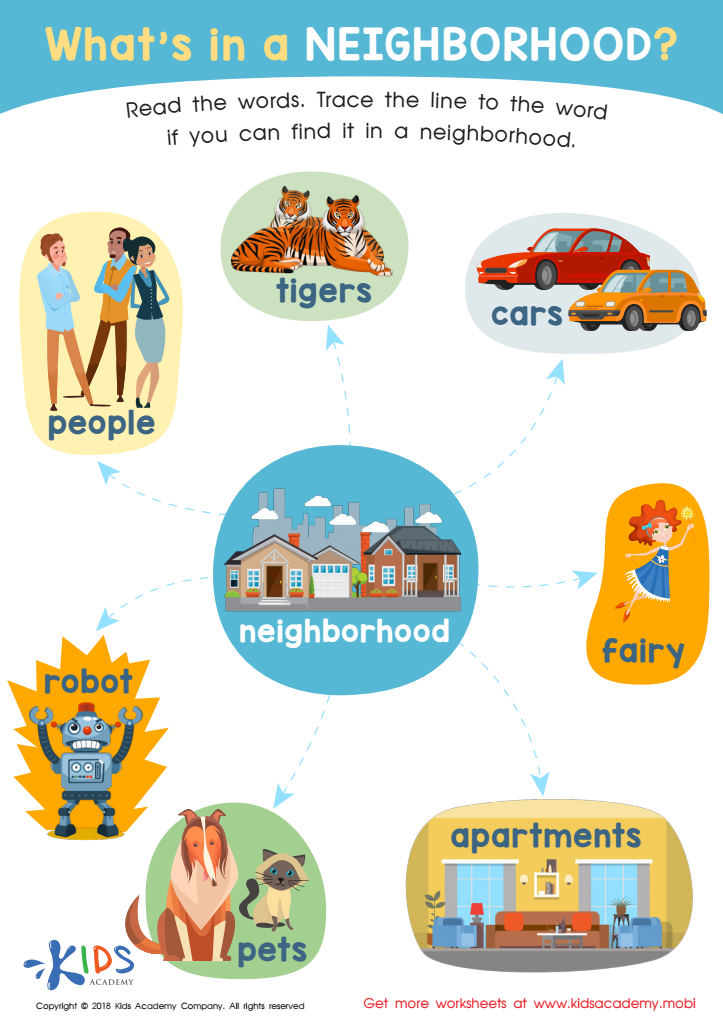
What's in a Neighborhood? Worksheet








Understanding communities is vital for children aged 6-9, as it forms the foundation of their social, emotional, and cognitive development. Parents and teachers should care about this topic because it fosters a sense of belonging and connection among children. By learning about their own community, children can appreciate diversity, recognize different cultural backgrounds, and understand various roles individuals play within society, promoting empathy and respect.
Moreover, exploring community dynamics helps children develop essential skills such as teamwork, problem-solving, and effective communication. Engaging with local environments encourages curiosity and a sense of responsibility, motivating youngsters to contribute positively to their surroundings. Parents and teachers can facilitate this understanding through hands-on activities, discussions, and field trips, helping children draw connections between their personal experiences and broader societal structures.
Additionally, community understanding encourages critical thinking about social issues, inspiring children to envision themselves as agents of change. This early awareness cultivates their ability to collaborate with others and participate in civic life as they grow, ultimately leading to empowered and informed future citizens. Therefore, it is crucial for both parents and teachers to prioritize teaching children about their communities.