Historical Knowledge Social Studies Worksheets for Ages 6-9 - Page 2
26 filtered results
-
From - To
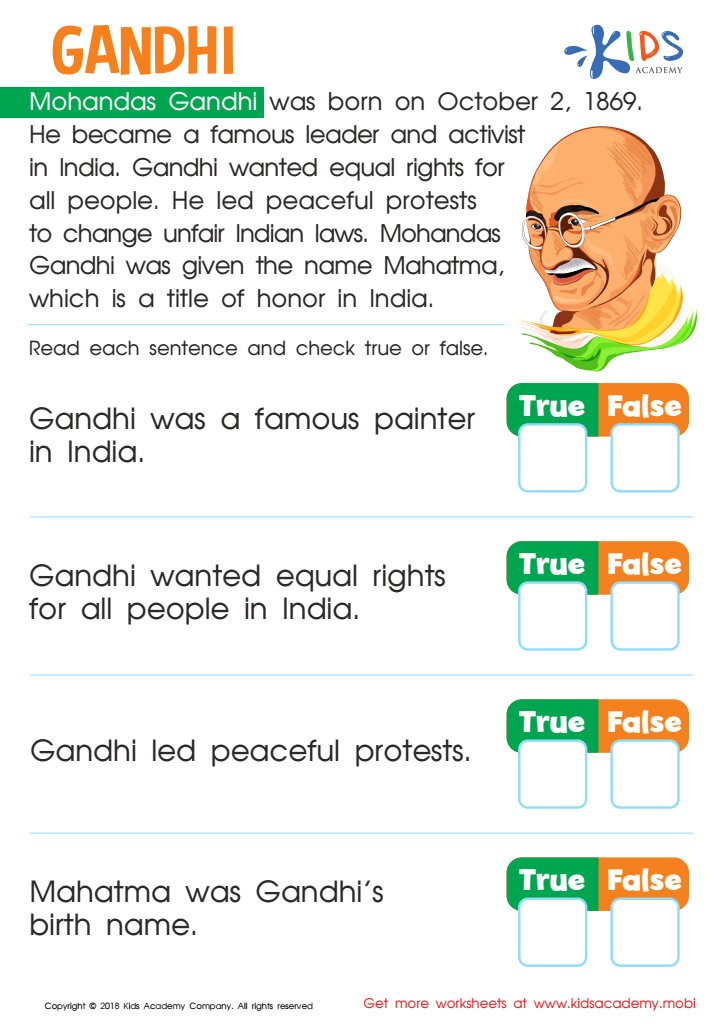
Gandhi Worksheet
 Assign to My Students
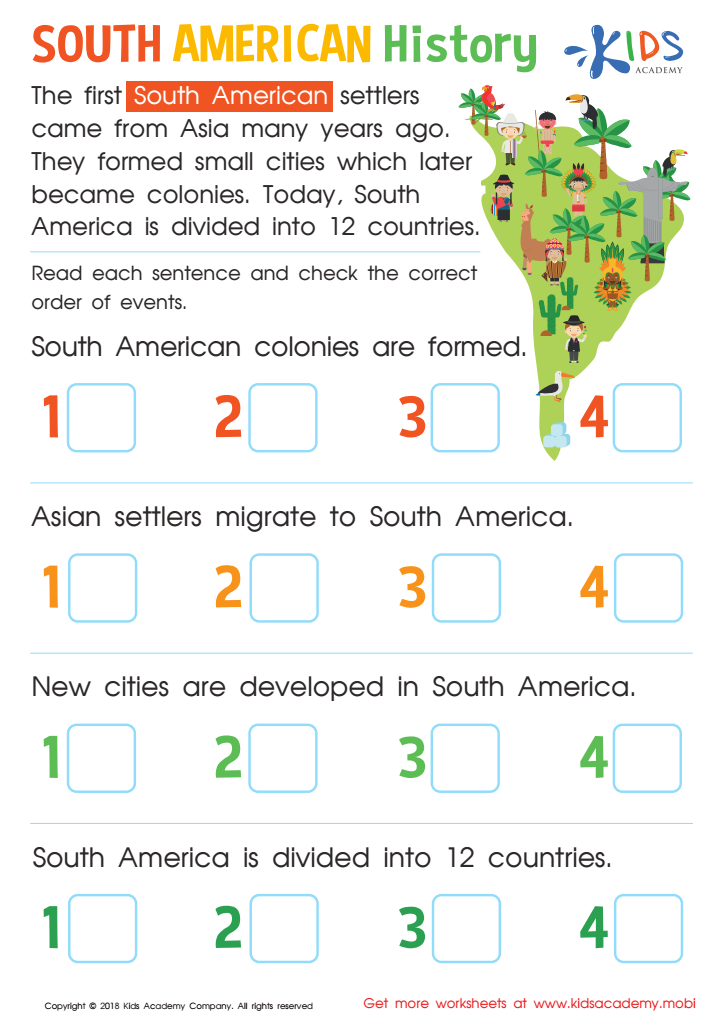
South American History Worksheet








Historical knowledge in social studies is crucial for children aged 6-9, as it forms the foundation for their understanding of the world and their place in it. At this age, children are naturally curious about their surroundings, and teaching them historical concepts fosters critical thinking and empathy by helping them relate their experiences to broader societal narratives.
Parents and teachers should care because historical knowledge enhances children's ability to make connections between the past and present, encouraging them to recognize patterns, differences, and similarities across cultures. It cultivates a sense of identity, empowering children to understand their roots while appreciating diverse perspectives.
Moreover, imparting historical knowledge at this developmental stage supports language and literacy skills, as students engage with stories of historical figures and events. This engagement not only builds vocabulary but also encourages storytelling and expression.
Children who grasp historical contexts are more likely to develop into informed citizens. They learn the importance of civic responsibility, justice, and respect for others, laying the groundwork for active participation in society. Overall, prioritizing historical knowledge in social studies equips young learners with critical skills for their future, helping them navigate an increasingly complex world with confidence and compassion.








