
Spatial awareness Social Studies Worksheets for Ages 6-9
6 filtered results
Difficulty Level
Grade
Age
-
From - To
Subject
Activity
Standards
Boost your child’s understanding of the world with our Spatial Awareness Social Studies Worksheets, tailored for ages 6-9! These engaging printables help young learners develop essential spatial skills, enhancing their ability to understand maps, geography, and the world around them. Each worksheet is thoughtfully designed to be fun and educational, focusing on key areas like map reading, navigation, and spatial relations. Perfect for classroom or home use, our worksheets support critical thinking and improve problem-solving abilities in a hands-on, interactive way. Start your child's learning journey with Kids Academy today!
Favorites
With answer key
Interactive
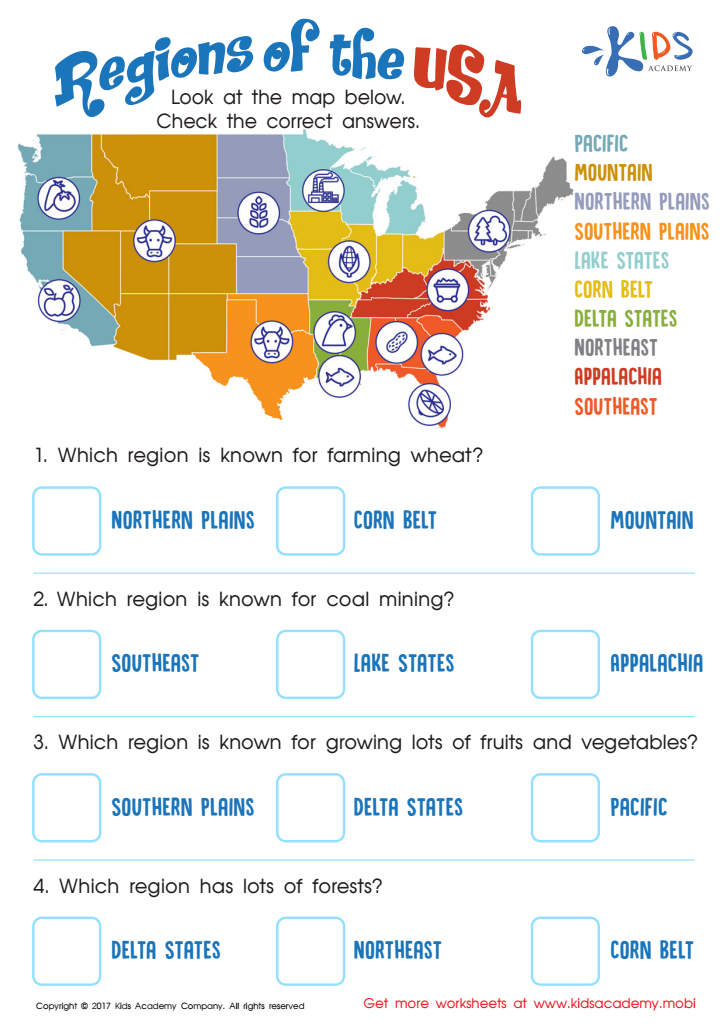
Regions of the USA Worksheet
Help your child explore the US with this regions of the United States worksheet! They'll learn about the diverse cultures, climates and purposes of each region. Make geography and US history fun with this educational exercise!
 Assign to My Students
Regions of the USA Worksheet
Worksheet
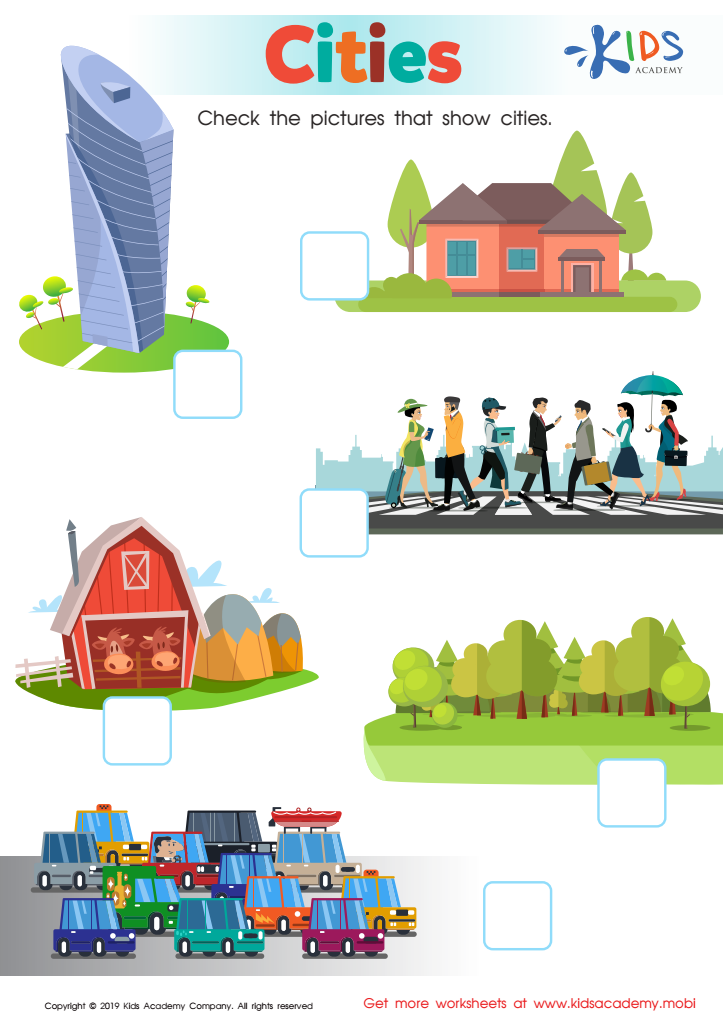
Cities Worksheet
This social studies PDF introduces kids to the differences between cities and towns. Colorful imagery helps them to distinguish between the two; for example, cities have traffic, business people and skyscrapers, while suburbs and rural areas do not. This allows children to have a reference point for what makes cities unique.
Cities Worksheet
Worksheet
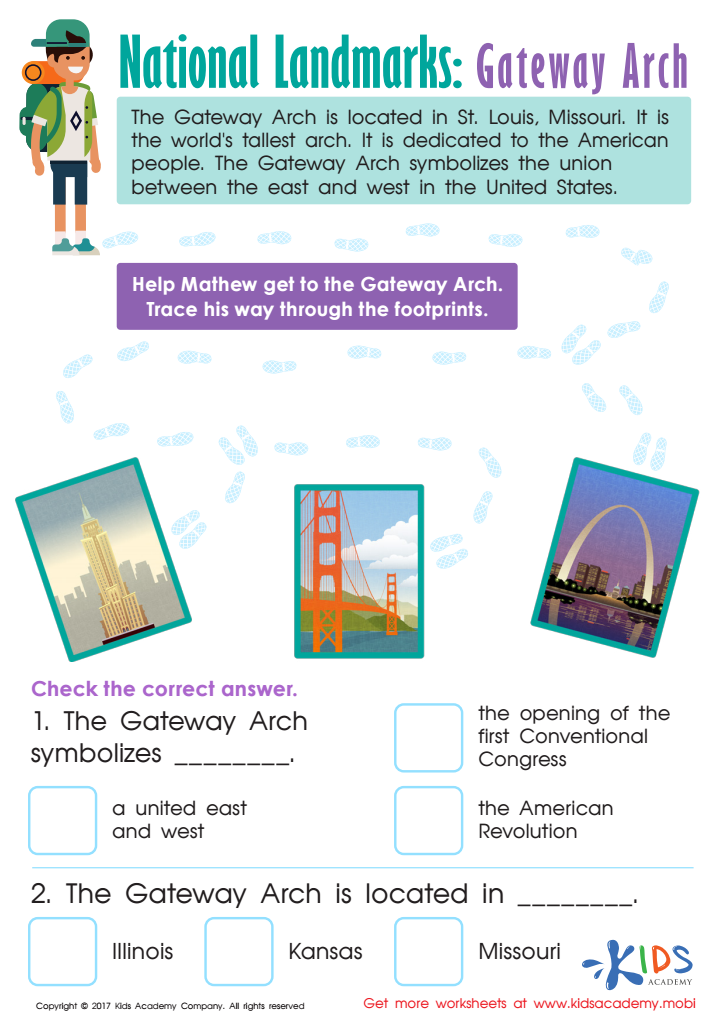
Gateway Arch Printable Worksheet
Explore America with your child! This printable worksheet takes them to St. Louis, Missouri's iconic Gateway Arch. As they learn about its history, they'll be quizzed with fun-filled facts. A great way to discover and appreciate this amazing national landmark! (80 words)
Gateway Arch Printable Worksheet
Worksheet
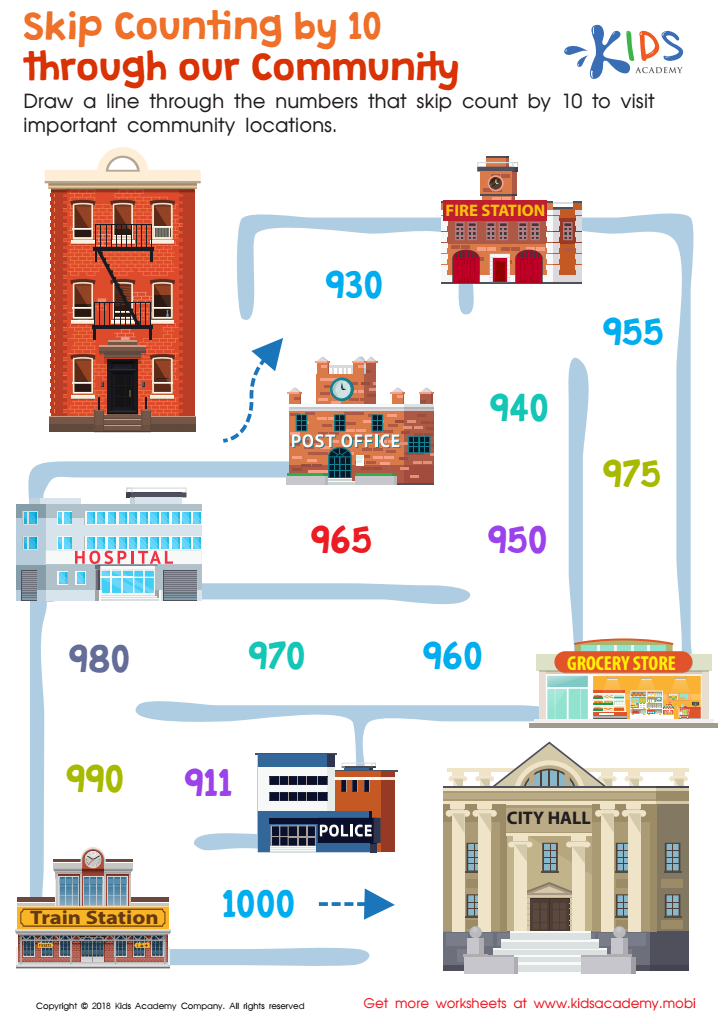
Skip Counting by 10 Through Our Community Worksheet
Our kids need to 'make a ten' and skip count by tens to boost their speed and accuracy in math. This cool, free worksheet takes them on a journey through their local community to practice counting by tens. They'll work on social studies and fine motor skills while having fun with the maze they get to count by tens in!
Skip Counting by 10 Through Our Community Worksheet
Worksheet
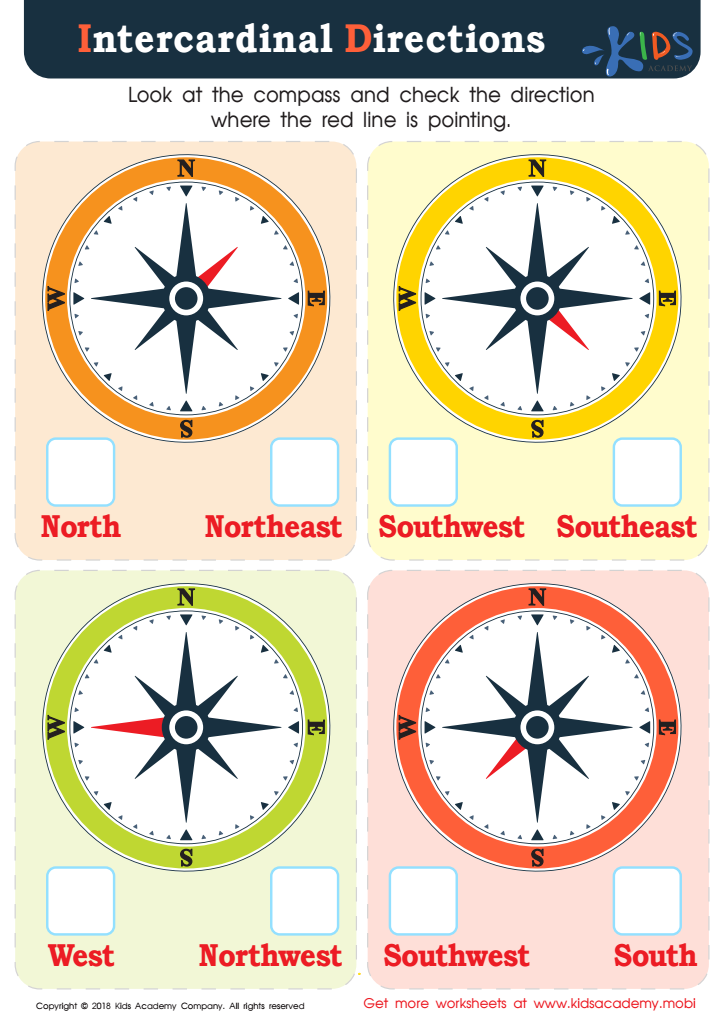
Intercardinal Directions Worksheet
Young students often don't get to practice cardinal and intercardinal directions in the digital age, but it's an important social studies and geography concept to learn. This PDF provides colorful compasses for them to practice with, giving them a real-world skill for common curriculum and independent living.
Intercardinal Directions Worksheet
Worksheet
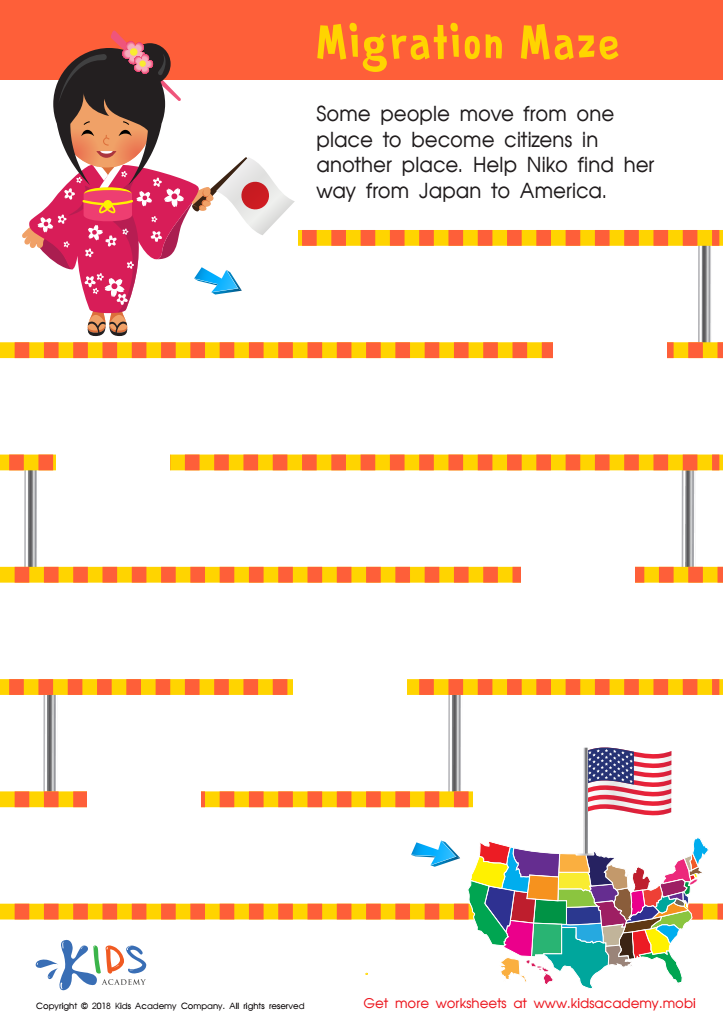
Migration Maze Worksheet
You are a citizen of your school, city and country. Many people migrate to become citizens of another place, like Niko in this worksheet. Ask your students to help her find her way from Japan to America.
Migration Maze Worksheet
Worksheet
Join Kids Academy for Free
Who is primarily going to use this learning content?







Spatial awareness in social studies is fundamental for children aged 6-9 for several reasons. Firstly, it helps them understand the world around them by making sense of space, places, and how they relate to their environment. This fundamental skill aids in reading maps, grasping geographical relationships, and developing a sense of direction. When children can visualize where they are in the world, they better understand historical events, cultural diversity, and the concept of community.
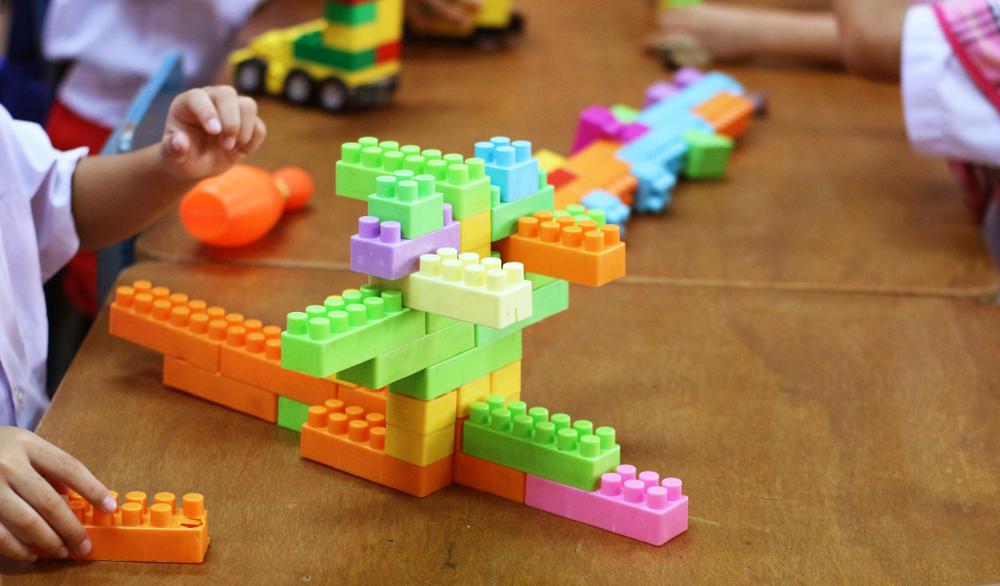
Secondly, fostering spatial awareness boosts cognitive development. It enhances problem-solving abilities and critical thinking as children learn to navigate physical spaces, recognize patterns, and engage in complex tasks like building structures or drawing maps. Spatial reasoning is strongly linked to success in STEM (Science, Technology, Engineering, and Mathematics), which are fields of growing importance.
Lastly, spatial awareness influences social skills and independence. Kids learn how to interact with and move through various environments, whether it’s the classroom, playground, or in understanding broader societal layouts in social studies contexts. This awareness fosters confidence and self-reliance, enabling children to explore, interact, and engage thoughtfully with their surroundings. Encouraging spatial awareness lays a foundational layer for a child’s overall intellectual and social development, making it a vital component of early education.








