Understanding democracy Social Studies Worksheets for Ages 6-9
3 filtered results
-
From - To
Explore our engaging "Understanding Democracy Social Studies Worksheets" designed for children aged 6-9! These worksheets introduce young learners to the fundamental concepts of democracy, including the importance of voting, community involvement, and civic responsibility. With age-appropriate activities and visually appealing illustrations, children will grasp the principles that shape their society. Our resources foster critical thinking and encourage discussions about rights and responsibilities, making social studies both fun and educational. Perfect for classrooms or home learning, these worksheets help cultivate informed and active citizens from a young age. Dive into the world of democracy and empower the future generation today!
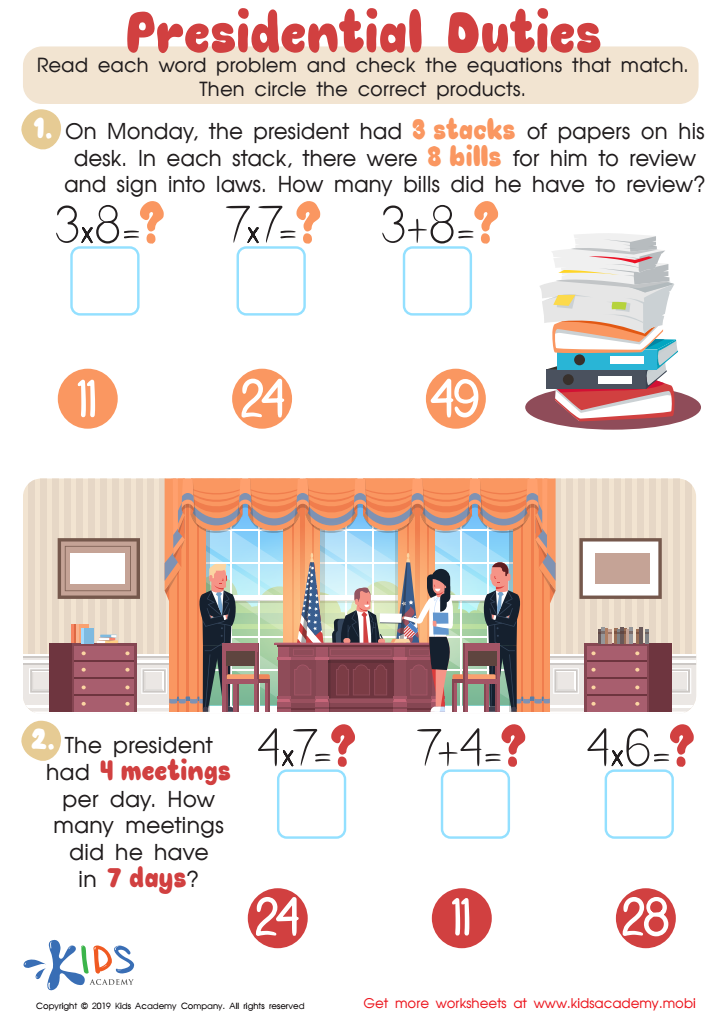
Presidential Duties Worksheet
 Assign to My Students
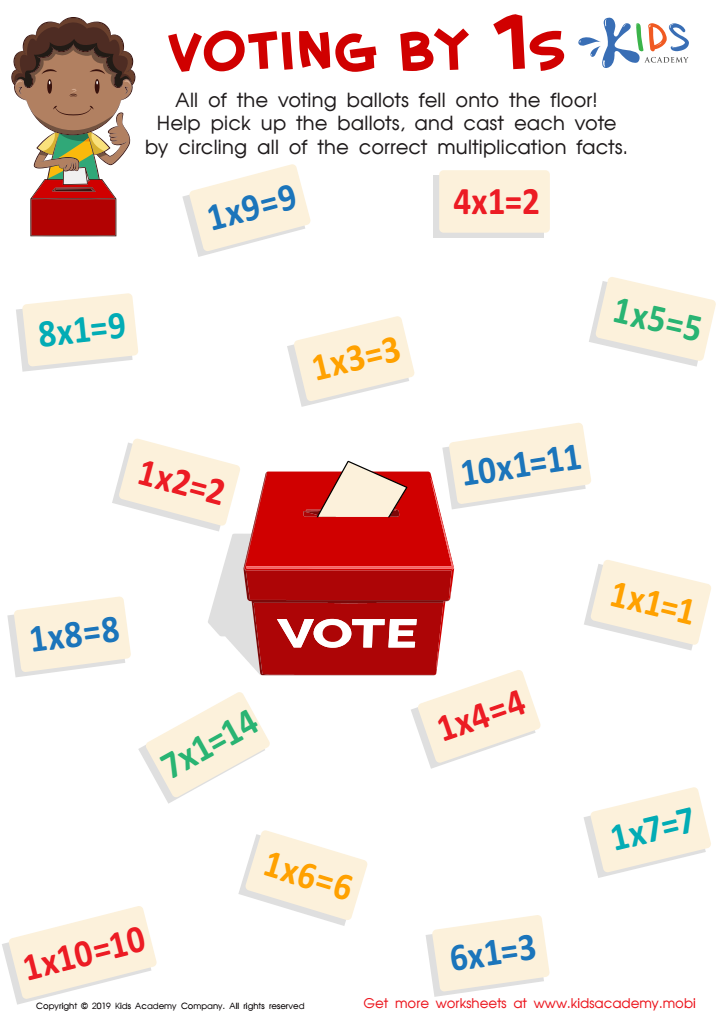
Voting by 1s Worksheet
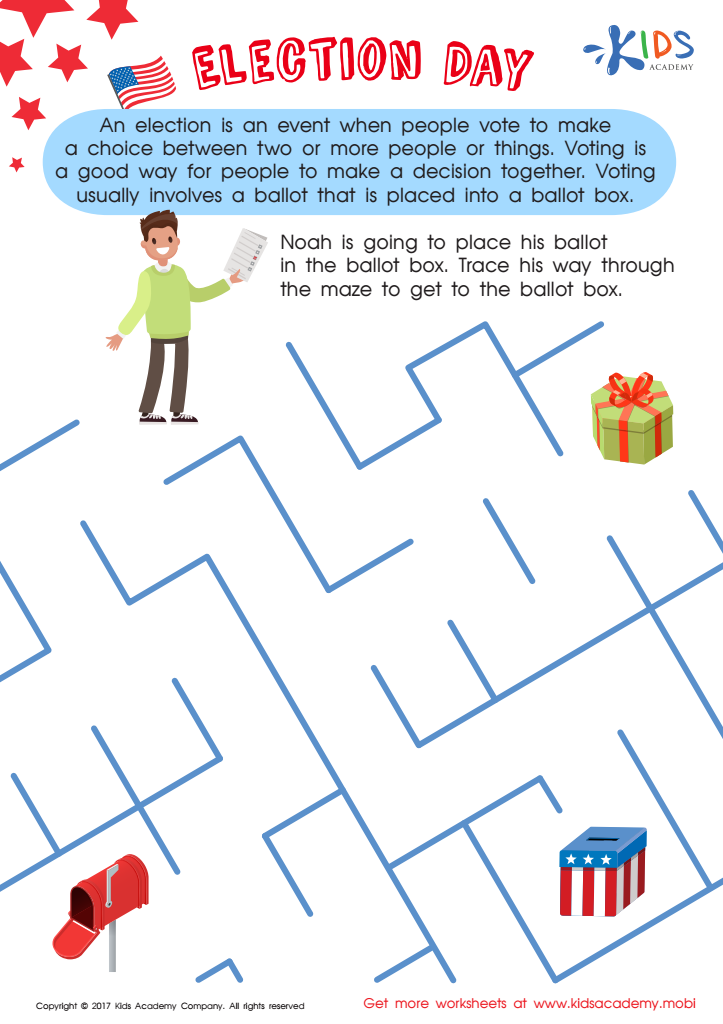
Election Day Worksheet







Understanding democracy is vital for children aged 6-9 as it lays the foundation for responsible citizenship and engaged community members. At this age, children begin to explore concepts of fairness, justice, and community, making it an essential time to introduce the principles of democracy. Parents and teachers should care about this subject because it helps young learners understand how decisions are made and why their voices matter.
By teaching children about democracy, they learn the importance of participation, whether through voting, engaging in discussions, or sharing ideas. This knowledge fosters critical thinking and encourages children to express their opinions respectfully while appreciating others' views. It also introduces them to the values of equality, inclusion, and social responsibility, which are crucial for building a cohesive, respectful society.
Furthermore, understanding democracy equips children with skills they need, such as problem-solving and collaboration, which resonate throughout their lives. When parents and teachers invest time in these discussions, they empower children to take an active role in their communities, inspiring a lifelong commitment to civic engagement. Ultimately, fostering early understanding of democracy cultivates informed, empathetic individuals who contribute positively to society's future.








